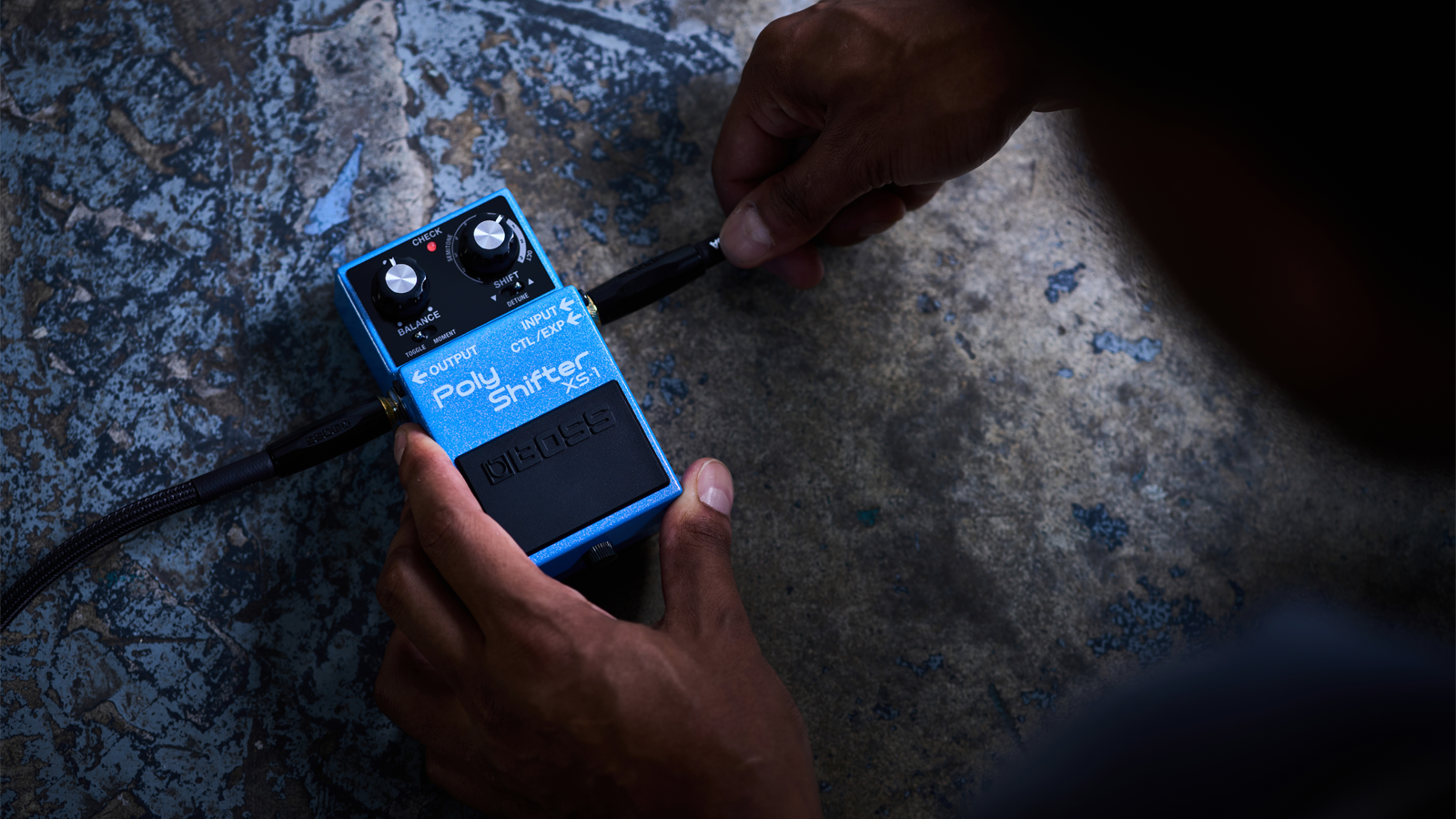
Ever wish your guitar or bass could play along with itself, drop down to a deeper range, or jump an octave higher without having to retune? That’s exactly what a pitch shifter does. It changes the pitch of your notes—higher or lower—while you play just as you normally would. The result? Fresh sounds, new textures, and loads of creative possibilities. Bass players, for example, can use a pitch shifter to add lower-octave layers for fatter-sounding basslines, while guitarists can apply a virtual capo to change key instantly. If you’re just starting to explore effects, this beginner’s guide will help you understand what pitch shifting is, how it works, and why it’s such a fun way to expand your sound.
What Is a Pitch Shifter Pedal?
A pitch shifter pedal is a tool that changes the notes you play on your instrument. When you play a note, a pitch shifter can make it sound higher, lower, or add one or more extra notes alongside it to create harmony.
This can make your riffs sound fuller, add additional color to your solos, or allow you to experiment with new sounds without needing another guitar/bass or player.
Pitch shifters work differently from other effects you might know. Distortion adds grit and crunch to your tone, delay repeats your notes over time, and a wah pedal sweeps your tone up and down for expressive filter sounds.
A pitch shifter, by contrast, changes the notes you play in detailed intervals and/or continuous sweeps, giving you more ways to shape your sound.
Where Do Pitch Shifters Go in the Signal Chain?
A simple setup looks like this: Guitar → Pitch Shifter → Amp
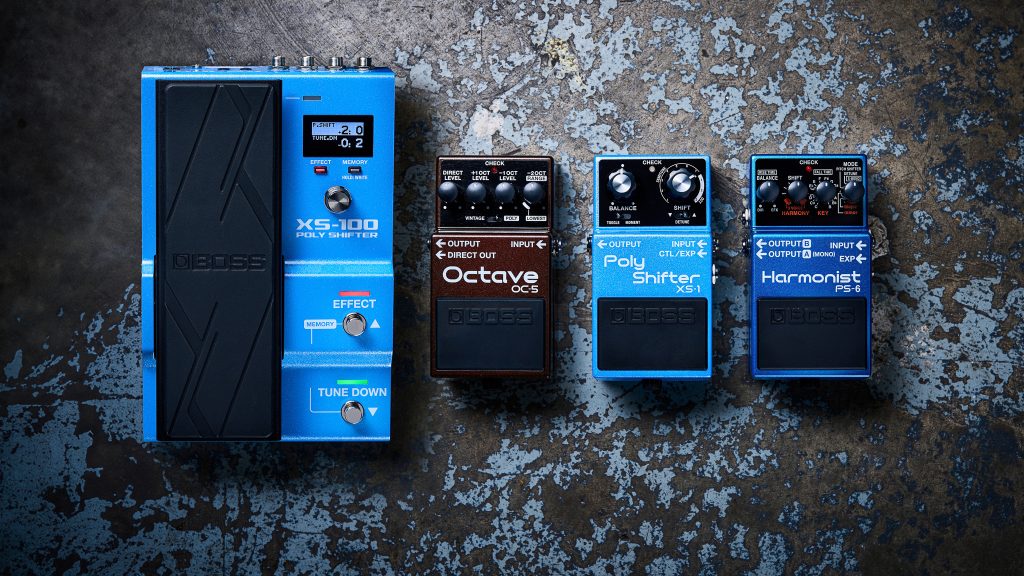
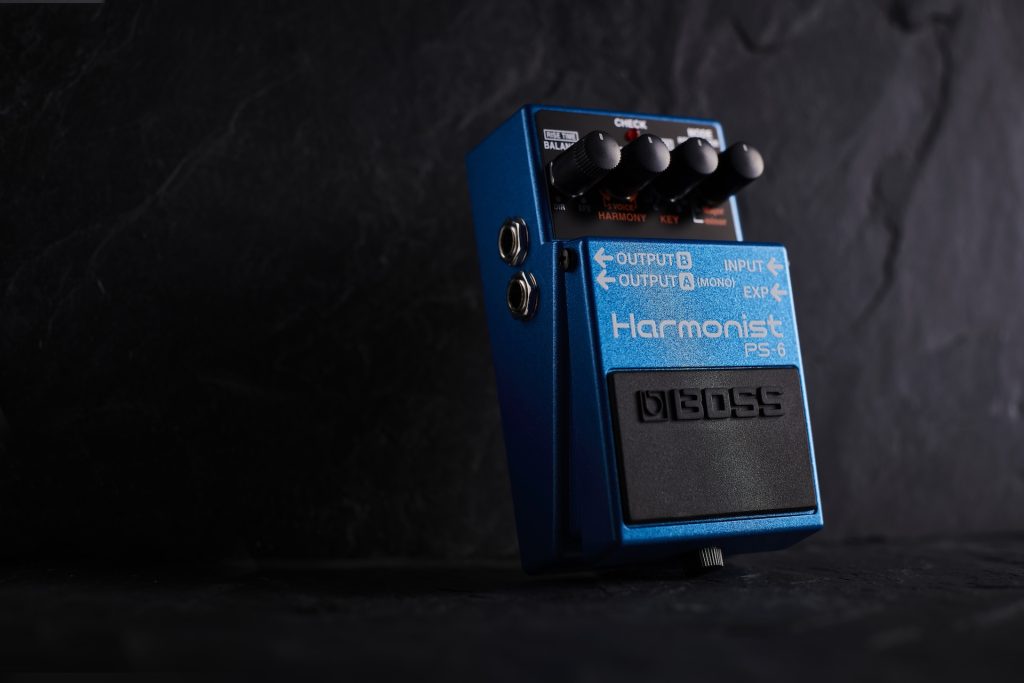
If used alongside other effects pedals, some pitch shifters—like the OC-5 Octave and PS-6 Harmonist—work best at the very start of your chain. This way, they “hear” your notes clearly and can track them more accurately.
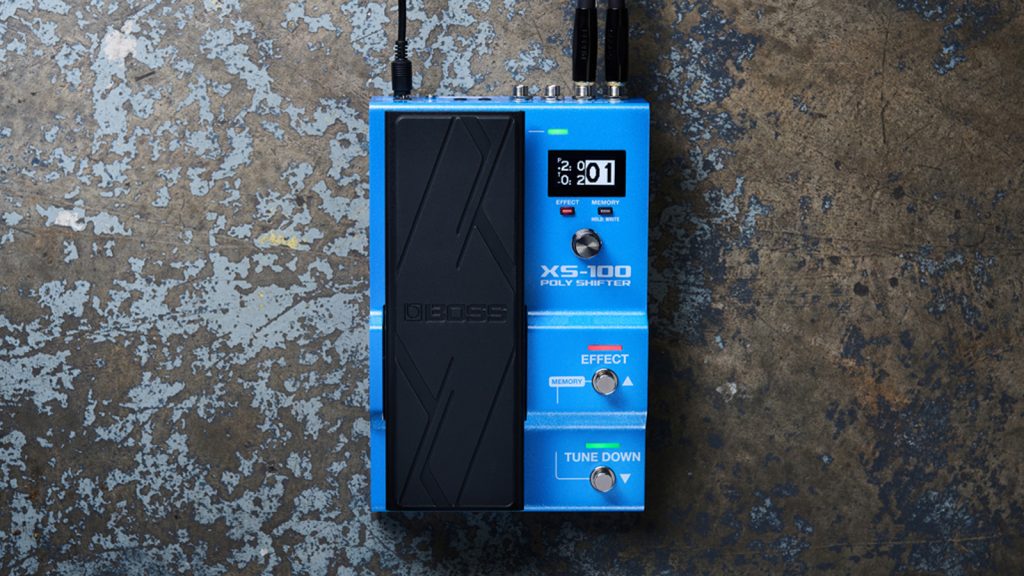
Newer pedals, such as the XS-1 and XS-100 Poly Shifters, offer greater flexibility. You can put them anywhere in your chain, and they’ll still follow your playing accurately.
Either way, a pitch shifter can create exciting and dramatic effects, making your playing sound more expansive.
"“I love how clean [the XS-100] is, being able to shift keys and not have that computerized sound like others do. I’ve been so blown away by that feature of it alone.”
Eric Gales, Grammy-Nominated Artist
How Does a Pitch Shifter Work?
Pitch shifters are pedals that change the pitch of the notes you play. Octave pedals are technically a type of pitch shifter, but they’re usually limited to moving your notes up and/or down by octaves.
Analog pedals often work this way. They tend to be monophonic, which means they can only shift one note at a time. Despite this, they’re loved for their warm, classic tone and the character they can add to your riffs and solos.
Even with their simplicity, analog octave pedals possess a musical quality that many players find highly satisfying.
Digital pedals are more flexible. They’re usually polyphonic, which means they can track and shift several notes at once. You can play full chords or more complex parts, and each note will be shifted accurately.
Digital pedals can handle anything from simple octave changes to harmonies and other creative pitch effects, giving you much more freedom to shape your sound.
“[The XS-100] is amazing—the quality of the tracking is second to none, and the lack of latency when pitching strenuously is so awesome. I'm trying to implement it onto my board and into our set with MIDI for our upcoming tour.”
Erik Bickerstaffe, Loathe
Why Use a Pitch Shifter Pedal?
There’s no single reason guitarists reach for a pitch shifter. Versatility is the real magic. Here are some of the most popular creative and practical uses.
1. Add Depth and Thickness
Blend in a lower octave beneath your signal to make riffs sound bigger. This bass-doubled tone can fill out your sound beautifully, especially in smaller bands.
2. Create Harmonies Instantly
With harmony, you can achieve complex, multi-layered textures without the need for a second (or third!) guitarist. Set your pitch interval to a third or fifth, for example, and enjoy automatic harmonies that follow your melody.
3. Drop Tuning or Virtual Capo
Need to play in a lower tuning, but don’t want to retune your guitar? Pitch shifters let you drop your entire tuning by multiple semitones—ideal for metal and hard rock. Conversely, you can shift upward to mimic a capo change on the fly.
4. Explore Experimental Soundscapes
Pair a pitch shifter with other pedals, like reverb, delay, or fuzz, and suddenly the sounds you can make get really exciting. You can create sparkling, ambient shimmer, slow, drifting drones, or even quirky, glitchy effects. Many ambient and experimental guitarists utilize these combinations to create rich, cinematic sounds from a single guitar.
5. Perform Pitch Sweeps
Plug in an expression pedal and you can sweep through pitch intervals—great for dive-bombs, big bends, or adding flair to solos. It transforms your pitch shifter into a more playful and expressive instrument that responds to your foot in real-time. Some pedals, like the XS-100, even have an expression pedal built in.

Common Features and Controls
While the layout varies between models, most pitch shifter pedals share a handful of key controls:
• Interval Selector: Sets the pitch shift interval (for example, +3 semitones or –1 octave).
• Blend or Mix Control: Balances your dry and shifted tones for subtle doubling or full transformation.
• Tracking Quality: Determines how accurately the pedal follows your notes (important for glitch-free chords and fast runs).
• Expression Pedal Input: Enables real-time control of pitch sweeps.
More advanced pedals can have features like preset storage, so you can switch settings instantly during a performance, and MIDI control, which opens up even more ways to control your sound.
“The BOSS XS-1 does a pretty stellar job at transposing in half-steps. Where I've found it really shines is in its harmonization features—particularly in 4ths and 5ths—which can be used to create some cool, almost synth-like chords.”
Mark Lettieri, Snarky Puppy
Types of Pitch Shifter Pedals
Pitch shifting isn’t one-size-fits-all. Different types cater to different musical goals.
1. Octave Pedals
These are the simplest form of pitch shifter, adding notes exactly one or two octaves above or below your input. They’re perfect for thickening riffs or creating synth-like bass tones.
2. Harmony Pedals
Designed to produce harmonized intervals (such as thirds or fifths) in a chosen key, these pedals let you craft harmonies that stay musically accurate—ideal for melodic lead playing.
3. Retuning Pedals
These pitch shifters digitally re-tune your entire guitar. They’re a godsend for metal players who need access to down-tunings without touching the machine heads. More advanced retuning pedals can also shift upwards.
4. Continuous-Pitch Pedals
These integrate an expression pedal for continuous pitch control. Sweep through octaves or perform tremolo-arm-style bends with precision and dramatic flair.
5. Multi-Effects Units
Many multi-effects processors include pitch shifting, and while dedicated pedals can offer more precise tracking, multi-effects units are great for having pitch options readily available. They’re perfect for quickly adding harmonies, layering textures, or experimenting with new sounds without needing extra pedals.
“My favorite thing [about the XS-100] is that you can specifically set the pitch in increments of half-step, single-note movements, which provides a very smooth and consistent bend/expressive motion. I’m currently working on a new Night Verses record and, so far, that has inspired me quite a bit.”
Nick DePirro, Night Verses
Pitch Shifters in Popular Music
Pitch shifting has made its mark across genres—from rock and metal to ambient and experimental music.
Here are ten artists who’ve used pitch shifting to create unique and memorable sounds in their songs:
• Tom Morello (Rage Against the Machine) utilized radical pitch sweeps to produce wild pitch jumps and DJ-style effects.
• Sean Long (While She Sleeps) conjures head-turning tricks to “create things that sound impossible.”
• Nick DePirro (Night Verses) maneuvers notes, harmonics, and chords to extend his range with standout results.
• Jack White (The White Stripes) combined octave and fuzz effects to merge bass and guitar tones into one explosive sound.
• Mike Kerr (Royal Blood) used a PS-6 to help define their distinctive duo sound.
• Joe Duplantier and Christian Andreu (Gojira) unleash massive, pitch-energized riffs that intensify Gojira’s seismic heaviness.
• Matt Bellamy (Muse) fires off six-string pyrotechnics with divebombs, tonal shifts, and soaring octaves.
• Steve Vai pioneered intricate harmonies and expressive pitch bends in his virtuoso solos.
• Erik Bickerstaffe (Loathe) regularly leans on pitching to work new sounds into the Liverpool band’s music.
• The Edge (U2) employed pitch shifting to create quick, on-the-fly pitch changes and smooth, continuous sweeps.
These players have all demonstrated how pitch shifters can take your playing to a new level, while redefining what guitars and basses are capable of.
“There’s a lot to unpack with the XS-1. I currently use it for a lower-octave blend. The detuning options are out of this world and extremely accurate compared to other options I’ve tried.”
Jon Jourdan, Mammoth WVH
Where Inspiration Begins
Few pedals are as fun and inspiring as a pitch shifter. It can thicken your riffs, add harmonies, drop your tuning, or even take your instrument into entirely new sounds you didn’t think were possible.
Cutting-edge pedals like the XS-1 and XS-100 give you easy control and a vast range of creative options, from subtle octave doubling to bold pitch sweeps.
The best part? You can play around and experiment. Try stacking effects, sweep pitches with an expression pedal, or mix different intervals to see what sounds you like.
With a pitch shifter on your pedalboard, your next riff could easily be the beginning of an entire new song.