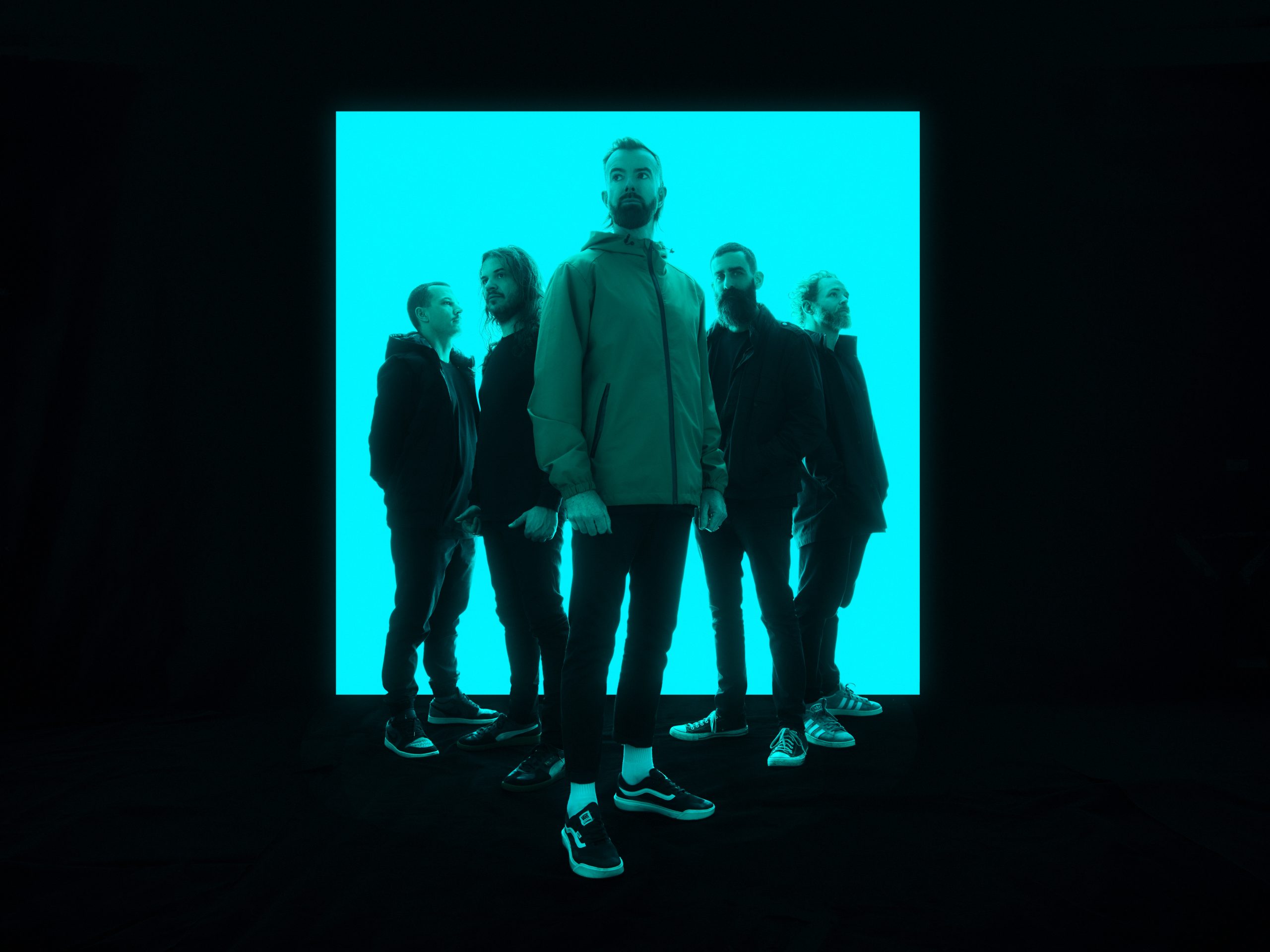


Since forming in 1998, Karnivool have established themselves as one of Australia’s most distinctive rock bands. Combining technical precision with an instinct for melody and atmosphere, the Perth-based pioneers have continually evolved their style while remaining unmistakably themselves.
In this interview, guitarists Drew Goddard and Mark Hosking discuss the gear, tunings, and creative discoveries that have accompanied that journey. From early encounters with BOSS pedals to the songwriting possibilities unlocked by the GK pickup system, they reflect on the ideas, innovations, and idiosyncrasies that have helped shape the Karnivool sound.
First Impressions
Do you each remember the first piece of BOSS gear that genuinely changed how you played or wrote music?
Drew Goddard: I remember being over in the UK in 1999 and buying a GT-3 on Denmark Street. I’d had an ME-series unit before that, but the GT-3 was the one that really changed things for me. It was around the time I was starting to write songs for Themata, and I remember reading the manual cover to cover and being excited to get home and try everything out.
Mark Hosking: Mine was similar. I remember getting a GT-5 when we were working on the early Karnivool material. Back then, the idea of having all those effects in one place was mind-blowing. It felt like it could do everything.
Before that, though, BOSS pedals were my pride and joy. Growing up in Melbourne, it was always about saving up enough money to buy the next pedal. The DS-1 was a big one for me, along with the Flanger, Phaser, Chorus and Blues Driver.
I actually had a DS-1 that my mum accidentally left on top of an open fire. It was the only pedal I owned at the time. I remember smelling burning plastic, going downstairs and finding this completely melted DS-1 sitting on the fireplace. Thankfully, she bought me another one afterwards.
What was it about those products that resonated with you at the time?
DG: For me, it was the all-in-one nature of the GT-3. I didn’t have many individual pedals at the time, so having all those sounds in one unit opened up a lot of possibilities. I remember assigning the expression pedal to all sorts of different parameters and just seeing what would happen.
The chorus sound on that unit ended up all over Themata. You can hear it throughout that first record, and I used the GT-3 live for a long time as well.
MH: The DS-1 was really the start of it all. That was around the Nirvana era, and it was the sound everyone wanted to replicate. I tried some of the heavier distortion pedals, but they always sounded a bit thin to me. The DS-1 just had something about it.
A DS-1, a BOSS Flanger and a BOSS Compressor became part of the original Karnivool sound, and we used that combination a lot in those early days.
"With the GK pickup, it was about finding entirely new sounds and seeing where they could take a song."
Mark Hosking
Beyond the Pedalboard
If you were to map Karnivool’s evolution through the BOSS products you’ve used over the years, which pieces of gear would define the major eras of the band?
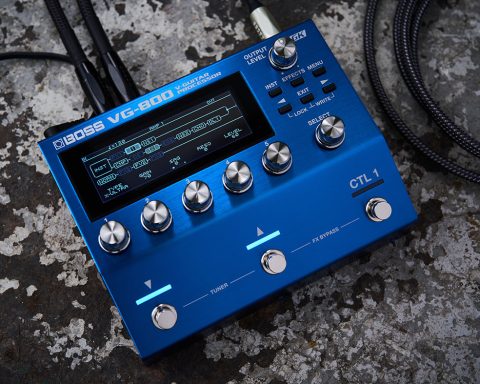
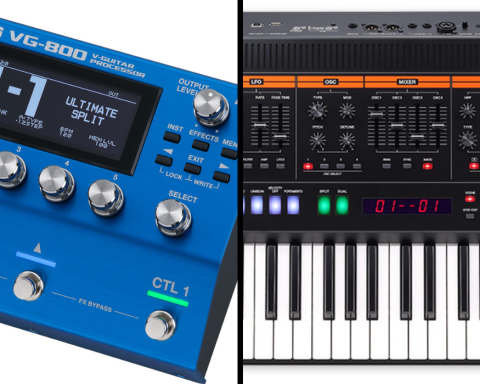
MH: We eventually moved into using all the MIDI and GK stuff. We don’t have a keyboard player in the band, but John is an amazing keyboard player, so we needed a way to recreate some of those parts live. Being able to do MIDI with the guitar through the GK system opened up a lot of possibilities for us.
DG: It ended up contributing to the birth of “Set Fire to the Hive” as well. Around the same time we were jamming ideas for “All I Know,” Mark was triggering all these different sounds from the guitar, including police sirens and riot-type effects.
It started as this playful jam that we called “Disco Massacre.” Mark had this disco beat going and we were just messing around with sounds. Then it gradually became darker and more serious. We started pulling sections out of it, a title emerged, new riffs appeared, and eventually it became “Set Fire to the Hive.” The GK pickup was there right at the beginning of that process.
MH: It started as complete insanity and turned into something else.
Was there a moment when the technology stopped being a way to recreate sounds and became a creative tool in its own right?
MH: Definitely. At first it was about solving practical problems, but once you get into that MIDI world you’ve suddenly got so many more tools at your disposal.
Back then we were even launching things in Ableton from the guitar. That kind of thing feels more common now, but when we started experimenting with it, it wasn’t something many people were doing.
The biggest thing for me was being able to create sounds that you simply couldn’t make with a traditional guitar setup. That’s what made it exciting. It wasn’t just about reproducing parts. It was about finding entirely new sounds and seeing where they could take a song.
Finding New Paths
Experimentation has always felt like a defining part of the Karnivool sound. How much of your songwriting comes from deliberately chasing unfamiliar sounds and ideas?
DG: A lot of it comes from just playing around with things. That’s always been part of the process. A lot of the tunings we’ve used over the years came from experimentation rather than having a specific plan.
In the early days, I came up with what we called “Karnivool standard tuning.” The top three strings stayed in standard tuning, while the lower strings were tuned down to create this sort of drop-B setup. I wanted the low power-chord thing, but I didn’t want to completely rethink the rest of the guitar. It just made sense at the time.
Over the years there have been all sorts of different tunings. Some have ended up on records and some are still attached to ideas that are sitting there waiting to become something. It’s always been about seeing what happens when you approach the instrument from a slightly different angle.
MH: That’s always been part of what we do. Sometimes the sound comes first and sometimes the idea comes first. It can work both ways.
"When you change the instrument, even slightly, it changes the way you interact with it. Sometimes that's all you need to find a new idea."
Mark Hosking
Do alternate tunings change the way you write?
DG: Absolutely. Some tunings immediately suggest different chord shapes or different ways of moving around the instrument. They can take you somewhere you wouldn’t normally go.
On Asymmetry I was experimenting with a lot more dissonance and some stranger intervals on the lower strings. That naturally led to different ideas because the guitar responded differently.
The funny thing is that after spending so much time in alternate tunings, standard tuning now feels like the most alternate tuning of all. I’ve spent so long outside of it that going back can feel unfamiliar.
MH: That’s probably the biggest thing. When you change the instrument, even slightly, it changes the way you interact with it. Sometimes that’s all you need to find a new idea.
Essential Ingredients
Are there any BOSS pedals that have remained constants in your rigs over the years?
DG: For me, it’s always the delays. The DD-20 is the one pedal I’d need for a Karnivool set. There was a point where I knew I could get through an entire set with just that pedal if I had to.
I’ve got a few mainstays on the board, but the DD-20 is probably the biggest one. The Modulate setting in particular has been a key ingredient from Sound Awake onwards. It thickens things up, adds texture, and opens up as it goes on. You can hear it all over songs like “Simple Boy.”
MH: For me it’s the DM-2. I’ve used that a lot over the years. It’s great for all that quick, on-the-fly expressive stuff.
And honestly, the tuner as well. Nobody ever talks about it, but I still love the tuner.
What is it about those particular pedals that has kept them on your boards for so long?
DG: Part of it is familiarity. They’re sounds that have become part of the band’s DNA over the years.
But it’s also reliability. The DD-20 has always done exactly what I need it to do, and it’s become one of those pieces of gear that I instinctively reach for.
MH: That’s the thing with BOSS gear. It just lasts. You put it on a pedalboard, take it on tour, and it keeps doing its job.
DG: The GT-3 is a good example of that. Mine is still going. It’s incredibly well made. Those units are built to last.
"There are certain pieces of gear that become part of the way you play, and BOSS has always had products that stick around because they continue to do their job."
Drew Goddard
BOSS has existed through almost every era of modern guitar music. What does the brand represent to you?
DG: Longevity. Not just the company itself, but the pedals as well. You look at something like the DD-20 and it’s still got a place in my rig. It’s still sitting there on stage after all these years. That’s become a comfort for me.
There are certain pieces of gear that become part of the way you play, and BOSS has always had products that stick around because they continue to do their job.
MH: For me, it’s two ends of the spectrum: reliability and experimentation.
BOSS pedals were some of the first tools that allowed me to explore different sounds and different ideas. Before software and DAWs became what they are now, that was how I experimented. I’d save up, buy a new pedal, and suddenly there was a whole new set of possibilities to explore.
At the same time, they’re incredibly reliable. That’s a big part of why they’ve always remained in my setup.
After everything you’ve explored over the years, what still excites you about the electric guitar today?
MH: The moving of air. The vibration of strings that becomes the movement of air. That’s still the best thing about it.
The fact that it’s an analog instrument and still fundamentally makes the same sound it made 50, 60, or 70 years ago is incredible. There’s just something special about plugging in a guitar, hitting a string and feeling that sound move through the room.