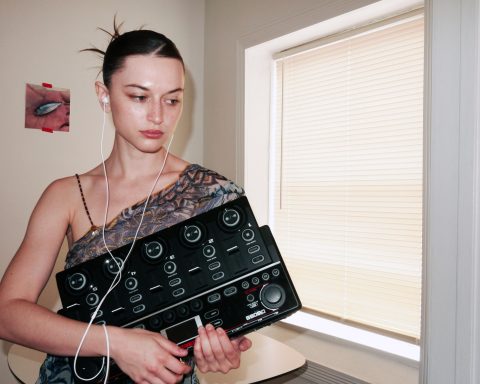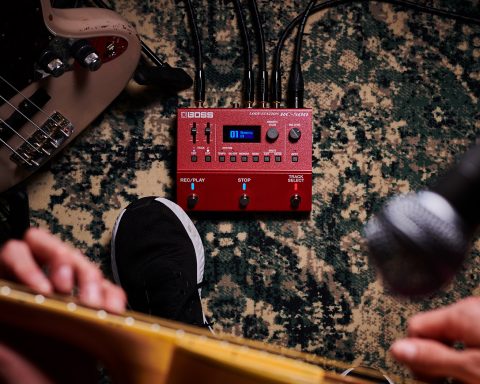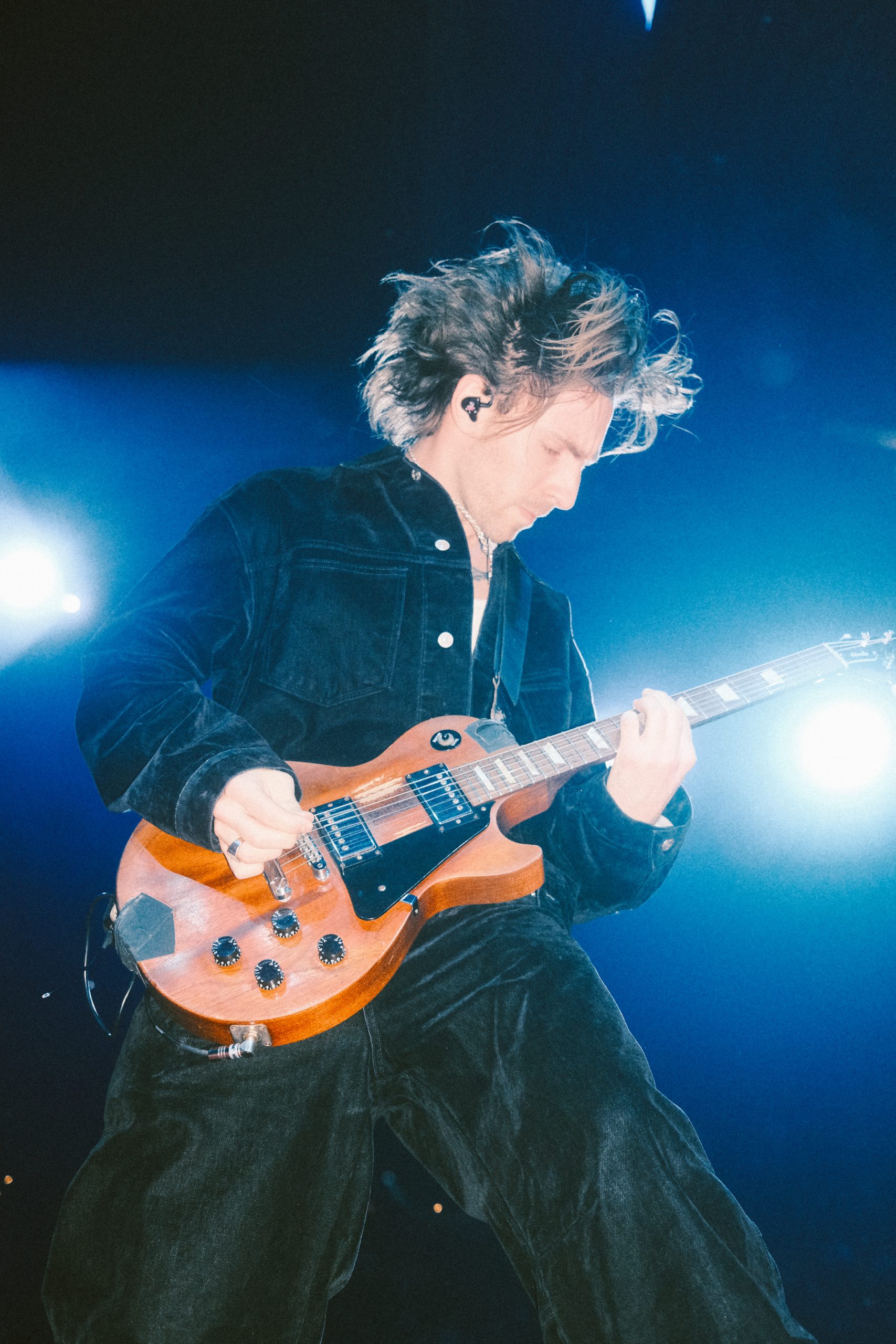


No Love For Middle Child has penned and produced a vast catalog of hip-hop/alt-rock/electronic music with over 200 titles to his name on Spotify for artists like Jelly Roll, Zero 9:36, Wiz Khalifa, SIIICKBRAIN, and mgk—in addition to his solo work. Most recently, he’s been touring with mgk on the Lost Americana Tour, performing the album he helped write and produce. Adding an unexpected twist to the live show, he takes the stage with an electric cello and BOSS RC-505mkII Loop Station for the duo’s reimagined version of The Killers’ “Mr. Brightside.”
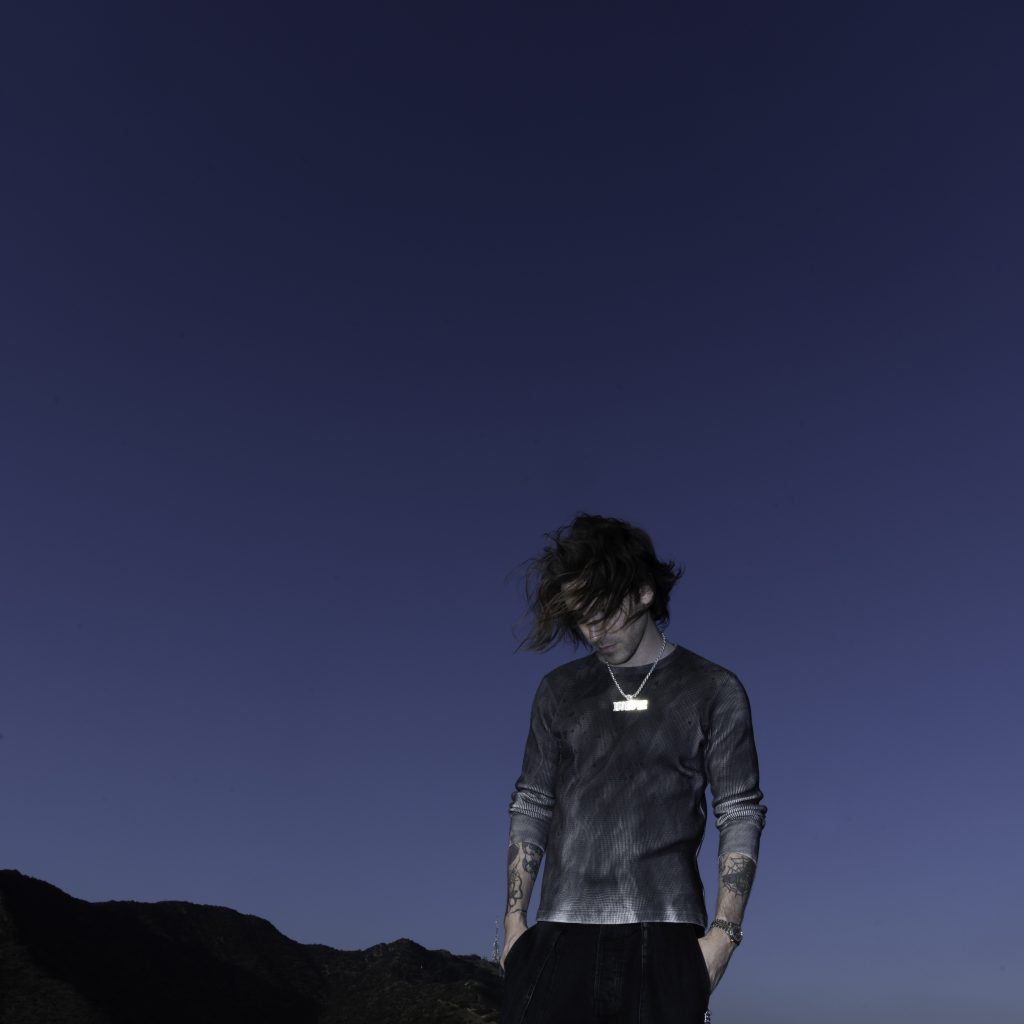
His classical background helps inform his production and performances. He builds soundscapes from a combination of unexpected sources, BOSS pedals, and his trusty Loop Station. From his home studio in Los Angeles, with his pup Roo at his side, No Love sat down with us to discuss how his orchestral background influences his songwriting and productions, how he uses his Loop Station and favorite BOSS pedals, and his hopes for the emerging artists he mentors.
Playing the Classics
You’re a classically trained cellist in addition to playing guitar, piano, and drums. How has that musical foundation shaped your approach to songwriting and production?
I learned theory first while playing piano. That really informed how I write songs with chords and harmony.
My orchestral background also influenced how I think about arrangement and inversions. It taught me to view each individual part as part of a whole, instead of thinking, “How can this instrument do the most here?” It’s more like everything acts as one.
Who are some of your main influences?
I’d say The Strokes, The 1975, Lil Wayne, Bon Iver, and Prince.
"Working on 'Lost Americana' was one of my favorite creative experiences to reflect on, and I'm grateful for it."
Lost Americana
You were a major part of writing and producing mgk’s Lost Americana album. What did that creative process look like?
It was really dope because mgk is really talented in so many areas, whether it’s writing, arranging, producing, or even the overall theme, look, and sound of a project. Working with an artist who was so seasoned in all of that was dope and taught me a lot.
I was able to go to Conway Recording Studios every day and work on the album with a group of people I respect.
I’d never done that before. I felt like I was transported back in time to the rock documentaries you’ve seen. It made everything feel larger than life.
Making a record at home can be and often is fire, but it’s a way different process. Working on Lost Americana was one of my favorite creative experiences to reflect on, and I’m grateful for it.
You guys have been performing a cover of “Mr. Brightside” on tour where you’re playing electric cello and using the RC-505mklII. How does that contribute to the performance?
The short backstory is that I have my solo project, No Love For The Middle Child, and we played a show in front of maybe 60 or 70 people. We did a cover of that song with the Loop Station and a cello. mgk came to the show, saw it, and asked, “Are you down to do it during our set when we go on tour?”
I was like, “Well, yeah, of course,” not really believing it was actually going to happen. Then I showed up, and it was on the set list. It was awesome. It was a good layup, too, because everybody’s there for mgk, and then they’re like, “Who is this random guy with a loop pedal and a cello?” But it’s a song they already know, so it helped. I think it was impactful during the set because “Mr. Brightside” is such a great song, and we were able to do our own take on it. I’m so grateful for mgk and that opportunity.
"I looked up the best multi-channel looper, and it was the RC-505mkII Loop Station. I instantly bought it."
Loops and Layers
How did you discover the Loop Station?
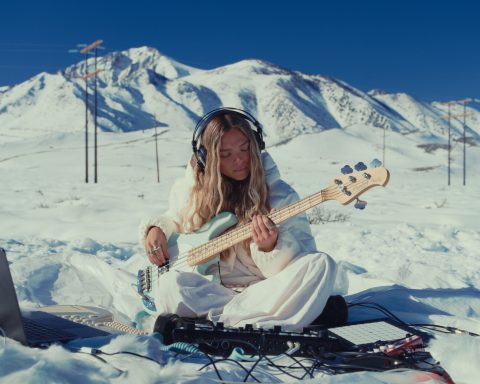
I’m pretty sure just through Google. I’d always used two different loop pedals at once. I inherited a BOSS RC-20. I blew it out once before a performance. I plugged in the wrong power supply and fried it right before a set years ago. I was like, “Man, well, that sucks.”
At the time, I was also using another looper, so my feet had to be perfectly on beat or the whole loop would get messed up. I looked up the best multi-channel looper, and it was the RC-505mkII Loop Station. I instantly bought it.
From using a bow on a guitar to using your cello as a percussion instrument, you think outside the box when you’re building loops. What are some of your favorite unexpected sounds you’ve used?
Definitely bowing the guitar—it creates a soundscape. The Velvet Underground would sustain a note through an entire song. I love that. Depending on the vibe, it makes you feel like you’re in a trance. If you bow the guitar, it creates this through-line of one note or a chord that you can build off of. It gives the song its own space instead of just living in its own vortex. That’s probably my favorite.
You also run several BOSS pedals through your Loop Station. What are you using?
I’m using the DD-6 Digital Delay and the Chorus Ensemble. The Chorus Ensemble is my favorite by far.
How does the Chorus shape or enhance your overall sound?
It sounds so warm. As soon as you throw that Chorus pedal on, it takes your tone from “This is a guitar” to “What is this?” It’s so cool. It reminds me of a lot of Bon Iver-type sounds, which I love.
You’ve also said you use a DD-8 in every show and in the studio. What makes that an essential part of your sound?
It’s not just an echo pedal. You can play that pedal like its own instrument. You can set the delays, but then there’s always a moment at the end of a song when you start messing with the note values and the feedback, and you can create your own rhythm. It starts sounding like machinery.
"It's really important to only pick elements that matter when you're looping."
How does that complement the Loop Station when you’re layering parts?
It creates texture. It adds layers that feel super original while actually doing less.
I think it’s really important to only pick elements that matter when you’re looping, both to keep someone’s attention and because you’re not sitting at a computer EQ’ing everything. You have to keep a mental map of what’s happening and make sure it all feels good together.
Using the Chorus gives you a great tone that doesn’t step on the toes of what the delay or cello is doing. Everything works well together.
Do you have any advice for musicians interested in trying a Loop Station?
The best way to learn is to just dive in. I didn’t read the manual or anything like that. I think getting your hands dirty, trying things out, and figuring out what the controls do before you start looking everything up teaches you a lot.
When I started making beats, I didn’t know what a filter was. I was literally Googling, “What’s the sound that sounds like the room next door?” Of course, nothing came up. I had to spend time learning the software and vocabulary.
But, I learned so much about the functionality just by putting in hours, messing around, making mistakes, and getting the timing wrong. Put in some time, get to know it, and then read the manual. That’s how I learn. It can look a little complicated at first because it’s a whole station instead of a single pedal, but that’s what I’d recommend.
Gearing Up
You have a new project in the works. What can you tell us about it?
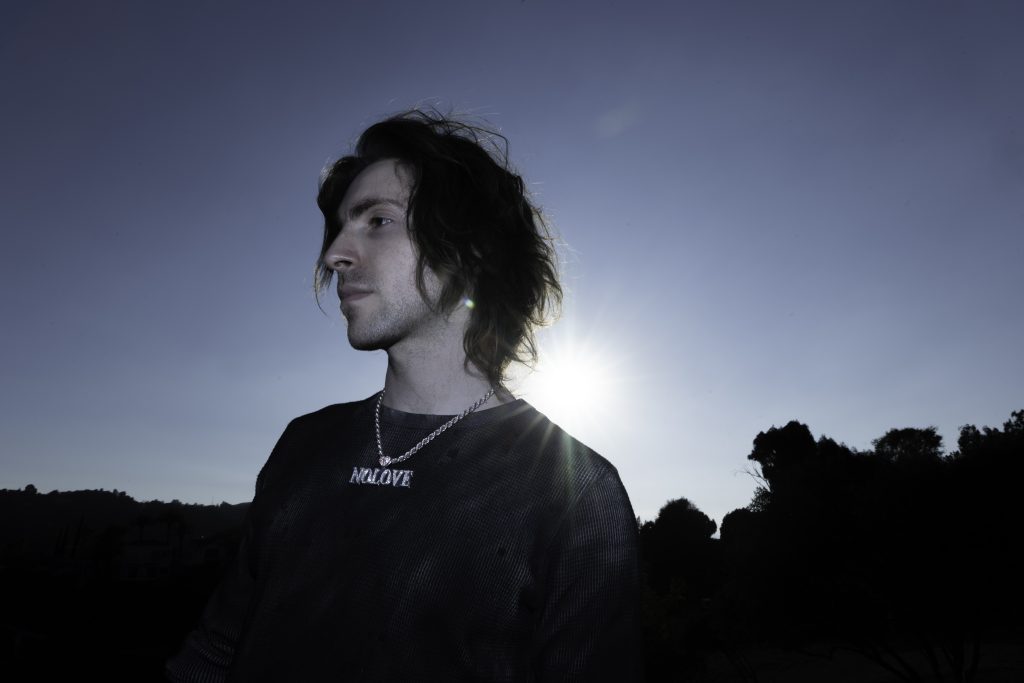
It’s called RYERS AVE. There are a lot of loops and pedals on it. It’s a very personal project about my roots, so I’m excited about it. I’ve had all this gear for so long without really using it the way I did when I was a kid, just messing around in my house. This feels like a return to what made me fall in love with music: nerding out over equipment.
How do you approach writing for No Love versus writing or producing for another artist?
It varies. If I’m writing for No Love, it’s going to be very personal.
If it feels like someone else could do the song, I’d probably give it to somebody else. I think it’s a gift in my life to work with other artists who trust me and want me involved.
When I remove myself from that and focus on my own artist project, I want it to feel deeply personal. It’s a chance for people to get to know the person behind the songs I’ve made for other people.
That’s the main difference. It also might take me longer. I’m down to write a song for myself and spend three years making it. If I’m working with someone else, I usually want the song to happen pretty instantly.
The Warped Tour
You performed at Warped Tour Long Beach with Gym Class Heroes. How did that collaboration come about?
Travie and I started linking up in the studio maybe three years ago, producing together and becoming friends. He’s always been super supportive of me as an artist, too. My roommate, Chophead, who’s in my band, DJs for Travie when he’s doing gigs that don’t require the full band. It’s kind of a family thing.
He came over to the studio one day while we were working on music and said, “Oh, I’m doing Warped Tour. You want to come out and sing ‘Stereo Hearts’?” I was like, “Yeah, of course. Oh my God.” He’s a real one for that. He’s a living legend, so it was really cool.
Are you working on any upcoming Gym Class Heroes material?
We have a bunch of songs. I’m curious to see what makes the project, but there are definitely a few we’re really stoked about.
Is waiting to see what makes the cut exciting or nerve-racking?
Ooh, that’s the hard part. After producing for so many years, I honestly try not to think about it anymore because you’ll drive yourself crazy. I remember being a younger producer with less going on and thinking, “This could be the thing that gets me to the next thing.”
You spend so much time stressing, and ultimately, even if the song comes out, the outcome is never exactly what you imagined. As soon as it’s out, you’re just like, “Well, it’s out now. Hell yeah.” You never really get that perfect feeling of, “Yes, I’ve made it.” So, I try not to think about it.
Inherited Samples
You’ve also mentioned using the Roland SPD-SX. How are you using that?
Traditionally, I used it a lot for playback, programming it to start and stop tracks. But it also has a lot of built-in sounds, so I’ll use it to play drums live. Sometimes, with the loop pedal, I’ll use it as the drum set because it’s more interesting to watch than somebody hitting keys.
Are you using the internal sounds or loading your own samples?
What’s crazy is that I bought it used, and the previous owner had already loaded a bunch of sounds into it. So, the answer is kind of neither.
That’s handy. Do you know who you got it from?
No, just some guy in Canada. It came that way. They were using it for playback, and they’d gotten it from someone else who had used it before them. This is the traveling SPD pad right here. I think the journey ends with me. If I ever decide I want a different pad, I’ll have to load some sounds onto it before it continues its travels.
"Music is art, and doing music for a living shouldn’t feel like work."
Elevating Talent
You’ve built a successful career as both a writer and producer, and now you’re helping nurture new talent through All Time Publishing. What do you hope emerging artists take away from your guidance and mentorship?
I hope to inspire emerging artists/producers/writers to remain pure. Music is art, and doing music for a living shouldn’t feel like work. Make music with friends, hold them up when you’re feeling down, and they will do the same for you. I feel like I learned this the hard way, but don’t burn yourself out doing things you’re not inspired by. My goal is to elevate everyone around me, and whether I’m a small part of their journey or not, I know I did right by them as a mentor, friend, and creative.