Behind the Board: Dean Rowbotham With Good Charlotte, Bring Me the Horizon, and The Prodigy
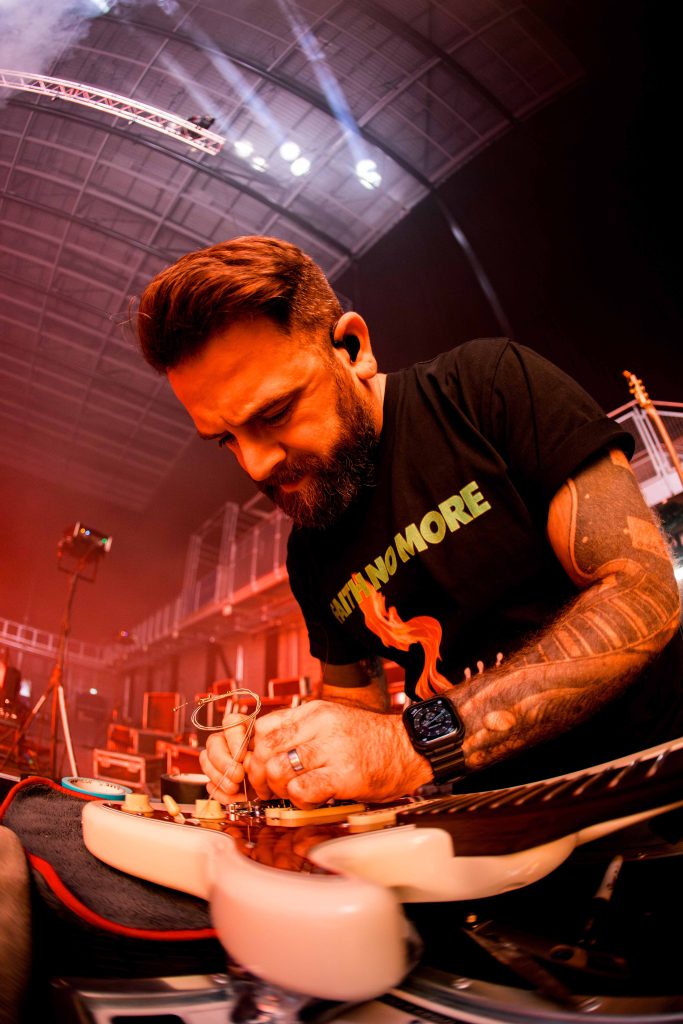
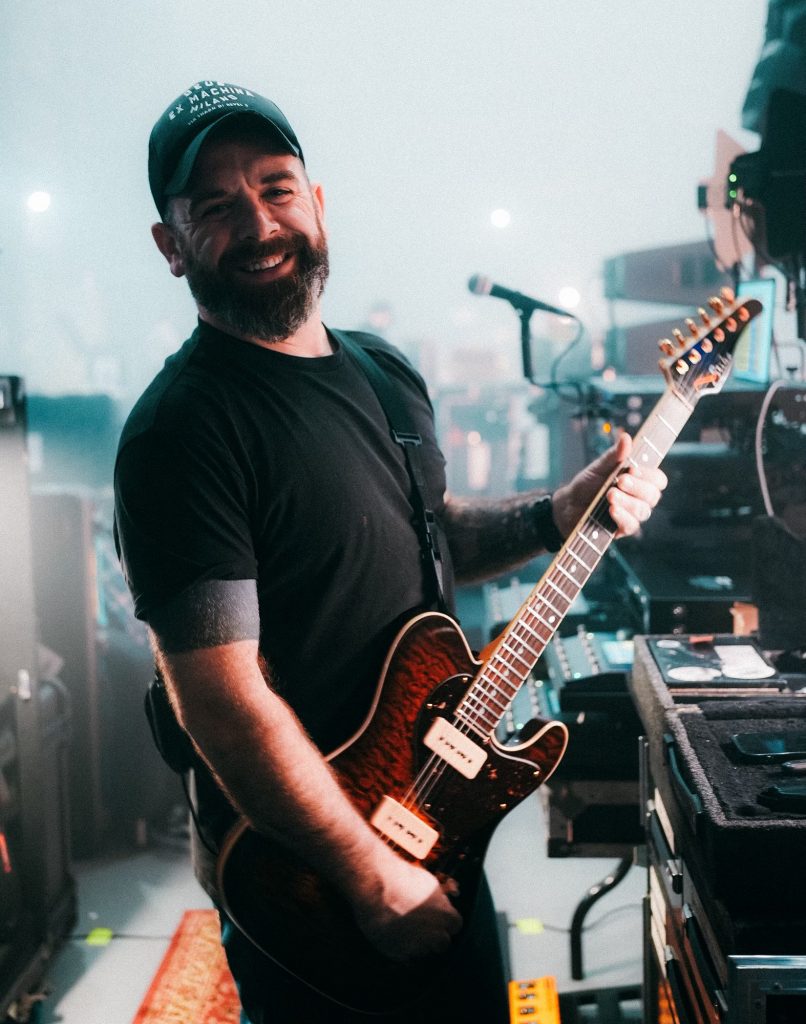
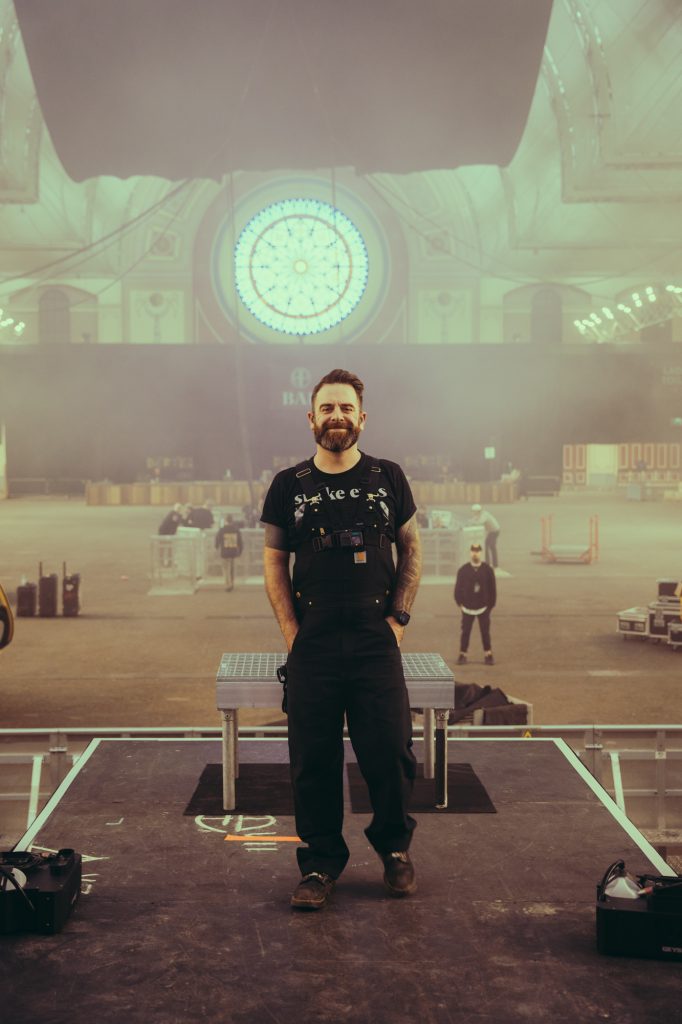
From Sheffield shops to world tours, DR Guitars founder and master rig builder for the pros, Dean Rowbotham, retraces globetrotting steps. Header photo by Rod Brakes
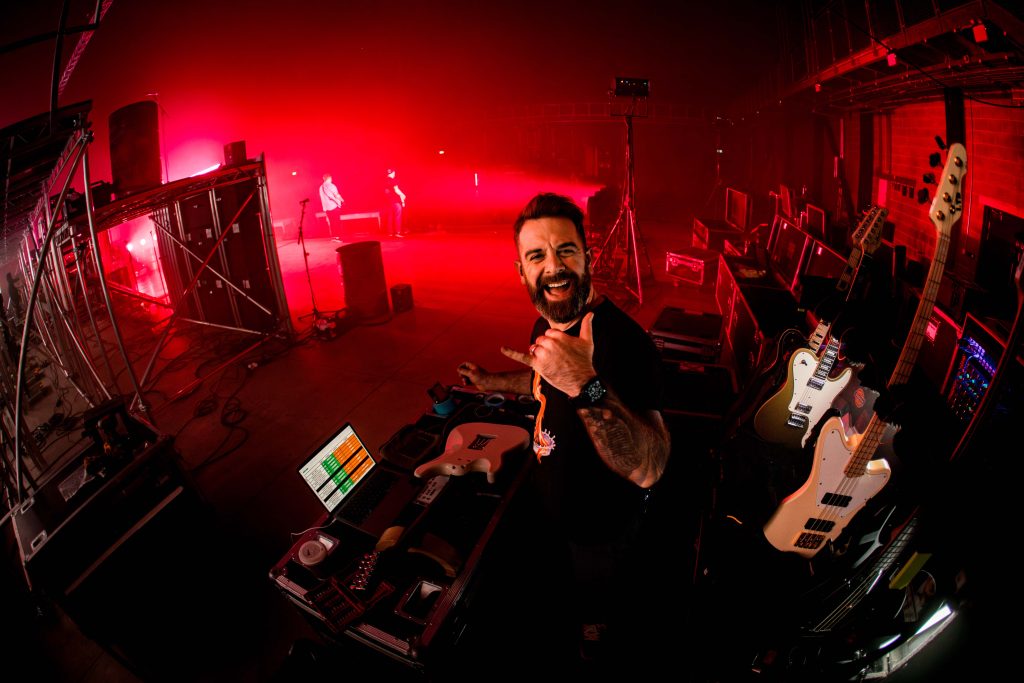
Guitar techs like Dean Rowbotham are rare. His technical mastery and exacting standards have established him as a world-class expert. Through his company, DR Guitars, he designs top-tier rigs and pedalboards, earning the trust of artists who demand truly pro-grade results. Over the last two decades, he’s built a solid reputation for precision and reliability, working on tour with acts ranging from Good Charlotte, Bring Me the Horizon, Architects, and Foals to The 1975, Sam Smith, and The Prodigy.
From Store to Tour
“I started out in 2004, making cups of tea for customers in a guitar shop in Sheffield called Academy of Sound,” Rowbotham begins. “The shop was wicked. It had a family-style vibe about it, and we always had lots of interesting second-hand stuff.
“This is where I first met the Bring Me the Horizon guys. They used to come in and buy bits of gear every now and then. I think I met Vegan (Matt Kean) first. He came in with his dad and bought some bass gear.”
Among the shop regulars were Lee Malia and Curtis Ward, who would also go on to form Bring Me the Horizon. “Lee and Curtis used to come in with their parents, and they would buy or trade bits of kit,” Rowbotham reminisces. “That’s how I first met them.”
In addition to providing musicians with one-to-one assistance in a music shop early on, Rowbotham gained hands-on experience with legendary British amp maker Matamp.
While retail work deepened his knowledge of guitar gear, building amplifier cabinets sharpened his practical expertise—a solid foundation for a career as a tech on both fronts.
Rowbotham’s first chance to jump on a tour came in 2005 with Planes Mistaken for Stars.
Photo courtesy of DR Guitars.
“I was 21 and spent a month driving them around the UK and Europe,” he says. “It was all very DIY, and I was sleeping in the van or on people’s floors. There was only enough money to get to the next show, but I loved it. When I got back from that trip, I bought a splitter van and spent the next two years driving bands around Europe.”
At the same time, Rowbotham played in his own band, The Mirimar Disaster, balancing live gigs with touring work. But that all changed abruptly when the band decided to break up.
“It was all very DIY, and I was sleeping in the van or on people’s floors. There was only enough money to get to the next show, but I loved it.”
Photo courtesy of DR Guitars.
“About half an hour after my band decided to split up, Bring Me the Horizon’s tour manager at the time, Sheep, called me and asked if I wanted to go to America for six weeks to work as a guitar tech. I said yes, then called the only guitar tech I knew at the time, who worked for Mogwai, and asked, ‘What does a guitar tech do?’
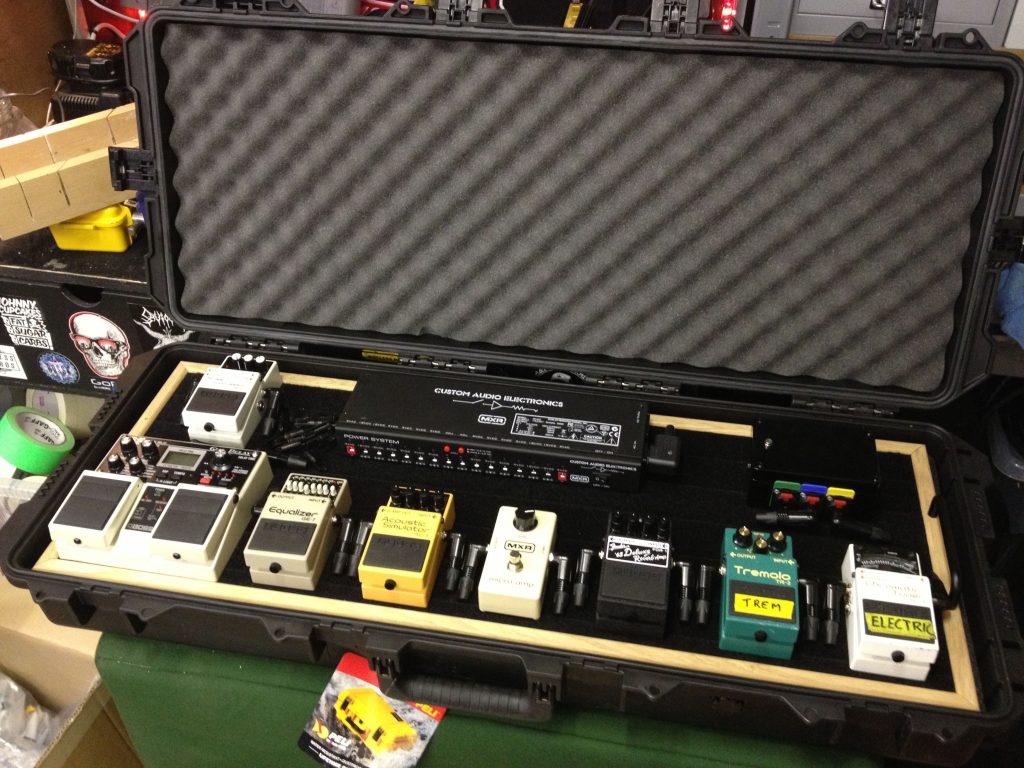
“He wrote me a list of all the tools I needed to buy. I bought a Peli case and some tools, and a week later, I flew to America with Bring Me the Horizon.”
“I was lucky because I started out as a guitar tech traveling on a tour bus, which is unusual.”
New Horizons
That first US leg was Rowbotham’s introduction to the rigors of international touring. “I was lucky because I started out as a guitar tech traveling on a tour bus, which is unusual,” he notes.
“Bring Me the Horizon’s second album, Suicide Season, had just come out, and they were doing really well in the States. The shows were always packed and a lot of fun.”
Photo courtesy of DR Guitars.
Rowbotham worked with Bring Me the Horizon on and off until 2016, often overlapping with other bands. “Architects toured with Bring Me the Horizon and had a couple of headline tours when Bring Me were not touring,” he recalls.
“I bounced between those two bands for the first few years. After Bring Me the Horizon, I started working with Foals. For the next five or six years after that, I worked with tons of different bands.”
Bring Me the BOSS
Malia’s pedalboard exemplifies Rowbotham’s philosophy: precise, versatile, and reliable. Remembering a pedalboard he put together around 2014, he brings to mind some key BOSS stompboxes.
“Lee Malia used the RV-5 Digital Reverb (in Modulate mode), the DD-20 Giga Delay, and the DD-7 and DD-3 Digital Delays.”
“Lee used the RV-5 Digital Reverb (in Modulate mode), the DD-20 Giga Delay, and the DD-7 and DD-3 Digital Delays. I think he had a DD-7 with a tap switch, set to Analog mode.
“There was also an NS-2 Noise Suppressor. Virtually every metal band I saw live had an NS-2, especially in America. American bands always had them. I think we might have also had the OC-3 Super Octave in there somewhere to thicken things up.
Photo courtesy of DR Guitars.
Photo courtesy of DR Guitars.
“To begin with, Lee’s pedals were all hooked up in series and going into the front of the amp. For the next build, we put all the pedals on trays and used MIDI controllers.
“That was great when we were in the UK or the USA, but when we flew anywhere else, it was a nightmare. Back then, the logistics were a lot more difficult, and we would have to de-rig everything and re-rig it so we could check the cases onto a plane.
“Virtually every metal band I saw live had an NS-2 Noise Suppressor.”
“We tried amp modelling (with the first versions of Kemper), but Lee much preferred using real amps, so we soon returned to using a pedalboard. Lee’s new rig, built by the fabulous Joey Black, is much slicker than anything I ever did for him.
“To be honest, during those first few years, I was figuring out how all the gear worked. It was a case of just having a go until I got it right.”
DR Guitars
Rowbotham’s rare experience and technical know-how led to the formation of his first company, Bedford Guitars, in 2012. Initially focused on repairs, it quickly expanded to include full rig and pedalboard services.
“As the business grew, more bands contacted me,” he reflects. “In 2016, I started building rigs, pedalboards, and cables as a service.”
Photo courtesy of DR Guitars.
Rowbotham’s new company, DR Guitars, is built on this foundation. Growing from a repair workshop to a full-service pro-rig supplier, he has carved out a niche with products designed for serious touring musicians.
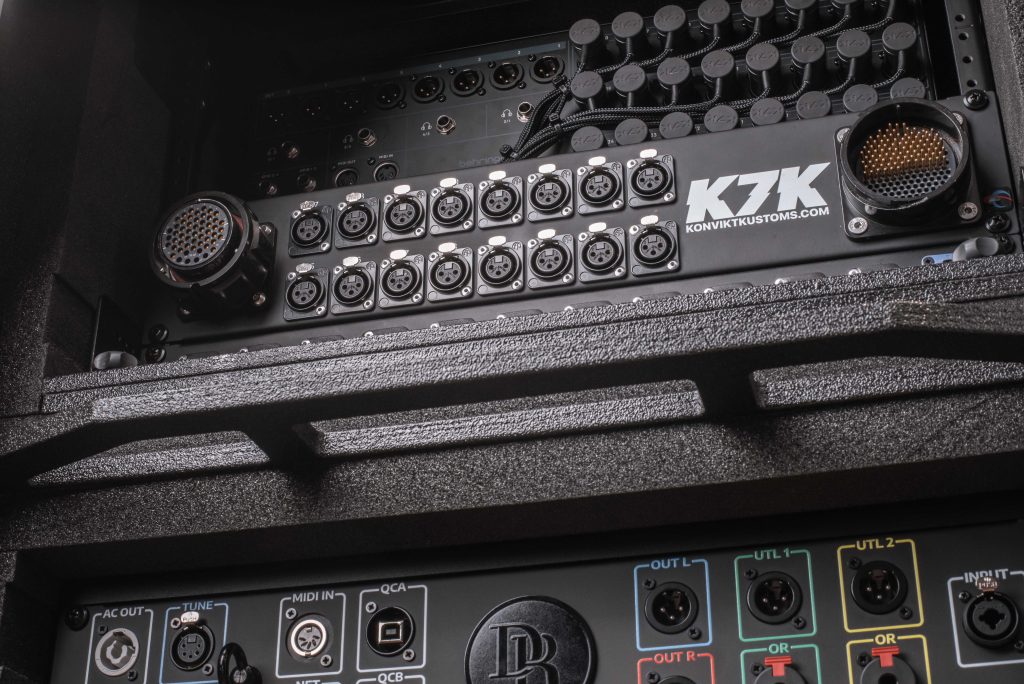
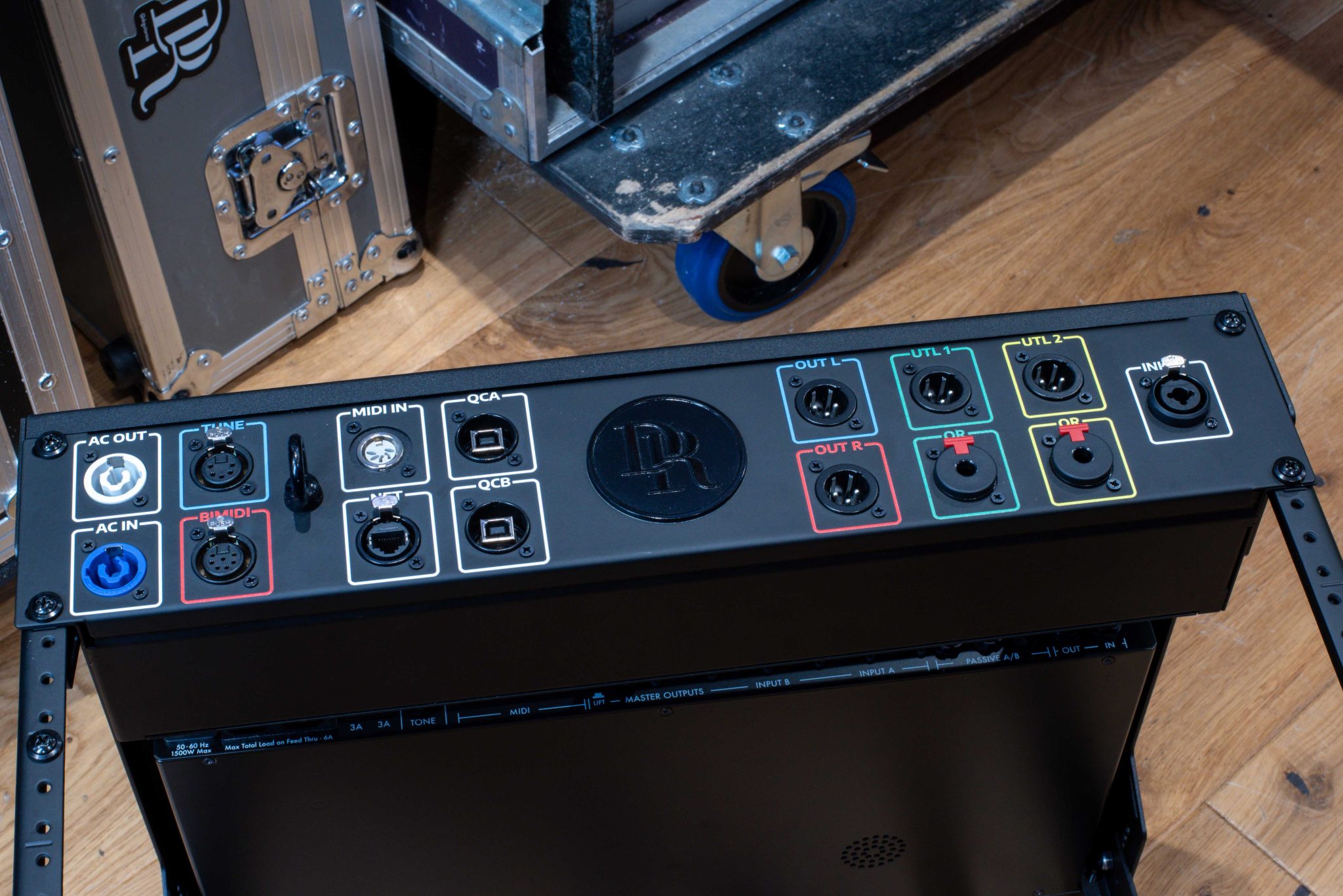
“At DR Guitars, we do fly racks as individual products that come in a self-assembly box,” he tells us. “We do a 6U fly rack, and there’s a 3U for playback rigs. You can stack them all nicely, and they’re really stable. You can purchase fly racks individually or with a custom foam-lined Peli case.”
“In 2016, I started building rigs, pedalboards, and cables as a service.”
Photo by Rod Brakes.
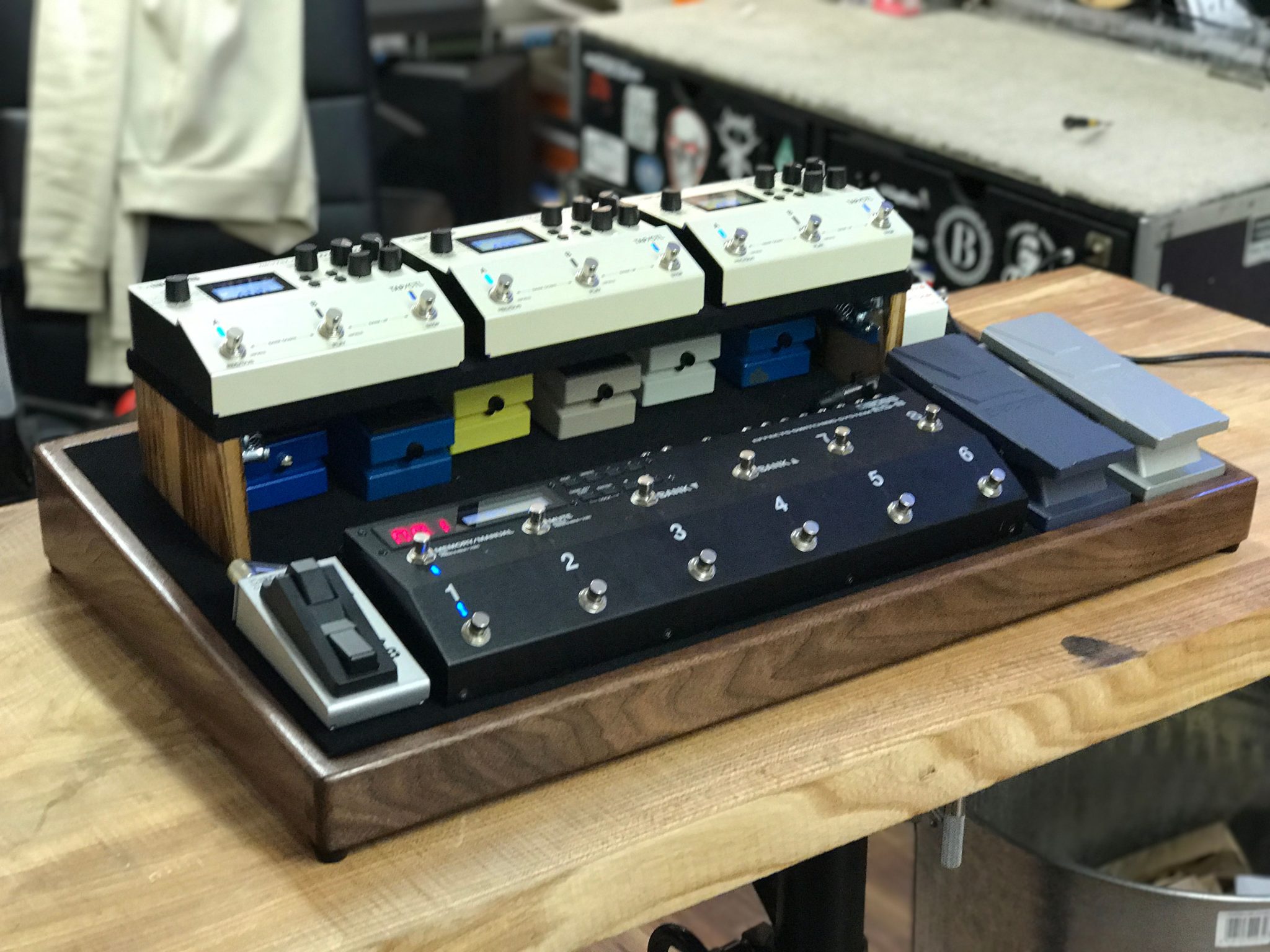
Pedalboards form another cornerstone of DR Guitars. Rowbotham prefers pre-built boards that let players finish the setup themselves. “We don’t build pedalboards for customers in the sense of wiring up all the individual pedals; I’d rather supply them with everything they need to finish the job themselves.
“A lot of guitar players just want someone to tell them what they need, so they can focus on playing their instrument and performing. DR Guitars is more about working with artists and other companies like BOSS and aligning ourselves with the best firms out there.”
Among his favorite BOSS products, Rowbotham highlights the ES-8 and ES-5 Effects Switching Systems, as well as the EV-1-W Wireless MIDI Expression Pedal, which he calls “a game-changer.”
“The BOSS EV-1-W is a game-changer.”
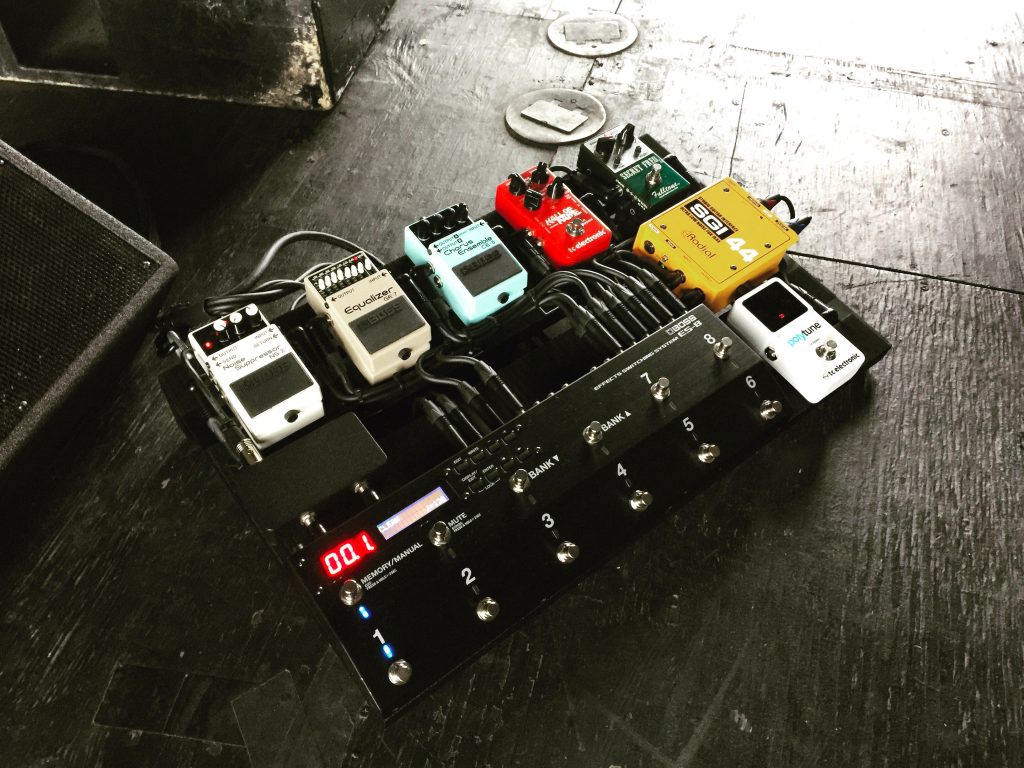
This pedalboard, built by Rowbotham for Good Charlotte guitarist/vocalist Benji Madden, features the BOSS ES-8. Photo courtesy of DR Guitars.
Good Charlotte
Good Charlotte was another key partnership of Rowbotham’s that marked a turning point in his career. Working with guitarist Benji Madden, he further refined his approach to building guitar rigs that deliver punch and clarity for live performances, while maintaining consistency across any venue.
“I’ve been working with Benji for nearly ten years now,” Rowbotham states. “I did a tour with them in Europe in 2016, and we’ve worked together ever since. In 2017, Benji flew me out to his studio, where I built him a new touring guitar rig. There was a lot of BOSS gear on that one.
Photo courtesy of DR Guitars.
“I also worked on some guitars in the studio. Benji is a great guitar player and is really focused on the big picture. He just wants the show to be great for the fans and for the crew to be on their A game. They really look after the crew and make you feel very welcome.”
Beyond Good Charlotte, Benji and Joel Madden manage multiple businesses and maintain a relentless pace. The twins’ management company, MDDN, handles bands, producers, and actors.
Meanwhile, their online streaming platform, Veeps, has gone from strength to strength since launching during COVID-19. Watches, clothing, and other ventures also fill their schedule, yet Good Charlotte remains a high-profile band, preferring to play a select handful of major shows each year.
“I’ve been working with Benji Madden for nearly ten years now. I did a tour with Good Charlotte in Europe in 2016, and we’ve worked together ever since.”
Benji Madden’s unflinching support gives Rowbotham space to also focus on his family and business. With that in mind, he’s looking forward to heading out to Australia with Good Charlotte at the end of February 2026 and their headline slot at the UK’s Slam Dunk festival in May 2026.
“My wife and I have just had our first baby, which we’re both incredibly excited about,” Rowbotham shares. “We’ve talked about Slam Dunk being baby’s first show!”
Guitar rig built for The Prodigy by Rowbotham. Photo courtesy of DR Guitars.
The Prodigy
After teaming up with Good Charlotte, Rowbotham’s roster continued to grow with other high-profile acts. He built a “beautiful” guitar rig for The Prodigy after Ben Weinman from The Dillinger Escape Plan had joined the ranks as live guitarist. However, that was the last time he would see it in action.
“When I went back to The Prodigy in 2021, they’d got all the old guitar rigs back,” Rowbotham recollects. “I was getting paranoid, thinking, ‘Did it break, or did they just not like it?’
“The Prodigy are punk. Backline is probably the least important thing on that gig!”
“But that wasn’t the case; apparently, it had been crushed by a forklift and smashed into a thousand pieces. I’m not sure if they made that up or not, but they’re punk, that band. Backline is probably the least important thing on that gig!”
Alongside Bring Me the Horizon, Good Charlotte, The Prodigy, Foals, and Architects, Rowbotham’s major credits include The 1975, Def Leppard, Sam Smith, Dua Lipa, Massive Attack, Royal Blood, and The Who.
Photo by Rod Brakes.
Photo by Rod Brakes.
Three Golden Rules of Gain
Rowbotham’s approach to gain pedals is methodical. “I think the most versatile way is to have a drive for your clean sound and a drive for your heavy sound,” he emphasizes, “but I think there are three main areas to consider.
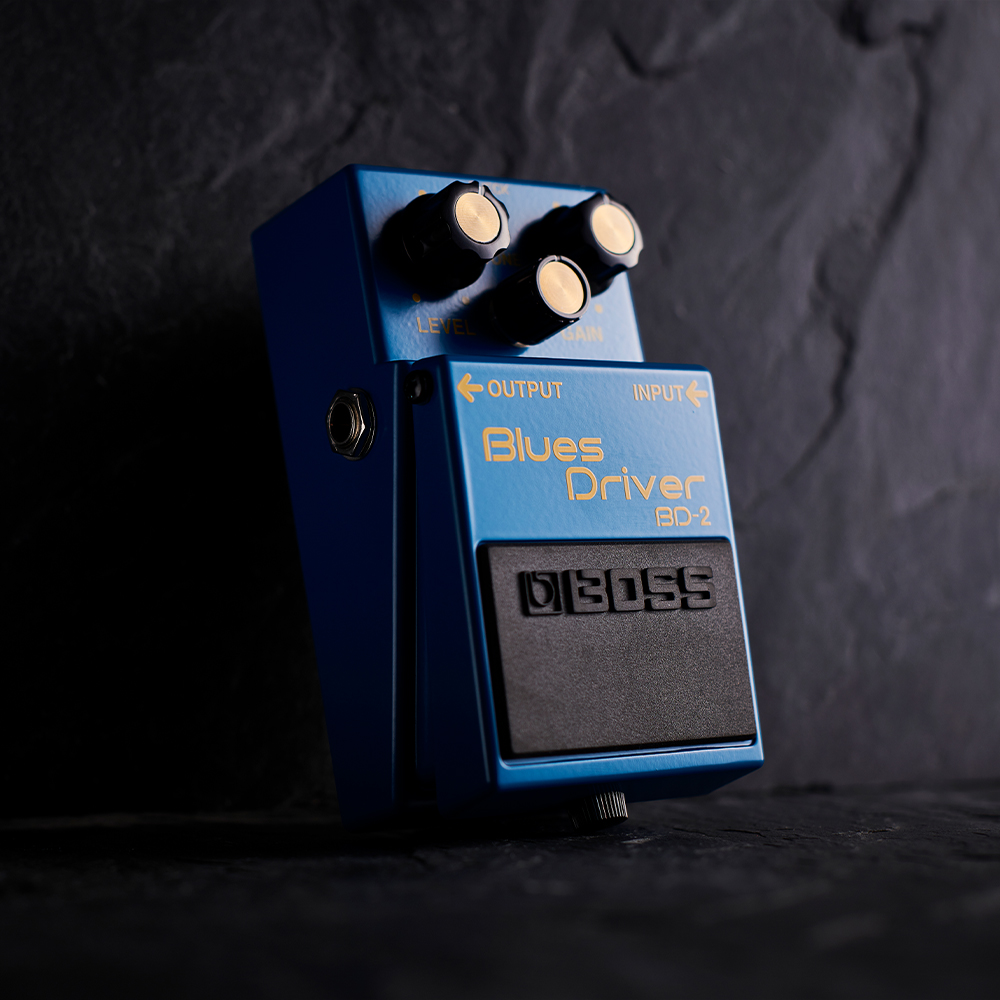
“One is being able to push a clean channel, so it starts to break up—something like a BOSS BD-2 Blues Driver to push the front end and add some grit.
“I like to use gain pedals to complement the sound of the amp rather than change the sound of the amp.”
“The second is more like a slightly driven amp—something in the JCM-800 vein—that really comes alive when you stick an overdrive pedal in front of it.
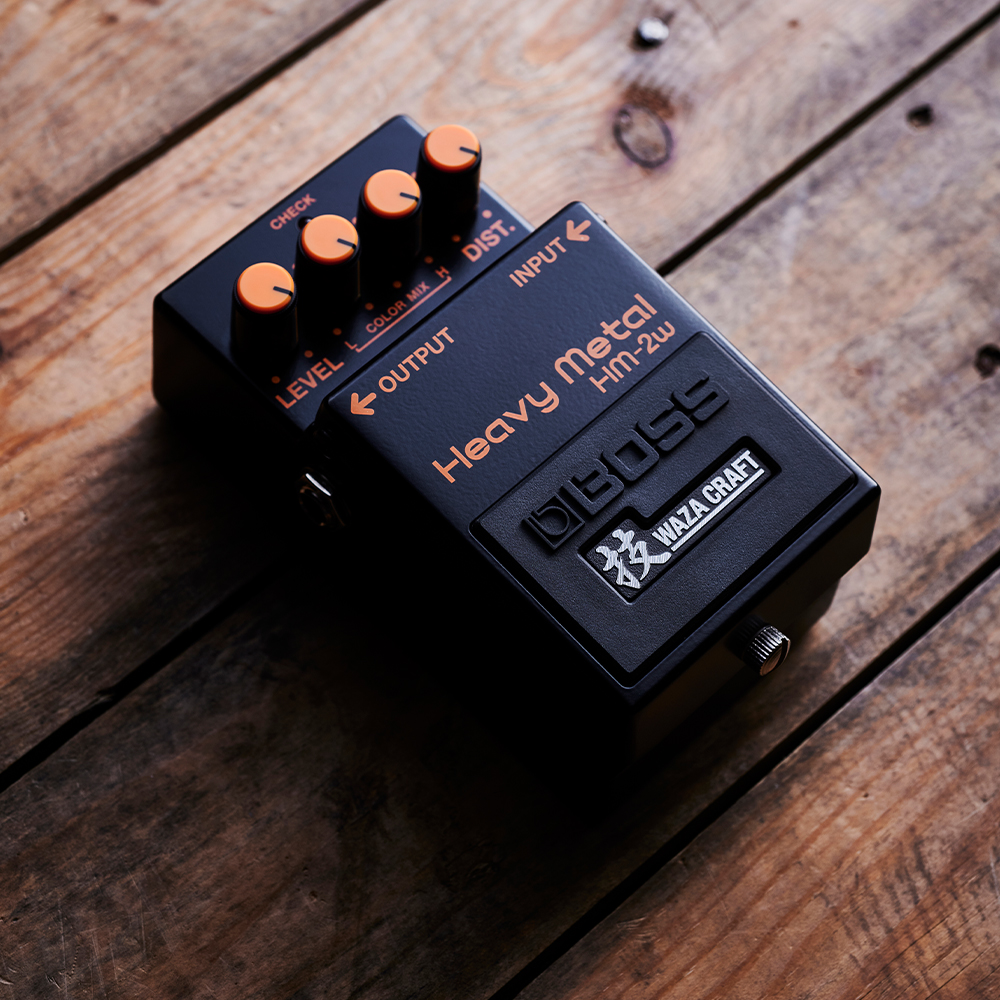
“And the third is tone coloration, where fuzz or something like the BOSS HM-2 Heavy Metal transforms a solid rock tone into a far more aggressive sound.
“So, a clean drive, gain drive, and fuzz drive: that’s how I see it in my head. I know guitar players who get all their distortion just from pedals, but I like to use gain pedals to complement the sound of the amp rather than change the sound of the amp.”
Subtleties of Space
For delays and ambience, Rowbotham favors subtlety. “In a live environment, I would say that less is more, especially when it comes to reverb,” he explains. “But it depends. If you’re a band that’s doing big, clean soundscape stuff, reverb is a huge part of that sound.
“I’m old school in that I’ve always run everything into the front of the amp. It wasn’t until recently, when I started to look more closely at stereo rigs, that I considered running pedals in the effects loop.
“Personally, I don’t see the point of running reverb and delay in the effects loop unless it’s stereo. That’s my personal preference, but everyone has their own style. That’s the cool thing about all this stuff: there are a million different ways to create guitar tones.”
“There are a million different ways to create guitar tones.”
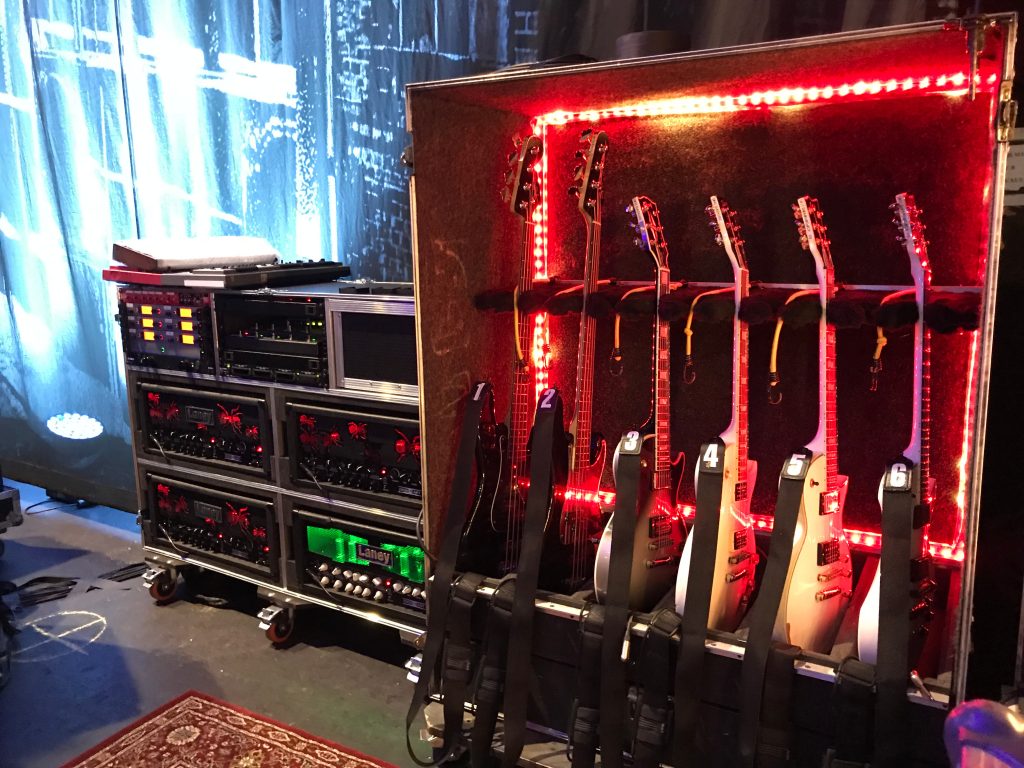
One of Rowbotham's guitar tech workstations pictured on tour with Bring Me the Horizon. Photo courtesy of DR Guitars.
BOSS Favorites
Rowbotham is an unapologetic fan of BOSS. “They’re just solid,” he affirms. “I don’t think I’ve ever had a BOSS pedal break. Genuinely. They’re indestructible and super reliable.”
This tech’s favorites include the DD-3, a classic design which is currently available in the form of the tap-tempo-equipped DD-3T Digital Delay. “It sounds great and does exactly what you need it to,” Rowbotham says.
“I love the RC-series Loop Stations. My dad recently sent me a couple of videos of Loop Station competitions held in Japan. Madness! I also love the RV-5—especially the Modulate mode. It’s lovely. I always had an RV-5 on my pedalboard.”
“I don’t think I’ve ever had a BOSS pedal break. Genuinely. They're indestructible and super reliable.”
Bossk BOSS
For recent tours playing with Bossk, Rowbotham included the DM-101 Delay Machine and PS-3 Digital Pitch Shifter/Delay on his personal pedalboard. “The DM-101 is a cool pedal,” he underscores.
“It looks sick, for one, and it sounds awesome. I like the fact that it has MIDI-programmable memory banks. You’ve got one to four on the panel, but you can access loads more via MIDI, which is very handy.”
“The DM-101 is a cool pedal. It looks sick, for one, and it sounds awesome.”
And when it comes to a three-pedal Desert Island pedalboard, Rowbotham doesn’t hesitate. “The BD-2 Blues Driver has to go on,” he enthuses, “because you can use it in so many ways—from a clean boost to a low-gain drive. You can get loads of tones out of the BD-2.
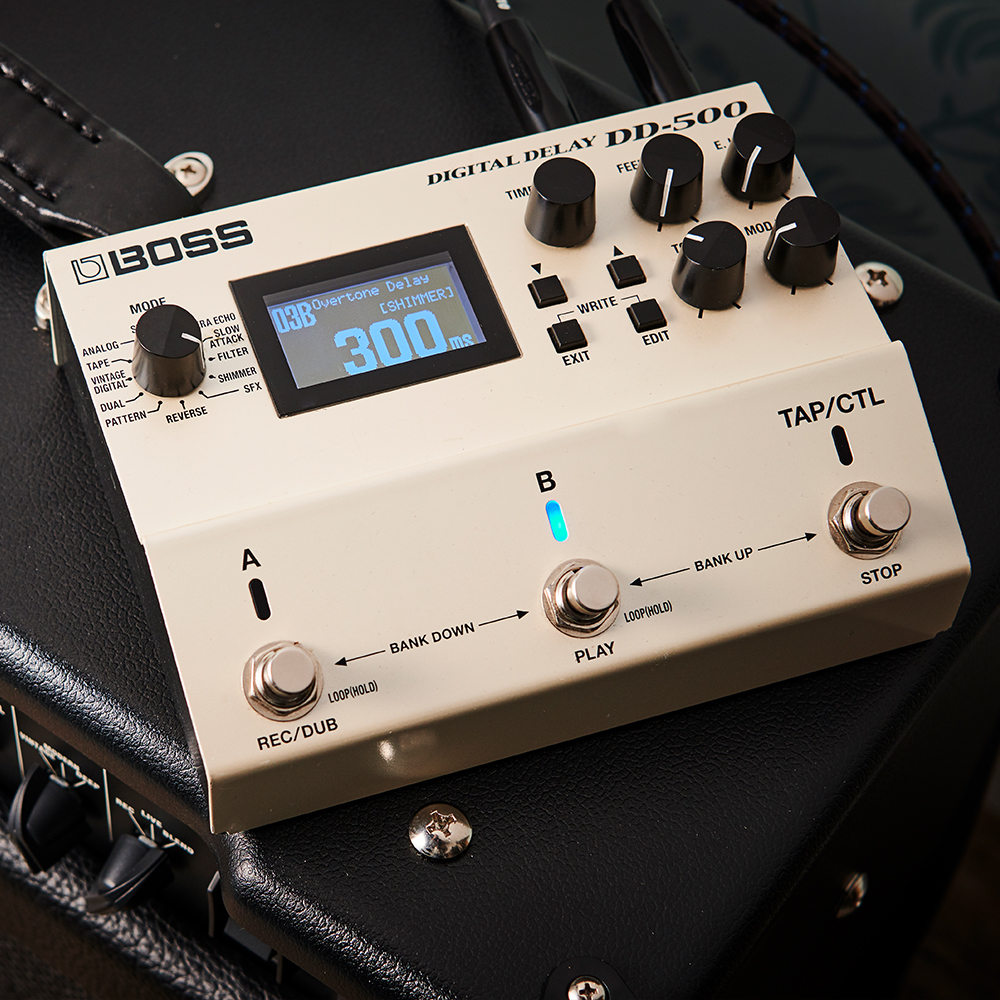
“I’d also have a DD-3 Digital Delay, because I know what it does—and it does pretty much everything you’d ever want or need from a delay pedal. Of course, I could say the DD-500 Digital Delay and have every delay ever, but I’d like to keep it simple. Lastly, it would have to be the RV-5 Digital Reverb. You’ve got to have reverb on a desert island!”
Overdriven to Distraction
Rowbotham has seen countless pedalboard mistakes over the years. So, what’s the most common mistake of all? “Power supplies! People spend hundreds, even thousands, on pedals and use them with a ten-quid power supply. It drives me mental.
“That’s my biggest gripe. You need to give your power and cabling the same level of attention as your pedal choices. Otherwise, you’re just not going to get the best out of them. But that’s easier now than it ever has been.”
“You need to give your power and cabling the same level of attention as your pedal choices. Otherwise, you’re just not going to get the best out of them.”
Photo by Rod Brakes.
Photo by Rod Brakes.
Photo by Rod Brakes.
Photo by Rod Brakes.
Stop the Bus
Having been on the road virtually non-stop for over a decade, Rowbotham decided to step off the full-time touring circuit in 2018 and begin training as a paramedic.
But what was it that inspired him to trade the tour bus bunk for a solid bed, we ask. “In 2014, I was on tour with Bring Me the Horizon and met my wife. I had a day off, and we met on a night out in New Orleans,” he says.
“I bumped into her in the middle of Bourbon Street, and we’ve been together ever since. She’s American and ended up moving to the UK in 2016, so I started thinking about doing something else.”
“I’m enjoying being creative again, making some cool guitar rigs, and doing the odd show here and there.”
Photo courtesy of DR Guitars.
Parametric Paramedic
After life on the road, Rowbotham decided to attend university for three years, earning a Bachelor of Science degree in Paramedic Medicine. “For the last two-and-a-half years, I’ve been working for the Yorkshire Ambulance Service, but I’ve just started a twelve-month career break,” he reveals.
“I had a couple of heavy jobs that I went to at the start of the year, which put things into perspective a little bit too much.
“I’ll always have the qualification, but to be honest, man, this is what I love doing. I’m enjoying being creative again, making some cool guitar rigs, and doing the odd show here and there.”
Rod is Brand Storytelling Copywriter, BOSS. His writing has appeared in outlets like Guitar World, Music Radar, Guitar Player, and numerous others. He’s also a lifelong musician.