

Metal guitar spans a vast tonal range. From the ominous grind of Black Sabbath to the razor-edged precision of Metallica and the crushing, down-tuned force of Meshuggah, there are countless ways to define the genre. What unites them is a focus on power, intensity, and unmistakable sonic identity.
Across eras and subgenres, tones range from loose and raw to tightly controlled and hyper-defined. Some styles thrive on swing and saturation, others on stringency and speed. The common thread is not a specific amp model or preset, but how the entire signal chain delivers command and presence without collapsing under high levels of gain.
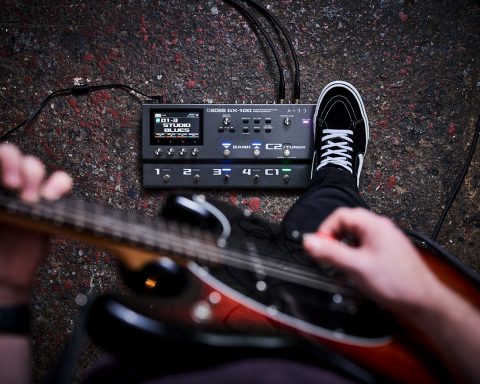
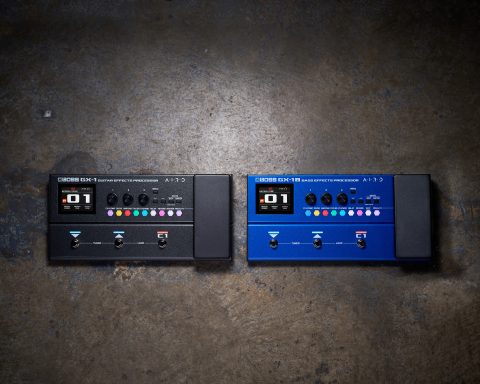
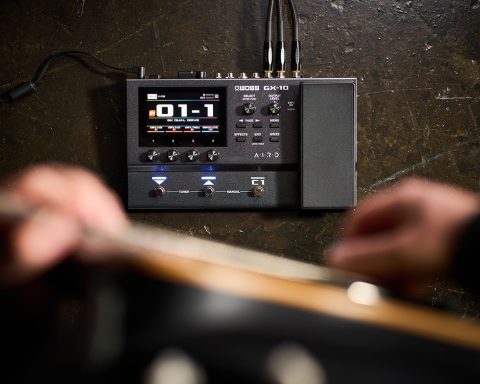
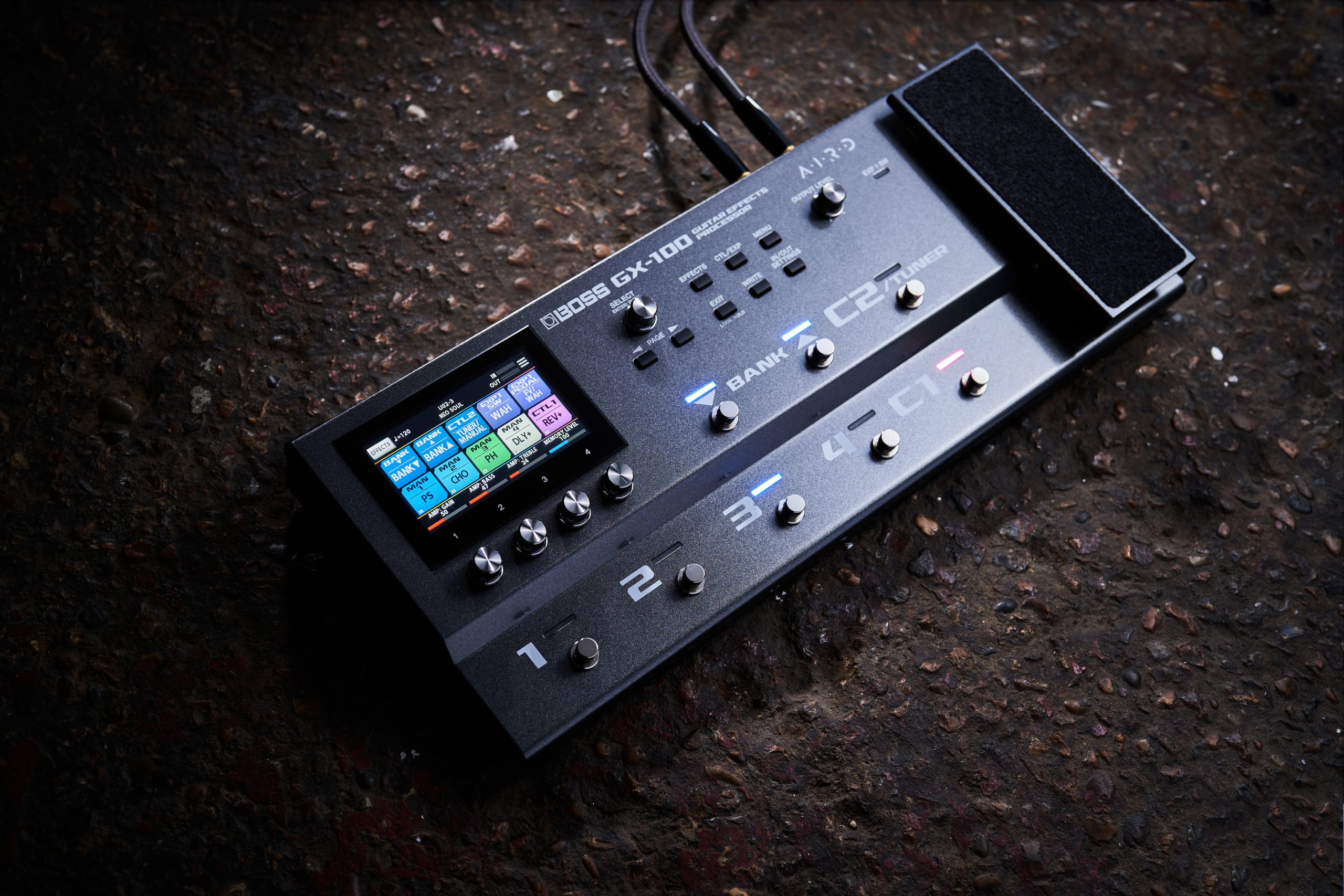
This guide explores how to approach metal tones on a multi-effects unit like the BOSS GX-1, GX-10, or GX-100 with these principles in mind. Rather than chasing a single “correct” setting, the aim is to build a strong, adaptable foundation that works across different metal styles while staying heavy and authoritative.
Key Characteristics of a Metal Guitar Sound
- High gain
- Pronounced low frequencies
- Modest signal path, with few effects
Build a Metal Signal Chain Rather Than Using Presets
For an expressive style like metal, it will serve you well to construct your own signal path rather than using a preset. Instead of starting with an out-the-box tone and fine-tuning it, build a path where each addition has a deliberate role and is there strictly because it is needed.
The most iconic metal tones follow a simple structure:
- High-gain amp or pedal
- Optional boost or drive to shape saturation
- EQ for tonal balance
- Noise control to manage high-gain behaviour
Keep the signal chain purposeful. Introducing lots of gain amplifies everything, so every effect block should serve a clear function. If an addition does not strengthen the core principles of the tone, remove it.
"Instead of using an out-the-box tone, build a signal path where each addition has a deliberate role."
Commanding Metal Tone Starts with the Amp
A masterful metal tone begins with the right amp. On multi-effects units like the BOSS GX series, the amp block is not just another stage in the chain. It defines the character, response, and authority of the entire sound. Think about how many legendary metal guitarists are closely affiliated with their amp of choice: Tony Iommi and his Laney Supergroup, Dimebag Darrell and the Randall RG100, or Iron Maiden and a duet of Marshall JCM800s.
While some players build heavy tones from clean platforms and stack overdrives, this guide takes a more traditional approach. Here, the amp model itself provides the core saturation. Everything that follows refines and supports what is established at this stage.

Choosing the Right Amp for Metal Guitar
Begin by loading a high-gain amp designed for heavy styles and listen to it on its own, with no additional blocks engaged. Set the gain to roughly 60-70% of its available range. This is usually enough to produce sustained distortion without overwhelming the signal. Play sustained chords, repeated riffs, and single-note lines. If everything blurs together, reduce the gain slightly. If the sound feels thin or drops off too quickly, increase it in small increments.
At this stage, you’re looking for continuous distortion that holds its shape. Chords should remain recognizable, repeated notes should not dissolve into noise, and single notes should sustain without collapsing. If you cannot achieve that balance, try a different high-gain model rather than immediately adding pedals or shaping EQ. Establish a convincing core sound first, then refine it with intention.
Pickups for Metal Guitar Tone
Your pickup type has a direct impact on how the amp responds. Output level, frequency emphasis, and noise behaviour all change the way high gain behaves, so it’s important to understand what your guitar is feeding into the signal chain
- Humbuckers are higher output with thicker midrange and stronger low-frequency body. A common choice across many metal styles due to their balance of mass and control. Classic humbucker endorsees include Tony Iommi of Black Sabbath and both Brent Hinds and Bill Kelliher of Mastodon.
- Active pickups use an onboard preamp to boost and buffer the signal before it reaches the amp. The result is higher, more consistent output with reduced noise and a more controlled frequency response, as heard in bands like Metallica or Slipknot.
- Single coil pickups are lower output with more high-end detail and bite. They can produce cutting, articulate high-gain tones but may introduce more noise and less depth in the lower register. Think Yngwie Malmsteen or Ritchie Blackmore of Deep Purple

Use Overdrive to Shape Metal Distortion
Once the amp model establishes the core voice, a drive block placed before the amp can be used to shape how the distortion behaves. In this example, the drive pedal is not the primary source of gain, instead it’s used to influence how the front end of the amp responds.
Start with the drive level low and the output high enough to push the amp slightly harder. The goal is not to add a second layer of distortion, but to adjust the texture and response of the existing gain. This can increase density, alter the midrange emphasis, or change how quickly the amp reacts to your picking.
Engage and bypass the drive block while playing the same passage. Listen for changes in attack, sustain, and overall balance rather than sheer volume. If the sound becomes unfocused or overly compressed, reduce the gain slightly. Used deliberately, a drive pedal enhances the amp’s character and reinforces its authority rather than replacing it.
"The goal is not to add a second layer of distortion, but to adjust the texture and response of the existing gain."
Refine Your Metal Tone With EQ
Once the amp and any drive shaping are working together, an EQ block at the end of the chain can be used to fine-tune the overall balance. At this stage, EQ should not transform the tone into something new. Its role is to correct imbalances and enrich what is already working.
Start by playing familiar riffs across different areas of the fretboard. If the sound feels overly heavy in the lower register, reduce some low frequencies rather than boosting elsewhere. If the tone lacks presence or definition, try a small midrange adjustment before increasing gain. Make changes in small increments and compare with the EQ engaged and bypassed to ensure you are improving clarity rather than simply increasing volume.
Avoid large boosts, especially in the extreme low or high ranges. Subtle cuts are often more effective than dramatic increases. The aim is to achieve a balanced, forceful sound that maintains its character without becoming harsh or undefined.
Use a Gate to Reduce Noise in Your Metal Tone
High-gain amplification brings noise with it. Hum, hiss, and unwanted feedback become more noticeable as gain increases, especially when stacking drive and EQ blocks. Managing this is part of building a stable metal tone.
Start by using a noise gate placed early in the signal chain, typically after the drive block but before the amp. Set the threshold so it silences unwanted noise when you aren’t playing but doesn’t cut off sustained notes unnaturally. Play sustained chords and single notes while adjusting the threshold gradually. If the sound drops out too quickly, reduce the setting slightly.
Avoid relying on extreme gate settings to fix an unstable tone. Excessive gating can make riffs feel abrupt and remove natural sustain. The goal is a clean, controlled signal when idle, while preserving the full impact and continuity of the guitar when you play.
Multi-Effects or Individual Pedals for Metal?
Whether you decide to sculpt your metal tone using multi-effects like a BOSS GX series unit, or collect an assortment of individual pedals, is your choice.
Some players prefer the straightforwardness of an all-in-one unit, meaning they can audition different amps and effects. Others prefer focused stomp boxes that perform explicit tasks. Each approach has its own advantages and disadvantages and there is no “correct” way of doing things. Detailed below are some notable distinctions between each setup:
| Multi-Effects | Individual Pedals |
Flexibility | All-in-one units cover all bases including amp simulation, but are limited to onboard options | Multiple units required, but total freedom to chase specific sounds |
Power & Cabling | One power source and fewer cables | Multiple power connections and patch cables. Can get messy and complicated |
Consistency | Presets allow tones to be saved and recalled exactly | Settings must be dialed-in manually each time |
Workflow | Requires initial setup and menu navigation | Direct, hands-on adjustment of each control |
Value | Much cheaper than buying the equivalent individual amps and pedals contained within | Pedals only added if they’re needed, so no money spent on sounds you have no intention of using. Additional costs include power supplies, pedal boards, and cables. |
Adapting the Setup for Different Metal Styles
Classic Heavy Metal
Reduce the overall gain slightly and allow more mid-range presence to come forward. Ease off any aggressive gating so the tone feels more open and less compressed.
Thrash Metal
Increase front-end push with a drive block and tighten the gate response to keep fast riffs controlled. Trim excess low frequencies so repeated picking patterns remain defined under higher gain
Doom Metal
Let the amp produce deeper saturation and emphasize low-frequency mass. Lower the gate threshold to allow sustained chords and feedback to bloom naturally, creating a thicker, more enveloping sound.
Metal Guitar Tone in Summary
A strong metal tone is built through deliberate decisions at every stage of the signal chain. The amp provides the foundation, the drive influences how it reacts, EQ shapes the overall balance, and the gate keeps the system under control. Each element has a defined role, and the effectiveness of the whole depends on the strength of that foundation.
When you prioritize structure over excess, the result is a tone that carries authority without becoming unstable. Start with a solid core sound, refine it in measured steps, and make changes with intent. Whether you lean toward classic heavy metal, thrash, or doom, the same principle applies: build with purpose, then adjust with discipline.