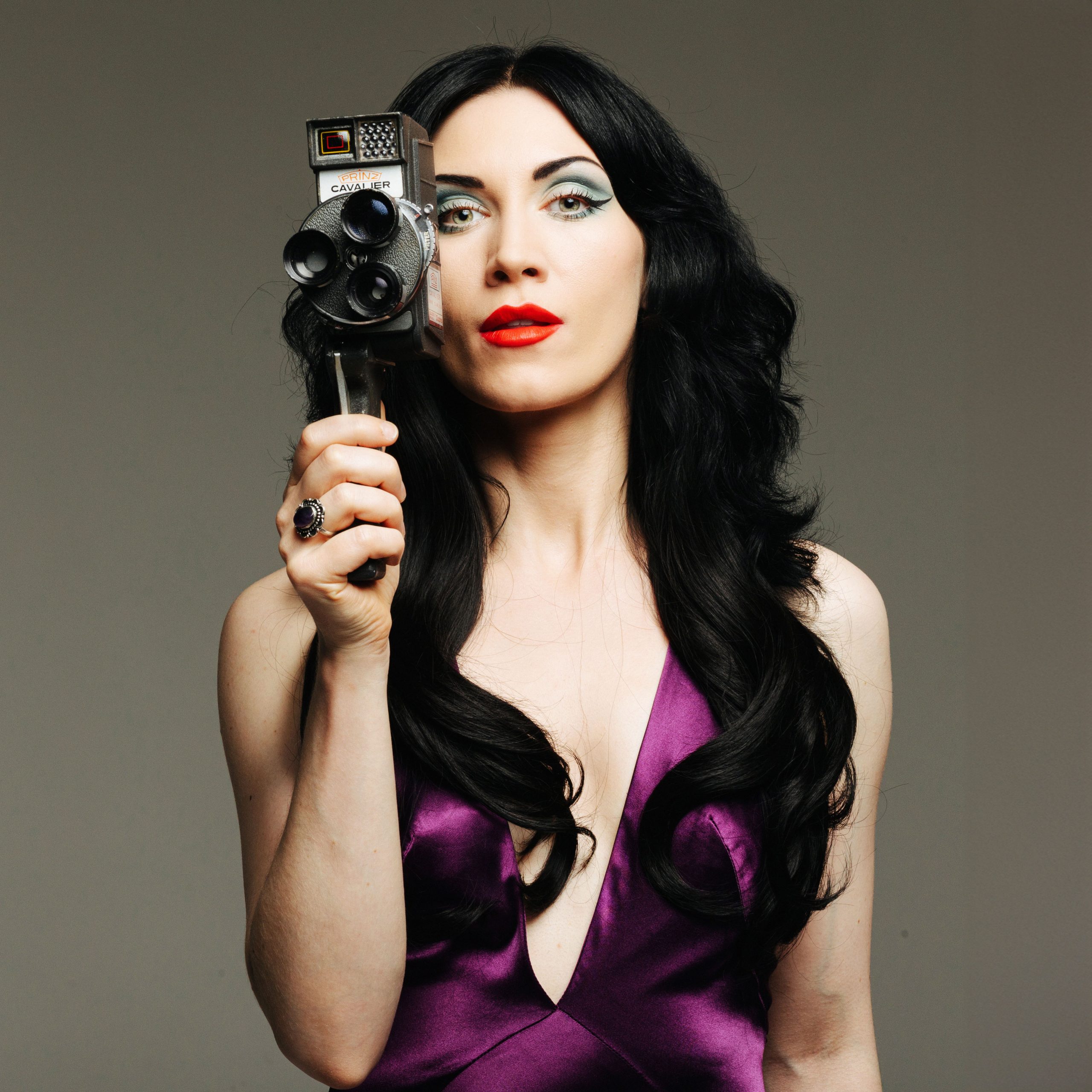


Rosalie Cunningham has always moved to her own rhythm. Long before her name began appearing in the pages of major music mags like Mojo, Uncut, and Classic Rock, the Southend-born singer, songwriter, and multi-instrumentalist was already carving out a distinctive musical path rooted in the adventurous spirit of late-’60s and early-’70s rock. Cunningham first emerged in the late 2000s with the all-female outfit Ipso Facto, a band that burned bright before dissolving almost as quickly as it arrived. The experience was a whirlwind introduction to the industry: major showcases, international attention, and the surreal experience of finding herself thrust into the spotlight as a teenager.
Solo Voyager
But it was the psychedelic rock group Purson, formed a few years later, that allowed Cunningham to truly develop as a songwriter and bandleader. Across two acclaimed albums, a host of singles and EPs, and years of relentless touring, Purson built a devoted following and established Cunningham as one of the most intriguing voices in modern psychedelic and progressive rock.
When the band came to an end in 2017, Cunningham faced a crossroads. Instead of stepping back, she doubled down on her creative instincts. Her 2019 self-titled solo debut—nominated for the Mercury Music Prize—revealed a songwriter unafraid to embrace ambition, theatricality, and intricate arrangements while maintaining a sharp melodic core.
Its successor, 2022’s Two Piece Puzzle, only strengthened that reputation, blending baroque pop, vintage rock textures, and prog-tinged flourishes into something vividly personal.
Since then, Cunningham has spent much of her time on the road, refining a live show that balances technical musicianship with the kind of magnetic stage presence that has become her trademark. Check out her 2023 album Live at Acapela for a taster.
Cunningham’s latest album, To Shoot Another Day, continues that creative evolution. Rather than looking back, she’s driven by curiosity—constantly exploring where her music might lead next.
In this inspiring interview, she reflects on her journey from teenage prodigy to fiercely independent artist, the gear that shapes her sound, and the lessons she has learned along the way.
Solid Stomps
Which BOSS pedals do you like?
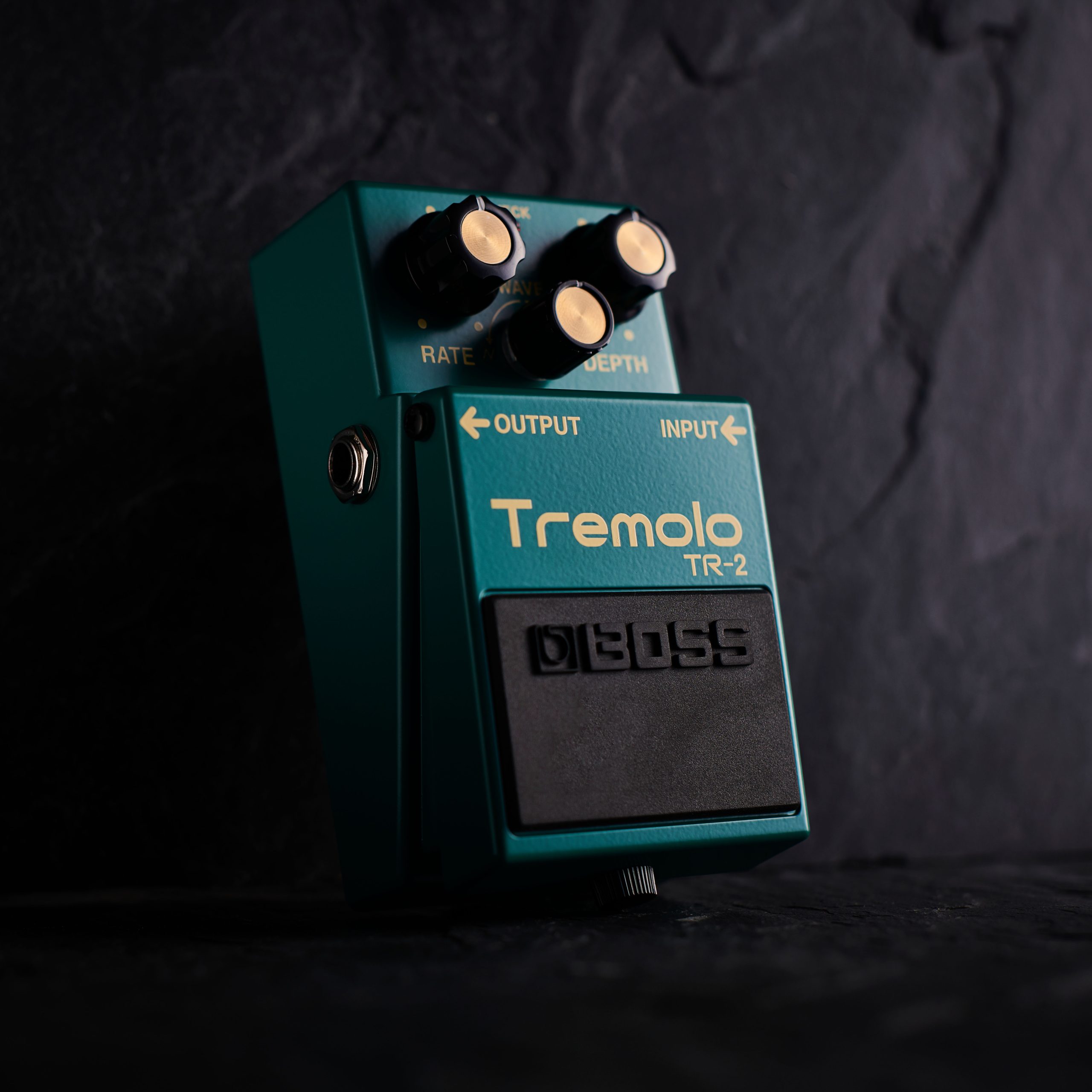
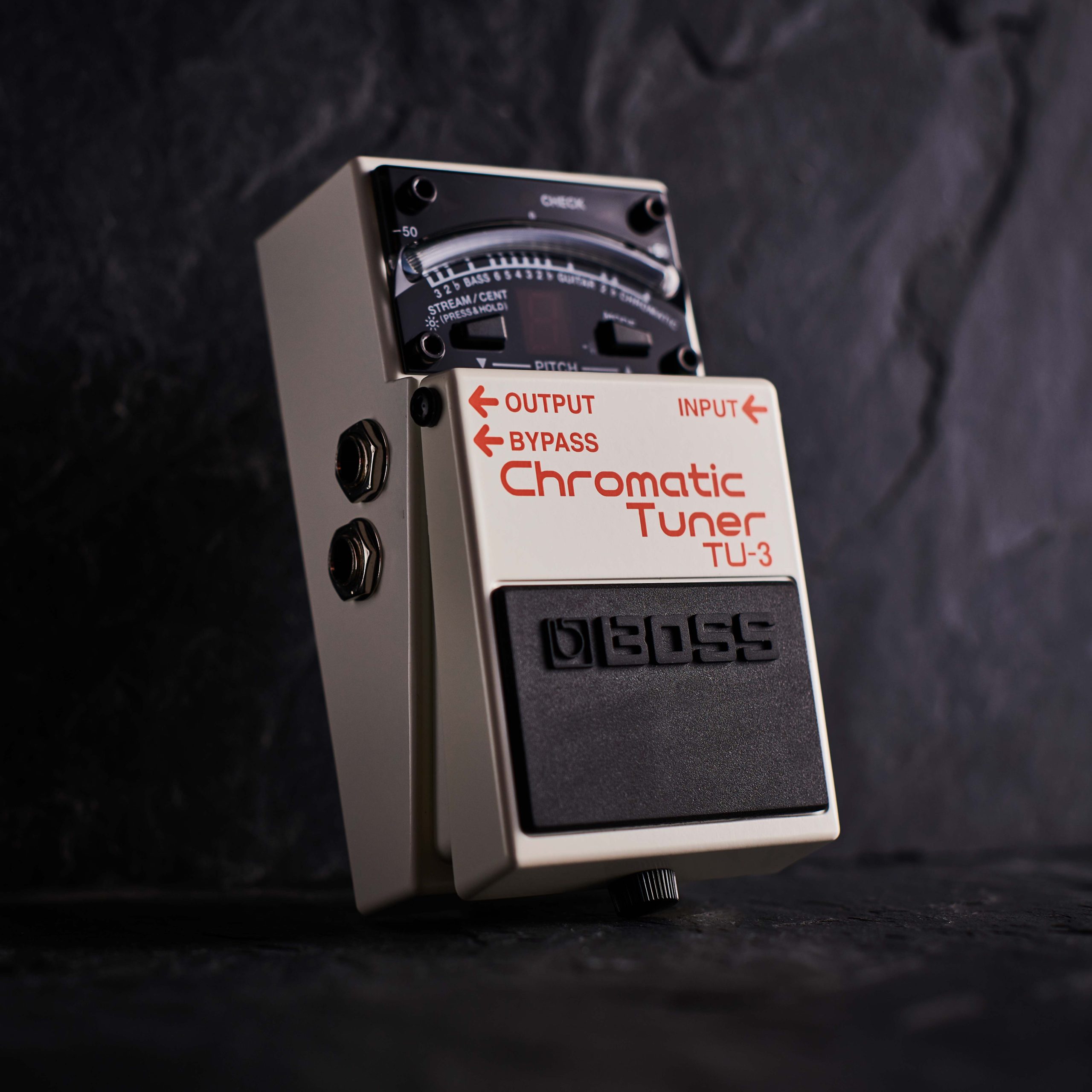
I’ve used the TR-2 Tremolo, and Rosco [Wilson, guitarist] has one on his pedalboard. I think the BOSS Chromatic Tuners, like the TU-3, are the best ones. Rosco was saying he’s had his TU-2 for 25 years. BOSS pedals are indestructible. I love that about them. They’re so reliable.
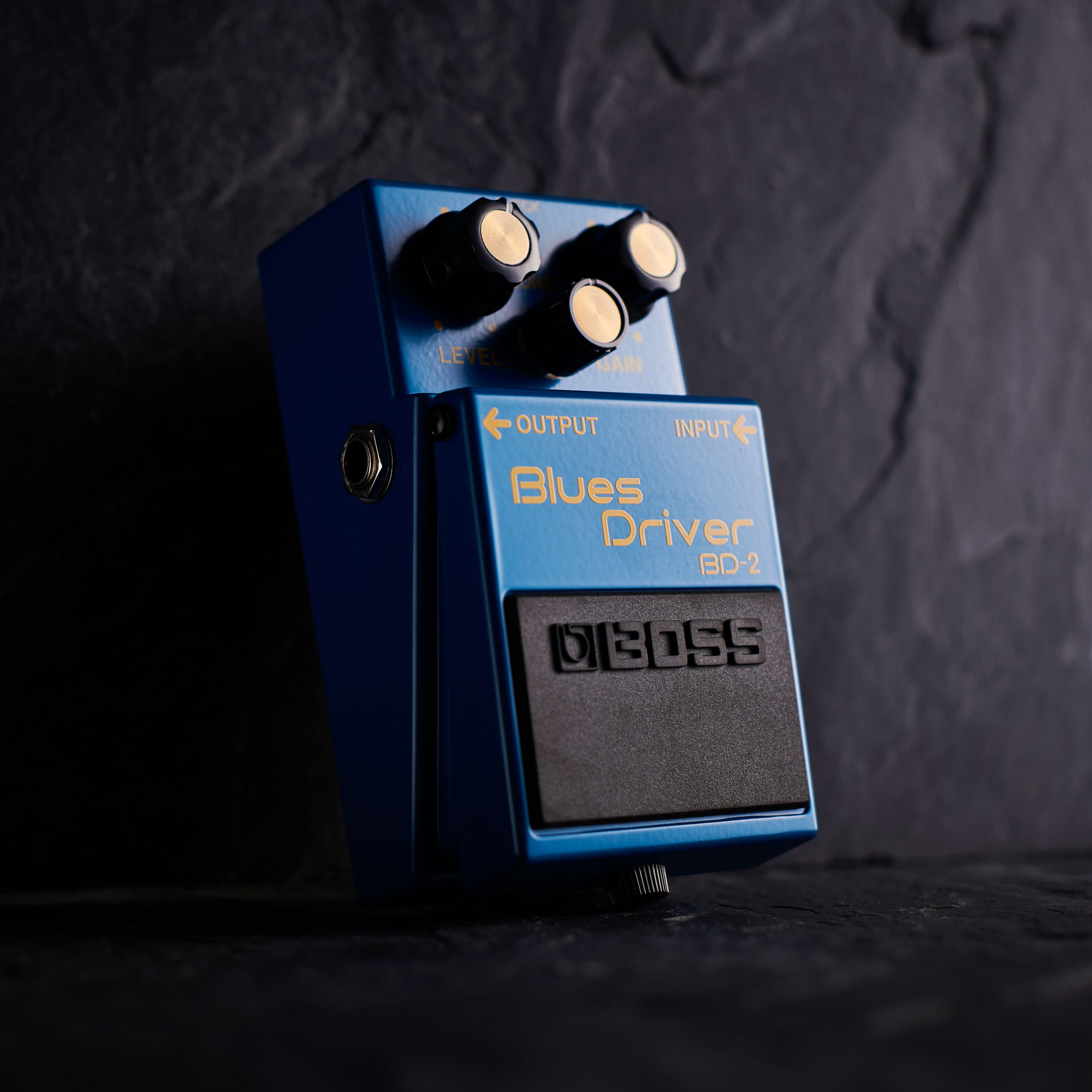
I also have a fondness for the FZ-2 Hyper Fuzz (especially for bass) and the BD-2 Blues Driver.
How do you tend to use gain pedals?
I rarely turn my distortion pedal off; I just roll back the guitar volume to clean up. With a Gibson SG, I get really versatile tones from just one distortion pedal. I also like Tone Bender-style fuzz pedals.
You’re well known for using Gibson SGs; what do you love about them?
I had an endorsement with Gibson while I was in Purson. There was a picture of me about 20 feet tall on the side of the Gibson HQ in London, which was pretty cool. Gibson helped me out when I toured and would always lend me guitars.
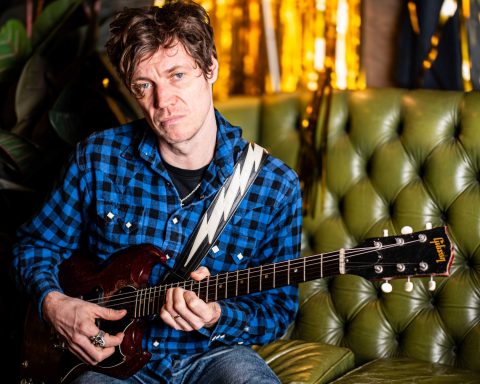
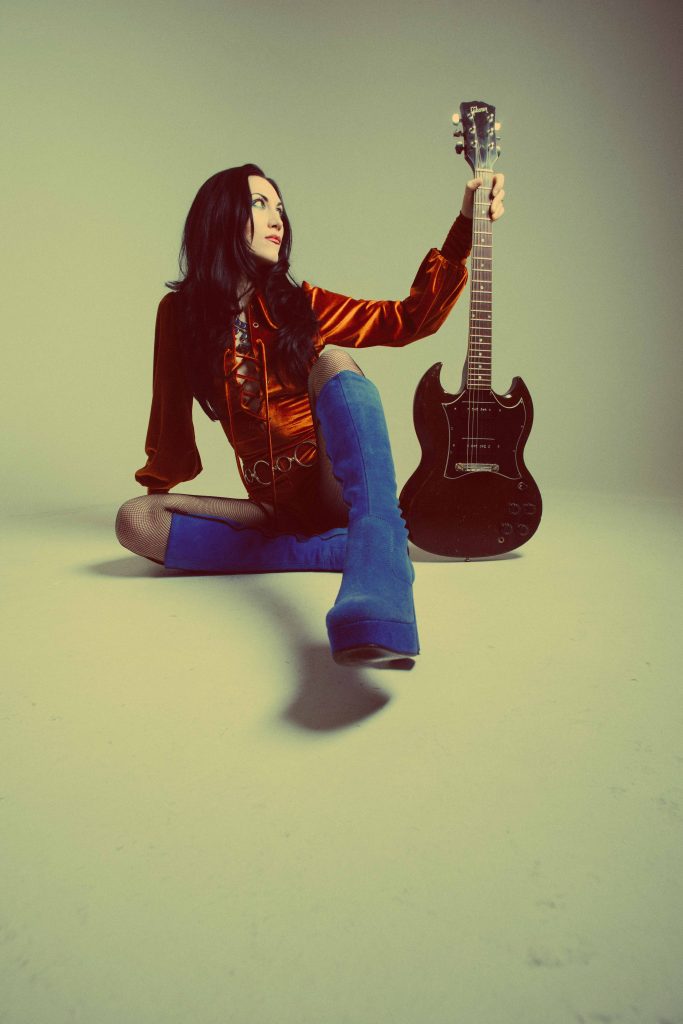
I currently have a 1971 SG Special with P-90 pickups and a ’70s SG Standard with humbuckers. I love P-90s, but the Special isn’t the most versatile guitar; I find humbuckers are a bit more versatile for rhythm and lead, and they tend to clean up better. My SG Standard sounds lovely.
Flying Start
You began with the all-female band Ipso Facto, went on to lead Purson, and then launched a solo career. How did Ipso Facto shape you as a musician and songwriter?
It was great to have those opportunities at such a young age. We got snapped up at our first gig and were flown here, there, and everywhere. We recorded a song for a Ray-Ban advert and played a fashion show in New York, which included a red-carpet event we walked. I was 17, and it felt crazy at the time.
I wasn’t prepared for it at all artistically or musically. It was too much too soon. It was all a bit of a fireball, and it started falling apart after about a year and a half. The experiences I had obviously taught me a lot, but they didn’t teach me an awful lot in terms of honing my craft because we were kind of seen as a bit of a novelty band.
I was frustrated that we weren’t taken seriously. I was totally underdeveloped at that point, but I’d always been very serious about music.
"I thought I couldn't do things independently. I thought you needed a label... But you actually don't. Not anymore."
Hard Lessons
Looking back, what lessons from Purson did you carry into your solo work, and what did you choose to leave behind?
During the Purson years, I really learned everything about songwriting, recording, and performing live. I mean, we did an awful lot in those years.
So, what have I left behind? Musically, nothing really, because it’s all just been a forward journey. It’s not like I’ve left things behind; you’re learning things all the time. You’re just adding to it rather than taking away.
Business-wise, especially, I was absolutely clueless in Ipso Facto and Purson. I really didn’t have a clue. Even at the end of Purson, I got myself into a load of trouble with record deals and management that I wasn’t happy with. It was a learning curve.
Going solo and doing things as independently as possible with Rosco meant we learned a lot together. I thought I couldn’t do things independently. I thought you needed a label for this and that, and you had to work with all these different people—an extensive team who all take a piece of the pie. But you actually don’t. Not anymore.
Road to Success
How have things changed in the music industry in recent years?
Record labels aren’t so important unless you really want someone to take care of all the headaches for you. But if you’re willing to essentially have a part-time admin job, you can just do it all yourself.
I mean, the music industry is always changing. We go about it in the old-fashioned way. Our engagement isn’t really the result of algorithmic trickery; it’s all about touring heavily and releasing (hopefully) good records continuously.
We do a lot of touring compared to other bands at our level. Everybody always says we do an awful lot. I love it. I mean, it’s got its ups and downs, but generally I love it. I enjoy playing in different-sized venues. There’s something to enjoy about each one.
"Our engagement isn't really the result of algorithmic trickery; it's all about touring heavily and releasing (hopefully) good records continuously."
How important was it to stick to your own artistic vision?
I’ve never allowed other people to interfere with it. That’s never been a problem. Honestly, it’s never been a problem because, luckily, my bandmates have always respected me in that sense. They know the band is a vehicle for my ideas, and they very rarely have anything to say about it.
Unfortunately, the record label did occasionally interfere, but I’ve always stood my ground, which is something I’m proud of. I’ve never bent to anybody’s will creatively.
How did the response to your self-titled 2019 Mercury-nominated debut shape your view of yourself as an artist?
It was certainly very encouraging that people cared who I was, because that year and a half after Purson felt like an eternity, mainly because I hadn’t done any live performances. I had an album, and I hadn’t really shown it to anybody. I’d just kind of lost confidence in everything.
"When I finally released [Rosalie Cunningham] in 2019, it got a good reception, which was hugely encouraging."
The recording and writing processes were very much the same as the bands I’d been in, which is mostly just me. But I just didn’t have an outlet for it. To begin with, I didn’t even know if I was going to go under my own name. So there were a lot of questions and a lot of insecurity.
Purson was doing really well when we broke up in 2017. So, naturally, I was getting well known in certain areas. I guess that year and a half afterwards felt like nothing for other people; they just thought I was busy doing my next thing, but, as I said, it felt like an eternity. When I finally released [Rosalie Cunningham] in 2019, it got a good reception, which was hugely encouraging.
I really, really appreciated the recognition. It’s something I was always looking for in Purson. A lot of people got it and had a lot of respect. I don’t know if it was sexism or what, but other people assumed I was just the face of Purson, like I was just the singer (which I wasn’t). So yeah, I was looking for a bit more recognition, but not in an arrogant way; I just wanted it to be understood.
Transformative Times
Would people often wrongly assume things about you as a musician?
Yeah, it used to happen a lot. But it’s changed enormously in the span of my career. This year, I’ll have been a professional musician for 20 years. The world was a completely different place for women 20 years ago.
Maybe my age was a stigma, too. I was very young when I first entered the music industry professionally. I wasn’t taken seriously wherever I went, whether I was doing a gig or even just going into a guitar shop. It was always assumed that I was someone’s girlfriend or just a singer. That doesn’t happen to me anymore. It might be happening to other people, but I hope not.
"I don't think sexism is just a problem in the music world; it's across the board in virtually every field. But it's changed dramatically in the last couple of decades."
Being older isn’t so much of a stigma these days, either. I’ve played with Arthur Brown quite a few times, and he’s in his 80s, but he’s just so vibrant. He dances around and sings as well as he ever did.
I don’t think sexism is just a problem in the music world; it’s across the board in virtually every field. But it’s changed dramatically in the last couple of decades. It used to be that women were seen as a novelty. Like that awful question, “What’s it like being a female guitarist?” Well, mostly it’s exactly the same as being a male guitarist!
We recently played the Planet Rock Winter’s End festival, and there were 13 bands on the bill that were either all-female or had female members, which was a majority of the lineup. If there isn’t adequate representation, half the population of the planet isn’t expressing itself through music. It seems to be equaling out more now.
Who are some of your favorite musicians?
My favorite musical period is the ’60s and ’70s, so they’re mostly male. But that’s how it was at the time. Female musicians playing prog rock in the early ’70s were rare.
There were some, like Sonja Kristina of Curved Air. She was a big influence on me. I think Kate Bush is an incredible artist, too. But my favorite music is from a period when there weren’t many women doing it.
"Sonja Kristina of Curved Air was a big influence on me. I think Kate Bush is an incredible artist, too."
Stagecraft
What role has live performance played in defining your solo work, and what do you want audiences to experience?
The touring’s been getting heavier and heavier over the years. I just write whatever I like and then figure out how it will go down live later. But recently, when I’ve been writing, I’ve started thinking I should lean more into my band’s strengths. Like writing some twin-lead parts, for example. These days, my live band is definitely influencing how I write.
We’ve been finding that our crowds at our shows are getting younger, which is a great sign. A lot of young girls are coming to our shows, which has not really happened before. I mean, there would be the odd one, but that’s changed. I always try to speak to younger fans, and they’re usually very sweet. I know it can mean a lot to them, so I always make the effort.
Homegrown Produce
Between 2022’s Two Piece Puzzle and 2024’s To Shoot Another Day, your sound evolved. How and why did your approach to recording change?
That had a lot to do with the development of our home studio between those two albums. We used to do bits and bobs at home, some in some studios, and then mix elsewhere.
To Shoot Another Day was the first album I made from start to finish in the home studio. So we had all the time in the world to experiment and hone the sound. I think that’s why it sounds more hi-fi.
"To Shoot Another Day was the first album I made from start to finish in the home studio."
To Shoot Another Day isn’t a concept album, but I wanted it to be more like a soundtrack, like scenes in a film. And I wanted it to have a glossier sheen than my previous stuff (which has been a bit lo-fi).
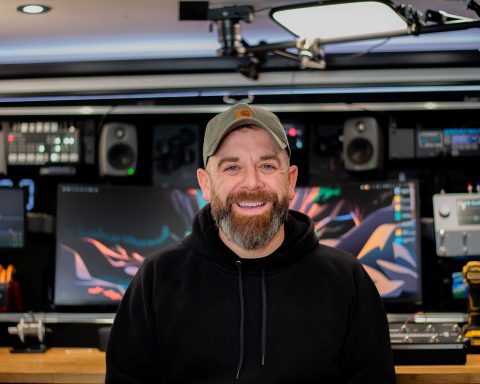
That’s Rosco’s influence. He’s co-written five of the 10 tracks, and he’s a great producer for me as well. We’ve been working together now for years, and we know each other so well. We play to each other’s strengths in that sense.
Rosco knows how to get the best out of me, though I can sometimes be difficult to work with. I can be very stubborn, which isn’t always a bad thing, but then sometimes I won’t see other ways of doing things that I may be wrong about.
Field Report
What inspired you to release Live at Acapela in 2023, and what do you feel it adds to your body of work as a solo artist?
I’d always wanted to do a live album. I wouldn’t say it’s captured us at our best, but I’m glad we did it because it’s a snapshot of that period. You know, the lineup’s changed slightly now, so that’s forever on record.
I’d really like to do another live album and have a sound engineer with us recording a tour, so it takes the pressure off trying to do everything in one night. With live music, problems often arise. Like, there’s always something that hasn’t worked properly—maybe the DI is not plugged in, or something.
We’ve tried to do it before with someone in the band, but we need an engineer to handle everything because there are too many things to check. If you’re performing, there are already a lot of pressures. If we just recorded every show for like a 12-day tour or something, then we wouldn’t even need to think about it. Our next thing is to find a good live sound engineer.
"Reliable gear is super important, which is quite relevant to BOSS!"
Touring extensively brings its own challenges and insights. What lessons from the road have stayed with you?
Reliable gear is super important, which is quite relevant to BOSS! We take out a stupid amount of vintage equipment, and I’ve always used vintage amps. The number of times they’ve blown up on me is ridiculous. I’ve always had to take a spare.
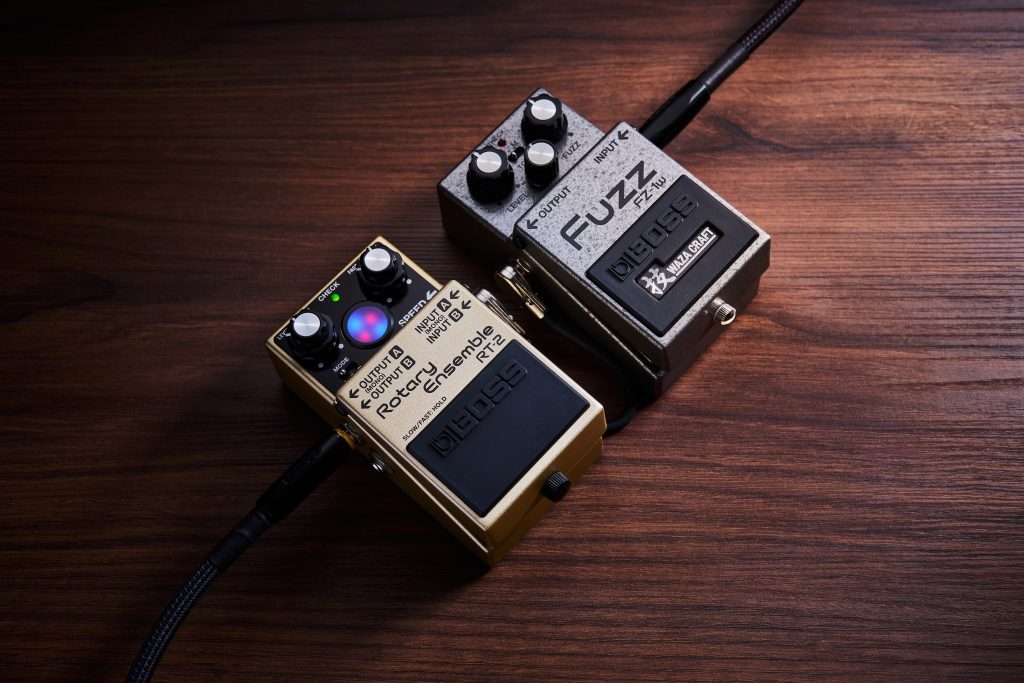
We probably shouldn’t be going out with an old Hammond and Leslie, given the number of shows we do, because stuff always breaks. That’s something we should have learned but haven’t. I wouldn’t mind trying the new BOSS RT-2 Rotary Ensemble.
The other thing is just like learning to sleep wherever you are. I’m an expert at sleeping in strange places.
Independent Industry
Having worked in genres like progressive and psychedelic rock, how have you witnessed the scene evolve in terms of inclusion over the years?
There’s so much more inclusion now, especially in something as traditionally masculine as prog rock. There are loads of women in prog bands these days. Of course, inclusion is important. It shouldn’t even be a conversation, really, but it’s had to be because of what we’ve come from. It’s happening, and it’s great. But we can’t just pretend it hasn’t always been like this.
What advice would you offer to young musicians who are finding their voice and place in the industry?
You can do it yourself. Try to remain as independent as possible. It is a bit more work, but it pays off in the long run. There are so many sharks out there still. If I could go back and not sign the things I’ve signed in the past, I’d do it in a heartbeat.
"Try to remain as independent as possible. It is a bit more work, but it pays off in the long run."
It used to be like, “Wow! A record deal!” But what does that actually mean? It means someone’s going to take your money for the next however-many years, often for very little. Sometimes, record companies show their worth. I have had great experiences with record labels, so I don’t want to badmouth all of them, but I’d say that in this day and age, keeping as much of it as independent as possible is realistic. It’s often the best route.
How do you draw on personal experiences and emotion when crafting your lyrics and vocal performances?
It’s always about personal experience and emotions, even if you’re wrapping those ideas up in a narrative and singing from the third person. It’s all still things you’ve experienced at some point.
And live, just reliving those words puts you back there. It’s always an emotional experience. Just seeing somebody singing makes it more direct. I think people connect with it more that way. People interpret things in their own way, so it’s not entirely my job to try and convey everything; it’s more about how an audience perceives it.
In today’s rapidly changing music industry, what stands out to you as the biggest challenge and the biggest opportunity for artists?
The way everything is with social media now means there’s so much competition out there. I’d say the hardest thing is to be seen. But on the other side of the coin, it’s also the easiest thing because you can be seen if you do it right.
"Inspiring young girls and young women would be a big deal for me."
Social media isn’t something I have a natural affinity with. I absolutely dread having to do anything like that, but it works for some people. Some musicians absolutely shine in that department. I think the hardest thing is to be noticed for your unique qualities, because there’s just so much information out there.
We do things the old-fashioned way, with people having heard of us not through an algorithm but through word of mouth. Playing festivals is great for exposure. That’s why a lot of people have come to my shows. We did Sweden Rock Festival in a massive tent with an audience of about 5,000 people, and it seemed like everyone who came to our Scandinavian shows afterwards said they were there.
We did all these obscure places on a Scandinavian tour, and loads of them were sold out. I was like, “Since when am I big in Sweden? What’s going on?”
Past, Present, and Future
Finally, what kind of legacy do you hope to leave?
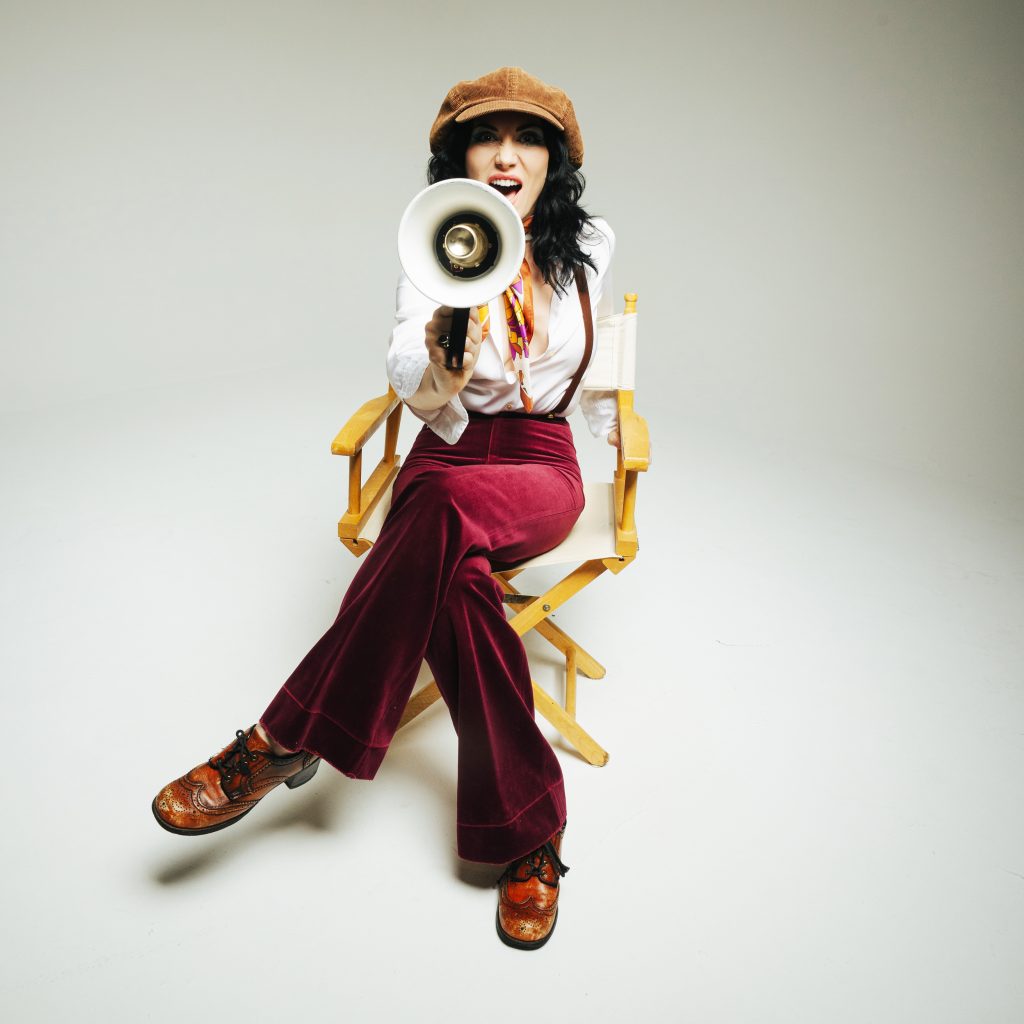
Inspiring young girls and young women would be a big deal for me. We’ve noticed more and more girls coming to the shows. A lot of them already play, or they’re thinking about starting. It would be amazing to know that something I did inspired them—and then see where they are in 10 or 20 years.
Honestly, legacy isn’t something I really think about. I’m just putting one foot in front of the other, trying to make the best record or the best show I possibly can in that moment. Then, after a while, you can look back and be proud of the body of work.
I’m already proud of what I’ve done, so I guess it’s just about continuing in the same way.