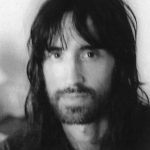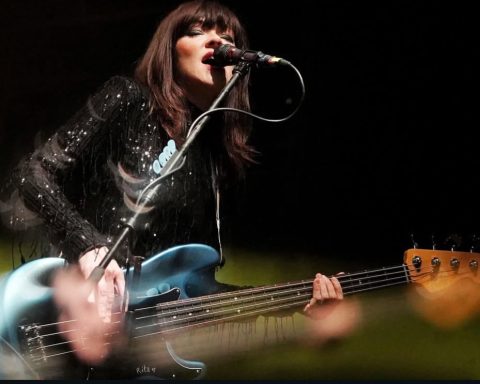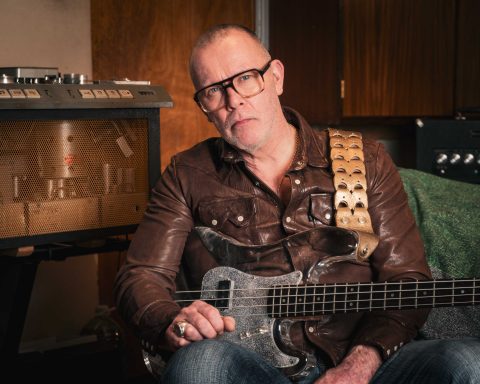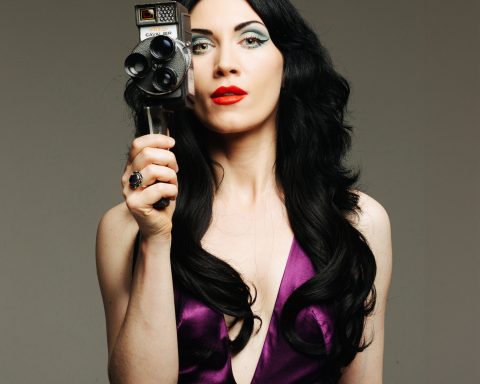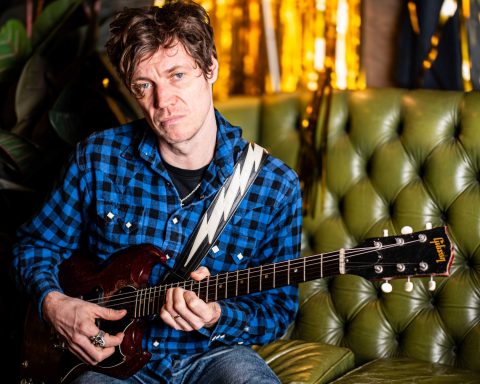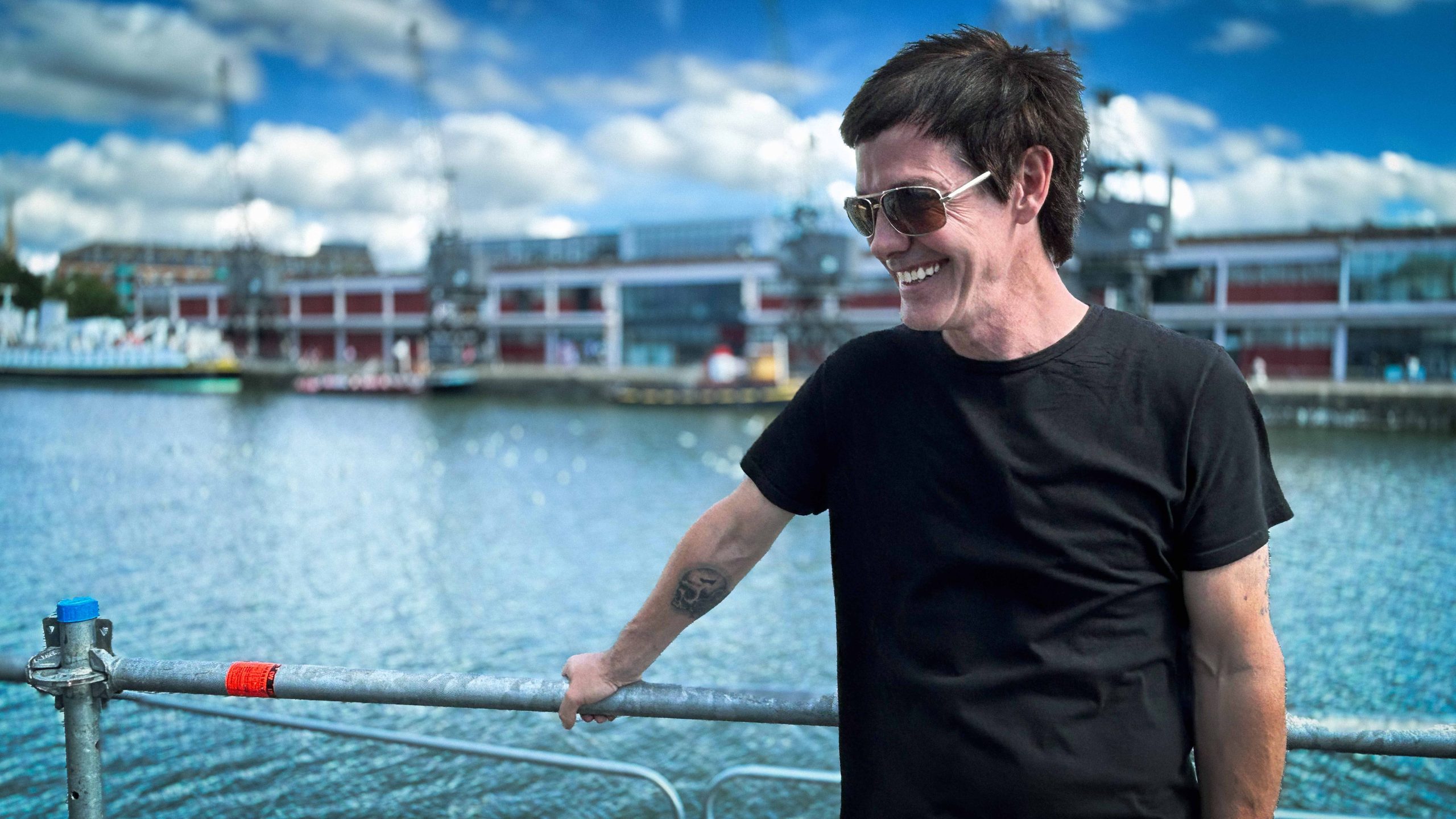


Guitarist Tony McGovern plays a key role in shaping the identity of one of Scotland’s most enduring and influential acts: Texas. Formed in Glasgow by singer Sharleen Spiteri, bassist Johnny McElhone, and guitarist Ally McErlaine, the band made an immediate impact with their debut album Southside (1989), which sold over two million copies worldwide. Throughout the decades, Texas has chalked up a succession of anthemic pop-rock smashes, including the multi-platinum albums White on Blonde (1997), The Hush (1999), and The Greatest Hits (2000). Their longevity is underscored by continued chart success—most recently with 2021’s Hi—and a loyal fanbase that fills arenas. At the same time, a younger generation of music lovers has embraced Texas, as evidenced by the rapturous response from “a whole new generation of fans” at Glastonbury Festival’s Pyramid Stage in 2023.
Collective Creativity
From singalong classics like “I Don’t Want a Lover” and “Say What You Want” to modern highlights such as the Wu-Tang Clan collaboration “Hi” and the Donna Summer-infused “Mr Haze,” Texas showcases the power of collective creativity, musical rapport, and expressive range.
McGovern, who first connected with the band through touring and session work, quickly became more than a supporting guitarist. As a longstanding member, his nuanced approach and dynamic playing enhance the tight-knit chemistry of Texas alongside drummer Cat Myers, keyboardist Eddie Campbell, McElhone, and Spiteri.
Renowned for his impeccable taste in gear—particularly his decades-long use of BOSS effects pedals—McGovern balances technical precision with instinctive feel, helping craft the group’s powerful sound both on stage and in the studio.
In a band celebrated for its crossover appeal, his guitar work continues to elevate Texas, ensuring their music resonates with both longtime fans and a new generation alike. BOSS caught up with McGovern to talk effects pedals, guitar heroes, and creative interplay.
"BOSS pedals are just so reliable—they’re virtually indestructible. Also, they just sound great, and I often go back to them. You can’t go wrong with BOSS."
Compact Control
What is it you like about BOSS pedals?
They’re just so reliable—they’re virtually indestructible. Also, BOSS pedals just sound great, and I often go back to them. You can’t go wrong with BOSS. They’re not too expensive, either; you see guitarists of all levels using them.
I like to keep pedalboards relatively simple, especially for smaller gigs, because it’s easier to travel. BOSS compact pedals are great for traveling as they don’t take up much space.
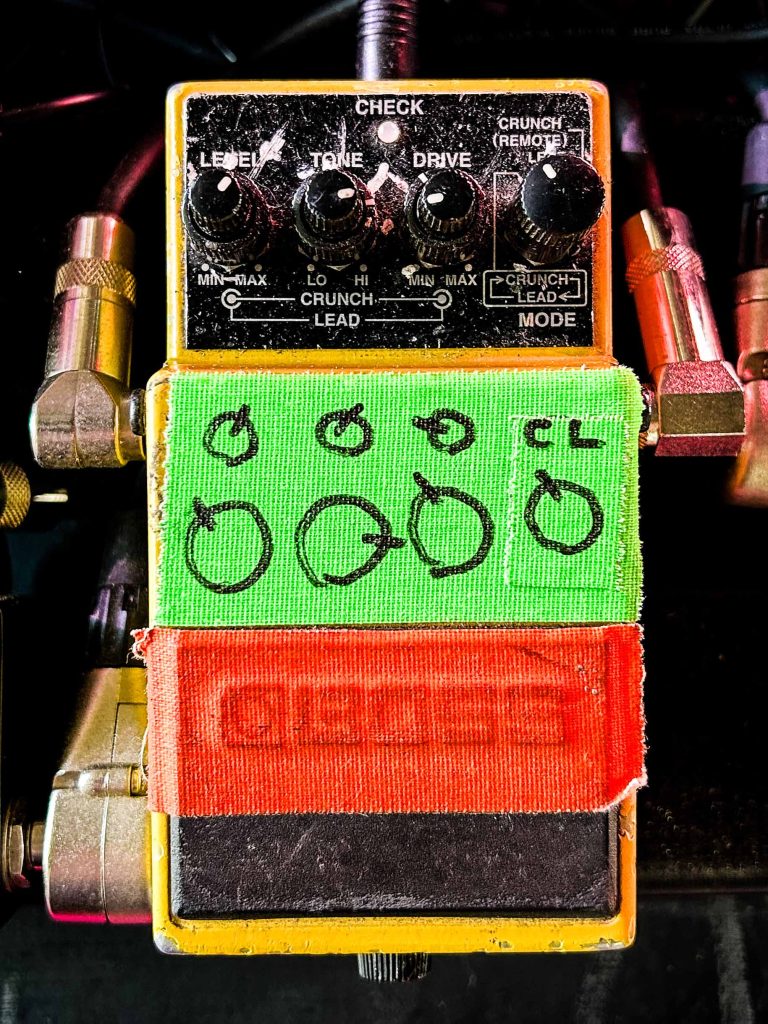
Sometimes, I’ll even do a gig with just a TU-3 Chromatic Tuner and an SD-2 DUAL OverDrive. I rely on the amp sound quite a lot of the time. So, rather than have a big array of pedals, I’ll compact it down.
"BOSS has always done great overdrive pedals. I think they’re the best. I’ve been using them for years."
The SD-2 DUAL OverDrive is one of the lesser-known BOSS pedals. When did you start using it?
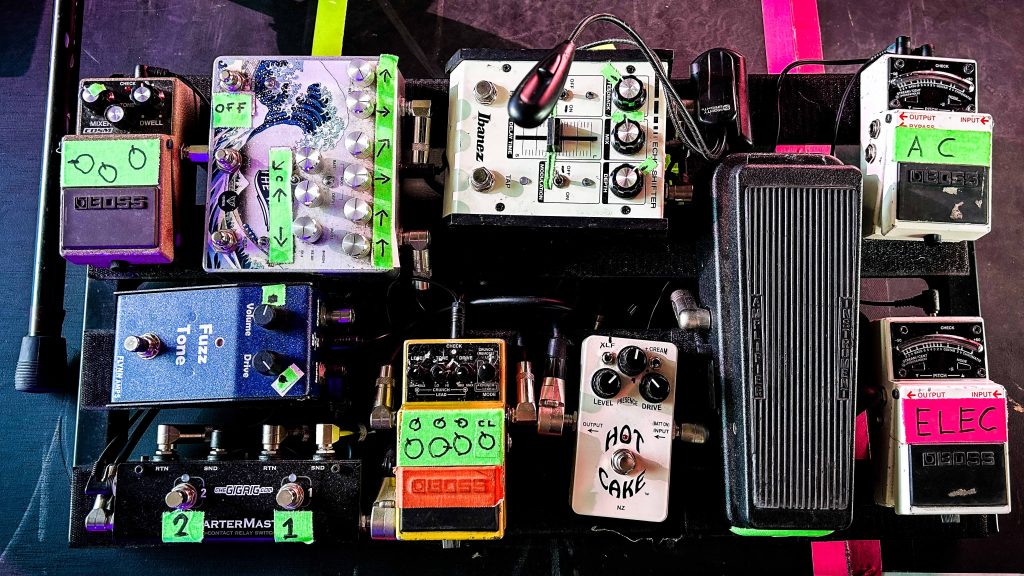
The SD-2 is great. I’ve used that since it came out [in 1993]. The two levels [Crunch and Lead] are great for Texas songs like “Inner Smile,” where I need a gain boost. I use a GigRig QuarterMaster to engage the SD-2 and the pedal itself to select either mode.
I’ve also got a BOSS OD-1 Over Drive, which I really like. I’ll use that every now and then. If I’m not using my own amp, I’ll often put that in the chain. BOSS has always done great overdrive pedals. I think they’re the best. I’ve been using them for years. Everyone uses them.
"I’m quite a dynamic player, and the BOSS overdrives respond really well. I love the feel. They sound and feel natural, real."
What do you like specifically about BOSS overdrive pedals?
They give you a lot of control over your sound. That’s also why I like using BOSS overdrive pedals for recording. The frequencies are nicely dialed in out of the box. With a lot of other overdrive pedals, the midrange isn’t as well shaped, and you have to EQ it out—we call that “the cheap sound.”
Also, if you really dig in when you’re playing, BOSS overdrive pedals don’t tend to struggle; there’s a decent amount of headroom. They have a nice, open sound. I don’t usually use compressors because I like the dynamics of a good overdrive pedal.
To me, it’s not as good if everything’s at the same level when you play. I’m quite a dynamic player, and the BOSS overdrives respond really well. I love the feel. They sound and feel natural, real.
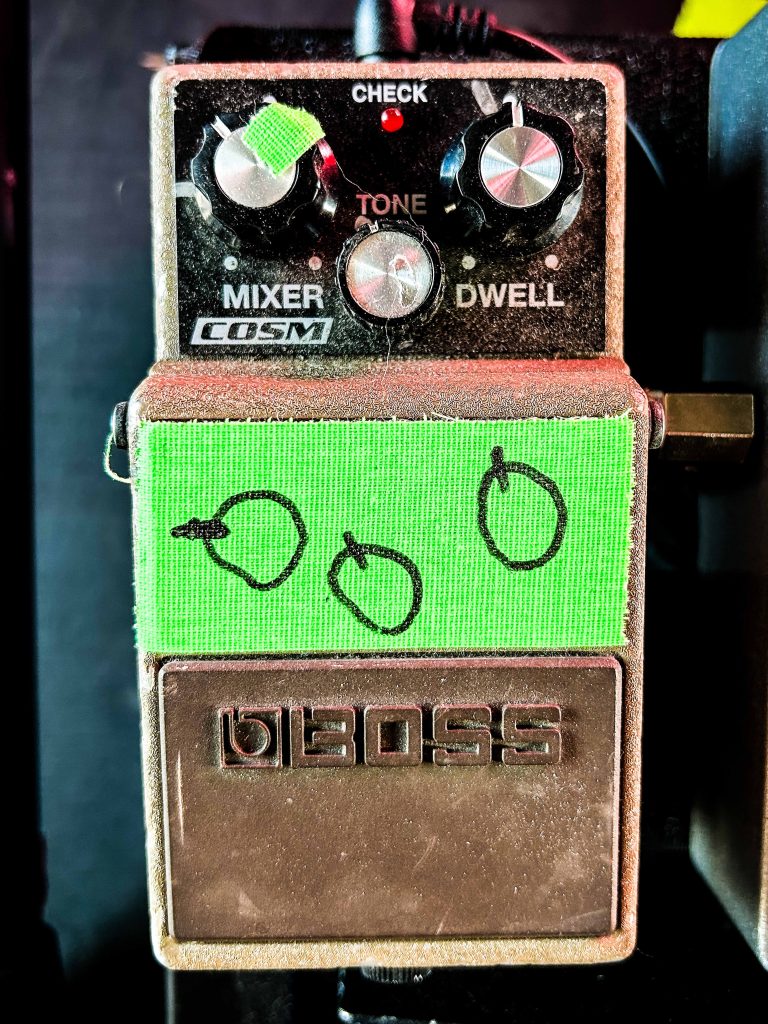
How do you like to use the BOSS FRV-1 ’63 Fender® Reverb?
I use the FRV-1 for a touch of top-end sparkle. It’s so good I just leave it on all the time. I don’t use it for an obvious reverb sound; it just gives my guitar tone a wee shimmer, and it’s great for improving separation in the mix.
Used with a BOSS overdrive, it really helps the sound cut through. It’s simple but effective.
"I use the FRV-1 for a touch of top-end sparkle... With a BOSS overdrive, it really helps the sound cut through. It’s simple but effective."
Why have you got two BOSS TU-3 Chromatic Tuners on your Texas pedalboard?
I use one for acoustic guitar and one for electric. You can’t beat the BOSS Chromatic Tuners. They’re so accurate. I’ve got loads of them. Actually, I’ve got a box full of BOSS pedals I’m always diving into—including different delays I’ll use every now and then. The SDE-3 Dual Digital Delay is one of my new favorites.
The Ibanez Echo Shifter is a cool delay, and I have a Foxpedal The Wave delay pedal, but I want to replace it with the BOSS RE-202 Space Echo delay pedal. I tried one in a Guitar Guitar shop, and it sounded great. I keep going back to my BOSS delay pedals. I’ve also got some cool BOSS chorus pedals and reverb pedals I love.
Guitar Heroes
What are the most important qualities you look for in an electric guitar?
I use guitar tone controls a lot. That’s why I like the [Gibson] B.B. King Lucille guitar—the Varitone control is great. If the sound is a bit too bright, for example, I can easily just pull it back a bit.
"If you study the details of Jimmy Page's playing, you’ll quickly discover his technique is incredible."
My ’70s Gibson Goldtop Les Paul is one of my favorites. But, live, I really like the 335 sound. The semi-hollow body makes a real difference to the sound.
What’s your favorite kind of guitar music?
I’m a massive fan of Led Zeppelin. A lot of people say Jimmy Page is a messy guitar player, but if you study the details of his playing, you’ll quickly discover his technique is incredible.
Recently, I’ve been studying Jimmy Page’s playing to better understand why he made the choices he did. I like the stuff he did with The Yardbirds as well, before Led Zeppelin formed.
Which other guitar players do you like?
Bert Jansch, John Squire, and Steve Cradock are truly great players, I think. Recently, I’ve also been enjoying listening to Stevie Ray Vaughan—his technique was amazing.
"It’s all about feel and attitude for me."
I was a ’60s and ’70s buff and really liked Marc Bolan for his feel. Check out the live TV performances of “Children of the Revolution.” His playing and feel are exactly the style I love.
I love [Small Faces and Humble Pie guitarist/vocalist] Steve Marriott as well. The way he plays is my kind of thing. It’s all about feel and attitude for me.
Greenock Boy
What was the music scene like where you grew up in Scotland?
I was born in Greenock [near Glasgow, Scotland]. There was always a good music scene there. The vibe is similar to Manchester in a way. In fact, Mani [Gary Mounfield, 1962-2025], the Stone Roses and Primal Scream bassist, had connections there.
The irony is that, as a musician, I was always trying to get out of Greenock to Glasgow. Being a Greenock boy, I always wanted to play there. Even when the bands I was in got bigger, we’d always play out of town.
"When I joined Texas, I started getting more into effects."
What bands did you play in early on, before you joined Texas?
Before Texas, I was in a band on A&M Records called The Smiles. Before that, I was in a band called Spirea X on 4AD. I tended to use really simple setups with BOSS overdrive pedals.
I was a singer and didn’t think much about pedals, but when I joined Texas, I started getting more into effects.
The Road to Texas
How did you transition from The Smiles to Texas?
The Smiles had the same management as Texas, and we went out on tour with them. I’ve known them for over 30 years and even recorded on some of the early Texas stuff.
As I said, The Smiles were on A&M Records, and when it collapsed, we were wondering what to do. Mercury Records offered us a single deal, but we wanted an album deal. So, we said no to that and decided to hang fire.
In the meantime, I went out on tour playing rhythm guitar with Texas to help out Sharleen. Along the way, I just totally forgot about The Smiles, and things took off with Texas.
"I’ve known Texas for over 30 years and even recorded on some of the early stuff."
As a singer yourself, which vocalists do you admire?
Sharleen, obviously! I’ve always loved Joe Cocker, particularly Mad Dogs & Englishmen. I used to emulate Joe Cocker’s singing when I was younger. One day, I had a chance to meet him, but I was too nervous. Sharleen was saying, “Go and talk to him!” But I couldn’t.
I really regret not speaking to Joe Cocker. It wasn’t too long after that that he passed away. But I’ve nothing but great memories of him.
"Cat really adds something special to the band. She bounces when she plays and has a great feel and sense of groove."
Band Dynamics
How do the other members of Texas shape the band’s sound and the way you perform?
I love playing with Cat. Cat really adds something special to the band. She bounces when she plays and has a great feel and sense of groove. For example, she might pull the snare back a bit for a more laid-back groove or bring it forward a touch when we need to push it.
"Playing with Eddie helped me so much as a guitar player. Space is often more important than playing. Especially when performing with a vocalist."
Cat plays with a click in her ear, but she has a built-in metronome. There have been moments when the click has dropped out, yet Cat keeps playing—and when it comes back in, she’s bang in time. She’s a total natural.
Eddie has an incredible feel, too—his dynamics and push-and-pull. He can do it all. Playing with him helped me so much as a guitar player. Space is often more important than playing. Especially when performing with a vocalist.
Johnny is all about that—less is more. Bass, drums, and simple guitar can be more effective than playing all over the song. Like “Summer Son” is one hook. In that song, each player is doing something strong, and each part supports the song as a whole.
"It’s normal to have fallouts, but we’ve always worked through any problems. That’s what makes a good band."
When Jimi Hendrix was performing, he tended to sing a part, then play. As did B.B. King. He didn’t sing over his hooks. Similarly, Jimmy Page and Robert Plant did a lot of call-and-response in Led Zeppelin. Robert would sing a line, then Jimmy would play a lick.
It seems there’s a really good atmosphere in the band.
Texas feels like a big family bubble. We’re really close. Really tight-knit. Sharleen is great. I actually ended up marrying Sharleen’s sister! And Eddie is like a brother to me; we grew up together.
A lot of bands fall out over the years. It’s normal to have fallouts, but we’ve always worked through any problems. That’s what makes a good band. We have such a laugh on stage. It’s light-hearted, and the audience picks up on that.
Enduring Appeal
Does Texas keep you satisfied creatively?
Yeah. Eddie and I have done quite a lot of recording on Pro Tools and Logic together. You’ve always got to have an idea in your head when you’re going into the studio with Texas; you can’t go in without having fuel in the tank.
I always did my homework, which made me a much better guitarist. I found there were many different styles of playing to learn.
"We’ve got a really young audience now. When we played Glastonbury, it seemed like we had a whole new generation of fans."
Texas formed in the mid-’80s. How has the band’s audience changed over the years?
We’ve also got a really young audience now. When we played Glastonbury [in 2023], it seemed like we had a whole new generation of fans. They were singing along and knew all the words. That was really good to see.
Obviously, there’s an older audience as well, but it seems like we’ve had a boost of teenage fans in recent years. A friend of mine told me, “I went into my boy’s room the other day, and he was blasting out Texas.”
Texas has been around a long time, but we only get better with age!