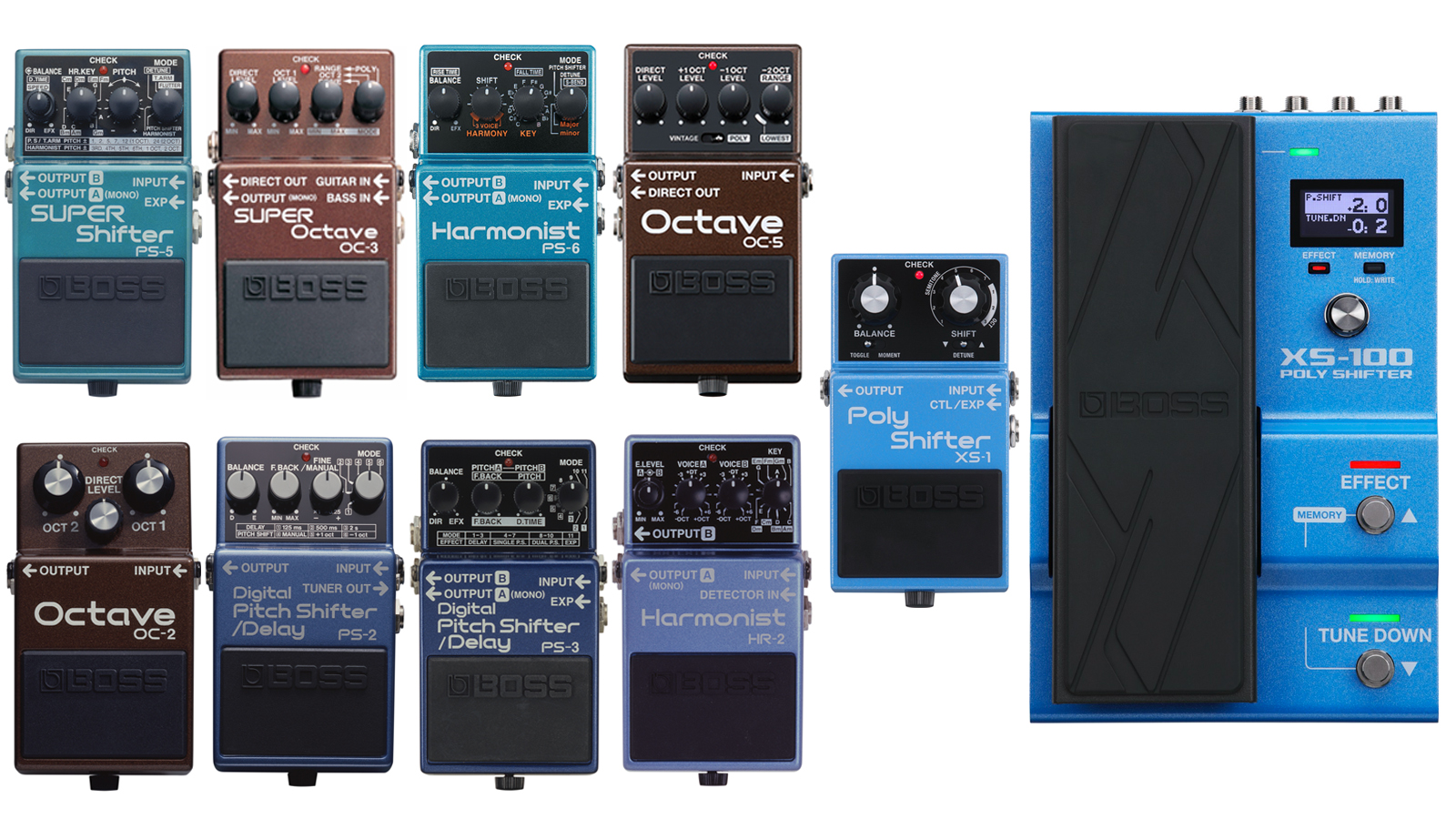
Since the early 1980s, BOSS pitch pedals have blended ingenuity with technical expertise to continually redefine the boundaries of music-making. From 1982’s OC-2 Octave to 2025’s XS series, each release has unveiled new creative possibilities for studio and live performance. For decades, these pro-grade stompboxes have combined precision and playability, consistently exceeding musicians’ expectations at every step. Today, the XS-1 and XS-100 Poly Shifters stand as the pinnacle of pitch-shifting technology, offering pinpoint accuracy, authentic tone, and a rapid attack that preserves every transient.
Decades of Evolution
BOSS has consistently set the standard in pitch-pedal technology, pioneering revolutionary octavers, harmonizers, and pitch shifters that inspire. Our award-winning pedals have evolved from monophonic octave effects into highly versatile polyphonic tools capable of shaping complex sonic pictures in real-time.
This progression reflects both technological innovation and the demands of musicians seeking reliability, responsiveness, and creative freedom. Listening closely to the needs of bassists and guitarists worldwide, BOSS developed products that led trends across the entire industry.
Join us on a journey through decades of evolution, as we showcase how BOSS pitch pedals have transformed the way music is imagined and performed.
1982-2005: OC-2 Octave
The analog OC-2 Octave quickly established itself as a gold standard in guitar/bass effects. Unlike earlier pedals that simplified waveforms and stripped away tonal character, it used waveform inversion to preserve the instrument’s natural sound.

Independent controls for the direct signal, one octave down, and two octaves down let musicians shape everything from subtle tonal thickening to deep, synth-like sub-bass. Bassists especially prized the OC-2 for adding seismic low-end power, while guitarists used it to fatten riffs and mimic basslines.
Over its long production run, the OC-2 became a staple on professional pedalboards and remains celebrated for its warm, organic sound.
1987-1993: PS-2 Digital Pitch Shifter/Delay
As digital technology evolved, BOSS introduced truly groundbreaking designs tailored for guitarists. The PS-2 Digital Pitch Shifter/Delay claims the distinction of being the first compact pedal to provide players with real-time pitch shifting capabilities beyond simple octave intervals.
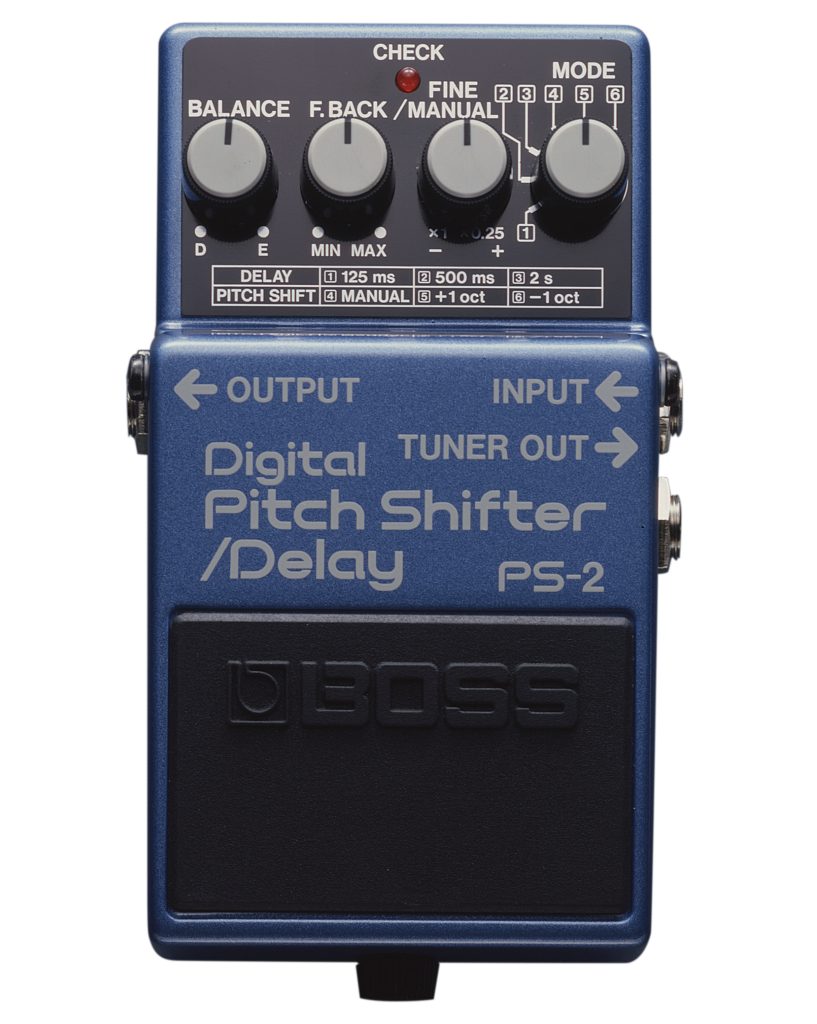
Like the world-first DD-2 Digital Delay (1983) and RV-2 Digital Reverb (1987), the PS-2 set a template for all that followed. In recent years, it has garnered a devoted following for its distinctive 8-bit vintage digital character.
A six-way mode switch afforded three pitch-shift options—+1 Oct, -1 Oct, and Manual—along with three delay ranges of 125ms, 500ms, and 2 seconds. Essentially two pedals in one, such versatility made the PS-2 ripe for experimentation.
1994-1999: PS-3 Digital Pitch Shifter/Delay
Building on the foundations of the PS-2, the PS-3 signified another big leap in pitch shifter innovation. Powered by 16-bit DSP, it delivered studio-grade clarity and considerably widened the sonic canvas for musicians.
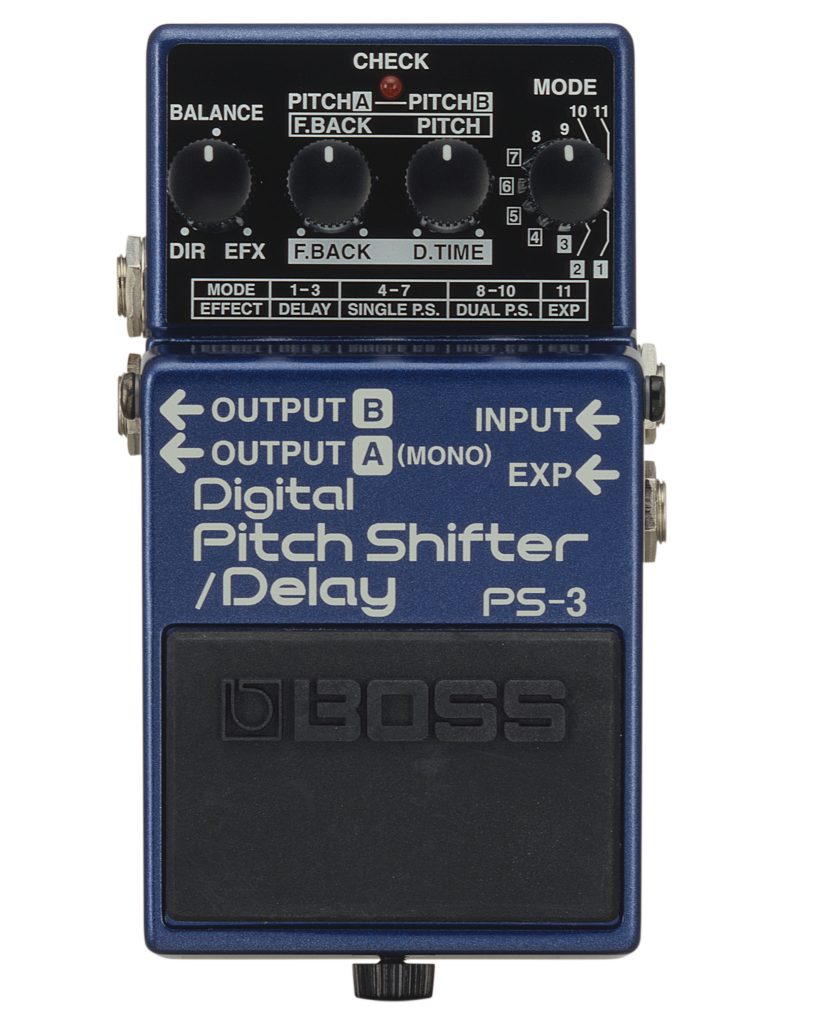
With independent dual voices spanning a four-octave range, stereo outputs, and a generous selection of modes, the PS-3 invited forward-thinking players to explore. Its reverse playback and pedal-controlled pitch sweeps made it a favorite among more adventurous performers.
An eleven-way mode selector presented eight pitch-based and three delay effect choices (up to two seconds), placing a world of shifting, shimmering, and time-bending sounds underfoot. Such diverse capabilities underscored BOSS’s commitment to advancing digital pitch effects.
1994-1999: HR-2 Harmonist
Appearing alongside the PS-3, the HR-2 Harmonist was BOSS’s first dedicated harmony stompbox and another milestone in digital effects design. Engineered for clear, studio-quality sound, it packed two intelligent harmonizer voices into a compact pedal.
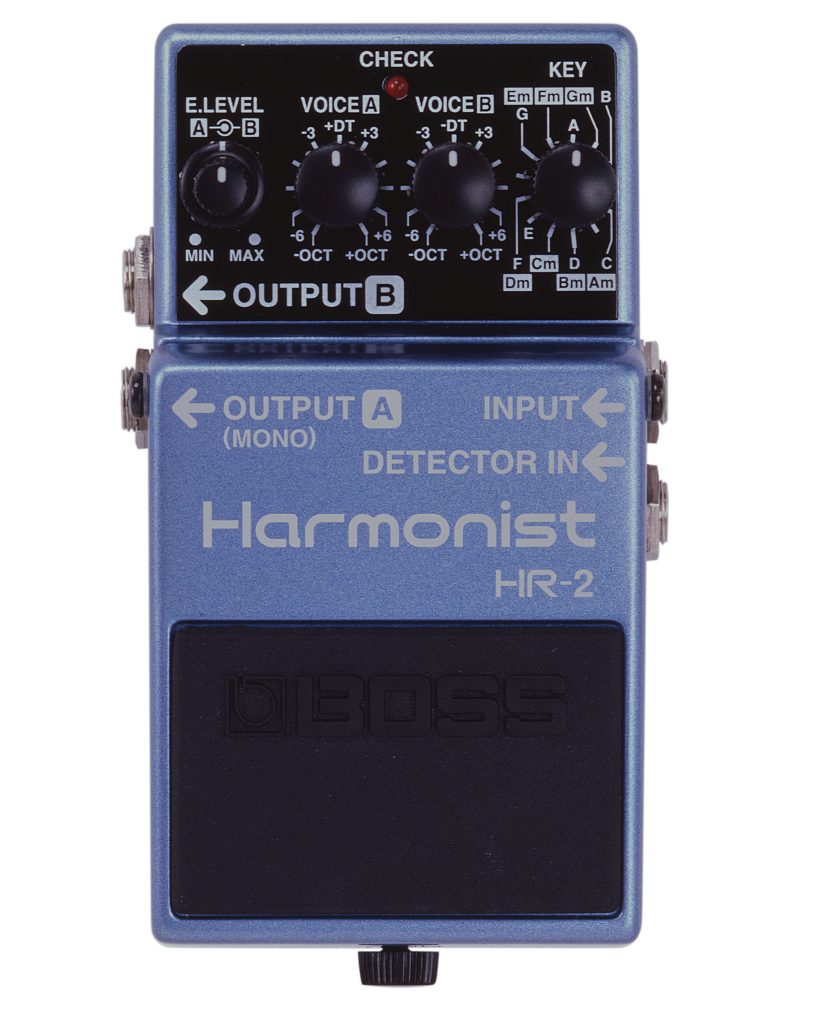
After selecting a key, players could instantly add one or two harmonies while playing single-note melodies. Each generated voice could have volume and pitch set independently, spanning 3rd, 4th, 5th, 6th, and single-octave intervals up or down. The HR-2 could also create detune effects, producing shimmering, chorus-like textures.
All considered, this was an impressive feat for the era and a glimpse of the progressive pitch technology that would help define future BOSS innovations.
1999-2010: PS-5 SUPER Shifter
Billed as “two effects in one—an intelligent pitch shifter/harmonist,” the PS-5 SUPER Shifter unified the concepts of the PS-3 and HR-2. Boasting an upgraded 24-bit DSP chip, it could shift pitch and harmonize across four octaves, add chorus-style shimmer, and emulate vibrato arm techniques.
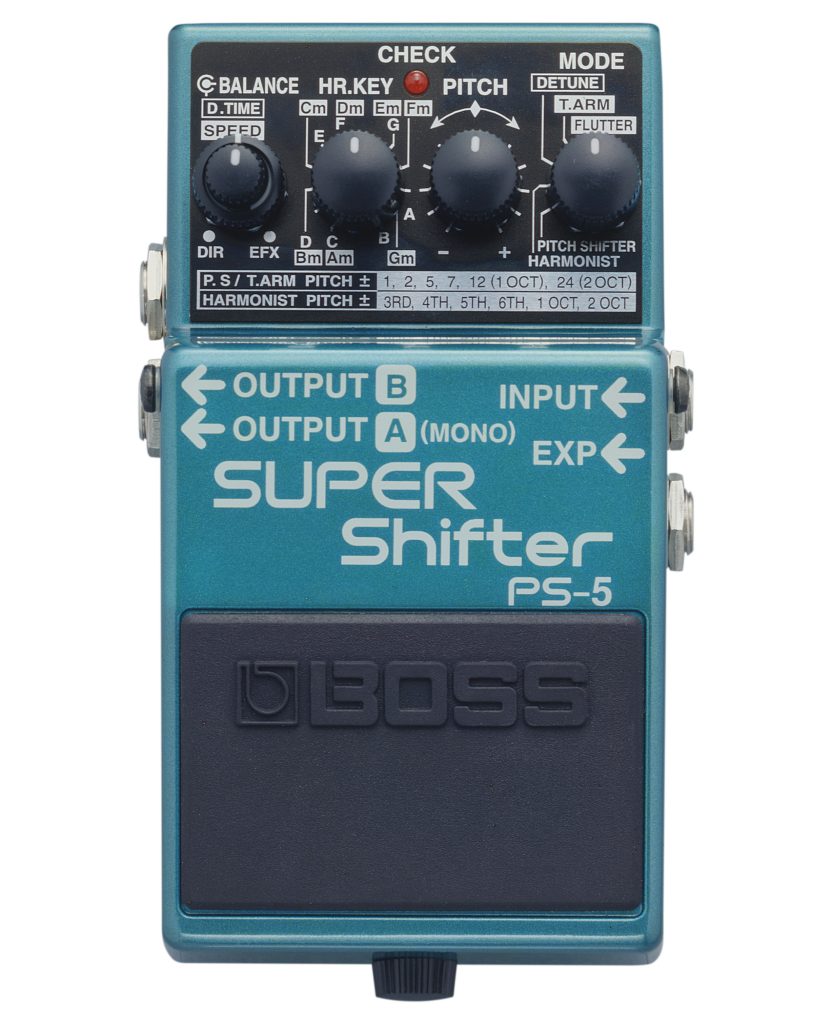
Whether performing using harmony duets, 12-string sounds, wild dive-bombs, or pseudo-bass tones, the PS-5 encouraged players to explore textures ranging from subtle musical enhancements to wild sonic showmanship.
Controls were intuitive yet versatile, comprising straightforward multi-function knobs alongside a five-way mode selector for Pitch Shifter, Harmonist, Detune, T.Arm, and Flutter. Flexible stereo outputs and an expression pedal jack for continuous pitch sweeps further expanded creative reach.
2003-2020: OC-3 SUPER Octave
As the world’s first compact pedal with true polyphonic octave functionality, the digital OC-3 SUPER Octave marked a major evolution from the monophonic analog OC-2.
For the first time, players could enjoy octave effects on chords as well as single notes.
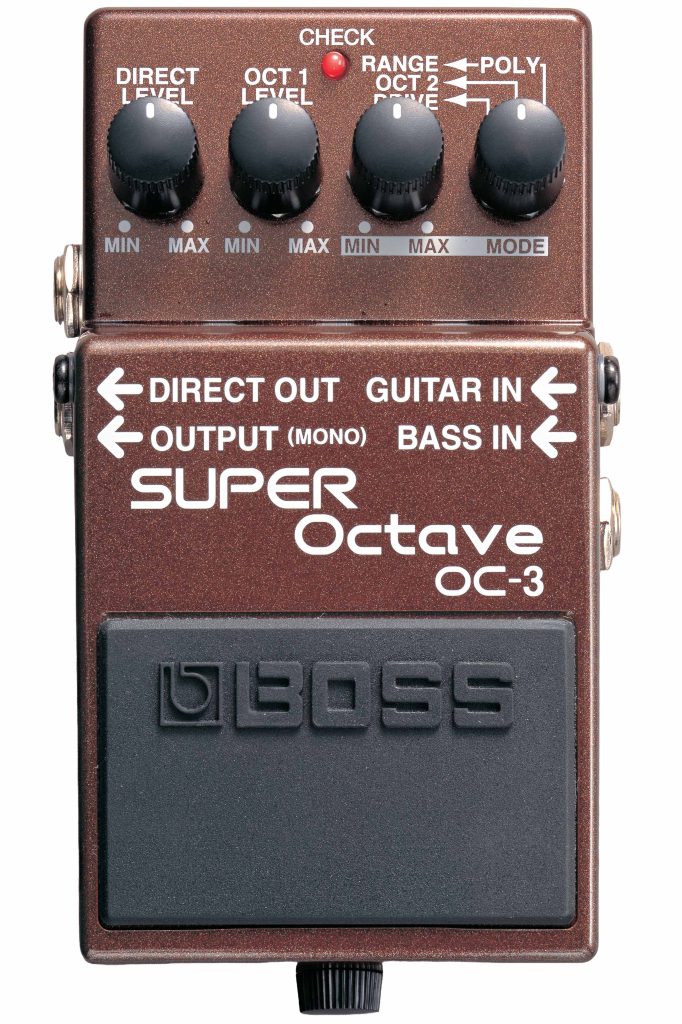
Beyond its groundbreaking Poly mode with adjustable range, the OC-3 furnished players with an OC-2-style mode for both single- and double-octave sounds, as well as a Drive mode that added distortion for aggressive, synth-like tones.
These three modes, plus independent Direct Out and Mono outputs and dedicated Guitar and Bass In jacks, further expanded options. The OC-3 set a new benchmark in octave processing and became a pedalboard mainstay for countless players.
2010-Current: PS-6 Harmonist
The PS-6 Harmonist combines dynamic harmony and pitch effects in a compact, performance-ready design. With pristine digital processing, advanced AD/DA conversion, and a vast array of sounds, it delivers expressive pitch manipulation and control like never before.
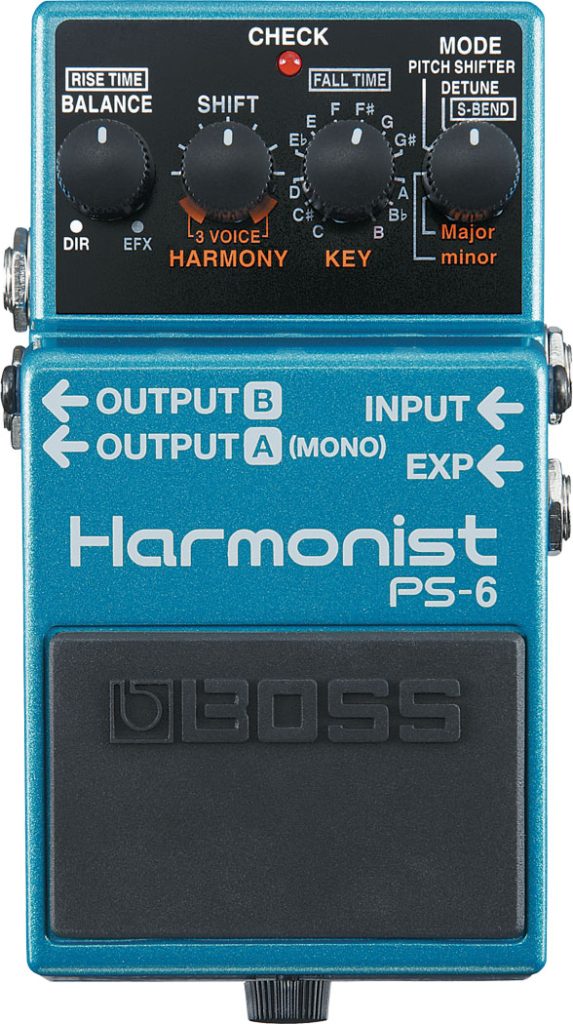
Harmony mode lets players create two- or three-part harmonies with ease—simply select a key and interval to layer one or two additional voices. Pitch Shifter mode enables polyphonic transposition across four octaves, while S-Bend mode produces dramatic seven-octave pitch glides. Detune mode adds gentle pitch shifts for depth and texture when playing single notes or chords.
An optional expression pedal supports real-time pitch control while stereo outputs create wide, immersive sounds.
2020-Current: OC-5 Octave
Founded on the OC-2 and OC-3 legacy, the OC-5 Octave redefines what an octave pedal can do. Vintage mode faithfully recreates classic OC-2 mono sounds, while Poly mode opens up full polyphony and lets you fine-tune the Range/Lowest setting to isolate parts of the fretboard—even down to single bass notes.
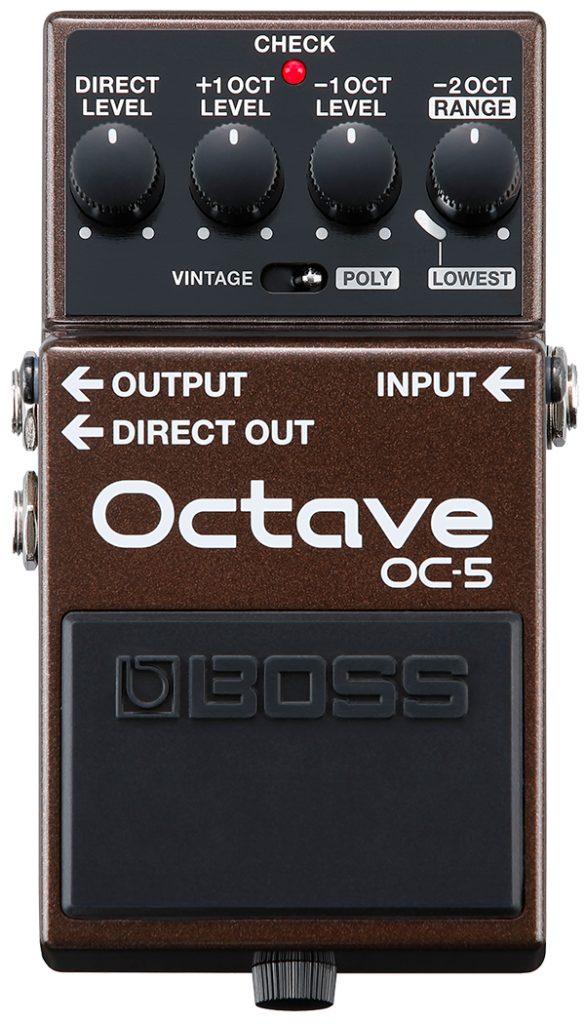
Leveraging a modern DSP engine, the OC-5 pairs low-end power from -1 and -2 octave effects with a new +1 Oct knob to add octave-up tones. Refined tracking supplies a clean, accurate response throughout, with no discernible latency.
Featuring a Guitar/Bass switch to optimize performance and a Direct Out for separate wet/dry routing, the OC-5 ensures exceptional response and control.
2025-Current: XS-1 Poly Shifter
The XS-1 Poly Shifter uses the same cutting-edge algorithms and SHARC processor as the top-of-the-line XS-100 to deliver precise, natural tracking for polyphonic instruments.
It puts compact, professional-grade pitch control at the feet of guitarists, bassists, and other musicians.
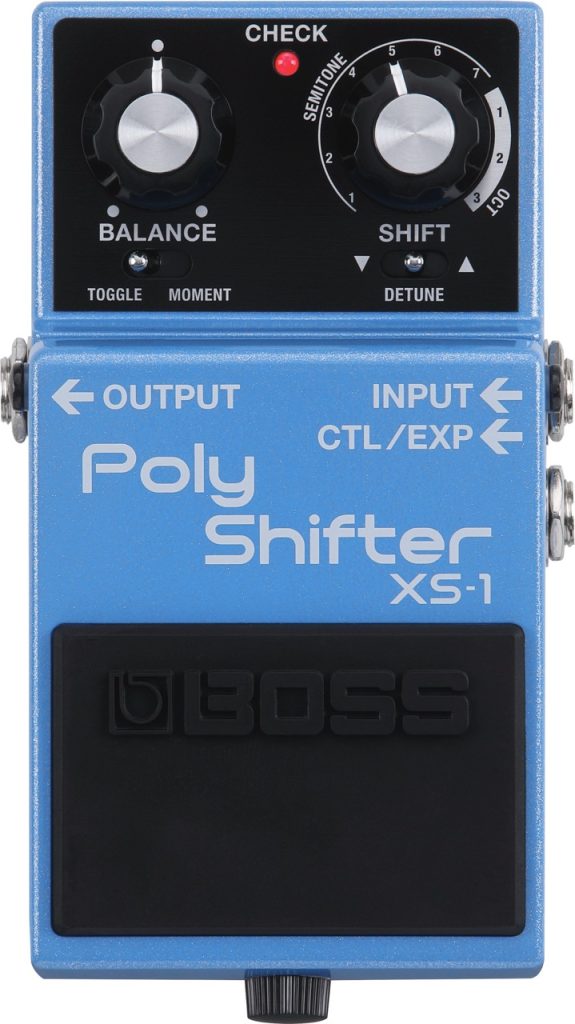
Players can instantly shift pitch up or down across ranges of seven semitones or three octaves, for anything from subtle key changes to bold octave leaps. The Detune setting gives a lush, full-bodied doubling effect when desired.
Further controls are equally intuitive and flexible: the Balance knob blends dry and wet signals, while Toggle and Moment options determine how the onboard pedal switch behaves. Up to two external footswitches or an expression pedal allow lightning-fast access to saved settings or continuous sweeps.
2025-Current: XS-100 Poly Shifter
The flagship of the XS series, the XS-100 Poly Shifter, represents a new standard in pitch shifting effects.
Highly developed BOSS algorithms, working in tandem with a SHARC processor, preserve your instrument’s fundamental character for unrivaled dynamic performance.
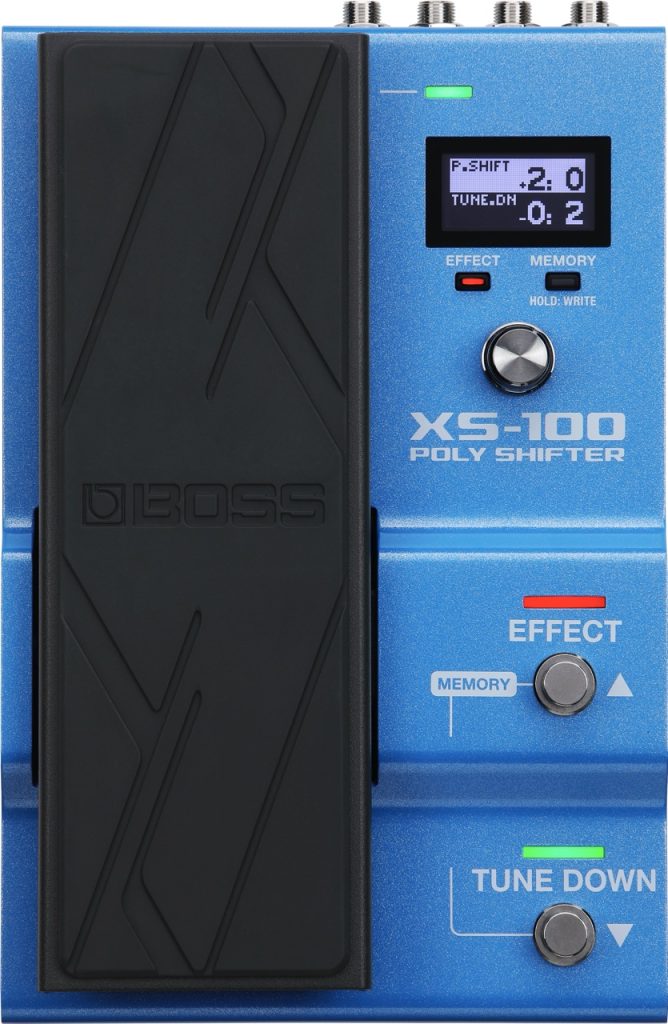
Offering an expansive eight-octave range, the XS-100 provides total control for guitar and bass, with fixed pitch settings in semitone steps, ultra-smooth pedal sweeps, and rich Detune effects.
Adjustable pedal curves and customizable switch functions (including a toe switch) adapt to your personal requirements. Meanwhile, 30 memories, a clear display, and flexible connectivity—comprising MIDI I/O, USB, external control options, and a dedicated direct output—make the XS-100 a pitch-shifting powerhouse.
A New Era in Pitch Shifting
Beginning with the analog warmth of 1982’s OC-2 and culminating in the unmatched digital firepower of 2025’s XS series, the BOSS pitch pedal journey tells a story of relentless innovation.
Along the way, each model expanded creative possibilities for musicians—from early monophonic octave shaping and harmony creation to leading-edge polyphonic DSP precision.
The BOSS XS-1 and XS-100 Poly Shifters are the pinnacle of a decades-long evolution. Step into this new era of pitch pedals and experience a transformative shift in your creativity.