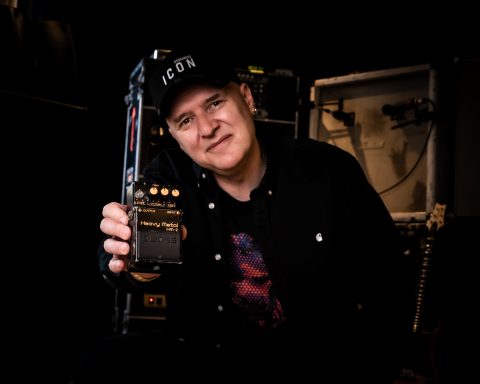


What does it take to keep world-class artists performing at their peak? For more than 20 years, James Sharpe has been finding out from the front line. He’s teched for a remarkable roster of major musical acts, from chart-topping pop and rap to pioneering ’70s punk and progressive metal. Sharpe’s long list of clients includes (breath in): Sam Smith, Dave, Gary Numan, The Stranglers, Sugababes, Paloma Faith, Shawn Mendes, Opeth, The Prodigy, Wolf Alice, Rick Astley, Maribou State, and more. A lifelong musician whose passions stretch from acoustic instruments to experimental electronica, Sharpe combines technical expertise with a creative mindset, making his observations on BOSS, Roland, and modern music-making especially compelling.
Live Without Limits
And there’s plenty to unpack. Drawing on decades of arena tours, festivals, and first-class productions, here, Sharpe reveals how professional musicians really use BOSS and Roland gear, why certain products become trusted fixtures, and what separates equipment that survives life on the road from gear that simply does not.
Just as fascinating are the stories behind the rigs. From Dave Greenfield’s Roland-powered Stranglers setup to Foals’ arsenal of BOSS Digital Delays, Sharpe offers rare insight into the practical realities of elite touring.
Along the way, he explains why the BOSS TU-3 Chromatic Tuner remains the “industry standard,” explores the strengths and limitations of digital modeling versus traditional amps and cabinets, and highlights the immense creative possibilities of the BOSS GK-5 Divided Pickup and GM-800 Guitar Synthesizer.
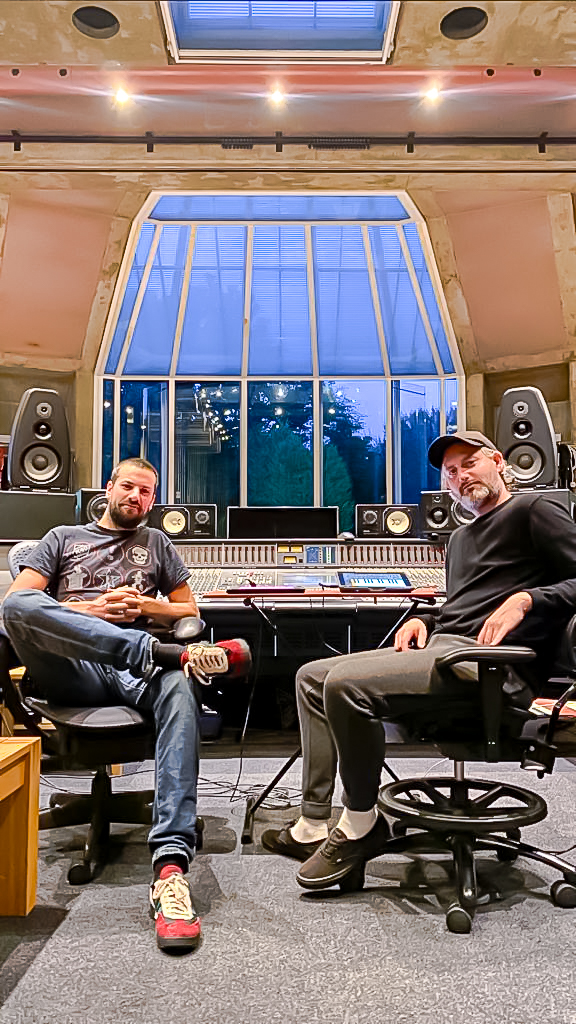
BOSS visited Sharpe at his London-based studio to uncover the stories, insights, and gear discoveries accumulated across a remarkable career.
For anyone interested in performing, live production, or music technology, this detailed conversation makes essential reading.
Creative Curiosities
When did your fascination with music gear begin?
Sound systems and loud music have always fascinated me. When I was a kid, I was obsessed with taking gear apart. There was a dump near where I lived in Wiltshire [UK], where I’d find old cassette recorders and take them to bits. I didn’t even know what I was doing; I just wanted to see what was inside. I’d take the motors out and connect them to batteries.
What was your earliest experience working in music professionally?
When I was 15, I was lucky enough to get a work experience placement in the maintenance department of Real World Studios in Box, [Wiltshire, UK], after writing to the manager, Owen Leech. It was a really cool workshop. When I first walked in, I immediately noticed stacks and stacks of half-pulled-apart Roland TR-808s and TR-909s.
At the time, I was using ReBirth RB-338 on a laptop and didn’t even know that 808s and 909s were actual hardware until I saw them. People used 808s and 909s a lot to record at Real World, and they were keeping them going by harvesting parts.
"People used 808s and 909s a lot to record at Real World, and they were keeping them going by harvesting parts."
Did your home life influence your musical interests in any way?
A friend of my dad’s was very interested in music tech. He had a set of Simmons drums, a mixing console, and a BOSS [Micro Studio Series] Digital Delay. I used to visit him and sit there talking into the BOSS unit, mesmerized by infinite echo. I was completely and utterly obsessed with it.
What music inspired you early on?
I was consumed by sound and played The Prodigy’s Music for the Jilted Generation and Orbital’s Green Album on repeat. I was so inspired by The Prodigy, Underworld, and Orbital that I got into DJing in my teens.
Before long, I started making electronic music and later began collaborating with my friend Charlie Henderson. Charlie had been part of the techno duo 3000003 in the ‘90s alongside Steevio, who is now well respected on the modular techno scene.
Original Synth
What Roland gear did Charlie Henderson use?
I remember Charlie had a Roland JD-800 [Programmable Synthesizer], which is really cool. He also had a 909, a couple of 808s, and a TR-606 [Drumatix], which he was really into because it has a very unique hi-hat sound.
Charlie’s ethos was to never, ever use a sample. He was all about making his own sounds so he wouldn’t sound like anyone else. He used samplers to sample himself, but he never used libraries or sound packs.
That really resonated with me. I play drums, bass, and a bit of guitar, too, and the idea of creating an entire original song using keys and synths was really exciting. Over the years, I’ve bought loads of music gear—BOSS pedals, desks, outboard, synths, and all sorts.
What are some of your favorite Roland synths?
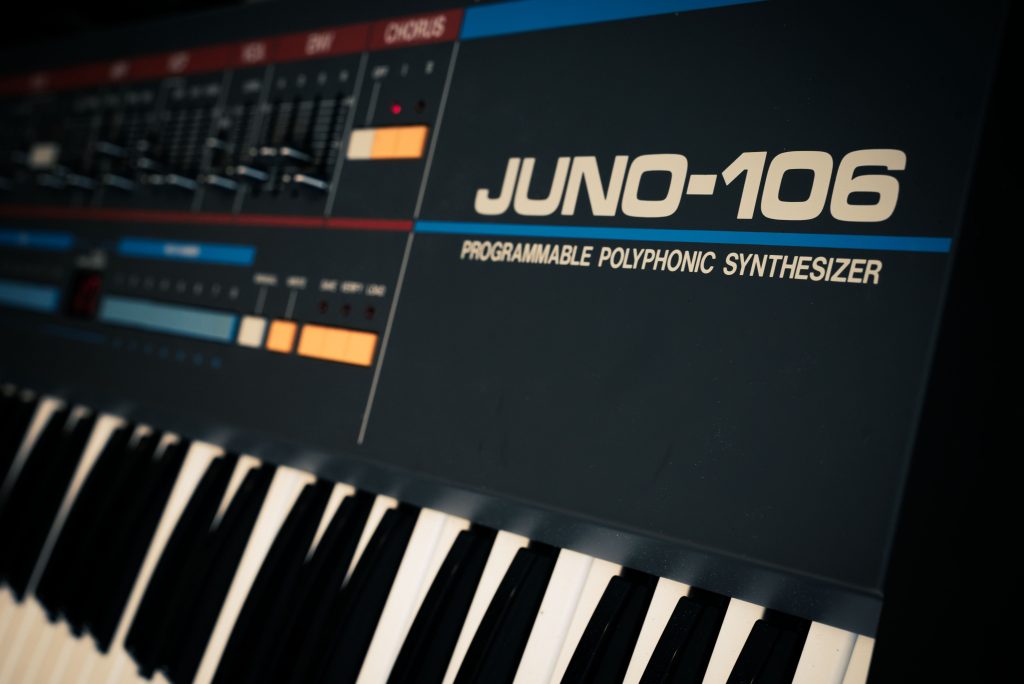
I still have my Roland Juno-106, which is great. They came out in 1984, but my one is super clean and looks like it was built yesterday. These days, digital emulations are incredible and sound like the real thing, but when I plug in my Juno-106, I can tell the difference, especially when using the wide stereo chorus. It’s lush—instantly magical.
"The Roland Boutique SH-01A synth goes everywhere with me. It’s the coolest little thing. I even use it with a laptop while traveling by plane."
Another of my favorites is the little Roland Boutique SH-01A synth, which goes everywhere with me. It’s the coolest little thing. I even use it with a laptop while traveling by plane.
I’ve got the Roland Boutique TR-08 Rhythm Composer, too. That’s really flexible because it has ten audio outputs and interfaces with a computer via USB. I also really like the Roland SE-02. The SE-02 is a really great analog synth.
I love the Roland SYSTEM-8 PLUG-OUT Synthesizer. My friend Pete Sené, who plays keys with Everything Everything, showed me one of those when they came out [in 2016]. I thought it was the coolest thing ever to have a synth that let you build sounds on a laptop anywhere and then load them into hardware.
What DAW do you use?
I use Logic for producing and Ableton as a live tool.
New Beginnings
So, you’ve plenty of experience and insight as a musician, but how did you get into teching?
I started teching in 2004 with a band at school called Blackbud, who got signed to Independiente. I went out on tour with them as a drum tech and did the Other Stage and John Peel Stage at Glastonbury. In 2008, I started working for The Stranglers, which was my first proper touring gig.
How did your tech role with The Stranglers come about?
When I was 16, I met Charlie Henderson working in a furniture restoration shop in Lacock, [Wiltshire, UK]. He had been in a band with Louie Nicastro, who now produces The Stranglers. Louie is a great engineer and still does front-of-house for The Stranglers.
Through meeting Louie, Charlie had started keys-teching for The Stranglers. By the time I was in my early 20s, he’d settled down with his family and asked me if I wanted to step in. I thought I’d give it a go because I’d done a bit of teching before.
"The workhorses of Dave Greenfield’s Stranglers rig were a couple of Roland Fantom-XR [Synthesizer/Sampler] rack modules."
What were you doing between Blackbud and The Stranglers?
Between Blackbud and The Stranglers, I was always trying to find a way into tech work, and was also employed at a music venue in Wiltshire. That was good, but it was more of a classical music venue. I was looking after the technical side of things there, but it didn’t float my boat, so I got a job in construction before joining The Stranglers’ crew.
Was teching for The Strangers a challenge to begin with?
Yeah. I was technically minded, but I didn’t have a clue about stagecraft at that point. I went in at the deep end. The first Stranglers gig I did was a headline show in the Big Top tent at the Isle of Wight Festival. I remember thinking, “What am I doing?” I was looking after the keys player, Dave Greenfield, and his rig was really complicated.
Fantom Vibration
Can you tell us about Dave Greenfield’s Stranglers rig?
The workhorses of Dave Greenfield’s Stranglers rig were a couple of Roland Fantom-XR [Synthesizer/Sampler] rack modules (one was a spare). He used MIDI controller keyboards, and each of the Fantom-XR’s four outputs would change sound, depending on the song.
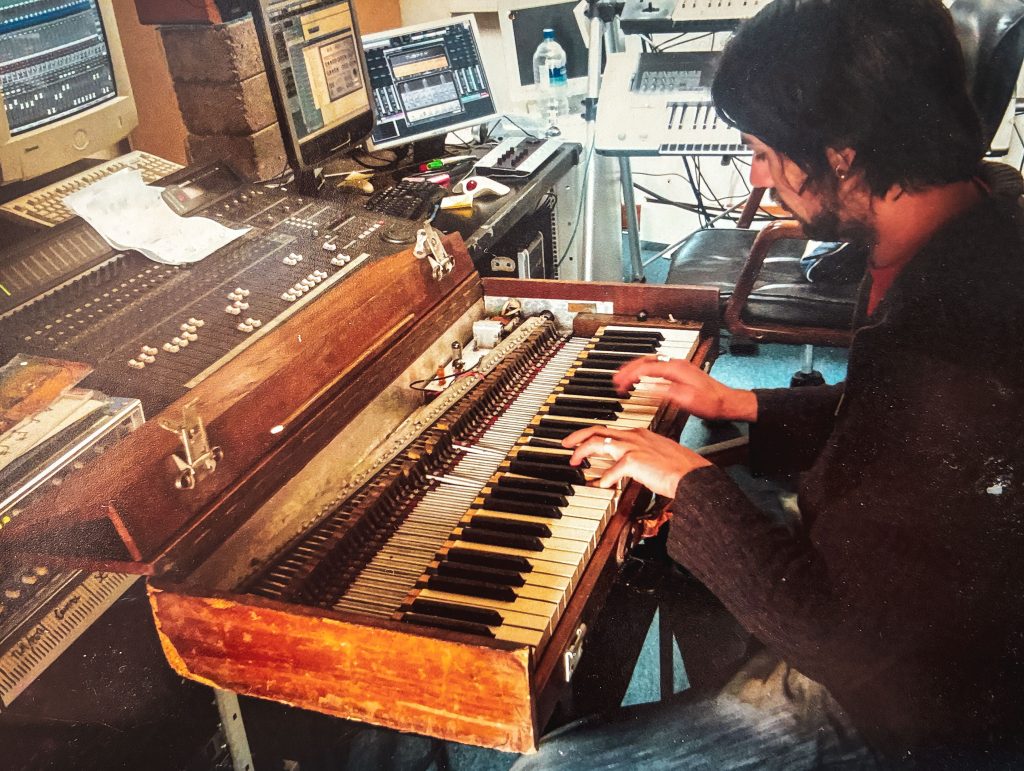
The rig was blueprinted from his ’70s setup, which originally included a Hammond organ, a Minimoog synth, and a Hohner Cembalet [electric piano]. His new setup was based on his original layout, so his muscle memory didn’t change. For example, controls for cutoff, resonance, and LFO speed were in the same positions as his old Minimoog.
The Cembalet can be heard on “No More Heroes.” They are incredibly rare and hard to find. Cembalets use metal reeds, a pickup, and a valve preamp, which gives them a cool, tube-y, overdriven sound. Louie and I managed to get hold of a working one in 2009 and sampled it into the Fantom-XR.
Dave Greenfield’s original rig also had a custom-made mixer, so he could mix his own monitoring. Over the years, he added PPG Wave and Oberheim synths in place of the Hammond and Cembalet, though the Minimoog was a longstanding fixture.
"Dave Greenfield fed a mono organ sound—Farfisa samples—from one of the Roland Fantom-XRs through a BOSS PH-2 Super Phaser to get a Leslie speaker effect."
Dave Greenfield’s setup evolved over time, but when I started with The Stranglers, he was using controller keyboards with Roland Fantom-XRs and Novation A-Stations. He also had a Yamaha O1v digital mixer so he could monitor himself using a pair of big JBL speakers. Aside from that, he had vocals and a band mix coming through a separate monitor.
So, Dave Greenfield’s rig was unique, and he was, too. He was a lovely guy and a proper character.
Next Phase
Did Dave Greenfield use any BOSS gear in The Strangers?
Yeah, he fed a mono organ sound—Farfisa samples—from one of the Roland Fantom-XRs through a BOSS phaser (the PH-2 Super Phaser) to get a Leslie speaker effect. The PH-2 has two modes [I and II], and he had it set to mode II, which produces a deeper phase sound.
He set the Rate knob high, so it sounded like a fast-spinning Leslie speaker. It made a really cool fluttering sound. The BOSS PH-2 Super Phaser was mounted on a stand so he could adjust the parameters in real time.
Why did Dave Greenfield change to a more modern digital rig?
It was more reliable and sounded consistent, which was great for front-of-house. Historically, The Stranglers had a tough time with equipment failing during performances, mainly because they used a lot of vintage gear. The Stranglers’ bass player, JJ [Jean-Jacques Burnel], told me about organs going down mid-show in the past.
Was it fun working with such a legendary band as The Stranglers?
Definitely. It was a lot of fun. The Stranglers are a band with stories to tell. They were among the first bands to truly understand the power of controversy as a marketing tool. There are all sorts of crazy stories associated with that band from the ‘70s and ‘80s—like kidnapping journalists! And there were numerous fisticuffs with other bands. I mean, that certainly got them in the papers.
The Stranglers straddled pub rock and punk but were kind of in a class of their own. I’m told some of the punks didn’t like them because they were a bit older and had a keys player. The Stranglers also sounded quite dark and atmospheric at times—verging on gothic—so, stylistically, they were very diverse.
"Every pedal on Baz Warne's board was BOSS."
Road-Warne
What did The Stranglers’ singer and guitarist Baz Warne’s rig look like?
Baz Warne has been the guitarist for The Stranglers since 2000 and became the singer in 2006, when I started working with the band as a keyboard tech. I switched to guitar teching for Baz and JJ Burnel in 2011.
Baz had a Marshall JCM800 and JCM900. The Presence control was set high on his JCM800, so he got a clangy, percussive tone that blended well with keys. Every pedal on his board was BOSS. I can’t remember them all, but I recall he had a TU-2 Chromatic Tuner, SD-1 Super Overdrive, DD-3 Digital Delay, PH-3 Phase Shifter, and a BOSS chorus.
Baz Warne is an old-school gear enthusiast. He’s a fantastic guitar player and a hard-working musician. He’s quite a bluesy player, but his tone in The Stranglers is fairly strident. He used the BOSS SD-1 Super Overdrive for solos and emulated The Stranglers’ trademark scratchy guitar sound.
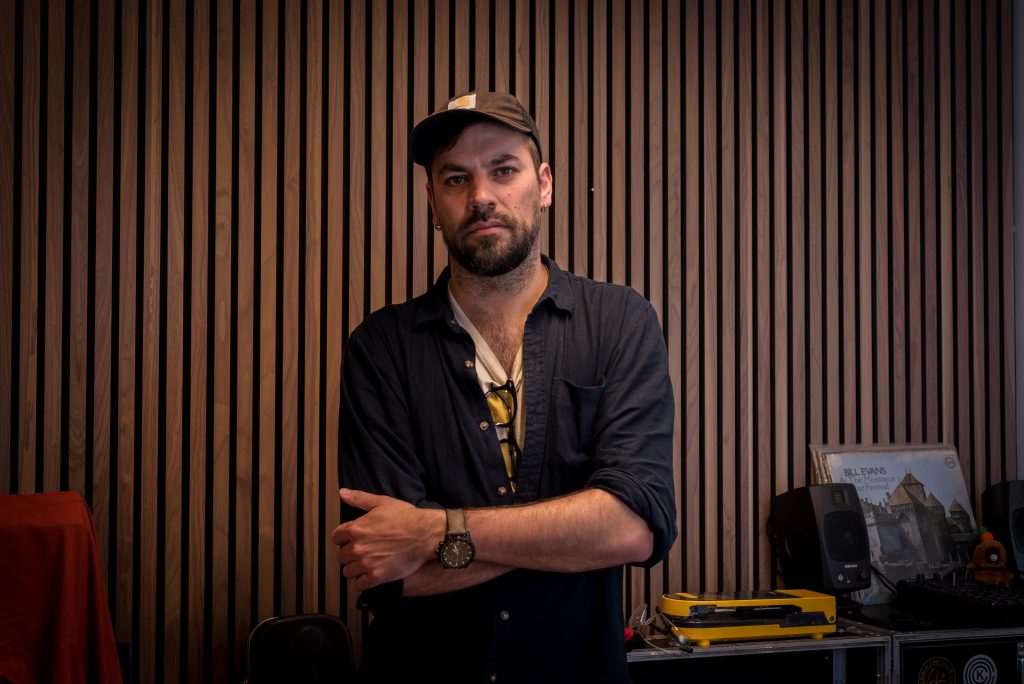
Baz is a fascinating character and a really lovely guy. He was also in Toy Dolls, Smalltown Heroes, and a bunch of ‘80s punk bands. He has a book out called No Grass Grows on a Busy Street: 25 Years on the Road With The Stranglers, which is a great read.
Metal Work
When did you start teching with Opeth?
I started teching with Opeth in 2009. I got that gig through my friend Coty Allinson, who recommended me to do drums and keys for them. Coty is a really great guitar tech. He’s been teching for years and worked with a lot of big metal bands in the ‘80s and ‘90s.
How did you meet Coty Allinson?
I got talking to him at a festival in Sweden. At the time, I was doing The Stranglers, and he was doing Opeth. A couple of months later, he called me and asked if I wanted to jump on an Opeth summer tour. In the end, I was with Opeth for four years. It was great. They’re an amazing band.
"Opeth love valve-amps, and they still use real amps on stage, which is good."
You’ve worked with a wide variety of musical acts. How did you diversify your experience?
I started working with some pop acts around the time I was with The Stranglers and Opeth. So, it was a slightly unusual mixture of music: ’70s punk, death metal, and pop. That’s when my work as a tech became incredibly busy.
I began working with a pop band called The Wanted, in 2011. Interestingly, on that show, we had a trio of New York hardcore musicians playing in the backing band. So the backline for that show was quite different from a usual pop gig.
What were the Opeth band members like to work with?
Opeth are such lovely people, and fantastic musicians. They’re also music gear aficionados. Mikael Åkerfeldt, Opeth’s vocalist, guitarist, and songwriter, and Fredrik Åkesson, the guitarist, use a lot of different pedals and effects.
In the studio, while recording with Tom Dalgety, they brought in a load of different instruments and pedals. They love valve-amps, and they still use real amps on stage, which is good. Musically, Opeth are so on it. I mean, their discipline is incredible. They’re such proficient musicians. Working with them really opened my mind.
Sudden Pop
What’s it like working on a pop gig?
On a typical pop act, session players tend to bring in their own setups. But on larger arena tours, the gear is often curated and purchased with production in mind. Creative teams usually don’t want loads of gear visible on stage. As a tech, curating and packaging rigs so that they can’t be seen on stage are crucial parts of the job.
How does having music gear offstage impact your role as a tech?
It’s useful for us because we can tend to things behind the scenes. It’s a good thing we can monitor the gear more closely. A majority of the gigs I’ve done in the last five years have been arena shows, where I’m in a bunker under the stage.
I spend half the time looking at the musician I’m assisting on a computer monitor. There can be a disconnect, however, because the person I’m looking after is sometimes two storeys away, and we have to communicate over a talkback mic.
"Things have changed a lot in the last five years. Real amps have become far less common."
How do the musicians control their offstage gear?
We tend to have switching systems and MIDI controllers for people who use pedals, and the pedals sit in a rack offstage with us techs. That can be handy, because if somebody says, for example, “My phaser is sounding weird,” we can get to the pedal straight away without interrupting the visual element of the show.
What have been the biggest changes in terms of guitar gear in the last five years?
Things have changed a lot in the last five years. Real amps have become far less common. But as a guitar tech, you still need to understand amps and how to do things like change and bias tubes—especially if you’re working for a band that uses them, obviously.
There are still many artists who prefer to use old analog gear, which is great. But the pop aesthetic usually just requires reliable, consistent sounds, and that often means using digital rigs rather than amps and cabs.
About ten years ago, iso cabs were more of a thing, and I did a few gigs using them. That’s cool if you’ve got the space, but it can sometimes be difficult to find space, especially at festivals where other crews are setting up gear.
Do iso cabs work well in your experience?
They do, yeah. Front-of-house engineers find it easier to mix when they have better separation with an isolated guitar cab. On-stage mic bleed can be an issue.
If you have high-gain amps bleeding down everybody’s vocal mics, it can be a real problem. That’s another reason why amp modeling has become so popular—you can have total isolation.
Let’s Get Physical
Do you think some players might return to using traditional guitar amps and cabs because of the physical connection to sound?
There’s a split. Big arena or stadium tours that require intense MIDI integrity so everything can switch perfectly will probably stay in the digital realm. Whereas I think guitar bands will always want to use amps to some degree.
I don’t think you can really do certain styles of music, like punk, for example, without using proper amps. Even if they’re using an amp modeler, a lot of musicians still want their sound to come out of a cab.
That connection in the air between guitar pickups and the speaker is part of the instrument as a whole. For one, you can’t get feedback just using in-ears.
"Realistically, you could put a BOSS multi-effects unit in a rucksack and do an arena gig with it."
How do in-ears impact the experience of playing electric guitar?
I think in-ears have changed the way musicians can hear and respond to each other on stage. Having your own direct mix and hearing your instrument on stage so clearly is a game-changer. In-ears also provide protection from high sound levels.
Do you think using amps and cabs is inextricably linked to guitar technique?
Definitely. I mean, look at legends like Brian May. He’s famously used a bunch of Vox AC30s cranked up to get a particular tone and feel. It’s the same with Pete Townshend and his backline wall of Fender amps and cabs—there’s a physical communication between the speakers and guitar pickups, so the amplification is part of the instrument, and, therefore, technique. I think a lot of people will likely go back to that.
Do you think real amps and cabs inspire musicians to perform with more energy and emotion?
I think they do. If you’re not feeling it musically as a performing musician, how can you expect the audience to feel it? I mean, I love watching musicians who are completely absorbed in their art. If you aren’t in touch with your music emotionally and sonically, it’s a bit like a painter painting everything white—there’s a vital part of the picture missing.
Model Behaviour
What are the benefits of digital modeling?
Digital modeling has come a long way over the past 10 years—not just in the way these devices sound, but also in the feel of playing. It’s now possible to have a compact device that can emulate an entire guitar rig, including effects. Realistically, you could put a BOSS multi-effects unit in a rucksack and do an arena gig with it. 10 years ago, that would seem highly unusual, but it’s the norm now.
Have you ever worked with a band that refuses to use digital modeling?
Absolutely. I’ve worked with bands that totally refuse to use digital modeling. They want their instruments coming out of an amp because that’s their sound—that’s how they perform.
I worked with a guitarist who said, “I want my guitar coming out of a cab with a microphone in front of it, because that’s what I sound like, and I want to actually feel it.” He wanted to experience the physical sensation of music rather than editing it on a screen.
"BOSS Chromatic Tuners are the industry standard."
But I think that makes sense. It’s a bit like going up to a saxophone player in a jazz band and asking them to use an electric saxophone. It’s just not what they do, is it? Musicians have unique ways of expressing themselves, and gear is central to that.
An electric guitar player needs electric gear, meaning an amp/modeler and usually pedals, too. So, I think of pedals, amps, and cabs as part of the instrument as a whole. An amp doesn’t just make something louder—it’s a massive part of a person’s tone, and it hugely affects how a guitar or bass feels.
Delay the Process
What Roland and BOSS gear did Foals use?
I remember Jimmy [Smith] had a Roland Boutique JP-08 [Sound Module] around the time they did the [2019] albums Everything Not Saved Will Be Lost – Part 1 and Part 2. The JP-08 is a four-voice polyphonic synth based on the Roland JUPITER-8. We were considering using a Roland SYSTEM-8, but went with the JP-08 in the end.
Jimmy used the Roland JP-08 extensively to record those albums, and he also used it live with a BOSS DD-3 [Digital Delay]. He had the DD-3 on top of a MIDI controller and would use it to make rapid bursts of echo. We had four JP-08s on stage. They were cool. They worked really well.
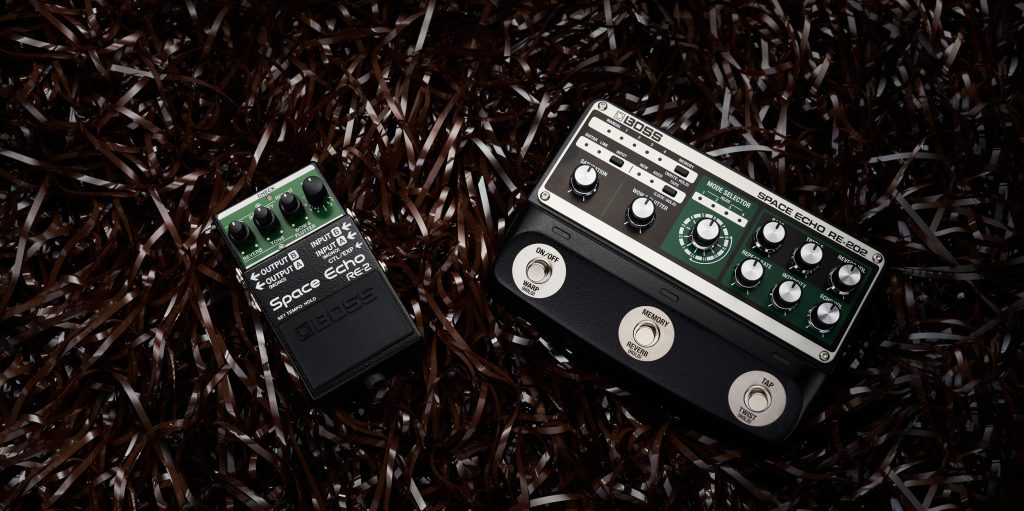
I’ve never seen a band use more BOSS Digital Delays than Foals. DD-3s, DD-6s, DD-7s, you name it. Foals must have had over 20 BOSS Digital Delays. They love them. Jimmy also likes the BOSS Space Echo pedals and has a BOSS RE-202 [Space Echo] on his board. I want to get the compact pedal version, the RE-2.
Foals also used BOSS Chromatic Tuners, as everybody does. BOSS Chromatic Tuners are the industry standard.
Top-Tier Tuner
As a tech, how important is the BOSS TU-3 Chromatic Tuner?
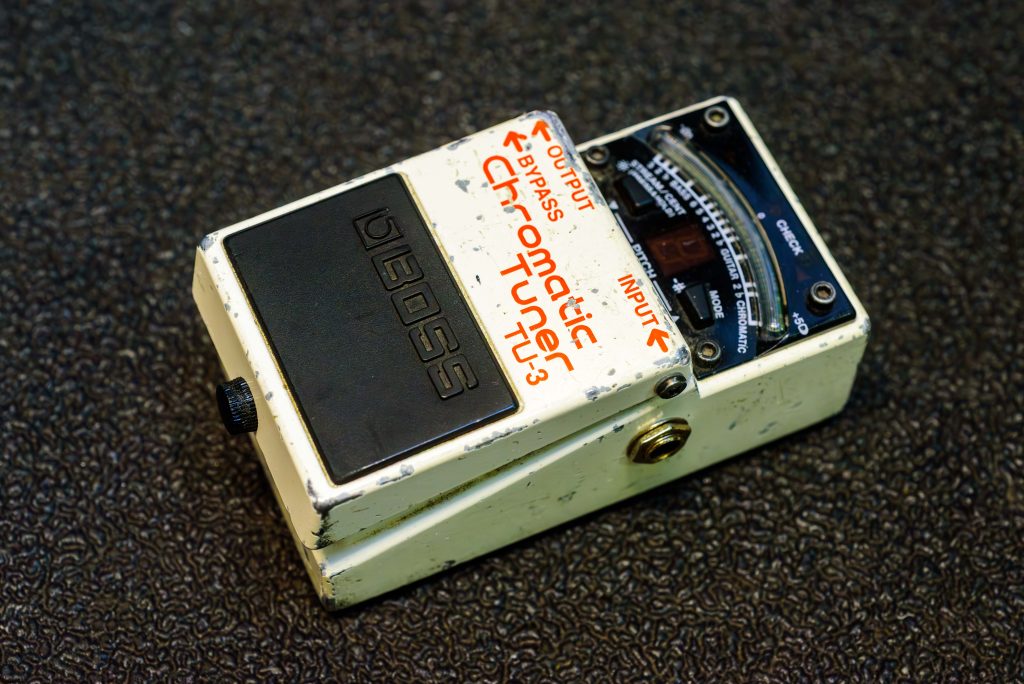
I’ve had a BOSS TU-3 since the week it came out. I’ve had the same one in my toolkit for years. It’s traveled the world with me and has seen me through innumerable gigs. I remember back in 2009, I went to buy a BOSS TU-2 Chromatic Tuner for the Sugababes session guitarist Murray Gould, and the TU-3 had just been released, so I got one myself, too.
"You can’t really destroy a BOSS pedal easily... I like that you don’t have to worry about BOSS pedals failing."
I’ve tried a lot of tuners, but the BOSS TU-3 Chromatic Tuner is a workhorse. I can’t find anything that betters it in terms of tracking speed. It works so well. At my last gig, I was stationed in a bunker right next to three 21-inch subwoofers while tuning acoustic guitars. Even with that overwhelming bass energy, the TU-3 tracked perfectly.
The TU-3’s LED display is great, and, as I said, it’s quick. When you’re working a gig, and the pressure is on, you need a fast, reliable tuner. Working with Shawn Mendes, I had 6 basses and 12 guitars to tune. Not only that, but the guitars are tuned differently. So, you need a speedy tuner, and the TU-3 is perfect.
Like a BOSS
What do you like about BOSS pedals generally?
You can’t really destroy a BOSS pedal easily. I’ve seen BOSS pedals fall off big stages and survive without so much as a mark on them. I like that you don’t have to worry about BOSS pedals failing. Load-ins and load-outs can be fast and furious, and BOSS pedals stand up to those rigors easily. BOSS pedals have never let me down.
Also, BOSS pedals do what they say on the tin: Flanger, Overdrive, Reverb, and so on. They’re not called weird names like The Unicorn Generator or whatever. The controls are clearly labeled, too, so you know exactly what they do. On the job, that’s more useful than people often think.
Another great thing I like about BOSS pedals is that the colors are so distinctive you can spot them a mile away. You know, phasers are green, flangers are purple, overdrives are yellow, choruses are blue, reverbs are grey.
Honestly, I’ve never used a BOSS pedal that I didn’t like. The sound quality is excellent, especially on a big stage. They have presence. With other pedal brands, the effect itself might sound good, but it can suck the life out of the instrument signal. It only takes one pedal to suck your tone, but you don’t get those sorts of problems using BOSS pedals because they’re buffered, which really helps. You need the signal to be strong.
"I’ve never used a BOSS pedal that I didn’t like. The sound quality is excellent, especially on a big stage."
BOSS Bangers
What are some of your favorite BOSS moments on record?
I love the CE-1 Chorus Ensemble sounds on early Pretenders tracks like “Brass in Pocket” and “Talk of the Town.” I love James Honeyman-Scott’s chorus tone. Pretenders are great.
I really like the way Tom Morello used BOSS Digital Delays on Rage Against the Machine tracks like “The Ghost of Tom Joad.” I love a delay pedal running in line into a driven amp, so the tone saturates differently as the delay tail wears off. It cleans up as the delay repeats get quieter.
You can run a delay into the front of an amp, as Tom Morello does, so the amp affects the delay repeats. Alternatively, if the amp has an effects loop, you can place the delay after the preamp section, so the delay is affected by the amp.
I love how simple the DD-3 is to control, yet you can get an almost infinite number of sounds using it. Tom Morello’s use of effects is incredibly creative. It’s amazing what you can do with just three delay parameters (Level, Feedback, and Time).
Beloved BOSS
What are some of your favorite BOSS pedals and why?
I’ve got an old [MT-2] Metal Zone I’ve had for years and years. That was my first BOSS pedal. The Metal Zone is great for synthesizers like the TB-303 as well as guitars.
I use the RV-5 and RV-6 Reverb pedals a lot as well. I especially like the Modulate mode. It’s so cool. If you want to make something a little more 3D, the stereo function works great.
I’ve got a couple of BOSS pedals on a board I use with a band I play bass in: the ODB-3 Bass Overdrive and the OC-3 Super Octave. The OC-3 is absolutely mega. I love that thing. I set it to Poly mode, dial up the lower octave, and run it into the ODB-3.
I really like the EQ controls on the ODB-3. It’s a stacked knob [High and Low], so you can crank the sub. I tune my bass to C Standard and can turn both BOSS pedals on at the same time using an effects loop, which sounds really gnarly. It feels like the entire room is going to cave in.
"The Metal Zone is great for synthesizers like the TB-303 as well as guitars."
What three stompboxes would you pick for a BOSS-only desert island pedalboard?
The BOSS RE-20 Space Echo is at the top of my list (probably because I haven’t tried out the RE-202 Space Echo yet). I bought my RE-20 when it came out in 2007. Charlie Henderson and I were always looking for a pedal that emulated the original Roland RE-201 Space Echo tape delay and spring reverb unit, so we were very happy when that was released.
The RE-20 is still very popular. I see them on pedalboards all the time at work. It’s cool that you can put them at the end of a mono chain to run out in stereo if you’re using two amps. The RE-20 sounds great in stereo.
I think the RE-20 still sounds amazing. I originally bought mine to use with a mixing desk (aux send and stereo return), and didn’t play guitar through it for about three years! At first, I mainly used it for live dub-style effects. It’s a great noise machine and a lot of fun.
My second choice would be the OC-3 Super Octave. It’s awesome with bass, and I love that you can make a guitar sound completely different—almost like a TB-303. If you turn up the Octave levels and silence the direct signal [Dry Level], it can do a pretty convincing synth sound.
Pedal number three would be the DD-3 Digital Delay. I especially love being able to do sound-on-sound stuff with those. Foals have used that feature in really creative ways.
I’d put the TU-3 in, but as it’s not a creative tool, I’ll go with those three: the RE-20, OC-3, and DD-3.
The BOSS OC-3 Super Octave is a solid favorite among bass players and guitarists alike.
Yeah, you see the OC-3 on a lot of boards. It can really add a lot to a performance. When it comes out of the PA, you can hear really lovely subharmonics.
"The ease of installing the GK-5 on a Strat amazed me. It’s so simple to fit."
MIDI Mastery
What’s one of the most challenging arena gigs you’ve worked on?
I did a large arena tour in 2022, which had two stages. The main stage was connected to another stage of exactly the same size with a thrust. The tech brief was to have a full backline on both, so the band could play any song at any time from either.
We ended up designing a pedalboard switching system that ran across 80-meter looms. The guitarist was using a BOSS SY-300 [Guitar Synthesizer] in stereo, and the MIDI implementation of that pedal is so good that he was able to perform with it remotely using an expression pedal at the other end of the arena!
One of the great things about certain BOSS pedals like the SY-300 is that you can pick and choose what you want to turn on and off using MIDI. It’s almost like having a studio rack on a pedalboard.
Divided & Conquered
Have you explored the MIDI capabilities of the BOSS GK-5 Divided Pickup and GM-800 Guitar Synthesizer?
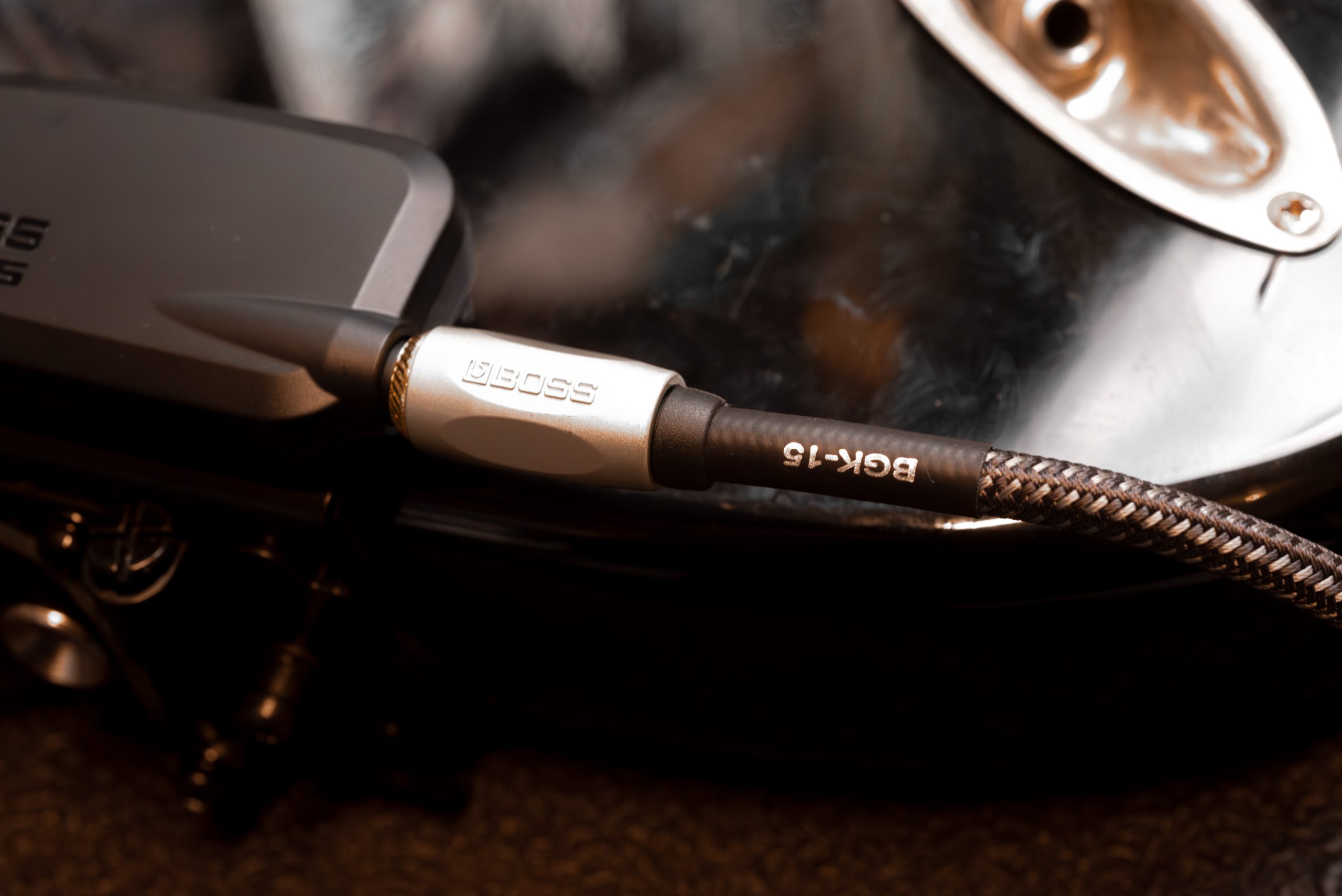
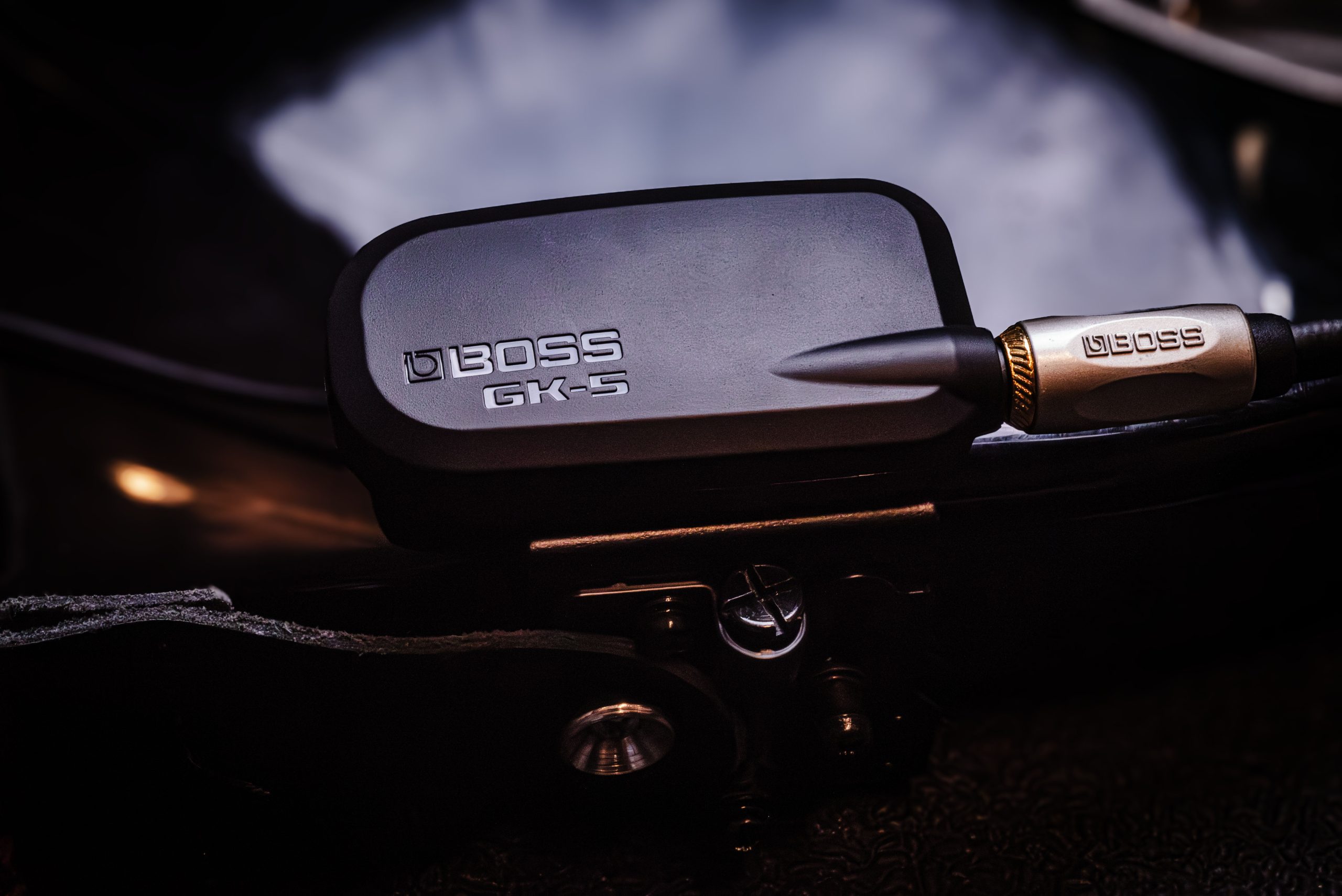
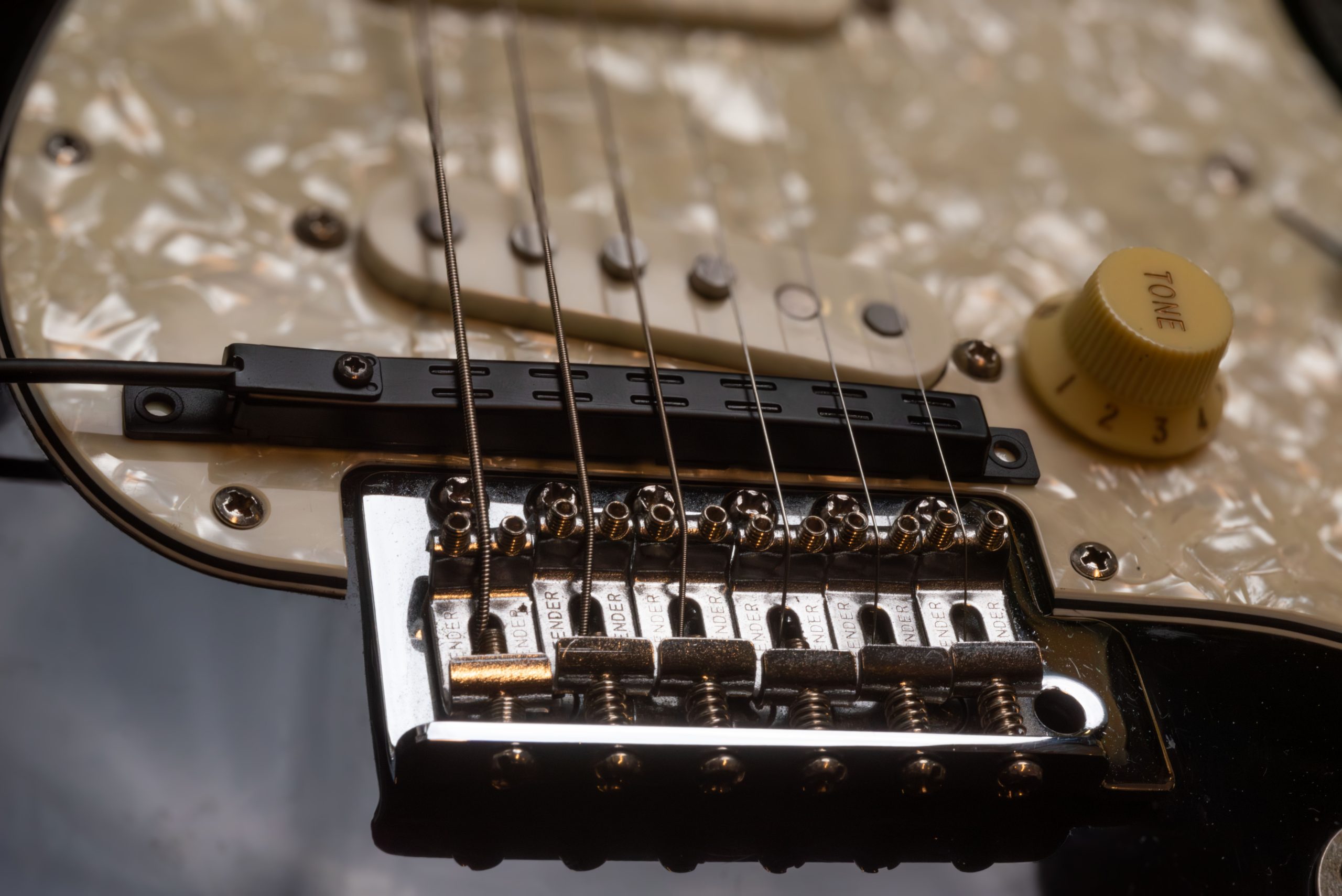
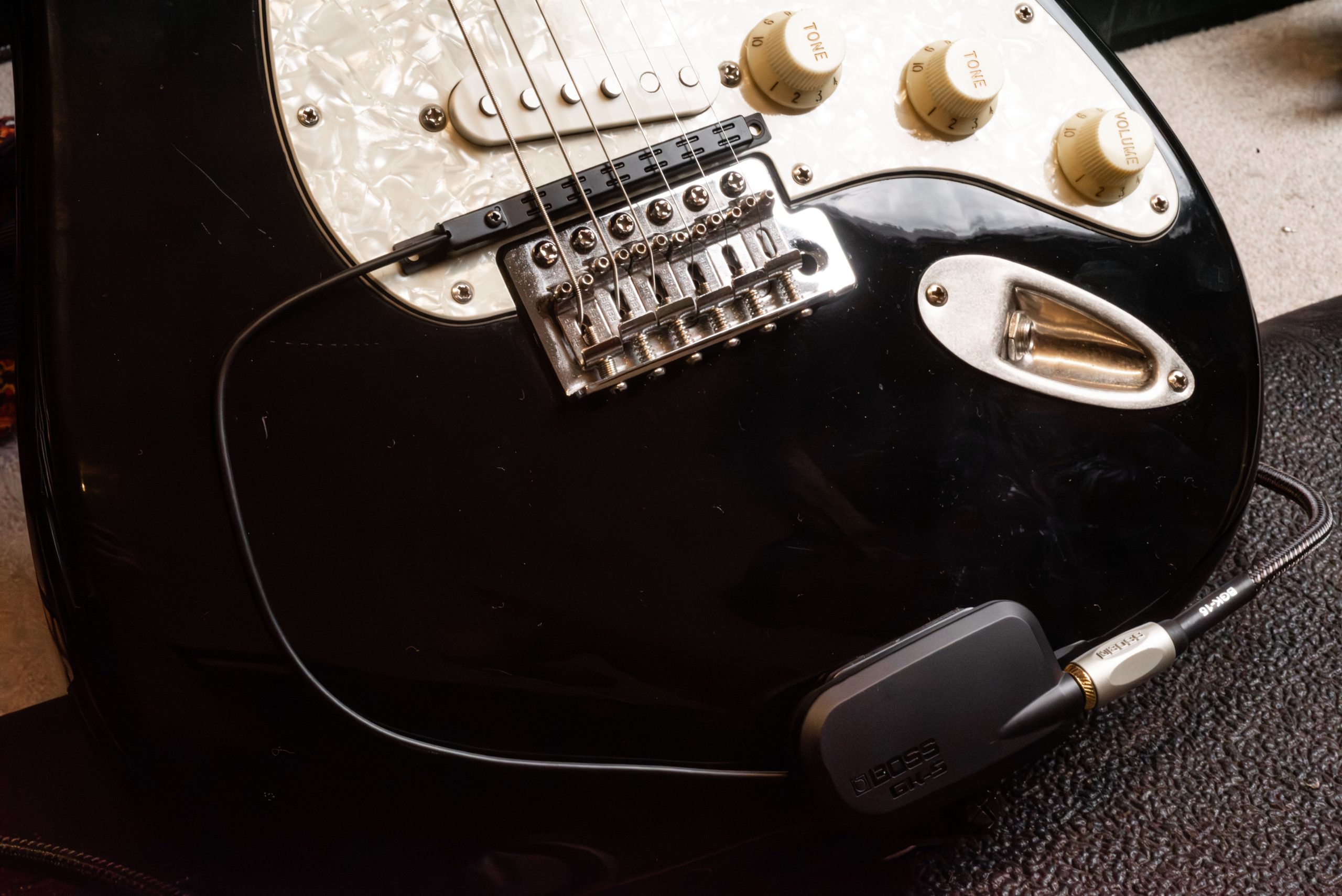
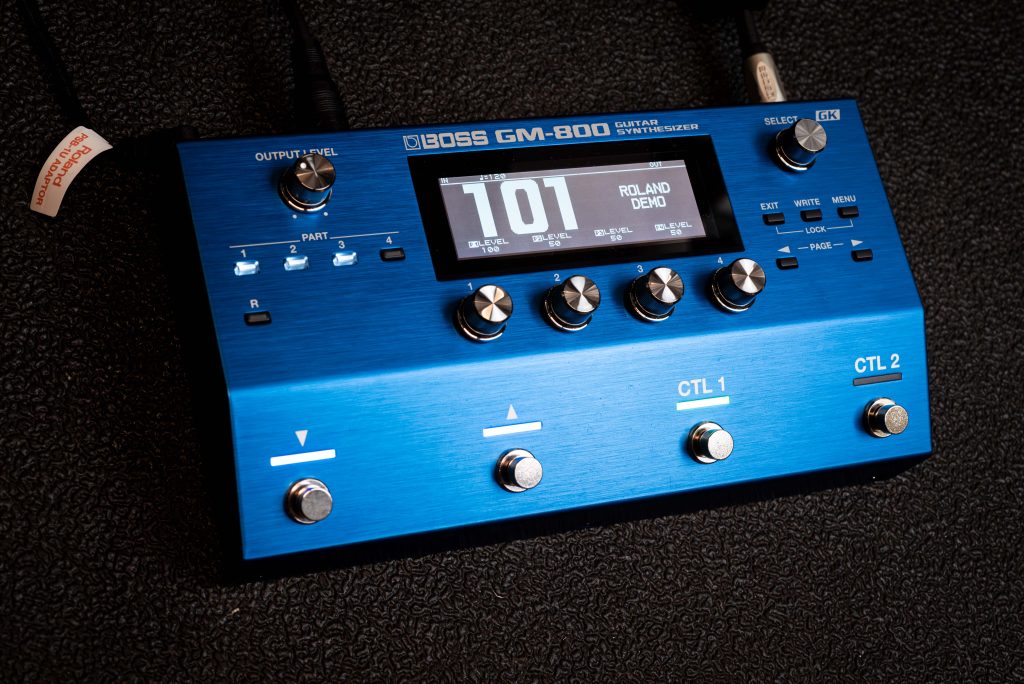
Earlier this year, I designed a system that utilizes the BOSS GM-800 Guitar Synthesizer and GK-5 Divided Pickup for MIDI conversion. We weren’t actually using the GM-800’s sounds; it was all about using the sturdy five-pin DIN MIDI connection to send the signal to Ableton, so you could play virtually any sound using a guitar. With the GK-5 and GM-800, you could even play samples using a guitar, if you wanted to. The GM-800 and GK-5 are incredible.
How easy was it to install the BOSS GK-5 Divided Pickup on a guitar?
The ease of installing the GK-5 on a Strat amazed me. It’s so simple to fit. You can stick a GK-5 on your guitar, plug it in, and it’ll work straight away. Obviously, you can dial it in and finesse it later, but you can have it up and running in no time, and there are some really cool-sounding GM-800 presets.
How well did the BOSS GK-5 Divided Pickup perform?
There’s a menu setting in the GM-800 that allows you to see the harmonic information coming in from the GK-5, and the tracking is mind-blowingly good. There’s virtually no latency with the GM-800 sounds. It’s crazy quick and feels totally natural—as if you’re playing the virtual instrument you’re hearing.
"You can get really creative with the GK-5 and GM-800."
You can bend notes and retain all those expressive techniques in your playing. Even if you’re just using the GK-5 and GM-800 for MIDI control, you can bend strings on the guitar, and it’ll control, say, the pitch bend wheel of a software synthesizer smoothly, without any glitches at all.
How creative can you get with the BOSS GK-5 Divided Pickup and GM-800 Guitar Synthesizer?
You can get really creative with the GK-5 and GM-800. There’s so much potential with that setup in a live environment, which I think a lot of guitar players are unaware of. It’s a great tool for songwriting, too.
I was playing a flute solo on my guitar using a Mellotron plug-in earlier, which was a lot of fun. I also love that you can tune each string individually, because the GK-5 has a sensor for each one.
Numan’s Man
You worked closely with synth pioneer Gary Numan for a while. What was that experience like?
I worked with Gary Numan for a good couple of years. It was really interesting. His longtime guitarist, Steve Harris, used BOSS effects. He’s a serious sound artist and is always trying out new gadgets. I remember Gary Numan’s bassist, Tim Slade, having a BOSS chorus on his board. Gary Numan’s band uses Roland gear, too. [Keys player, David Brooks, plays a JUPITER-X and a FANTOM EX].
Gary Numan is a really interesting musician, and effects pedals played a significant role in his story. Originally, the group was essentially a guitar-led punk band, but he discovered a synthesizer left behind in a studio from a previous session and worked out how to play his guitar parts on it, using his pedalboard and amp. That’s how he became a synth icon!
Digital Departure
Have you seen musicians moving away from digital gear?
Yeah, there are plenty of well-known guitar players who’ve gone back to playing with real amps after using digital modeling. I was listening to a podcast about AI recently, and some people were talking about the obsession with polishing music to make it sound perfect, which raises a question: Is now the time to become more human and organic?
"I love sitting down with gear and discovering new tones and textures. It’s a never-ending journey."
Playing live is the most human element of music. Surely most people find that more interesting than watching a machine process information. I think people will always want to connect with each other in a live music environment.
Jazz is one of my favorite types of music because I love watching and listening to people play their instruments. For many of those musicians, their instrument is like an extension of their body and a form of personal expression. A lot of the time, they don’t use electronic or digital technology at all, yet they push the limits of musical expression.
Breaking Boundaries
You have an unusually broad interest in music gear. Where does that come from?
My favorite kinds of music are jazz and electronic, so it’s kind of both ends of the spectrum in terms of gear. I love acoustic instruments, but using technology as an art form and pushing devices beyond their intended purpose really interests me, too.
For example, I love how drum and bass artists reworked drum breaks and sped up samples in ways that don’t sound very orthodox from a production standpoint. Similarly, Jamaican dub producers utilized technology in ways it wasn’t intended, such as using a mixing desk as an instrument rather than purely for mixing tracks. That kind of outside-the-box thinking is part of what makes music technology exciting for me.
Does assisting musicians with gear choices for live shows feed into that?
This is one of the things I’ve found most fascinating about working as a tech. I tend to ask the musician what they’re trying to achieve. There’s no absolute right or wrong; it’s a matter of taste and finding what works best to achieve creative goals.
Take the Roland TR-909 and TB-303, for example. Artists used those machines in ways they weren’t intended and ended up creating new genres of music. Techno wouldn’t be the same without the 909, and acid wouldn’t be the same without the 303.
Music gear manufacturers make all this equipment, but it’s up to consumers how they piece it together and use it. Musicians and techs make it work by figuring out the best combinations. I love creating reliable systems and getting music gear to talk to each other, especially when it comes to MIDI.
Making things work together in the box or using a digital modeler is a similar concept, as you still need to link different effects and experiment with signal chains.
Never-Ending Journey
As a musician yourself, how do you explore new sounds and find the right gear combinations to achieve your own creative goals?
When I was a kid, I looked at the gear musicians in bands I liked used as a guide for the equipment I should buy myself. It’s natural to hear a sound you like and be curious as to how it was made (especially if you’re a bit of a nerd like me).
People go on their own journeys with sound, and that’s what’s so fascinating about making music. I love experimenting with different sounds. I love sitting down with gear and discovering new tones and textures. It’s a never-ending journey.