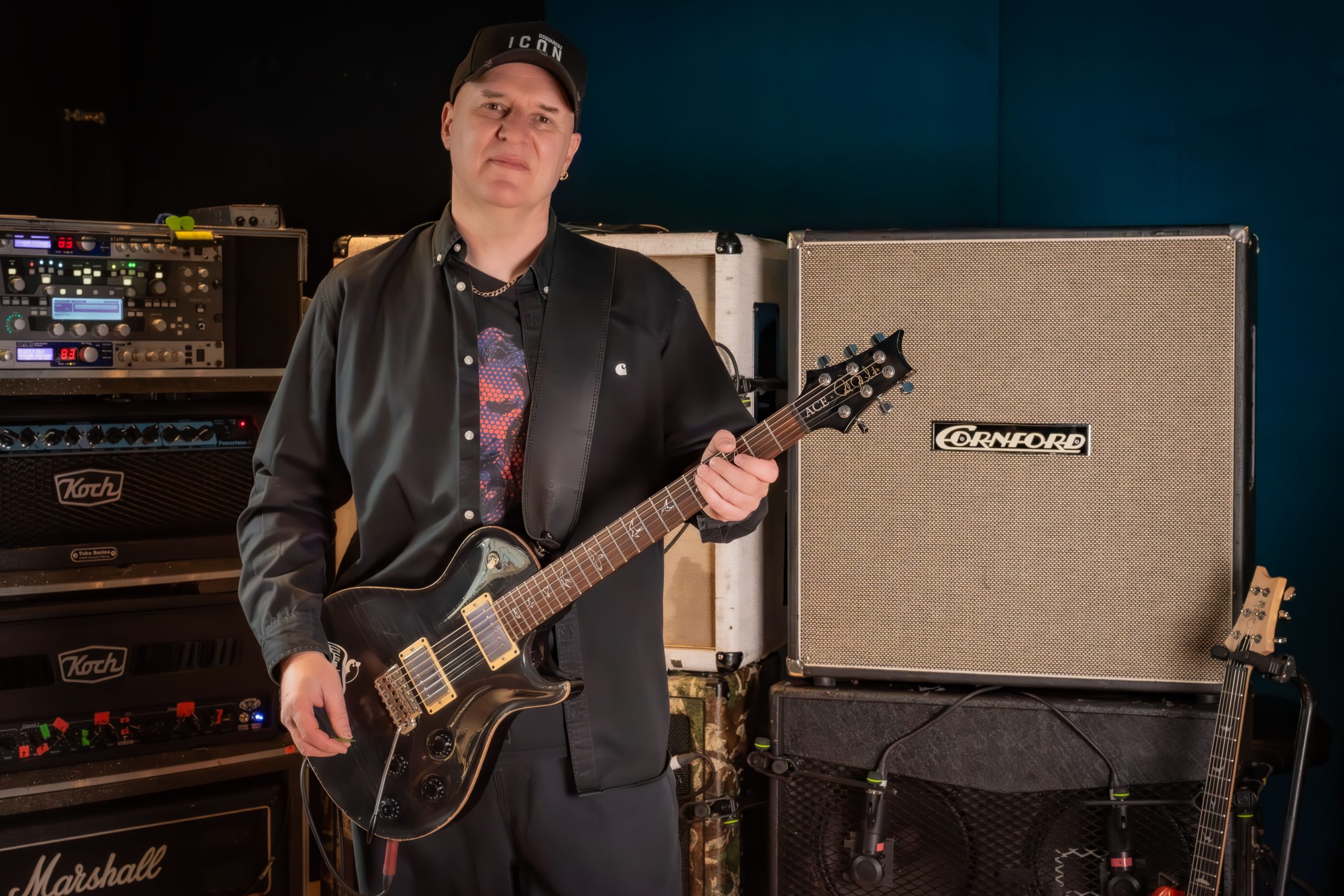
Few UK bands have left a mark on alternative rock quite like Skunk Anansie. Formed in London in 1994, the quartet broke through with a sound that resisted classification, anchored by frontwoman Skin’s commanding presence and Ace’s inventive guitar work. While many contemporaries receded into nostalgia, Skunk Anansie continued to evolve. Still selling out arenas and releasing top-ten records, their audience now spans generations. With ’90s anthems such as “Weak” and “Hedonism (Just Because You Feel Good)” sounding as vital as ever, the band remains one of Britain’s most respected acts. Indeed, their latest album, 2025’s The Painful Truth, drew passionate reviews, hailed by The Guardian as “a raw triumph of reinvention” and praised by Kerrang! as “eye-openingly fresh.” So when Ace set about replacing an entire pedalboard that had traveled the world with him for over three decades using BOSS compacts, the result was always going to be worth a closer look.
Deep Affinity
The catalyst for change came when Ace’s long-serving pedalboard finally gave up the ghost on the eve of a tour. But rather than patching together a quick fix, he seized the opportunity to begin from scratch, designing a new rig around a carefully curated array of BOSS compact pedals.
Like many fellow players, Ace’s affinity for BOSS is deep, dating back to his formative years as a musician and his earliest memories of discovering great guitar gear. Several decades later, that sense of excitement remains undiminished.
Ace first became aware of BOSS effects through a televised demonstration by Gary Moore. It left a lasting impression. Today, his loyalty remains unwavering—and for good reason. “I’ve never had a BOSS pedal fail on me in the entire 45 years I’ve been playing guitar,” he points out.
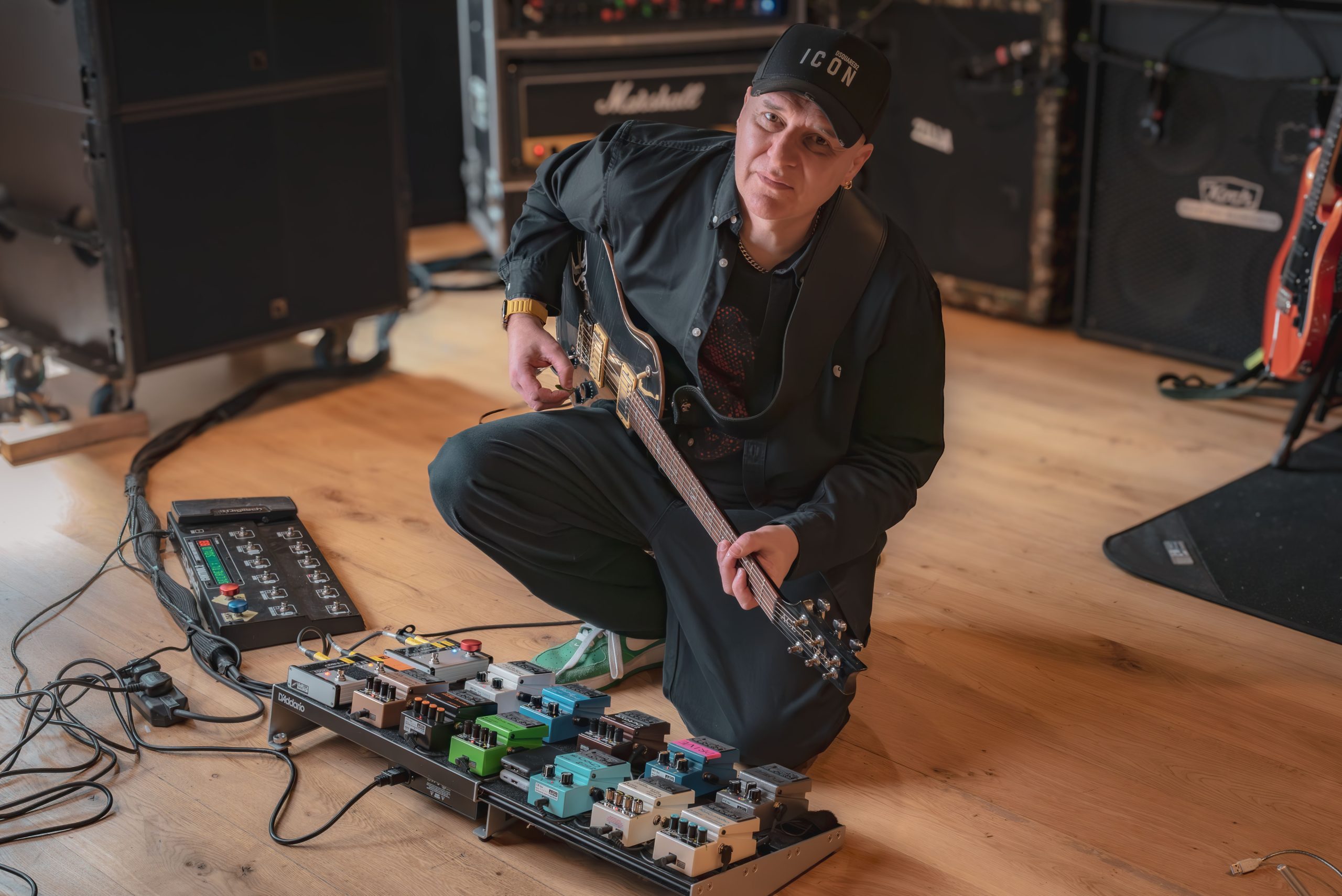
The resulting pedalboard reflects the mindset of a musician who still approaches gear with genuine intrigue and excitement. Every pedal setting has been pored over, every position in the chain scrutinized, and every sound tested under real-world conditions.
“My new BOSS pedalboard will be gigged around the world for years to come,” he says. “It’s a proper workhorse.”
In the following conversation, Ace takes us inside his new all-BOSS setup, explaining everything from signal-chain choices and favorite Waza Craft models to the GT-1000 Guitar Effects Processor fly rig that accompanies him around the globe.
Along the way, he reveals why reliability remains every bit as important as tone when you’re playing to thousands night after night.
A Tale of Two Boards
How many pedalboards do you currently use?
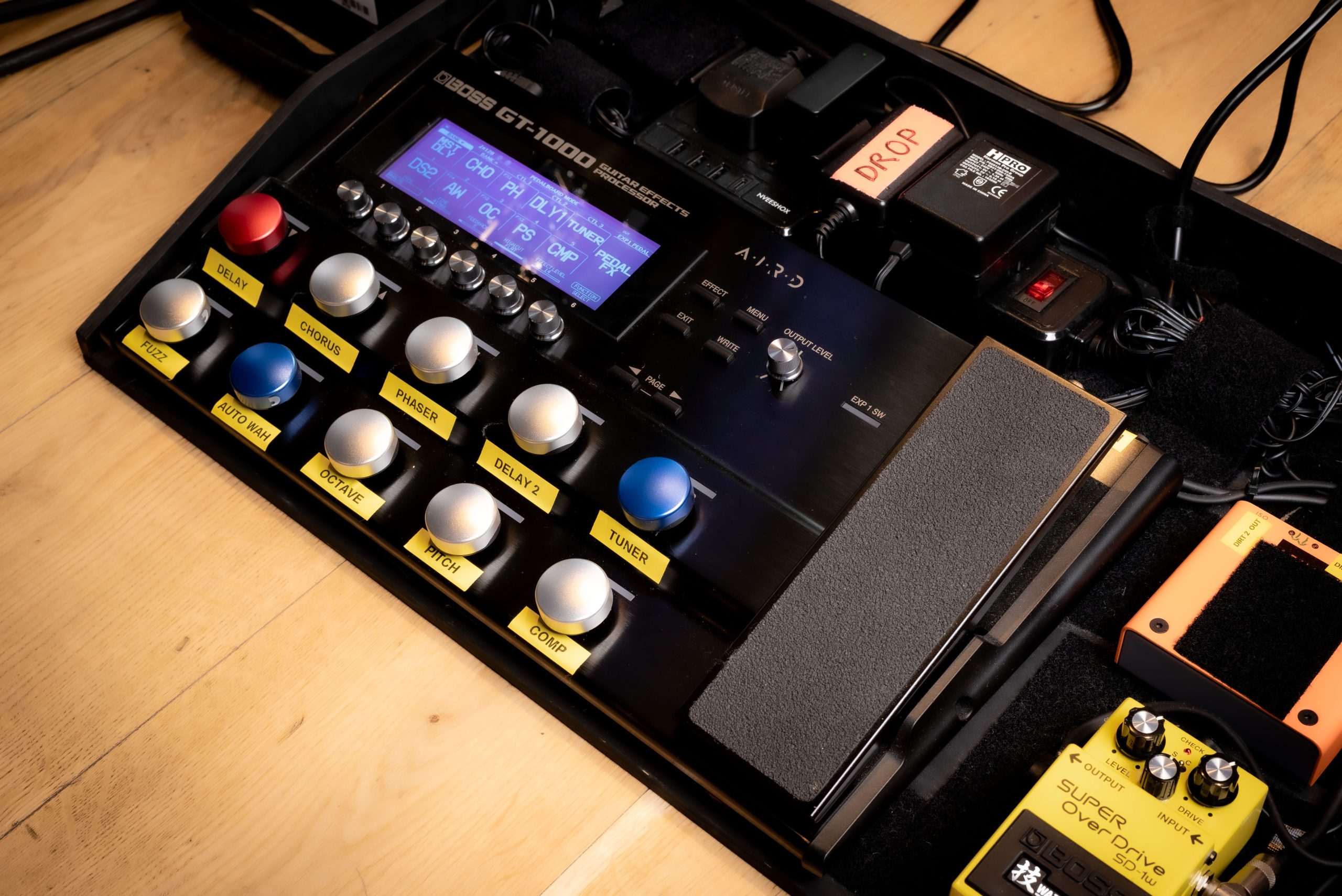
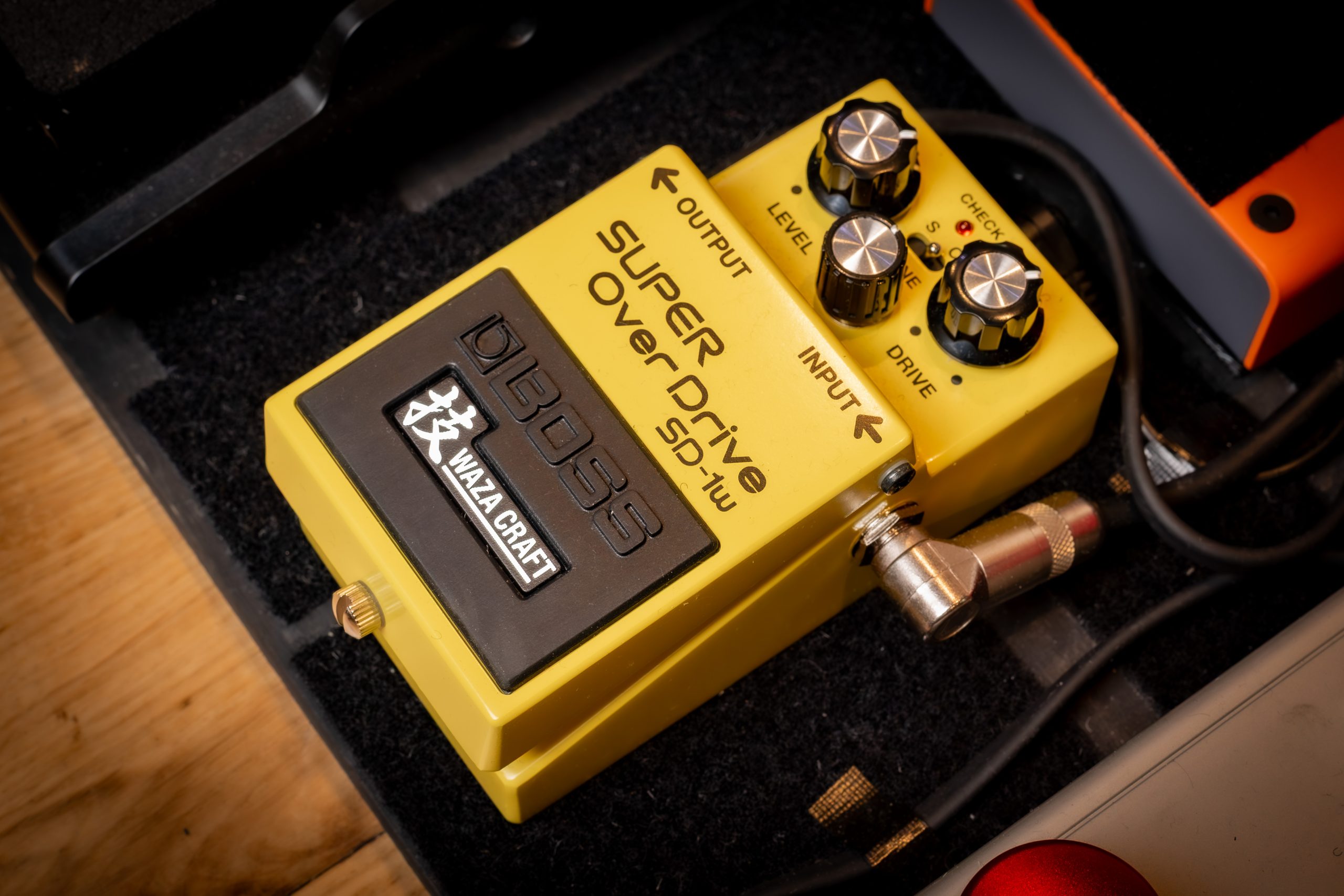
I’ve got two pedalboards. One is a fly rig featuring the BOSS GT-1000 Guitar Effects Processor and an SD-1W Super Overdrive. The other, my main pedalboard, is full of BOSS compact pedals.
How do you set up your BOSS GT-1000 Guitar Effects Processor?
I’ve programmed my GT-1000 to use in pedalboard mode (rather than using patches or presets), so each of the ten footswitches corresponds to a different effect: delay, chorus, phaser, second delay, tuner, fuzz, auto wah, octave, pitch shifter, and compressor.
When I got the BOSS GT-1000, I took it to rehearsals and emulated the sounds from my old pedalboard as closely as I could. It was so close that the untrained ear wouldn’t be able to tell the difference.
"I’ve got two pedalboards. One is a fly rig featuring the BOSS GT-1000 Guitar Effects Processor and an SD-1W Super Overdrive."
Have you refined your BOSS GT-1000 settings since using it live?
After I’d been using the GT-1000 for a while, some people from BOSS came over to the UK from the US and Japan and asked how I was using it. We started talking about my old pedalboard—what those pedals did, what they didn’t do, and how they compared.
By the end of the meeting, I was really impressed by what the GT-1000 was capable of. I discovered I could move things around in the chain and dial it in even further. So, when I got back home, I refined my GT-1000 settings to get even closer to the sound and feel of my old pedalboard.
How long did you have your old pedalboard for before deciding to build a new one with BOSS compact pedals?
My old pedalboard was made by Mike Hill decades ago. It was on the road for about 30 years. It got revamped many years back by Mike. I actually had two, including a spare.
The night before we went out on a tour last year, the switch broke, and I couldn’t replace it in time—it was impossible. So I chucked the old pedalboard in the skip and kept hold of the spare. But that’s when I thought, “I need to make a new board.”
I love making pedalboards and checked out Mike Hill’s store (now run by his son, John). I saw that they had some good switching units and decided to make the board myself using BOSS pedals and two A-B Both amp switchers.
"I’ve programmed my GT-1000 to use in pedalboard mode... Each of the ten footswitches corresponds to a different effect."
How do you use your two amp switchers?
One of them lets me switch between my pedalboard and clean amp (A-B). The other is at the end of my pedalboard chain and allows me to split the signal to two amps (Both). The A-B Both switchers also deal with earthing and phasing issues.
Tell us about the new pedalboard itself.
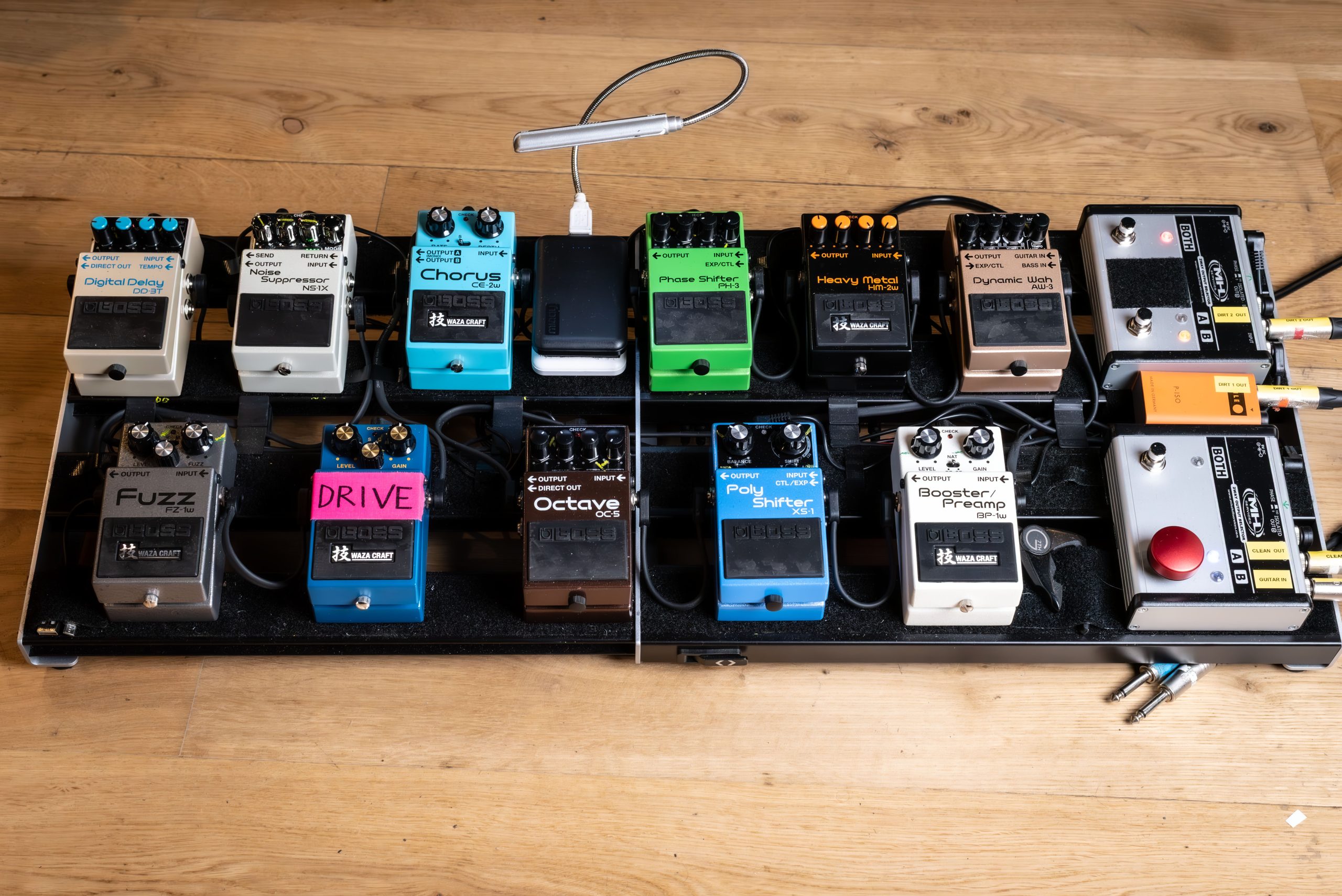
The pedalboard is a staggered D’Addario XPND. The two rows are different heights, which helps me switch pedals cleanly without stepping on one by mistake (which can happen if you’re wearing DMs!) Each pedal has plenty of space around it—about a couple of inches—which also helps avoid stepping on the wrong one on dark stages.
What do you use to power your BOSS compact pedals?
I power my BOSS pedals with a Voodoo Lab Pedal Power 3 Plus. All 12 outputs are isolated, which virtually eliminates noise. I also use a Lehle P-ISO (the little orange box between the Mike Hill switchers), which is another layer of protection against ground loops and phasing problems you sometimes get when using two amps.
Follow the Flow
How did you decide where to place your BOSS compact effects on the new pedalboard?
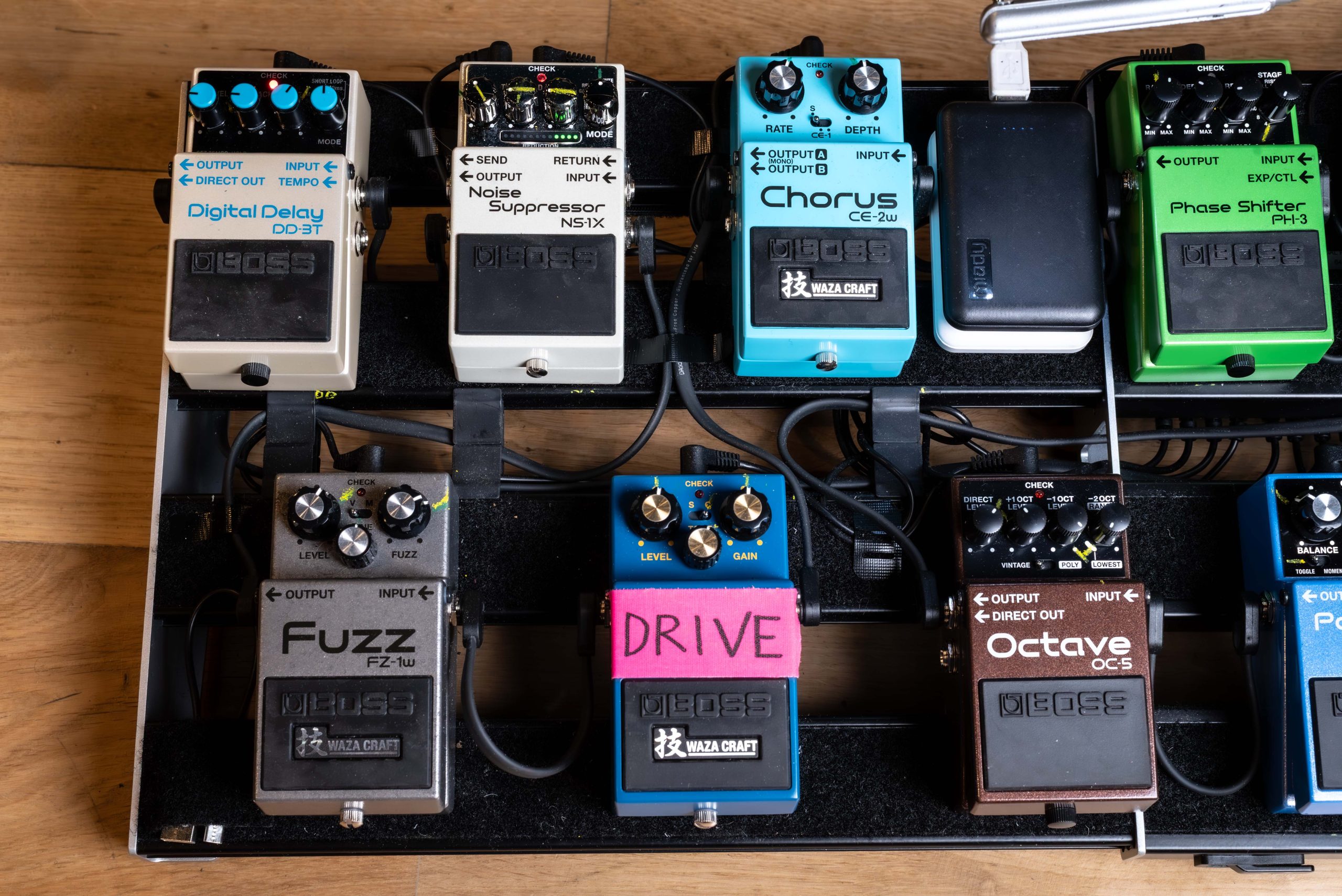
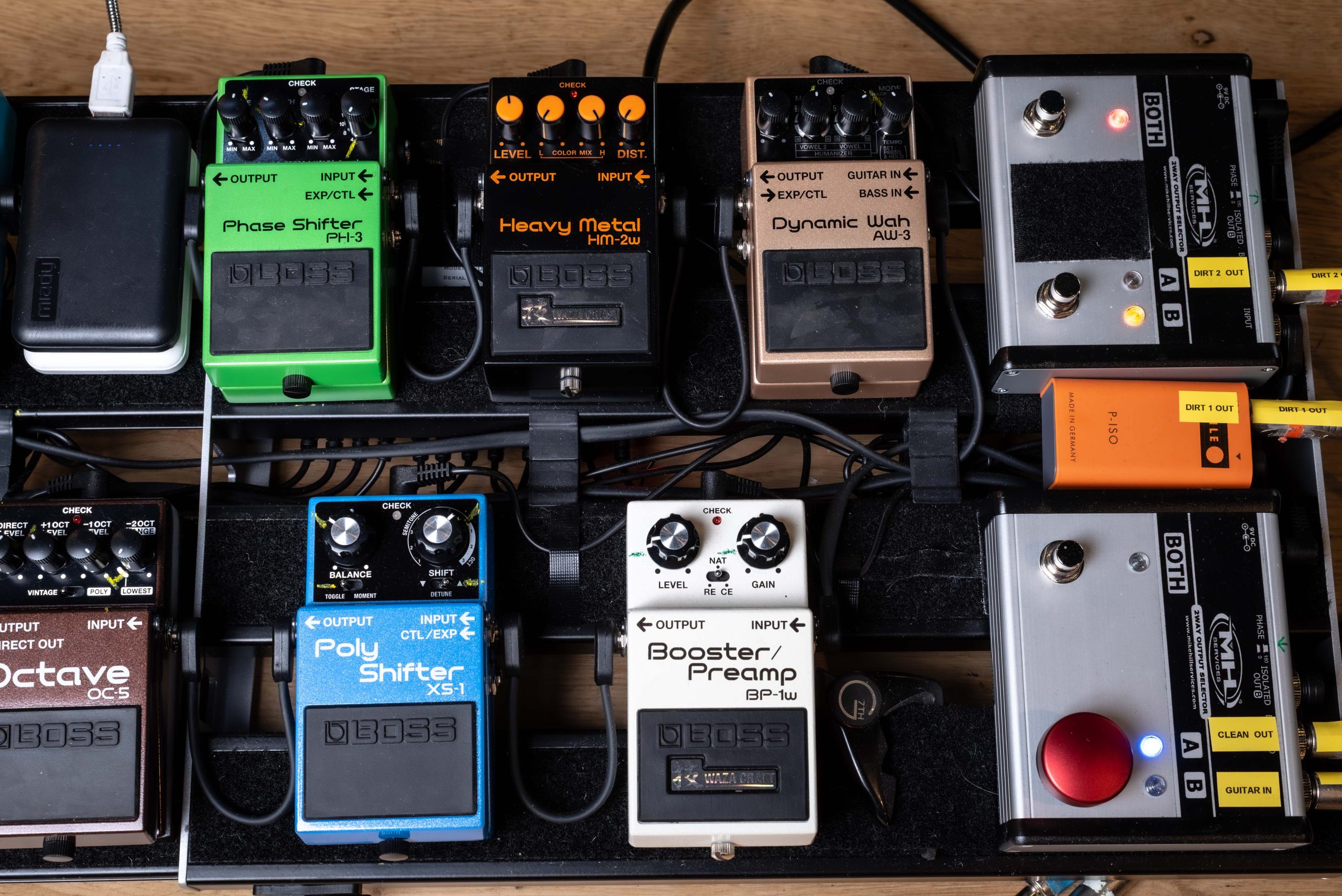
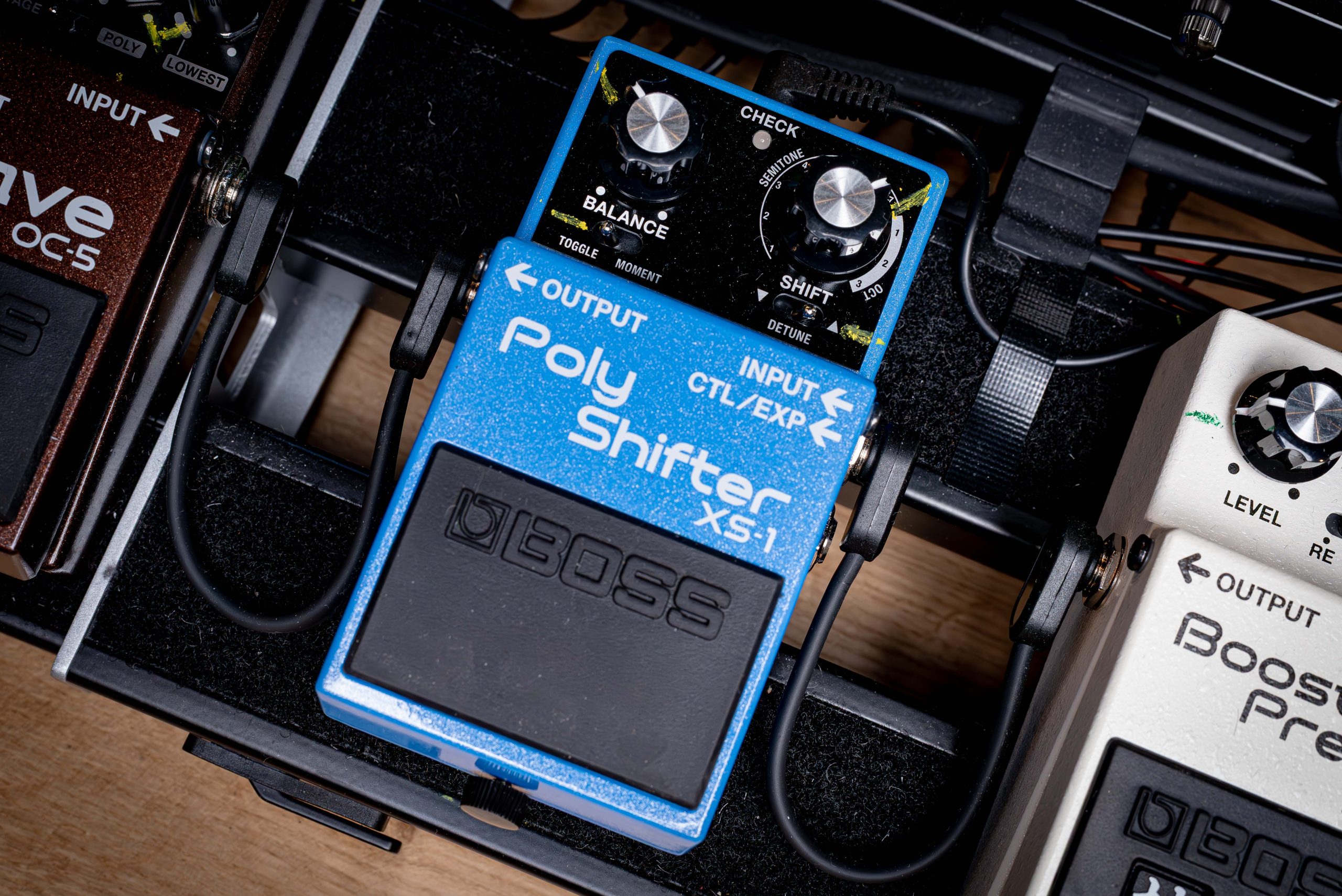
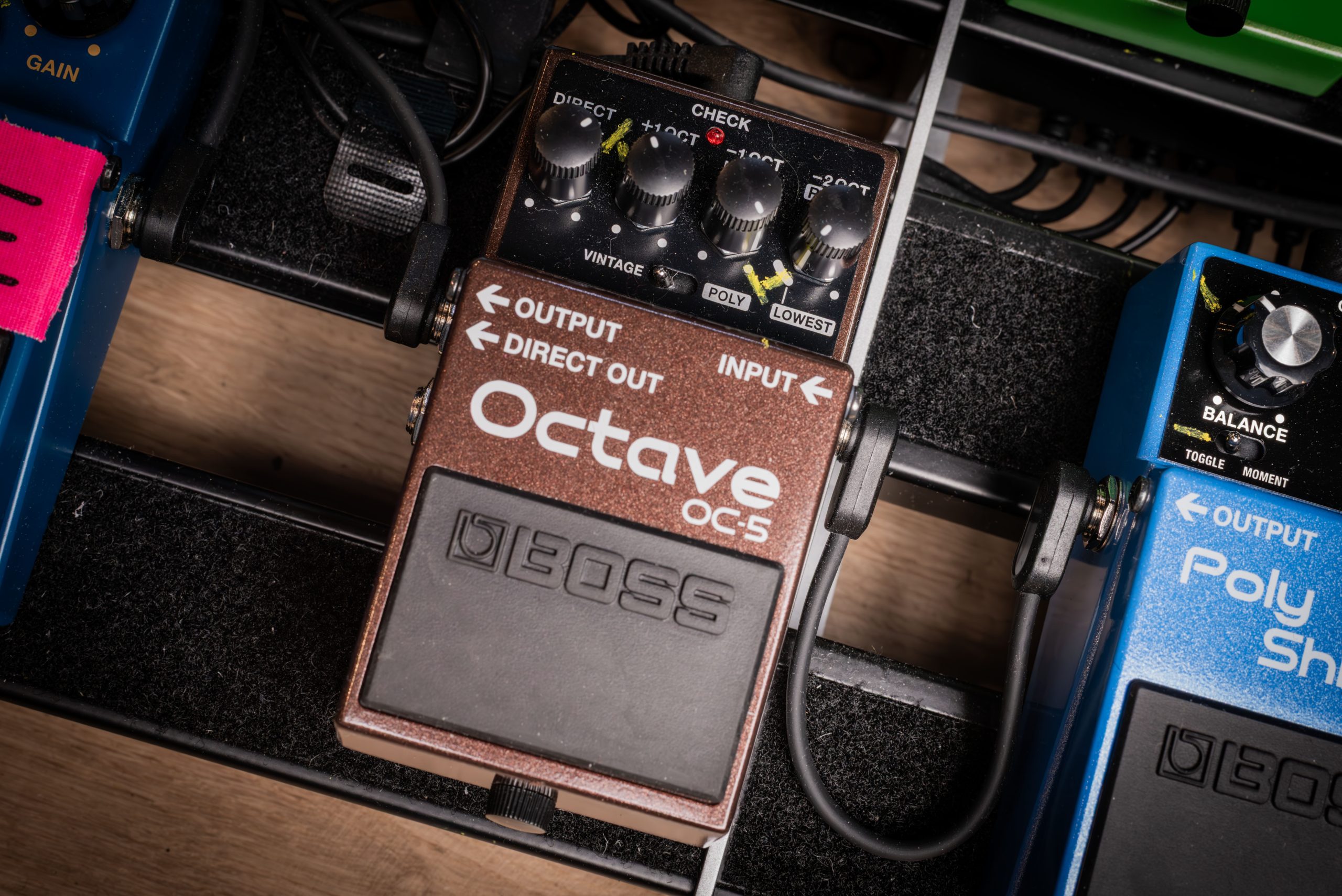
The BOSS pedals I switch on and off most frequently are in the front row. That’s the BP-1W Booster/Preamp, XS-1 Poly Shifter, OC-5 Octave, BD-2W Blues Driver, and FZ-1W Fuzz. Those are the ones I’m stomping on and off all the time.
"My main pedalboard is full of BOSS compact pedals."
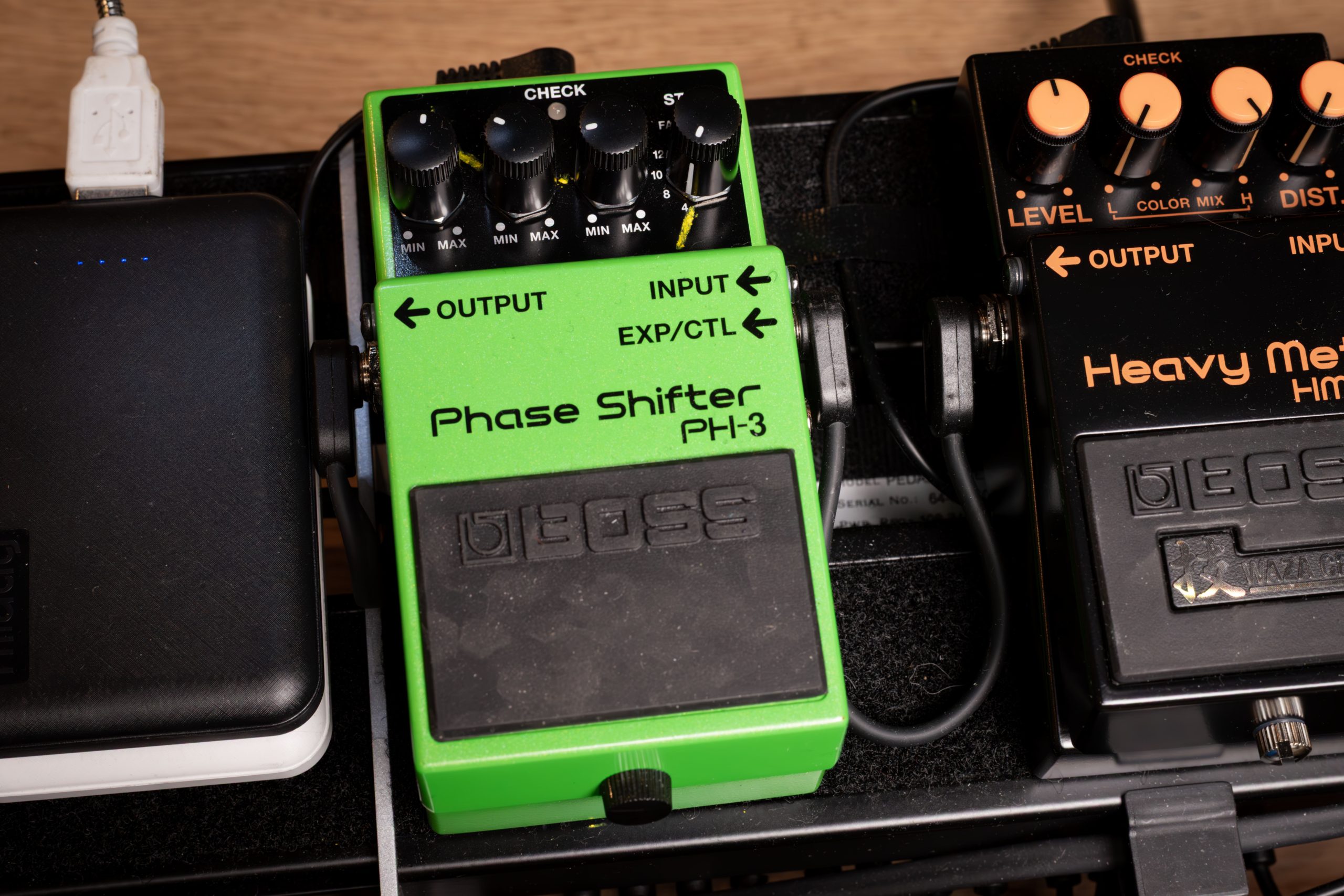
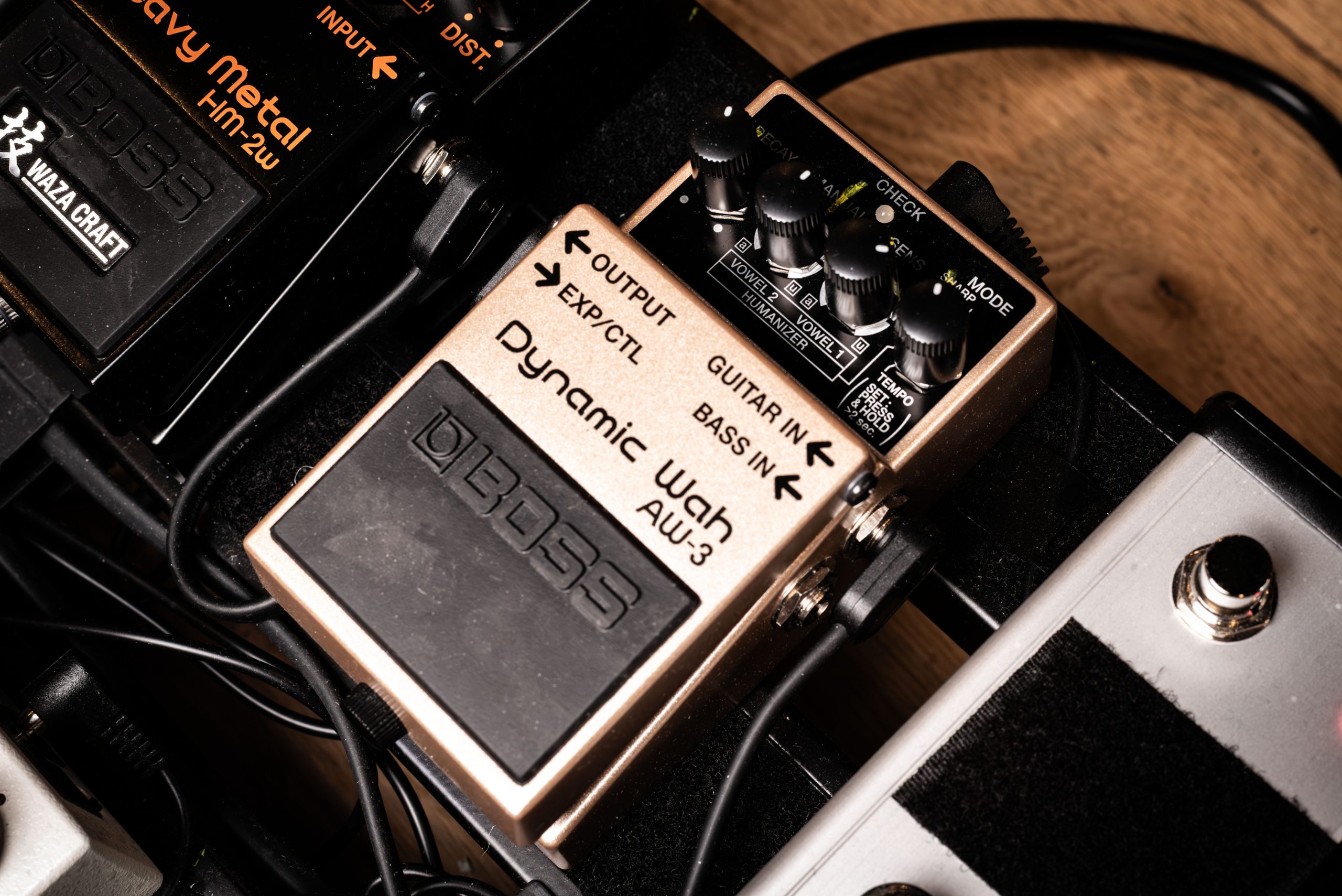
BOSS effects I use throughout the majority of certain songs—the CE-2W Chorus and PH-3 Phase Shifter—are on the back row in the middle. And the two BOSS effects I switch on and off briefly here and there—the DD-3T Digital Delay and AW-3 Dynamic Wah—are on either end of the back row.
Your pedals are arranged by frequency of use, yet the signal flow doesn’t reflect that layout. Can you talk us through your thinking behind it?
Yeah, they’re not wired in the sequence you see on the board; I arranged them in the order I want to step on them. There’s a funny story to that.
I had an operation recently, which required an MRI scan beforehand, and I had to remain still inside the machine for about half an hour. But I’m claustrophobic! So, to avoid panicking, I thought, “What can I focus on to take my mind off what’s happening?”
While I was lying there trying to remain calm, I thought about my new pedalboard and those two rows of BOSS pedals—how I could get the best sound and easiest-to-use layout. It was so complex that I was thinking about it the whole time during my MRI scan. Afterward, my blood pressure was so high, I had to monitor it for a week!
What’s the signal-chain order of your BOSS pedals?
My guitar signal goes into the BP-1W Booster/Preamp, then the XS-1 Poly Shifter, OC-5 Octave, AW-3 Dynamic Wah, HM-2W Heavy Metal, PH-3 Phase Shifter, CE-2W Chorus, BD-2W Blues Driver, FZ-1W Fuzz, NS-1X Noise Suppressor, and DD-3T Digital Delay.
Why do you place the NS-1X Noise Suppressor before the DD-3T Digital Delay?
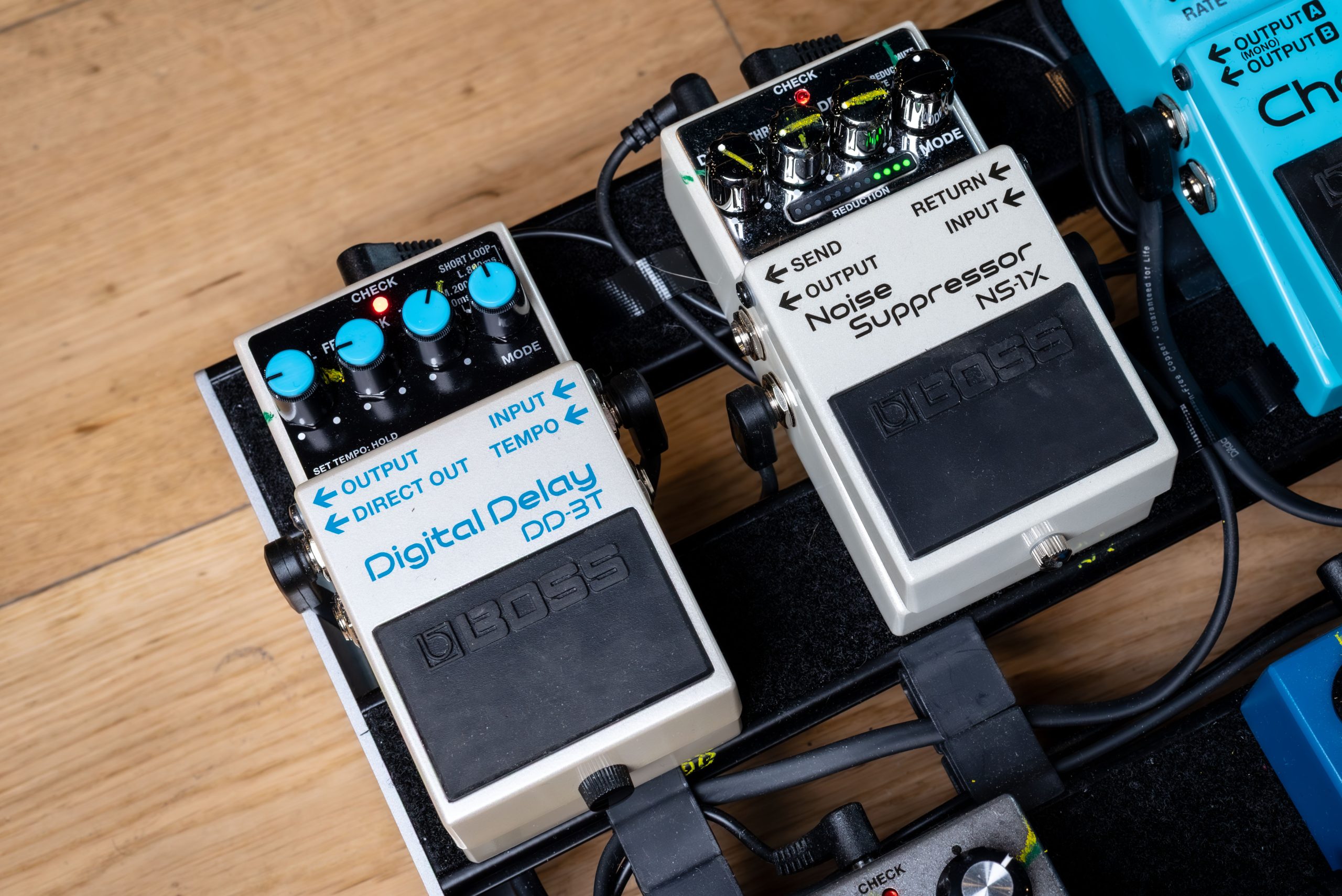
The NS-1X is before the DD-3T, so it doesn’t affect the delay trails.
How has the BOSS NS-1X Noise Suppressor been working out for you?
The NS-1X is amazing. That’s the best noise suppressor ever. I always used the BOSS NS-2 Noise Suppressor, but the newer NS-1X is incredible.
People often place gain pedals before modulation, but your BOSS BD-2W Blues Driver and FZ-1W Fuzz come after the PH-3 Phase Shifter and CE-2W Chorus. What’s your reasoning behind that?
If you put gain pedals before modulation effects like phase shifters and choruses, they can overload, making your tone washy and less defined. Similarly, if you put a gain pedal before a wah-wah, it can make more of a whoosh sound, rather than the more articulate vocal tone people like.
"The NS-1X is amazing. That’s the best noise suppressor ever."
Driving It Home
How do the BOSS SD-1W Super Overdrive and BD-2W Blues Driver compare?
I was trying to figure out which drive (the SD-1W or BD-2W) sounded best with my Marshall amps. I think the BD-2W Blues Driver has got a little more weight to the sound. To my ears, the SD-1W Super Overdrive has more midrange.
How does the Waza Craft BD-2W Blues Driver compare to the original BD-2 Blues Driver?
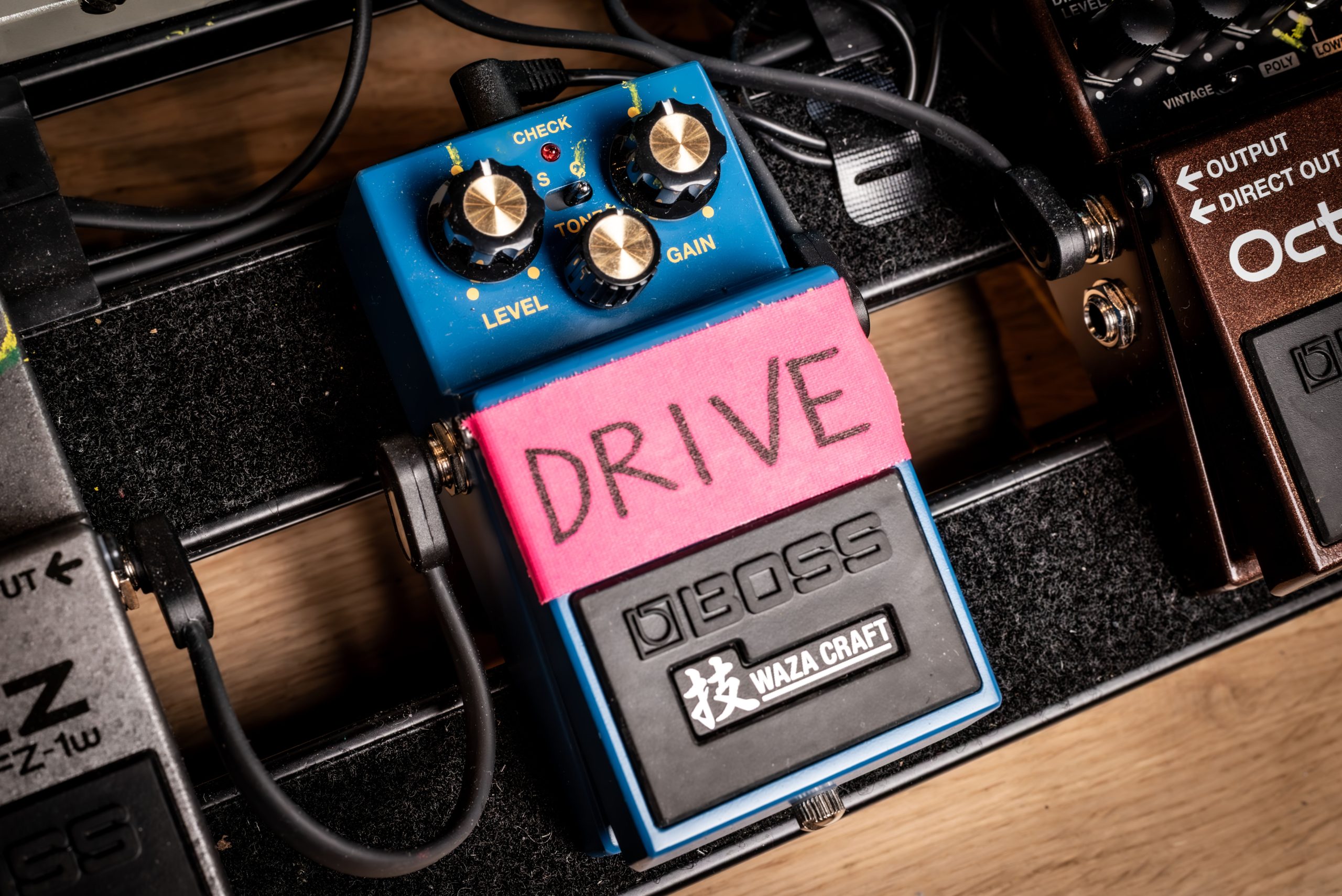
I tried the original Blues Driver when it came out in the mid ’90s, and thought it was good. I remember a lot of people really liked them, such as Kelly [Jones] from Stereophonics. But when I tried the Waza Craft version—the BD-2W—it blew me away. It sounds absolutely amazing.
What do you like about the BOSS FZ-1W Fuzz?
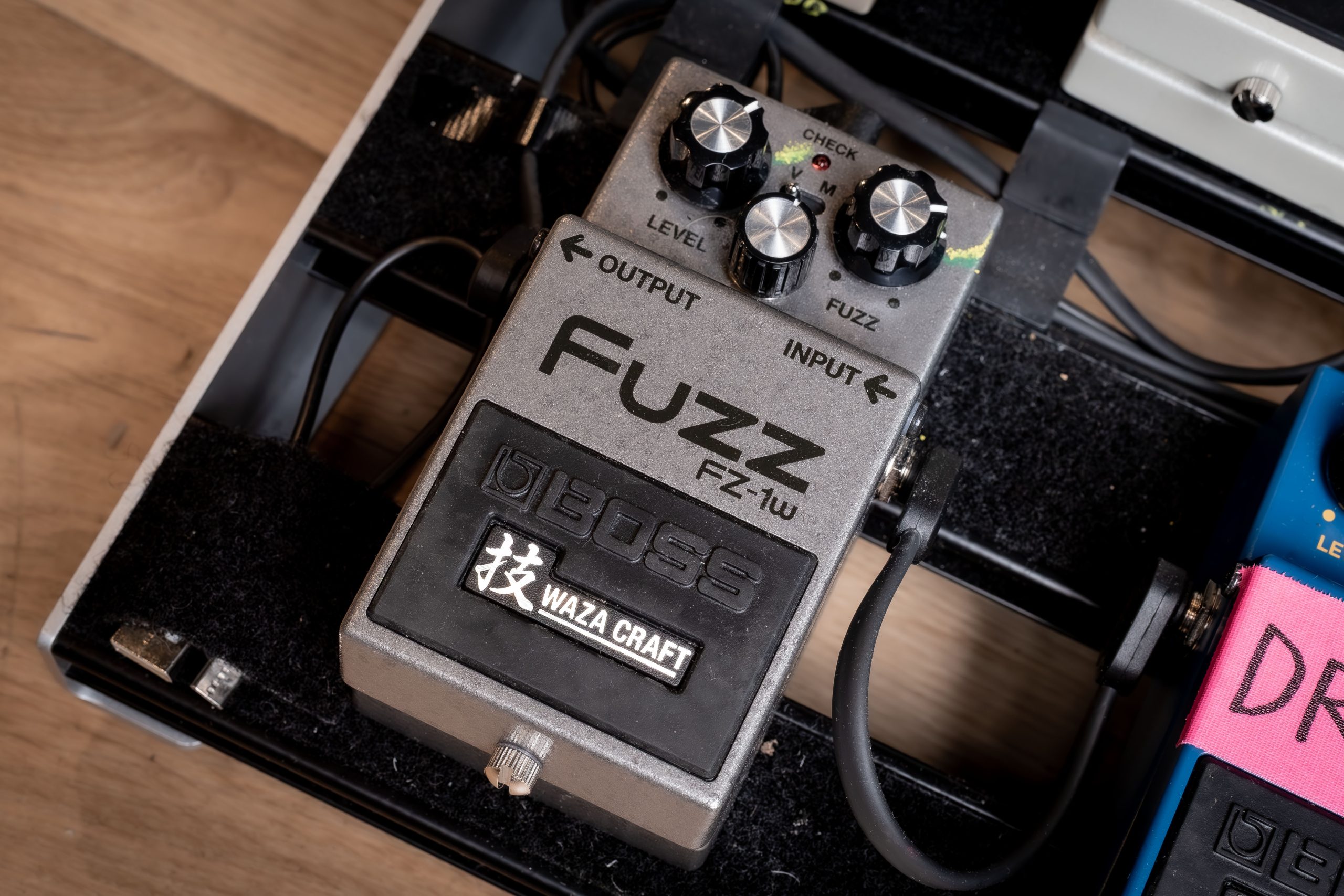
The FZ-1W Fuzz is great. It’s like a ’60s-style fuzz. I use it with an amp that’s already driven, so it sounds really weighty. The FZ-1W can do anything from Jack White to Black Sabbath. When I want something to sound really horrible (in a good way!) I’ll go for the FZ-1W.
Using a fuzz pedal in that way is so different from using a drive. We’ve got a song called “This Means War,” which has a massive Sabbath-y sound, and the FZ-1W is great for that. It sounds like an old Tone Bender.
How do you use the BOSS BP-1W Booster/Preamp?
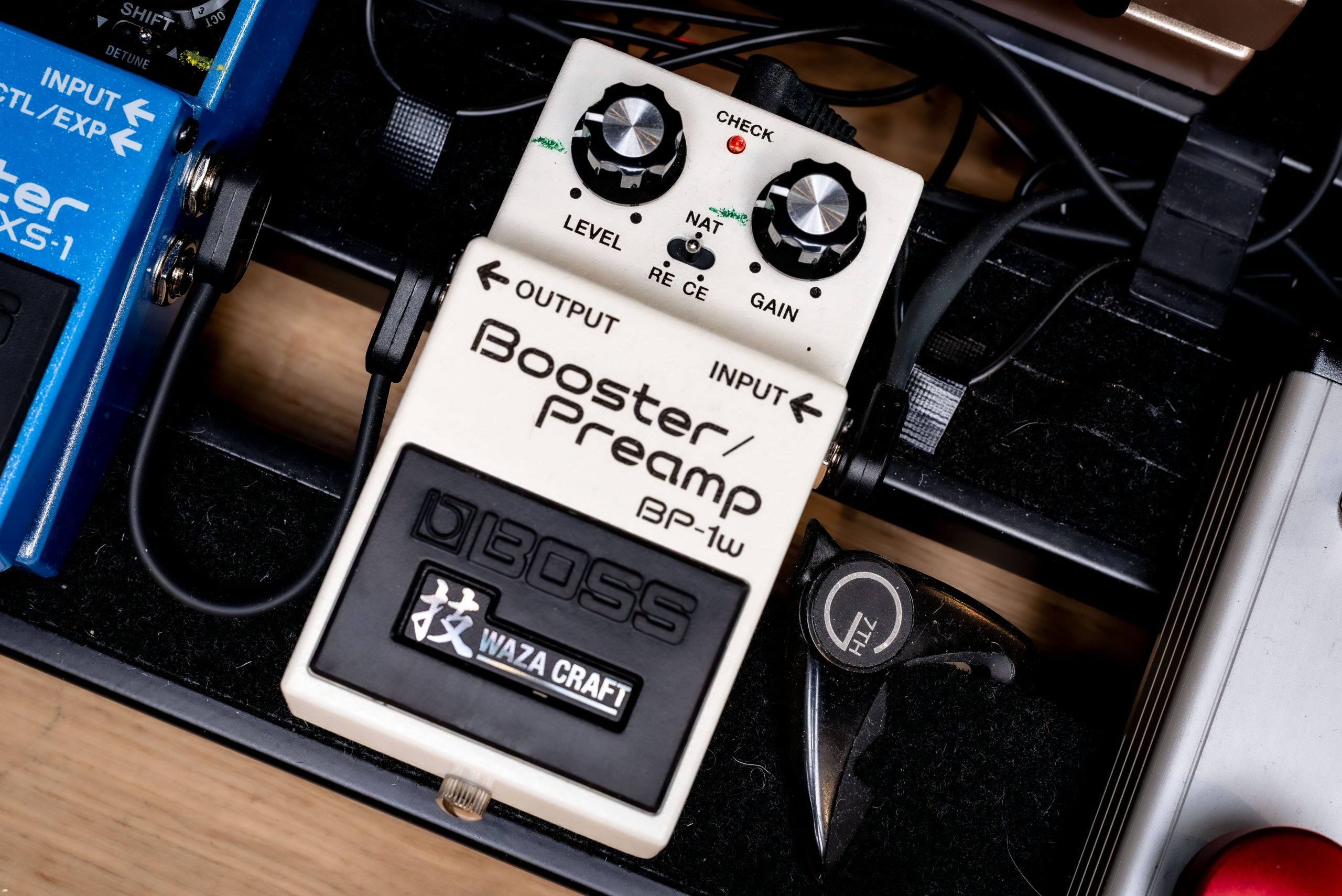
The way I use the BP-1W is a bit counterintuitive; instead of boosting the signal, I use it to cut. Sometimes, when you turn down the volume knob on your guitar, the sound can go a bit dull. But with the BP-1W, you can get that rolled-back Guns N’ Roses “Paradise City” kind of tone while keeping the sound clear and bright.
"The FZ-1W Fuzz is great. It’s like a ‘60s-style fuzz... It sounds like an old Tone Bender."
With the BP-1W, I get a Bruce Springsteen-style jangle using a driven JCM800. For example, when I’m playing “Hedonism,” I’ll step on it to take the weight out of the guitar while retaining some natural-sounding sparkle.
I’m loving the BP-1W Booster/Preamp. It’s cool that you can switch the input impedance between Standard and Vintage [1 MΩ and 100 kΩ, respectively]. I have it set to the Natural mode (with the three-way switch in the middle), rather than the CE [CE-1 Chorus Ensemble] or RE [RE-201 Space Echo] preamp sounds.
Tell us about your BOSS HM-2W Heavy Metal.
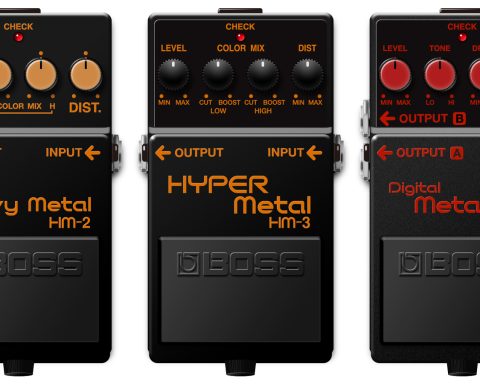
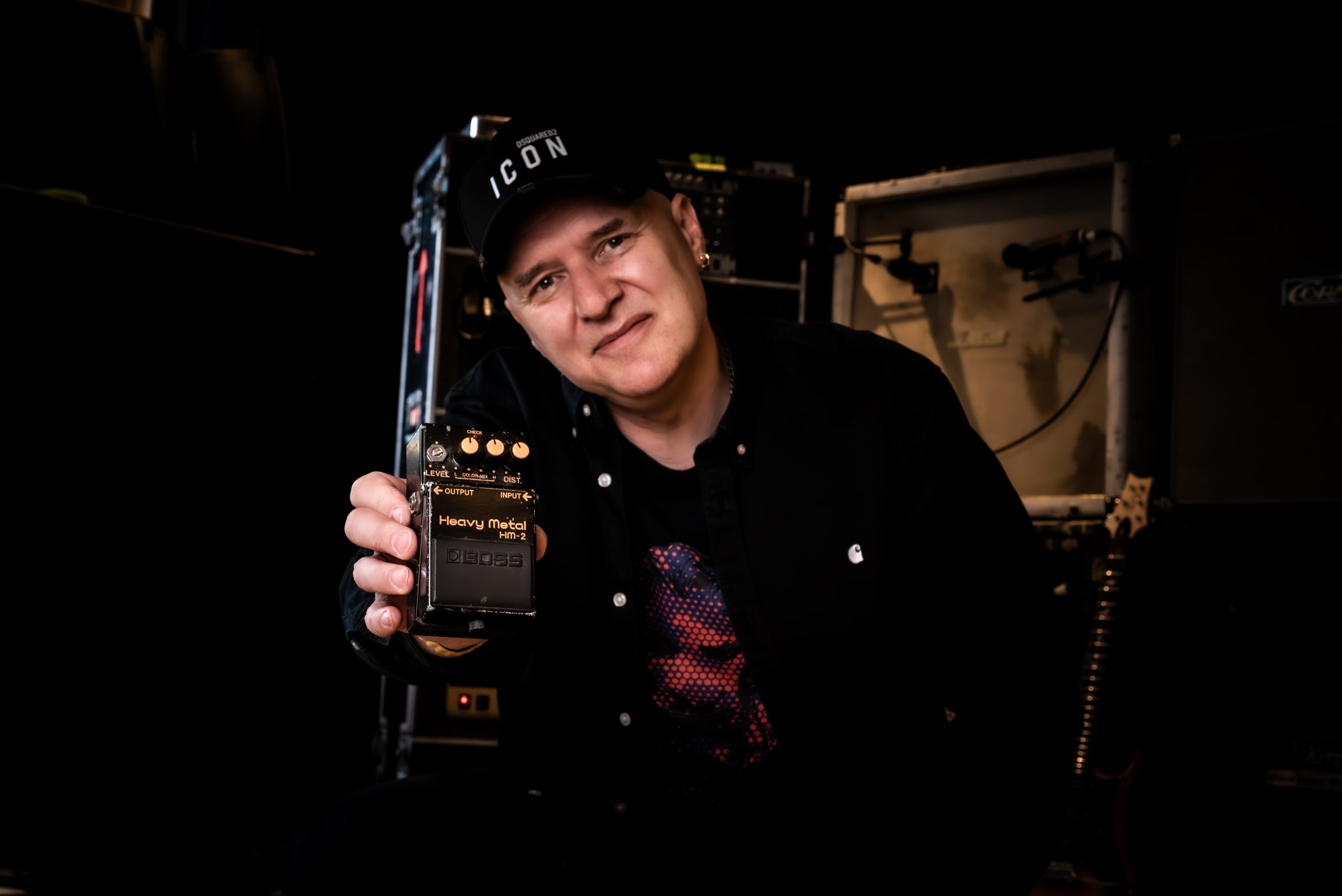
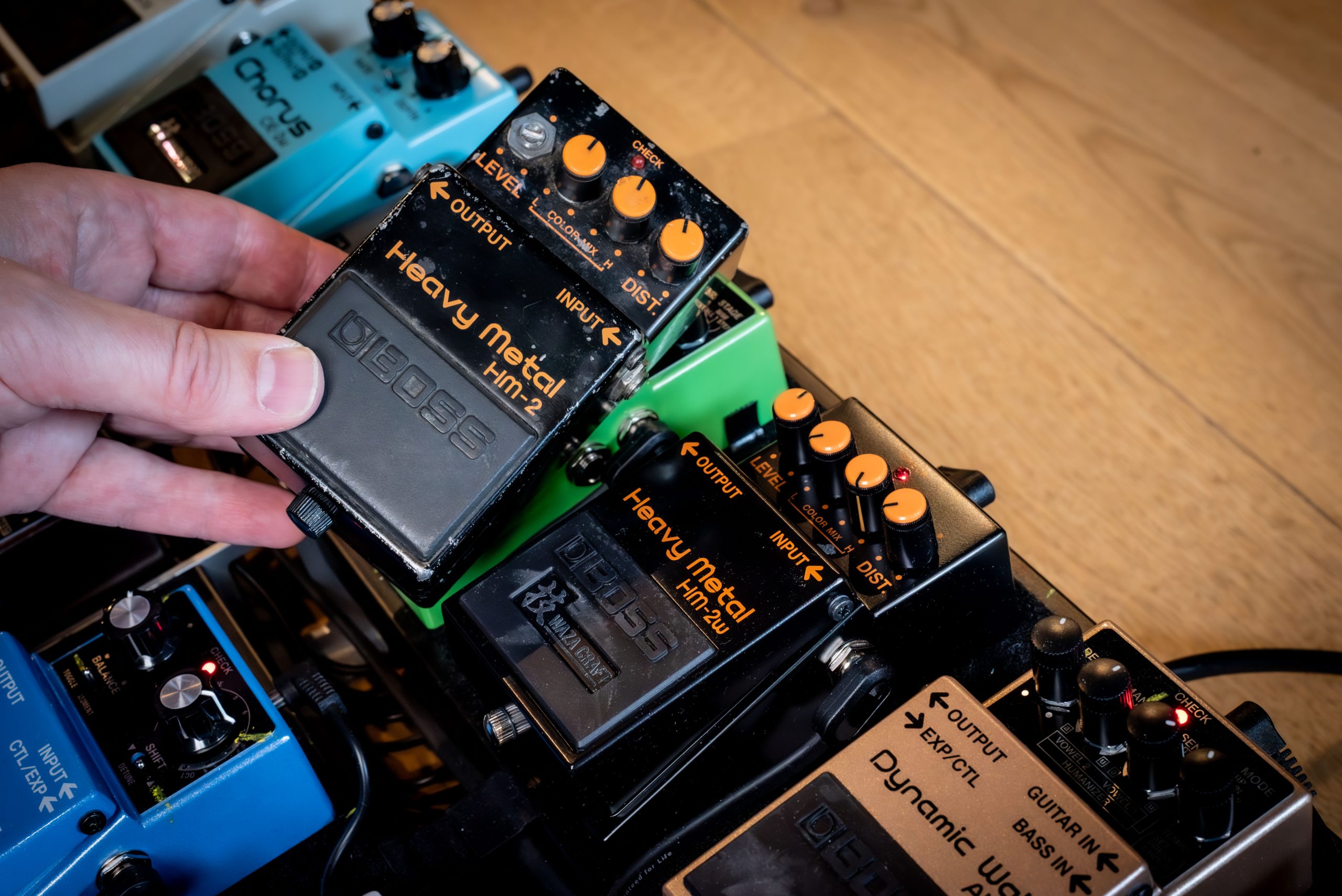
My new BOSS Waza Craft HM-2W Heavy Metal is a homage to my BOSS pedal from the ’80s—the original HM-2 Heavy Metal. One of the knobs was broken off, but it’s still working perfectly after all these years.
The newer Waza Craft Heavy Metal runs on a standard 9-volt power supply, so it’s a bit easier to use than the old Heavy Metal, which needed a 12-volt power supply. My HM-2W is all shiny and new. I love it! It’s a good-looking pedal.
Tone Hedonism
At what points in Skunk Anansie sets do you use the BOSS CE-2W Chorus?
I love classic BOSS chorus. It reminds me of The Cult and The Cure. The CE-2W Chorus is amazing. It’s so clear, and it really chimes. I’ve got it set up for a detune/doubling effect that I use in different parts of the set, like in the song “My Love Will Fall.” I also use it on “Weak”—the second chord in the middle eight, to be specific.
"My new BOSS Waza Craft HM-2W Heavy Metal is a homage to my BOSS pedal from the '80s—the original HM-2 Heavy Metal."
I have the CE-2W set to Standard mode (left switch setting), rather than the CE-1 [chorus and vibrato] modes. I prefer the CE-2 sound. I find the CE-1 a little too deep and bright. I mean, it’s beautiful, but I prefer the subtler modulation of the CE-2.
How do you set the BOSS PH-3 Phase Shifter?
I set the PH-3 Phase Shifter to a light [Electro-Harmonix] Small Stone-style sound for songs like “Twisted.” I had a BOSS PH-2 Super Shifter back in the day, but it disappeared somewhere. It’s a really cool pedal, and I’d like to get it back.
Which songs do you use the BOSS AW-3 Dynamic Wah for?
I use the AW-3 in a solo on the song “Hedonism.” It’s used just for that one song.
Are there any BOSS pedals in the current catalog that you like the sound of, which aren’t on your board?
The RT-2 Rotary Ensemble sounds amazing, and the SY-1 Synthesizer is really cool. I might use those at some point, though I don’t have an immediate need for them in the Skunk Anansie set right now.
What do you like about BOSS pedals generally?
I love BOSS colors. If you’re jumping around on a dark stage, you can stomp on a BOSS pedal and know exactly what it is. I’m still like that with pedals now—I see the color and stomp on it. I’m always running around the stage with lights flashing, so BOSS colors are really useful for me when playing live.
"I’ve never had a BOSS pedal fail on me in the entire 45 years I’ve been playing guitar."
Also, BOSS pedals are buffered, so you don’t get signal loss, which makes a real difference—especially on bigger stages. And the switching is super quiet, which helps keep things clean when you’re turning effects on and off all the time—especially through a big amp and PA.
BOSS pedals seem to last forever. You can take them on tour for years and years, and they won’t give you any trouble. My new BOSS pedalboard will be gigged around the world for years to come. It’s a proper workhorse.
You’ve collected lots of pedals over the years, but what made you return to BOSS?
When boutique pedals became popular in the ’90s and 2000s, I bought loads of them, but many eventually developed issues—crackles, buzzes, and noisy switches. BOSS pedals don’t do that. The build quality is just solid. I’ve never had a BOSS pedal fail on me in the entire 45 years I’ve been playing guitar.
Also, a lot of boutique pedals use odd voltages (12, 18, or 24 volts), whereas BOSS pedals operate at the standard 9 volts. I find it really useful that they can run on batteries, too. If there’s ever an issue with power at a gig, I can just switch over to batteries and keep going without any stress.
Plus, you don’t need a screwdriver to change the battery in a BOSS pedal—nor do you need to remove the pedal from your board because you can get to the compartment from the front.
What do you like about BOSS Waza Craft pedals?
BOSS Waza Craft pedals have an expensive sound. They sound fantastic—like boutique pedals.
"BOSS Waza Craft pedals have an expensive sound. They sound fantastic—like boutique pedals."
What turned you on to BOSS effects pedals in the first place?
The thing that really got me interested in pedals, and BOSS in particular, was when Gary Moore appeared on an ’80s TV show called Rockschool, demonstrating his BOSS effects. In the clip, he’s got one of the old BOSS [BCB-6 Carrying Box] pedalboards and shows you what they all sound like.
That was so inspiring to me. I was a young teenager who had just started playing guitar, and I was absolutely blown away by watching that. Straight away, I thought, “I have to get a BOSS Octave pedal,” and went to the music shop to pick up an OC-2. The OC-2 Octave was my first effects pedal—that’s what started me off.
Holding All the Aces
What got you interested in making music to begin with?
I loved music when I was a little kid. My older brother was really into music, and I’d often hear sounds emanating from his bedroom. When he was about 14, he started listening to heavy metal—Black Sabbath, Rainbow, and lots of other metal bands.
The first live band he saw was AC/DC—on their If You Want Blood tour in the late ’70s. When he came home, he was so excited. I really wanted to see a live band, so he gave me a ticket to see Motörhead at the Birmingham Odeon for my 12th birthday. It was during the Ace of Spades 1980 [Ace Up Your Sleeve] tour.
I was so taken by Motörhead that when my mum asked me what I wanted for my birthday, I told her I wanted a bullet belt, like Lemmy’s. She actually bought one for me—12 quid from a market stall. I wish I still had it.
"The OC-2 Octave was my first effects pedal—that’s what started me off."
Did the Motörhead show inspire you to make music?
The Motörhead show blew my mind. I mean, I couldn’t even believe such a thing existed. When I came home, I said, “That’s what I’m going to do.” From that day forward, I was completely focused on being in a band.
No one at school believed I’d just seen Motörhead, so I had to take the program in with me to prove it!
Did you take the name Ace after the Motörhead song “Ace of Spades”?
No, but Lemmy was a friend of mine for over 20 years, and he was amazing. He used to call me Ace Number Two, because Ace Number One was his friend Ace Trump (who was part of their management team). Lemmy would write me postcards on tour addressed to “Ace Two.”
At what point did you start playing guitar?
After the Motörhead gig in Birmingham, I bought a guitar and started playing all the time. I’ve never stopped being excited about playing guitar since the day I went to see Motörhead.
I’m still obsessed. I play guitar for a living, but it’s also my hobby. If I watch films, it’s usually about music. And if I read books, they’re usually about music too. I’ve never lost the passion for it.
What’s the secret to the ongoing success of Skunk Anansie?
It amazes me how successful Skunk Anansie still are after 32 years. Last year, we sold out 75 shows and released a top-ten album. I think it’s amazing. This year, we’re touring Europe, playing shows with Alanis Morissette and My Chemical Romance, and sharing a double-headline run with Garbage.
"You have to indulge your passion to keep things exciting and moving forward."
I think the reason we’re still successful is that we’re all so passionate about making music. You can’t drive anything without passion. Everyone in the band is still really into it.
Skin still looks amazing and is working with fashion designers. Everyone’s got new gear and plays all the time. We’ve got new songs, new management, a great road crew, and we invest in lighting and production.
You have to indulge your passion to keep things exciting and moving forward.