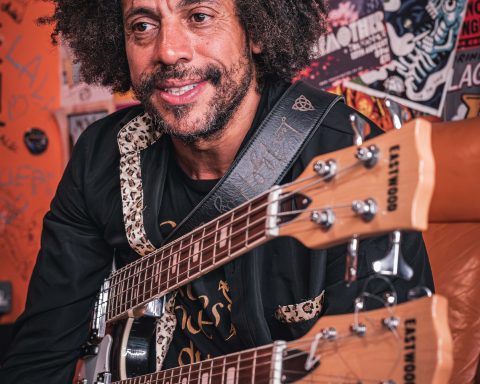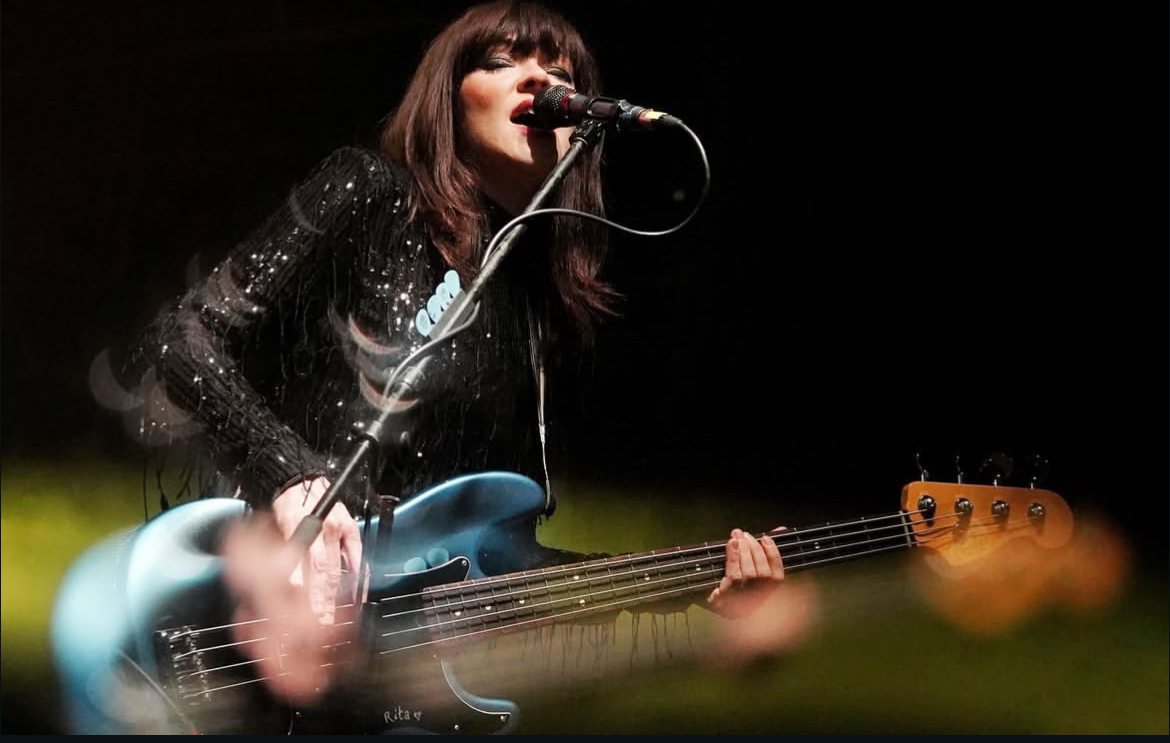


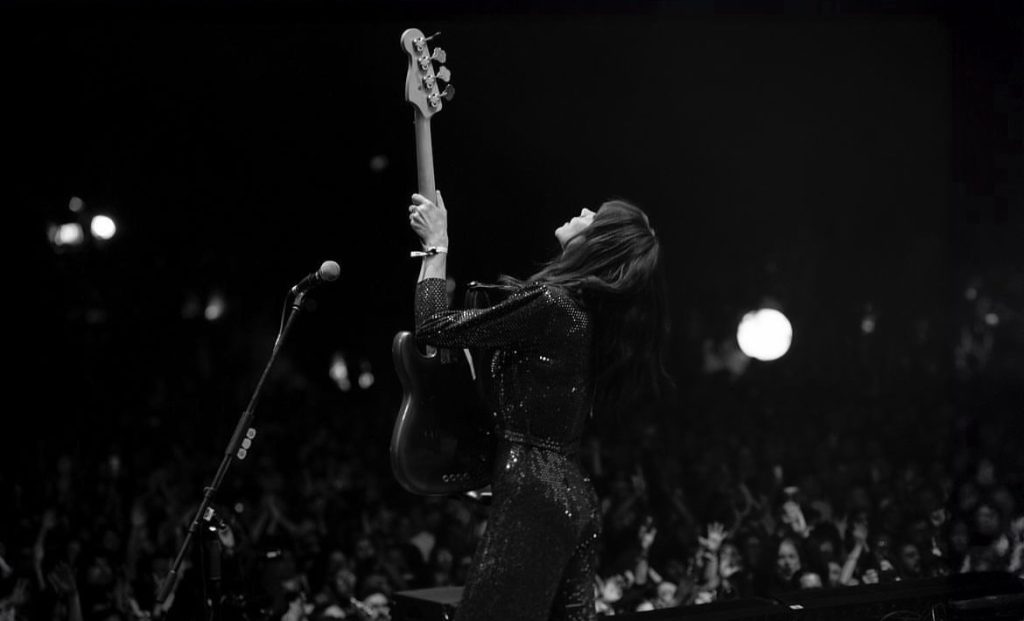
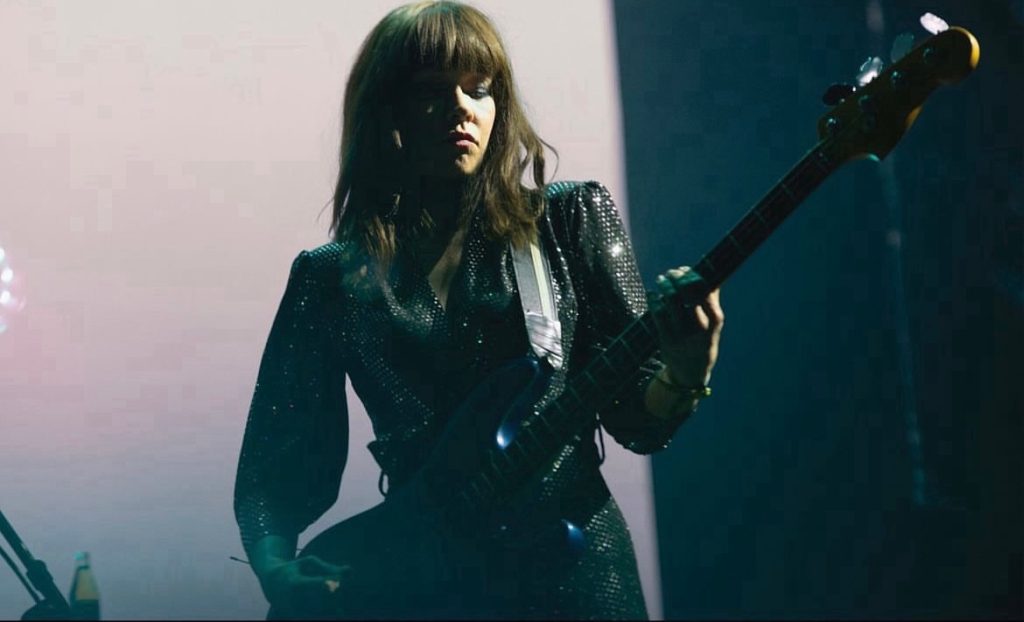
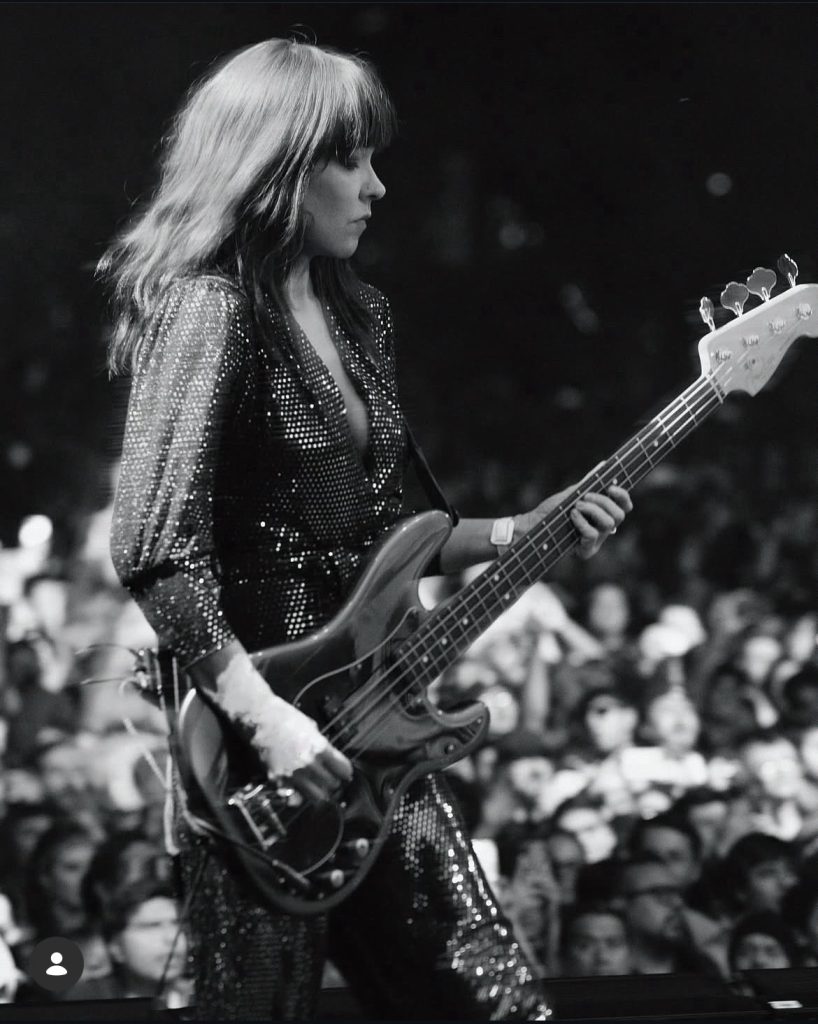
If your ears have been tuned to the undercurrents of British music any time over the last two decades, the name Simone Marie Butler will immediately strike a chord. Many will know her as the bassist who spent thirteen years anchoring Primal Scream, driving riffs that defined stadium anthems and underground classics alike. But to reduce her to a single band is to overlook a restless, prolific musician. Renowned for intuition, nuance, and power, her live work also spans established alternative acts like The Twilight Sad and The Jesus and Mary Chain. Meanwhile, countless studio sessions range from instrumental post-rockers Held By Trees‘ album-in-the-works to The Smiths guitar hero Johnny Marr‘s Fever Dreams Pts 1–4.
BOSS Palette
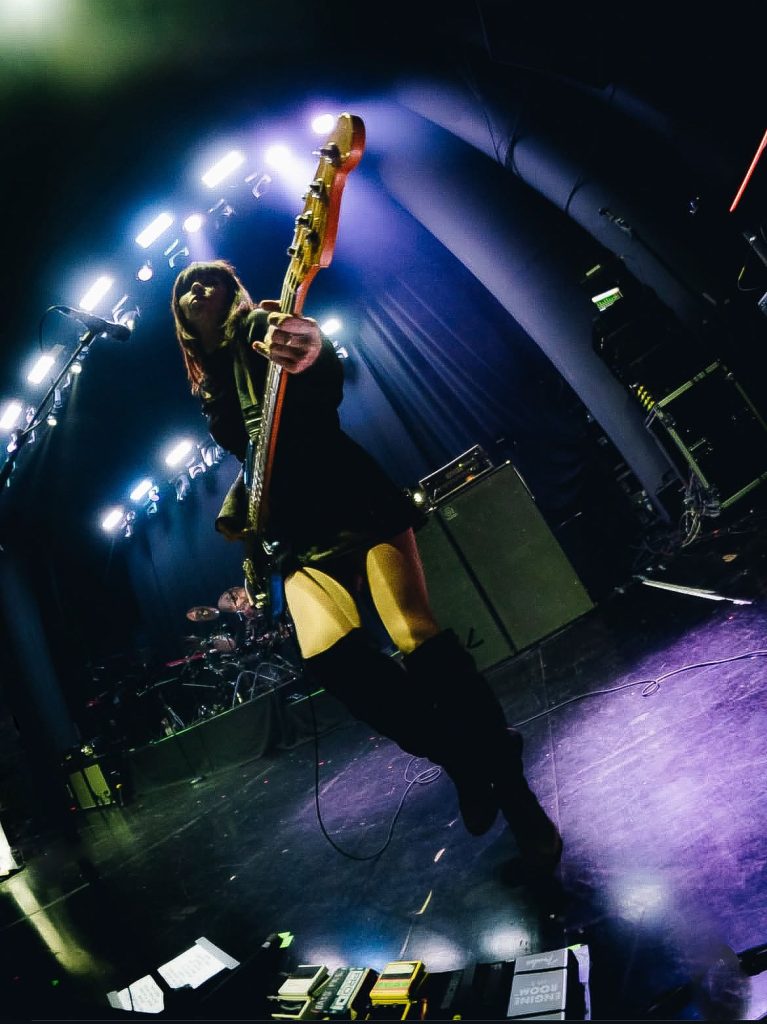
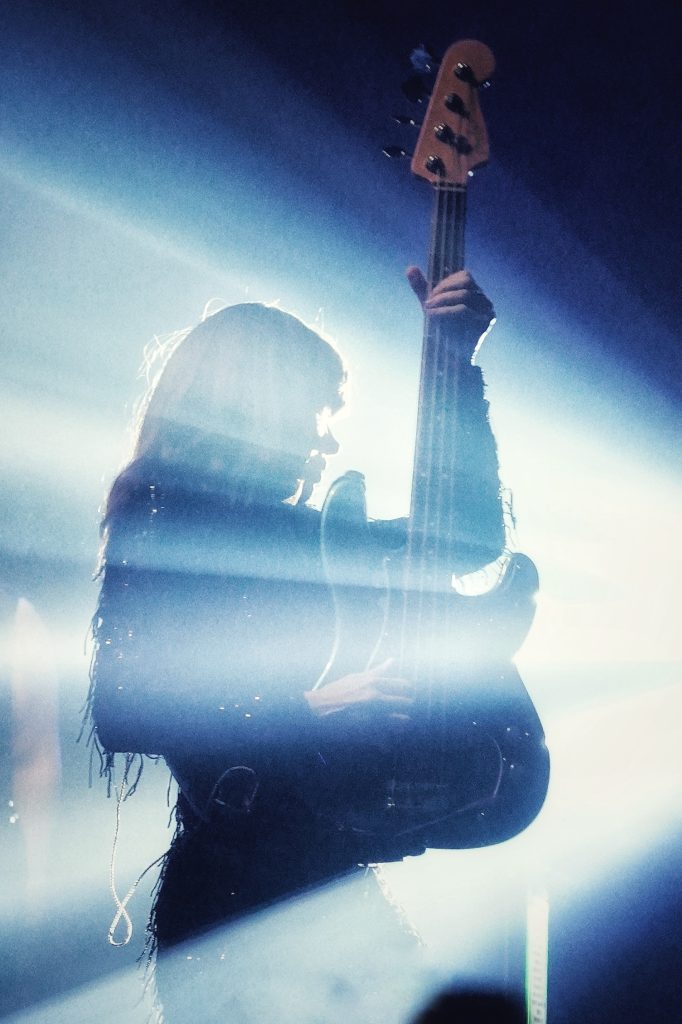
Simon Marie Butler’s career is defined by curiosity, experimentation, and a commitment to great tone. Throughout, she has relied on BOSS pedals to shape her sound.
“The thing with BOSS is that the pedals are so effortlessly reliable,” she tells us. “You need something you can adjust quickly—and instantly know what it’s doing.”
Elsewhere, Butler notes, “BOSS pedals are ridiculously user-friendly. If you’re a beginner, you’re instantly closer to what’s in your mind.”
It’s that combination of immediacy and trust that has kept her returning to BOSS while exploring everything from overdrive and chorus to tremolo and delay—each pedal a brushstroke in her sonic palette.
Butler’s musical journey is not only a record of versatility but a testament to the relationships she builds with sound and with artists—always seeking the spaces between emotion, melody, and raw energy.
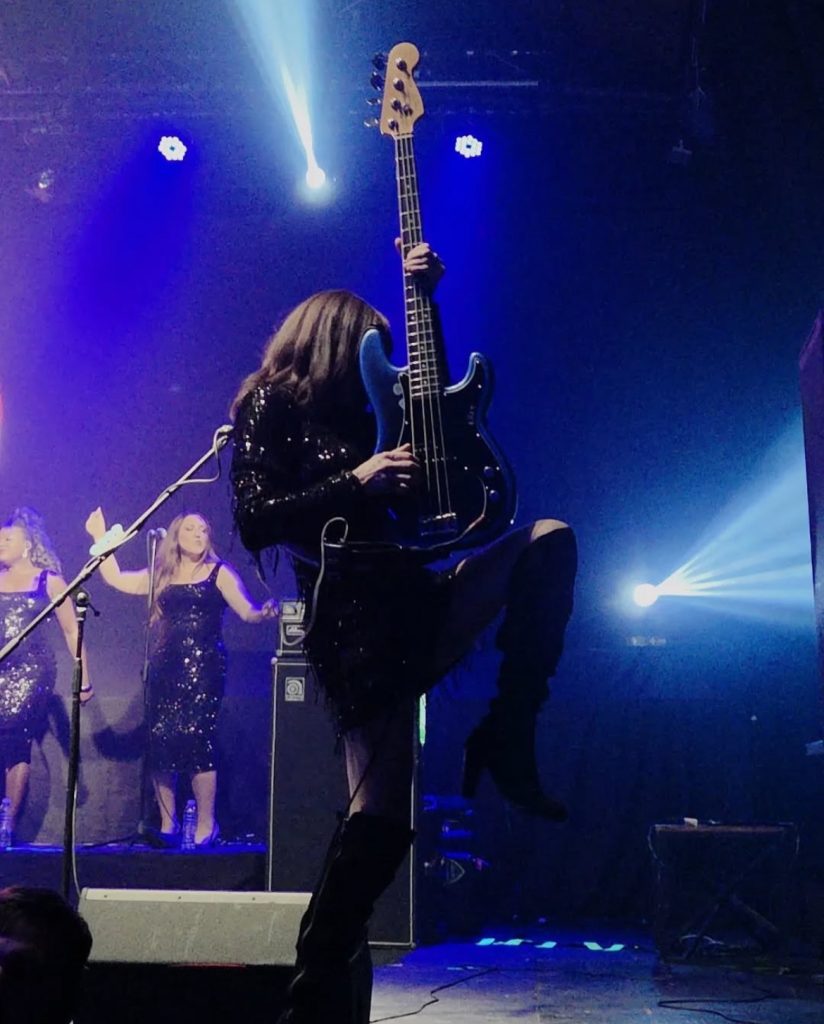
She now brings that sensibility to her work with The Twilight Sad, with whom she will be performing bass duties while touring this summer (and sharing stages with one of her lifelong inspirations in the process).
Decades of BOSS
Tell us about your current work with The Twilight Sad—the new album and tour, and its connection to The Cure.
I’m going on tour with The Twilight Sad mid-April [2026]. There’s a European run, and then we do a bunch of shows supporting The Cure. The Twilight Sad have supported The Cure a lot. Robert Smith really loves them. Of course, The Cure is BOSS pedal central, right? Robert and Simon Gallup have used them for decades.
The new Twilight Sad record, It’s the Long Goodbye, is a very emotionally charged, visceral, powerful, fierce album. I really love it. Robert Smith played on three of the tracks.
Who knows, maybe he’ll come out and play on one of the songs live. That would be quite amazing to play a song live with Robert Smith. I mean, The Cure are such a big deal for me. They are one of my favorite bands. I did Lol Tolhurst and Budgie’s podcast [Curious Creatures] a while back. Nice guys.
"I'm going on tour with The Twilight Sad... There’s a European run, and then we do a bunch of shows supporting The Cure."
Finding The Cure
How much of an influence have The Cure been on you, and what keeps you coming back to their sound?
The Cure is a band that I’ve continuously loved. They’re just such an unusual group, and so melodic. The Cure has a sound. Each album is different, but it always sounds like them.
It’s hard to pinpoint what it is, but the bass lines are an integral part of the music. “Fascination Street” is all about the bassline to me. That track is brilliant, as is “Lullaby.” They’ve got so many hits, and they’re epic live.
The Cure and Depeche Mode were the first two bands I really latched on to. I think the first track I heard from Depeche Mode was “Policy of Truth.” I kind of caught them from Violator onwards and then went into their back catalog. I probably know The Cure’s back catalog more than any other band.
Pedalboard Mainstays
How do you keep modulation effects tasteful and timeless, as Robert Smith does with the BOSS BF-2 Flanger?
I think it’s quite hard to make flanging effects sound tasteful on a bass, or even a guitar, but The Cure are masters at it [Robert Smith has three BOSS BF-2 Flangers in his live rig]. I think you’ve got to know how to dial modulation in well for it to sound really good.
To me, effects like a flanger or phaser can sound quintessentially ‘80s. But if you use them tastefully, or maybe with other pedals, they can sound timeless. It’s all about your sense of tone—how much you dial in, what you use them with, and what song you’re playing. It’s so much fun to play around with.
Which BOSS stompboxes are on your pedalboard?
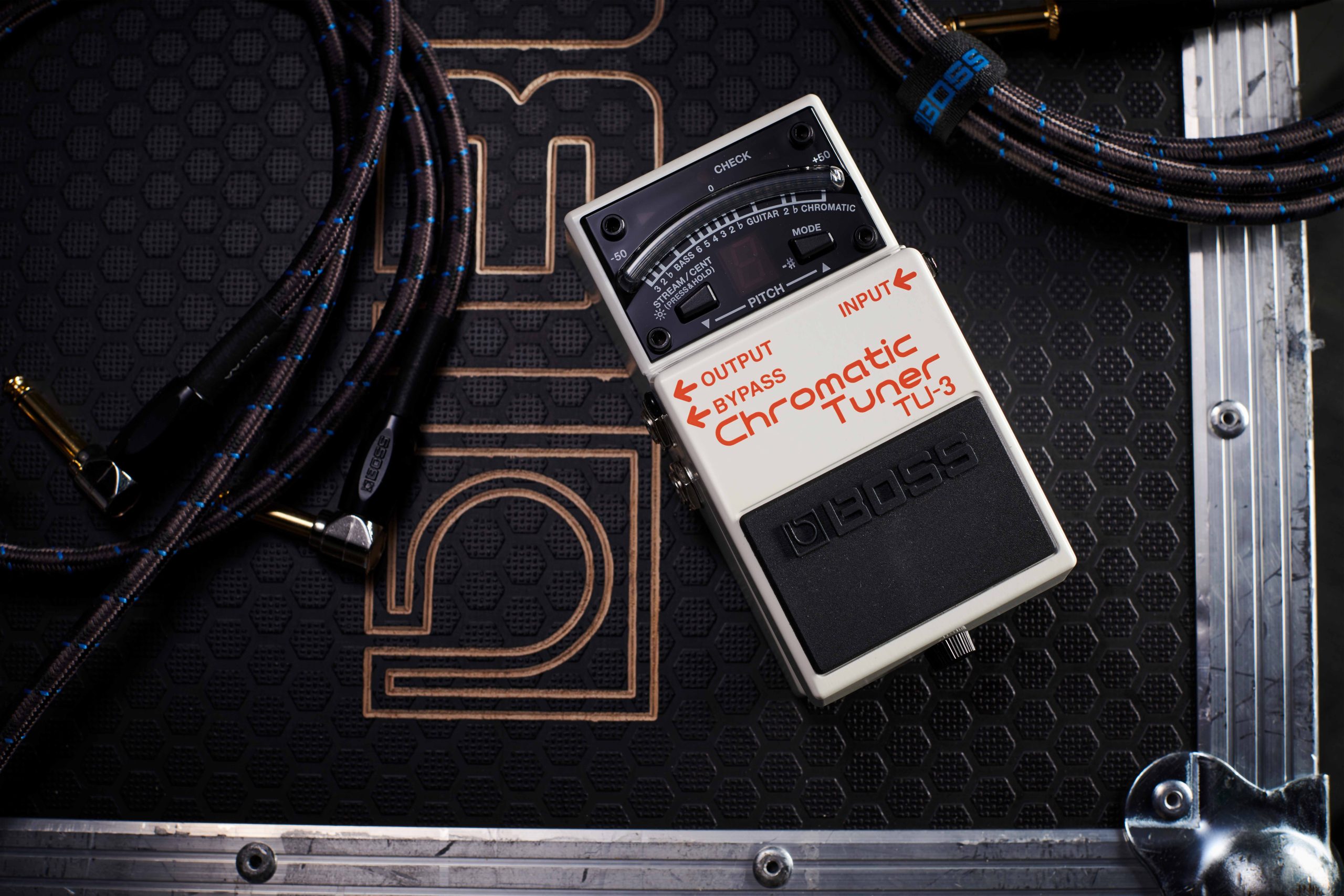
Obviously, the TU-3 [Chromatic Tuner]. It’s the best live tuner in the world. I did try the strobe ones for a while, but it just takes so long to use. When you’re playing live, and you’ve got maybe five seconds to quickly tune up between songs, you need the TU-3, which is fast and super reliable. Like, bam! There it is.
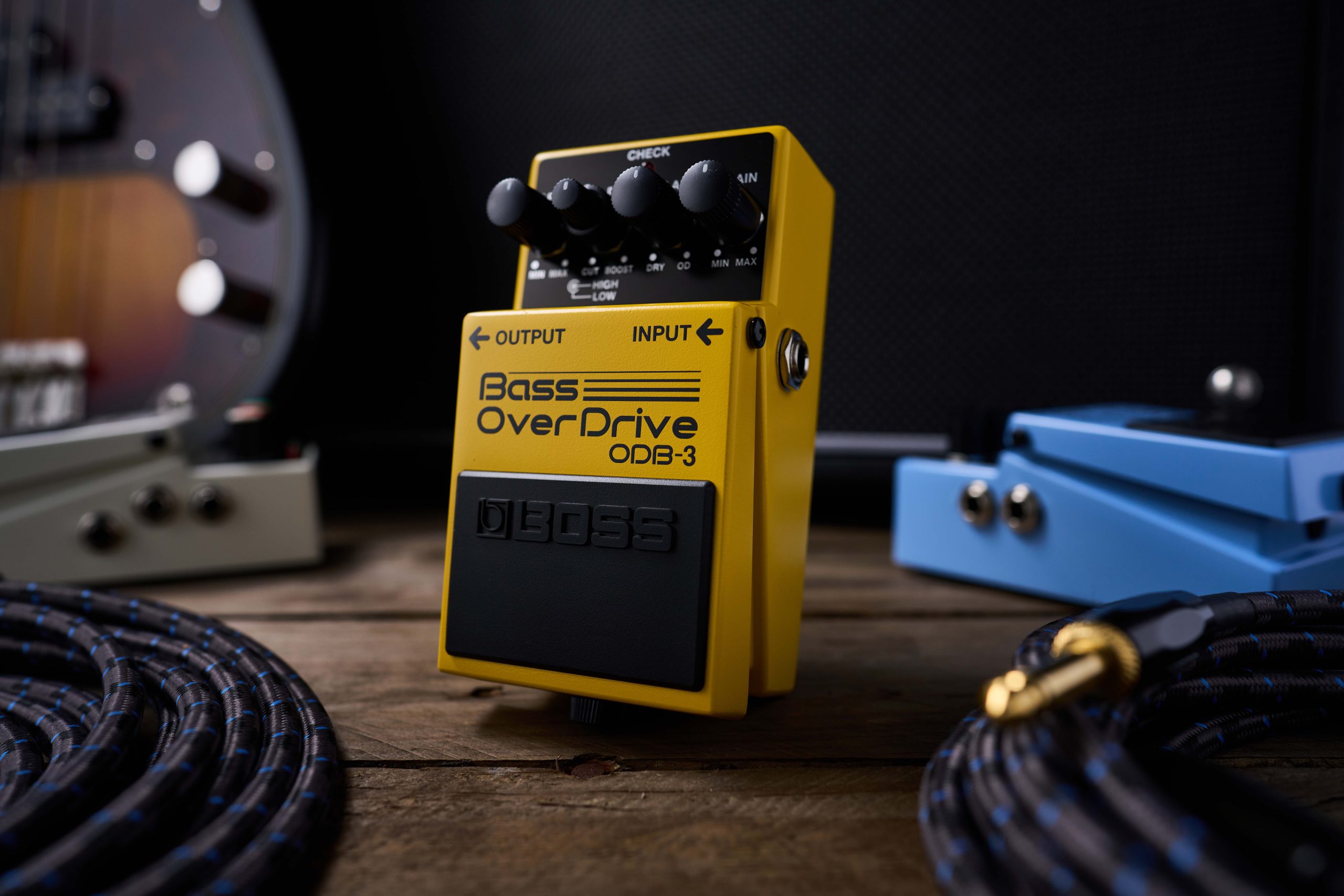
"Primal Scream was all BOSS ODB-3 OverDrive live."
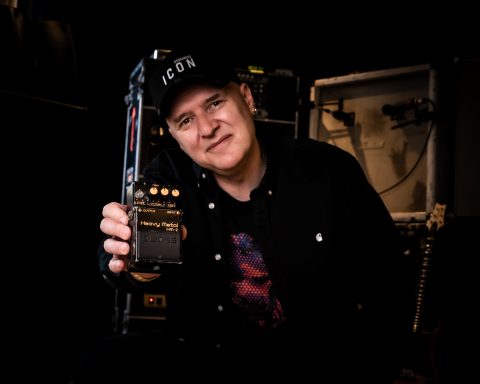
I’ve also got the ODB-3 Bass OverDrive. That’s just killer. It’s great, man—really good. It’s got great bass response and a lot of tone to explore. It does that gnarly kind of sound so, so well.
Much to Gain
How do you balance your bass overdrive sound?
There’s a fine line between overdrive and distortion, and distortion is not quite right for what I’m doing with The Twilight Sad. And it wasn’t right in Primal Scream, either. Primal Scream was all BOSS ODB-3 OverDrive live. If you push the gain a bit, you can get that nice fizzy sound—almost like a fuzz. I really love that pedal. It never leaves my board.
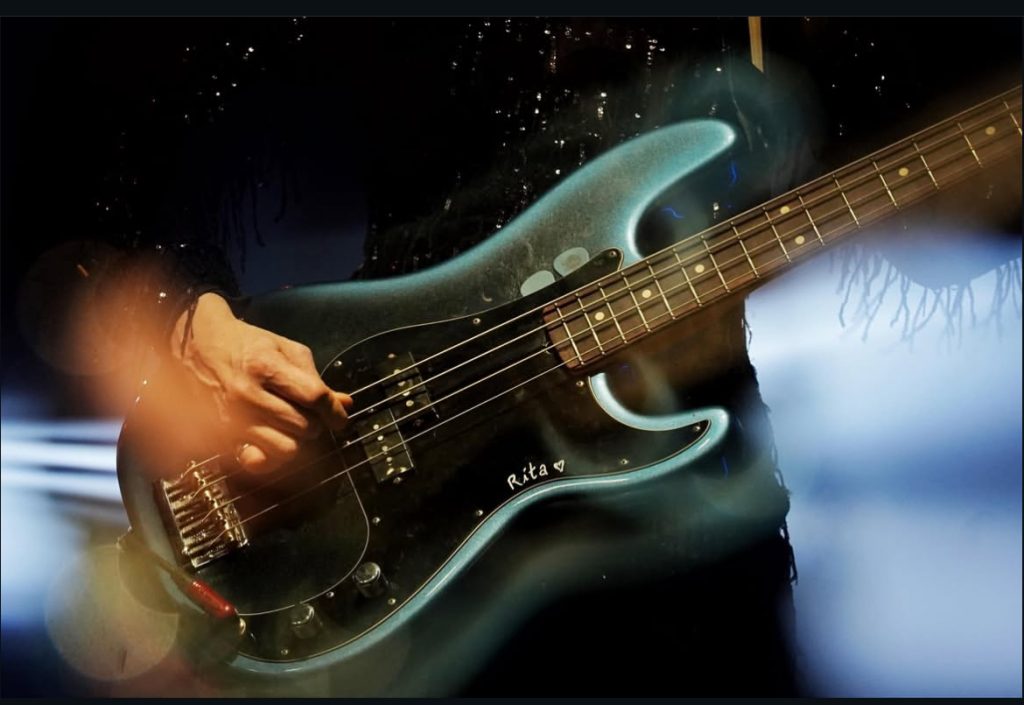
I kind of envy guitarists because they have a wider range of effects. Guitarists often have really big pedalboards, whereas bassists often have really tiny ones with like three or four pedals tops. I’ve got a massive box of pedals, and every so often I get them out because I feel like I haven’t built a big enough pedalboard yet. I really want to.
Tonal Colors
Are there any BOSS pedals you’re currently interested in adding to your rig?
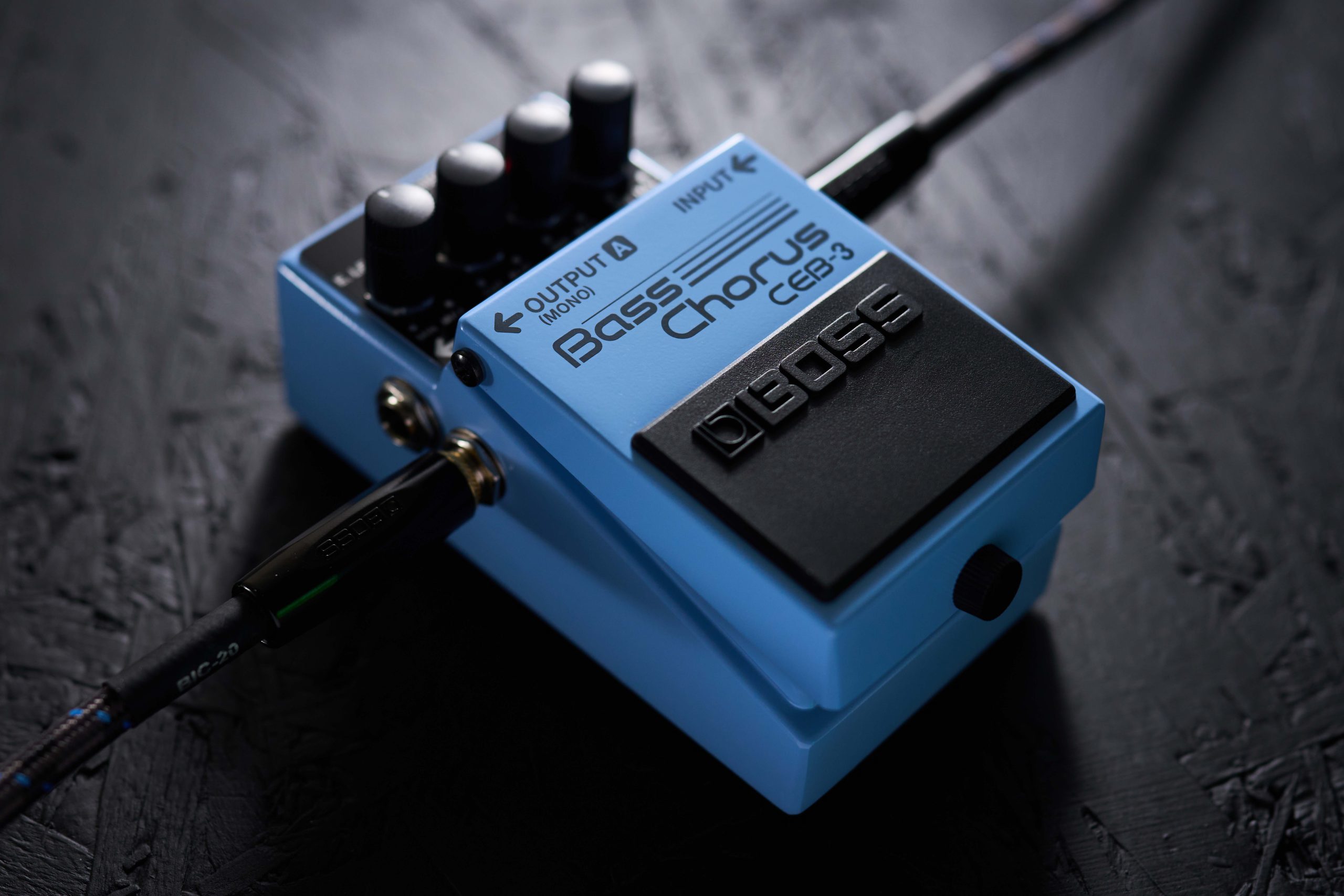
I really want to use the BOSS CEB-3 Bass Chorus on the tour with The Twilight Sad. The CEB-3 is the same color as my mum’s old Triumph Herald. I call that color “BOSS Chorus Blue.” It’s so funny because when I look at that pedal, I think of my mum’s Triumph Herald, and it’s a nice memory.
The colors of BOSS pedals instantly signal their effect type. You know: the chorus pedals are blue, flangers are purple, and overdrives are yellow. It’s color-coded, which is always fun.
Which other types of effects do you like to experiment with?
I like using tremolo pedals—changing waveforms, and adjusting the time. And I really like delay and reverb on bass. I’ve got a BOSS Digital Delay that I love, but I think the track really has to need it. Delay can be super interesting, though you need to exercise more restraint with bass effects than you do as a guitarist. If it’s a track where the guitar already has delay on, you have to be careful that everything doesn’t turn to mush.
"Part of being a musician and having instruments and equipment is being a geek... If you’re a serious musician, you should be obsessed. Really."
Geek Love
Are you a self-confessed gear geek?
Part of being a musician and having instruments and equipment is being a geek. I mean, it’s really healthy for a musician to be obsessed with sound. If you’re a serious musician, you should be obsessed. Really. I think a big part of playing an instrument is being fascinated with sound and knowing when something is great or not.
You need to know if a sound fits a song. It should be instinctive to feel what a track needs, because different effects convey different emotions. You know, overdrive and distortion convey anger and visceral emotion, and modulation can be dreamy and psychedelic.
Effects translate emotion into sound. To me, pedals are like colors to paint sound with. I find it challenging and exciting to use different effects as a bass player. Messing around with pedals can spark ideas. They can really elevate a track.
Loop Station to Loop Station
Musicians often say BOSS Loop Stations are particularly useful for sparking ideas.
When BOSS Loop Stations came out [in 2001], everybody I know went for that. They are the best ones. As soon as the Loop Station came out, lots of other loopers appeared. Everyone was buying looper pedals because they realized you could build your own multi-layered track live, and I attribute that to the BOSS designs.
BOSS Loop Stations changed the way people approached music. You suddenly saw lots of buskers on the streets using Loop Stations to add layers to songs. There’s a knack to using Loop Stations. It’s a bit of an art form. You have to spend a bit of time to get it spot on. It’s like another instrument in itself.
I like it when a new bit of kit comes out, and it changes people’s ideas of what’s possible. I think that’s really interesting. It sometimes feels like everything’s been done with effects, but companies still come up with new sounds and new ways of doing things.
"The thing with BOSS is that the pedals are so effortlessly reliable."
Effortlessly Reliable
What do you like about BOSS pedals generally?
The thing with BOSS is that the pedals are so effortlessly reliable. And, you know, there’s no complicated switches and little niggly bits, like those little DIP switches you get on some pedals. When you’re playing a live show, you do not have time for that. You need something you can adjust quickly—and instantly know what it’s doing.
BOSS pedals are so user-friendly—like, ridiculously user-friendly. If you’re a beginner and you buy a BOSS pedal, you’re instantly closer to what’s going on in your mind. You don’t have to spend ages figuring out how it works before you get a great sound out of it.
Overcomplicated pedals can put many people off. It puts me off if I have to read a user manual. Obviously, for some things you need to read the user manual, but I just like to take a pedal out of the box, plug it in, and start using it straight away. I really do. Maybe it’s an attention-deficit thing, but I’m just so eager to start making noise immediately.
Global Tone
What do you think makes BOSS pedals so accessible?
BOSS pedals have always been relatively affordable. But even the less expensive ones are not an indication of inferior quality. BOSS pedals are reasonably priced and famously reliable.
Also, like Robert Smith once said, you can go virtually anywhere in the world, and you’ll be able to find BOSS pedals. If you start buying rare, obscure boutique pedals that you can only buy from one shop in Australia or America or something, and they go wrong on tour, then, y’know, good luck!
Have you noticed that beginners often use the very same BOSS pedals as their favorite musicians?
It’s reassuring that big rock stars use industry-standard stuff like BOSS pedals. Much like Robert Smith, Prince’s pedalboard was full of BOSS pedals, which I was kind of surprised about, since I just expected Prince to have custom-built gear no one else has. One of the most exciting things is finding out what pedals your favorite artist uses, or the pedals that were used to make your favorite album, or your favorite song.
"When music really touches you, it becomes part of your backdrop and shapes how you approach playing."
There’s something magical about buying a pedal, getting it home, and trying to get that same sound. That’s one of the joyful obsessions of music. It’s so exciting because during that process, you find what you like—you find your own sound, which is made up of lots of little bits of other people’s.
It’s amazing how, despite using the same BOSS pedals, players can still sound so different from one another.
You can have the exact same rig as someone else, but it won’t sound exactly the same. What differentiates one person from another is the way they play—the way they touch the strings, the way they attack their instrument, and the emotion they play with.
It’s important to learn that sound isn’t just sonic. In other words, somebody’s sound or vibe isn’t just about equipment—it’s about them. I think the reason we love artists, bands, guitarists, and bassists is that it’s so individual. When music really touches you, it becomes part of your backdrop and shapes how you approach playing.
Cool BOSS
Over the years, many players have come full circle with BOSS pedals.
I think there was a time when some people thought BOSS gear wasn’t as cool as it is now. Like, somehow you weren’t very imaginative if you just had BOSS pedals—as opposed to some small one-off run of pedals you can only buy in New Zealand or whatever. But the thing is, so many people have come full circle with BOSS pedals.
I own a lot of effects pedals. I bought many of them from Vintage and Rare Guitars in Denmark Street [London] when I worked there years ago. I got really heavily into the boutique thing. I liked the hand-painted pedals because they were all a bit different. I’d try to get the ones with the coolest paint jobs.
But when you’ve tried all that rare boutique stuff, you do come back to what works every time—what’s reliable and unbreakable: BOSS. Plus, as I said, you can buy the same BOSS pedals in virtually any music shop worldwide.
"I like to touch a pedal, dial it in, and play with it in real time. I like the realness of pedals."
Tactile Tone
Have there been any BOSS pedals you regret selling, or that got away?
I really regret selling my old DC-2 Dimension C—the light purple one with the four grey buttons. It’s more of a subtle chorus, but I loved it. I sold it to Joe Light of Joe’s Pedals because I really needed the money at the time.
You can now find the DC-2 Dimension C sound, along with some of the other vintage, rare, and classic BOSS pedal sounds, in the PX-1 Plugout compact pedal and BOSS Effects Pedals plug-in suite. Do you ever use plug-ins for effects?
Plug-ins are definitely important, but I prefer pedals. I like to touch a pedal, dial it in, and play with it in real time. I like the realness of pedals. Moving a mouse or a cursor up and down doesn’t inspire me at all, but if you put me in a room with loads of cool pedals, I get really excited about trying stuff out.
Experimenting with effects on a screen is so uninspiring. With proper pedals, you think differently, and you play differently. If a pedal is in your signal chain, you respond to it in real time. Also, it’s fun to experiment with putting pedals in a different order in the chain because you get happy accidents.
I need to hear something in the air. I need air to move, and I need to hear how the effect sounds in the moment as I’m playing. It has more of an impact on you as a player. I’m not really into the whole thing of tone being an afterthought. I like to play with the sound in real time.
Obviously, plug-ins have their place with bass players and guitarists. I mean, it’s great if you can’t afford a lot of hardware like pedals, and you want to experiment and discover sounds you like. I think it’s important that new music makers, young music makers, or people who don’t have a lot of money for pedals can access the same level of creativity as someone with all the physical gear.
"A lot of Roland gear evokes nostalgia, yet it still manages to remain highly relevant."
I’m like that with synthesizers. As much as I’d love to own all my dream synths, there’s no way I could own everything I want. Even if I had the money, I wouldn’t have enough space for them all. Plus, with vintage gear, you’d need to pay someone just to keep them up and running.
Tomorrow’s Nostalgia
A majority of Roland’s classic synths and drum machines are available as software instruments via Roland Cloud. What do you think makes those sounds so timeless?
A lot of Roland gear evokes nostalgia, yet it still manages to remain highly relevant. When 808s and 303s arrived, and when synths like the Jupiter series defined bands’ sounds—especially throughout the ’80s—it created a lasting emotional connection. That nostalgia is deeply tied to the equipment itself.
It’s the same with BOSS pedals. To me, the BOSS chorus sound has that quintessential ‘80s and early ’90s character, and flangers and phasers also mark a specific era. I try not to overanalyze it, because that risks losing the magic. But once you start digging in and tracing sounds back to records—like discovering the synths Depeche Mode used—it all comes back to that urge to recreate a sound.
The sound of the classic BOSS and Roland gear doesn’t seem to change, as far as I can tell. It’s not like models released in the ’70s, ’80s, and ’90s that are still in production sound totally different, or aren’t as good as they used to be—they have a consistent sound. BOSS chorus has always sounded like the BOSS chorus. BOSS effects are benchmarks for certain effect sounds.
Many of the original BOSS and Roland sounds are still available. For example, the Roland JC-120 Jazz Chorus has never been out of production since its 1975 release, and the BOSS DS-1 Distortion has been in the catalog since its 1978 release.
Yeah, exactly! When you can access and recreate those sounds, it’s like stepping onto the other side of the music—almost like being in the band. There’s a real sense of being part of something special, which is an incredible experience. I think it’s such an emotional, nostalgic, slightly obsessive, wonderful thing—music, pedals, the whole equipment side of it. It’s this never-ending labyrinth of possibilities.
"With Roland and BOSS, it’s sometimes easy to forget how much of the equipment in the music industry it covers—it’s virtually everything!"
With Roland and BOSS, it’s sometimes easy to forget how much of the equipment in the music industry it covers—it’s virtually everything! There are so many iconic pieces of equipment that Roland has done. I love the 303 and those classic drum machines like the 808 and 909. The 909 is my favorite Roland drum machine. I mean, Jeff Mills used the 909 all the time.
The Chain Gang
From ’80s Roland drum machines to the ’80s scene itself, how did you connect with The Jesus and Mary Chain?
I toured with them in 2024 in New Zealand, Australia, Taiwan, and Japan. Then, in 2025, I did some more shows just on vocals. That was amazing, man. I mean, it’s not far away from Primal Scream in terms of six degrees of separation. I love Jim and William [Reid]. I love the songs and getting to sing them.
I’m singing with them again in August when they’ll be supporting Hollywood Vampires [featuring Johnny Depp, Alice Cooper, Joe Perry, and Tommy Henkriksen] for four arena shows up and down the UK: The O2 in London, OVO Hydro in Glasgow, AO Arena in Manchester, and Utilita Arena Birmingham.
I met Johnny Depp about 15 years ago when I worked at Vintage and Rare Guitars. He came in, and I sold him a guitar. We chatted about music and Hunter S. Thompson. He was great.
Electronic Future
Your diary looks pretty full with upcoming gigs, but what recording projects are you focusing on right now?
I’ll continue to DJ around live runs as well. Recording-wise, I’m in the middle of an album with the Indian musician Kuljit Bhamra. I’m also doing an electronic project with a friend of mine, Simon Mós. It’s called SMSM (because I’m called Simone Marie and he’s called Simon Mós) and we’re just finishing off an EP. The name SMSM was inspired by Vince Clark and Martin Gore; they simply called their project VCMG.
I wanted to write songs that sound a bit like Depeche Mode's more electronic side... and combine that with the hypnotic repetitiveness of modular synthesis.
I don’t know if the name SMSM will stick, but that’s the working title. SMSM sounds like twisted acid house. I wanted to write songs that sound a bit like Depeche Mode’s more electronic side, with a top line and melody, and combine that with the hypnotic repetitiveness of modular synthesis. Simon is deep into modular synthesis. I’m thinking Trax Records, Jamie Principle, and hypnotic Chicago House.
Also, I’ve got a bunch of songs I want to do as an electronic cover EP. I can carry a tune and sing in harmony, but I’m no Whitney Houston—I’m not like a lead frontwoman sort of person. So I’ve been looking at vocal effects to bridge the gap between what comes out of my mouth and what else is happening in the track.
I’ve also recorded a couple of tracks for the new Held By Trees album. They work with Charlie Hollis, Mark Hollis’s son, and it’s spearheaded by David Joseph. I contributed some synths to the previous album and have done more with them this time. David is brilliant to work with. He gives me a lot of freedom in terms of playing, vocals, and lyrics, and he is deeply passionate about music. He’s such a great person. I really love working with him.