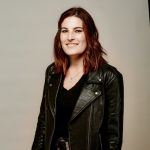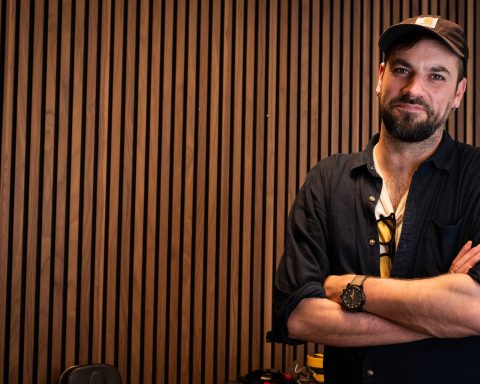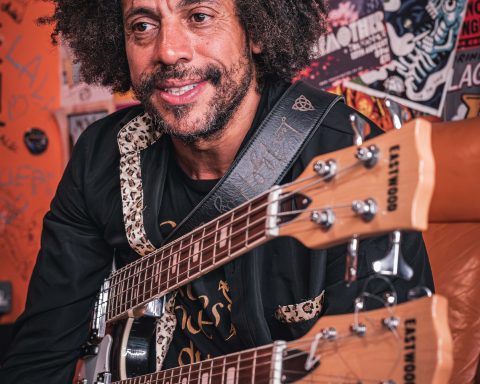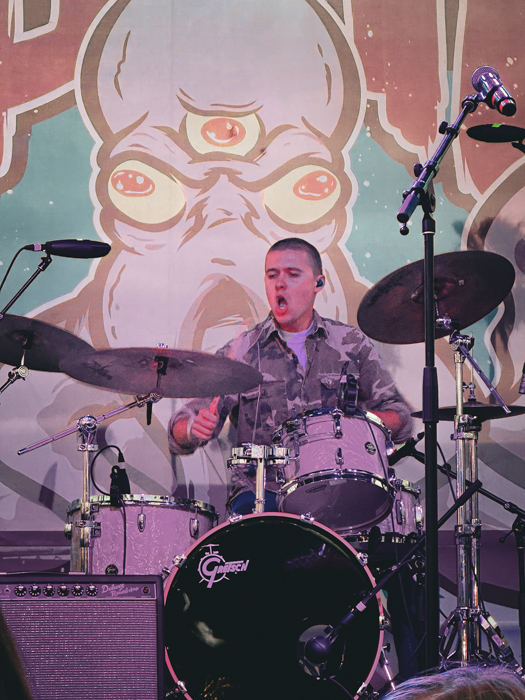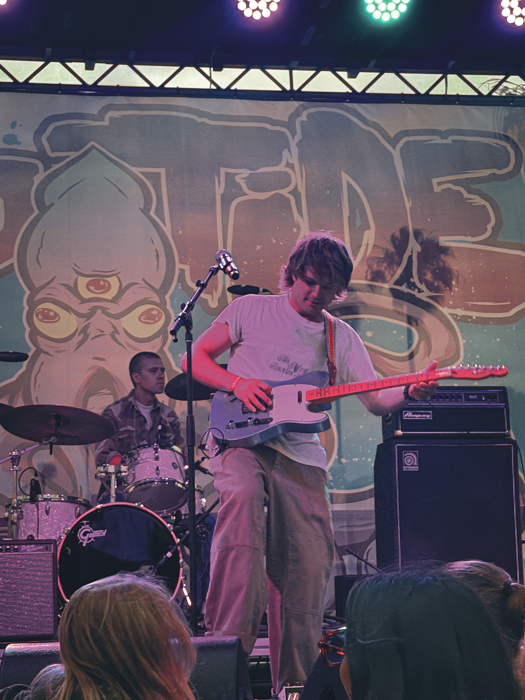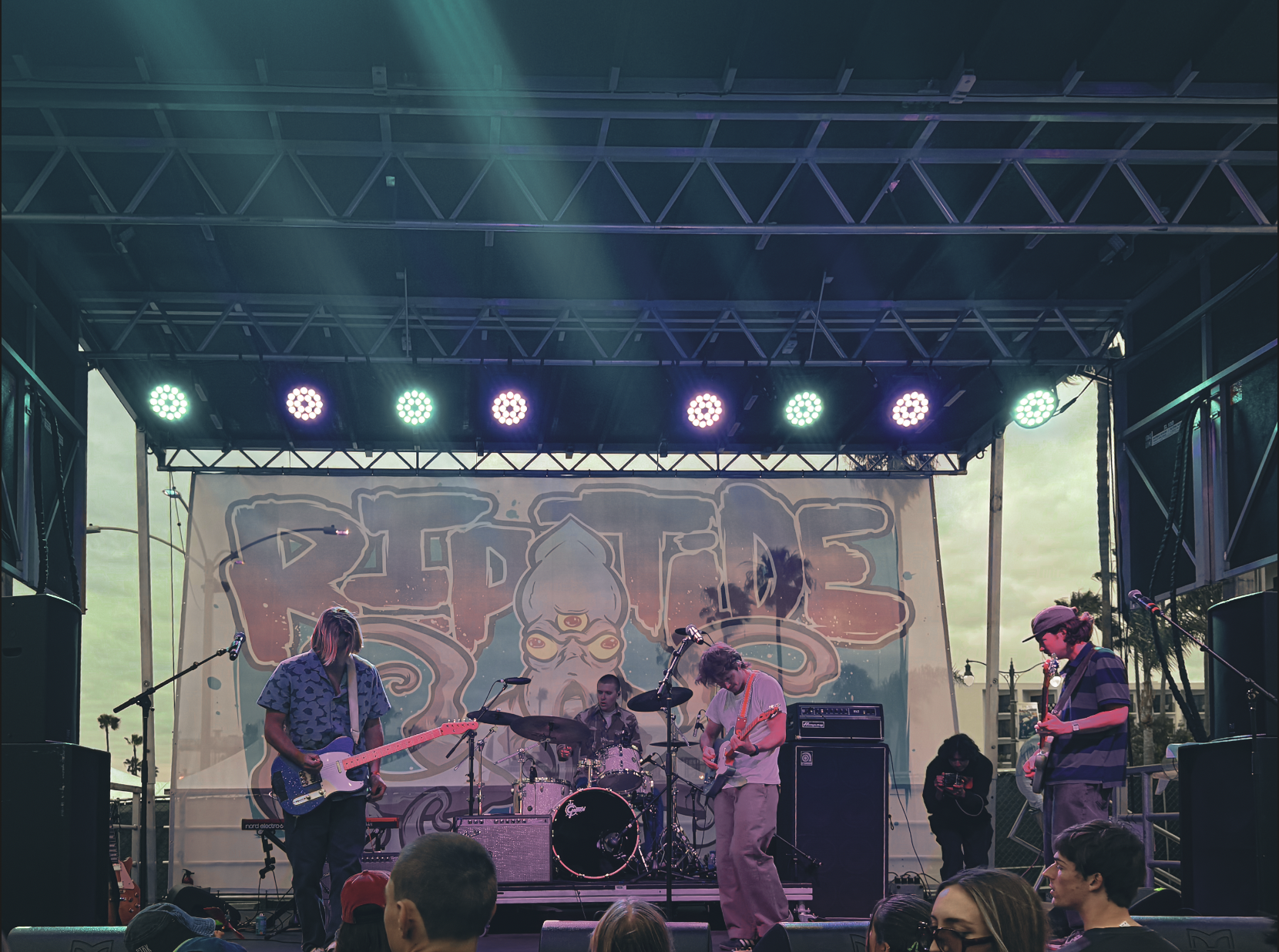


Named after the Winyah Bay of South Carolina, Winyah is Thomas Rowland on lead vocals and rhythm guitar, bassist Stephen Russell, lead guitarist Luke “Butters” Gordon, keyboardist Robert “Rob” Buffington Jr., and drummer Jacob “Jake” Riley. Raised on beach towns, long drives, and a steady diet of classic rock and modern indie, Winyah blends sun‑bleached melodies with a grounded Southern undercurrent.
Four of the five members of the rising indie rock band hail from the South Carolina coast, a sense of place that’s woven into the band’s sound. That coastal imprint is especially literal on their debut album Lot To Learn, which features the sound of crickets recorded in their own backyard.
Over the past year and a half, Winyah has carved out a fast‑growing presence in the indie scene while touring Lot To Learn, supporting acts like Mt. Joy, and collaborating with pals flipturn. With a run of sold‑out headlining shows ahead, the band’s upward momentum shows no signs of slowing.
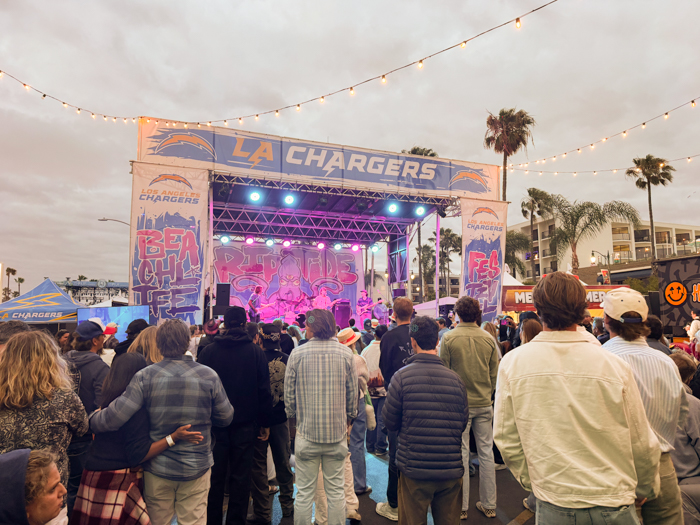
Fresh off their first coast-to-coast tour, Nowhere Winyah Would Rather Be!, the band plunged into their festival-studded summer at their first West Coast festival, BeachLife in Redondo Beach, CA. Their easy banter and laid-back air befitted the environment mere steps away from the crashing waves of the Pacific.
Ahead of their late-afternoon set, BOSS sat down with the band to chat about their Southern-rooted sound, favorite BOSS and Roland gear, and their much-anticipated sophomore album.
First Song Energy: Pure Voib
When you hit a festival like BeachLife, what do you want the first song to feel like for new listeners?
Thomas Rowland: An explosion of awesomeness. A voib. That’s V‑O‑I‑B.
Rob Buffington Jr.: Ethereal. I’m gonna double down on voib, for sure.
Who are some of your influences?
TR: The Backseat Lovers, flipturn, Peach Pit, Lynyrd Skynyrd, Led Zeppelin, The Allman Brothers, The Cars, The Rolling Stones—honestly, a lot. Frank Ocean, too. It’s a really broad spectrum. Oh, and Pinegrove for sure.
"I’ve played the Blues Driver for a really long time and still keep it in my arsenal. It’s insanely versatile—you can get a fat blues tone or something crispier and more aggressive. It works across genres."
Luke “Butters” Gordon
Longevity, Reliability, Great Sound
Can you walk me through the BOSS pedals on your boards and how they contribute to your sound?
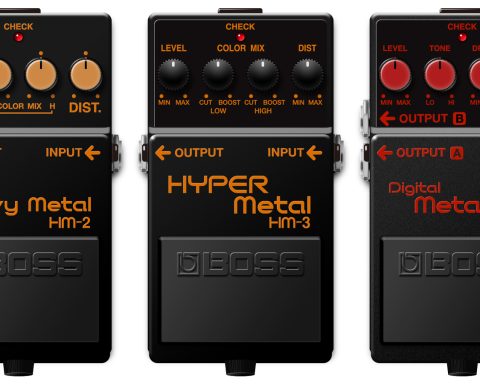
TR: The most reliable tuner in the game: my BOSS tuner. I’ve had it forever—my mom bought it for me when I was like 14. It’s been on my board for almost ten years now. That’s a testament right there. Longevity, reliability, great sound.
Stephen Russell: My bass fuzz is the DS‑1 Distortion. It just sounds great.
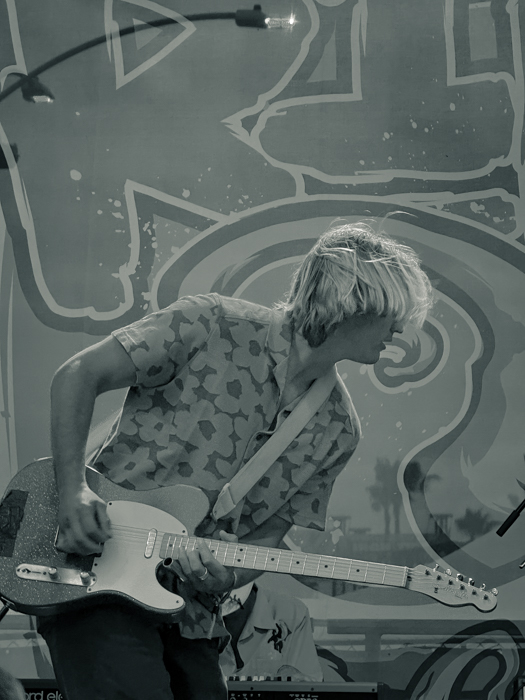
Luke “Butters” Gordon: I’ve played the Blues Driver for a really long time and still keep it in my arsenal. It’s insanely versatile—you can get a fat blues tone or something crispier and more aggressive. It works across genres. I love that pedal.
Pedal Punch
The Blues Driver is famous for being more feel‑responsive than overly saturated. Do you use it to control intensity from verse to chorus?
LG: One hundred percent. I stomp it and just let it rip. It cuts through everything in the best way, not screechy. It gives me exactly the kick I need to punch through the mix without losing fullness or tone.
Do you use it differently in the studio versus on stage?
LG: Definitely. In the studio, you can experiment more—move it around the chain, stack it, get weird. On stage, it’s more consistent. Any boost, any drive, any rich tone I need—I just click it on, and it works. Perfect.
"The VE‑20 Vocal Performer was huge for me. Early on—especially playing solo acoustic—it added a little magic to my voice."
Thomas Rowland
A BOSS Legacy
Was there a piece of BOSS gear that felt like a turning point for you tone‑wise?
SR: I don’t even know the exact name, but I love the newer distortion pedals.
LG: I have a Dr. Rhythm drum machine at home, and it’s been on almost every Winyah demo I’ve worked on. It’s super easy to use and sounds amazing.
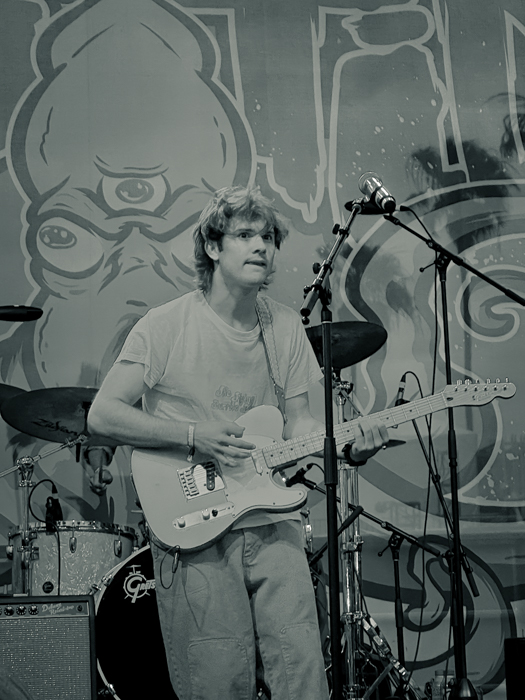
TR: The VE‑20 Vocal Performer was huge for me. Early on—especially playing solo acoustic—it added a little magic to my voice. It was a throw‑and‑go vocal chain. We used it religiously for the first year and a half of the band. I still use it at home all the time.
We also have Giga Delays…though I’ll be honest, it’s a battle for me. I haven’t spent enough time really mastering it.
LG: I loved mine. There’s a built‑in looper that helped me flesh out so many ideas on the road. You don’t even need a separate looper. Amazing delay quality, tons of options. I’ll never sell it. I keep coming back to it.
Transformative Tones
It’s cool when a pedal becomes more of an arrangement tool.
SR: Totally. Along those lines, I have an ME‑80 multi‑effects pedal. I learned basically everything I know about effects on that thing. We used it on the “Good People” demo and “8 Missed Calls.” It lets you figure out what you like without buying a million pedals.
LG: Fun fact—I used to play drums in a band with Stephen. Our friend Tripp played guitar, and Stephen would octave down on that ME‑80 and play bass on guitar.
SR: That’s literally how I started playing bass.
Do you have a go‑to effect on the ME‑80?
SR: The phaser. I’m a sucker for phaser—it’s so milky. Add a little reverb, dial the EQ, and it’s perfect.
Keys for the Road
RB: True story—someone once put a cooler on top of it in the trailer. It leaked. I pulled it out the next day and literally poured water out of it. Left it upside down for a week, turned it on… still works perfectly.
TR: We do not recommend trying that.
What does it unlock compositionally for you?
RB: Every sound. Pads, leads, horns—everything. As a keyboardist, you need to be ready for anything, and the RD‑88 covers it all.
If there’s one piece of BOSS or Roland gear you’re itching to try, what would it be?
RB: A JUNO‑106.
TR: I’m very close to pulling the trigger on a JUNO-106. I don’t even really play keys, but I need one. I’ll figure it out after.
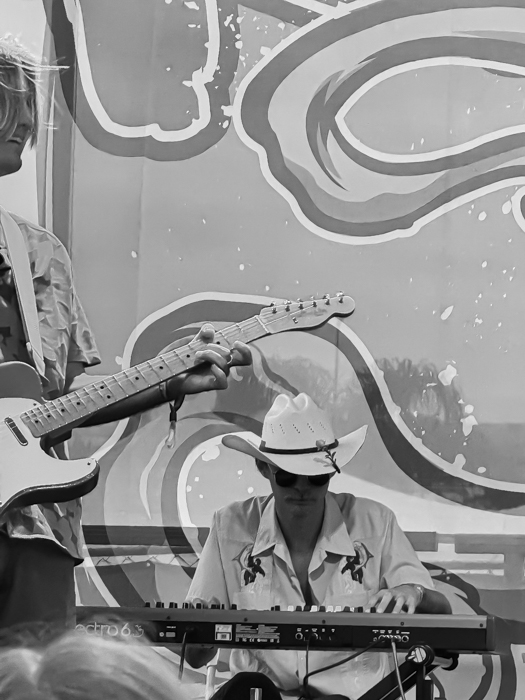
RB: My keyboard amp is a Roland KC‑200, and I play a Roland RD‑88, which is actually the keyboard I learned on.
Does the RD-88 unlock anything for you creatively when recording?
RB: The feel is everything. The ivory‑finish keys are almost sticky, in a good way. The action is amazing. It’s also the only 88‑key keyboard I’ve ever owned, and I toured with it for years.
"We love the first album, but we’re all really excited about what’s happening on album two."
Stephen Russell
Sophomore Album Loading
Once BeachLife wraps up, what’s next?
TR: We fly back to the East Coast to finish our spring tour—four sold‑out shows this week. Philly, two nights in New York, then Boston. After that, we head home and start building the world for album two.
Are you already working on it?
TR: It’s basically done. Now we’re figuring out the marketing phase.
Anything you can tell me about it?
TR: It’s way sicker than anything we’ve ever put out—and it’s going to change our lives.
SR: It feels more mature. We love the first album, but we’re all really excited about what’s happening on album two.
RB: It’s much more aligned with our current sound.
TR: It’s the first time we’ve spent a full month in a studio. That experience unlocked things we’d never found before. We’re excited to share that magic.
Where did you record it?
TR: Coast Records in Charleston, South Carolina, with our good friend Matt Zutell. If you’re a recording artist, especially a rock band, go see Matt. He’ll get you right. He’s the best.
So…coastal vibes.
TR: Always. We keep it coastal in the Low Country of South Carolina. Being on the opposite coast this weekend feels pretty good, too.
Feeling at home here at BeachLife?
TR: If we can see the ocean, we’re home.