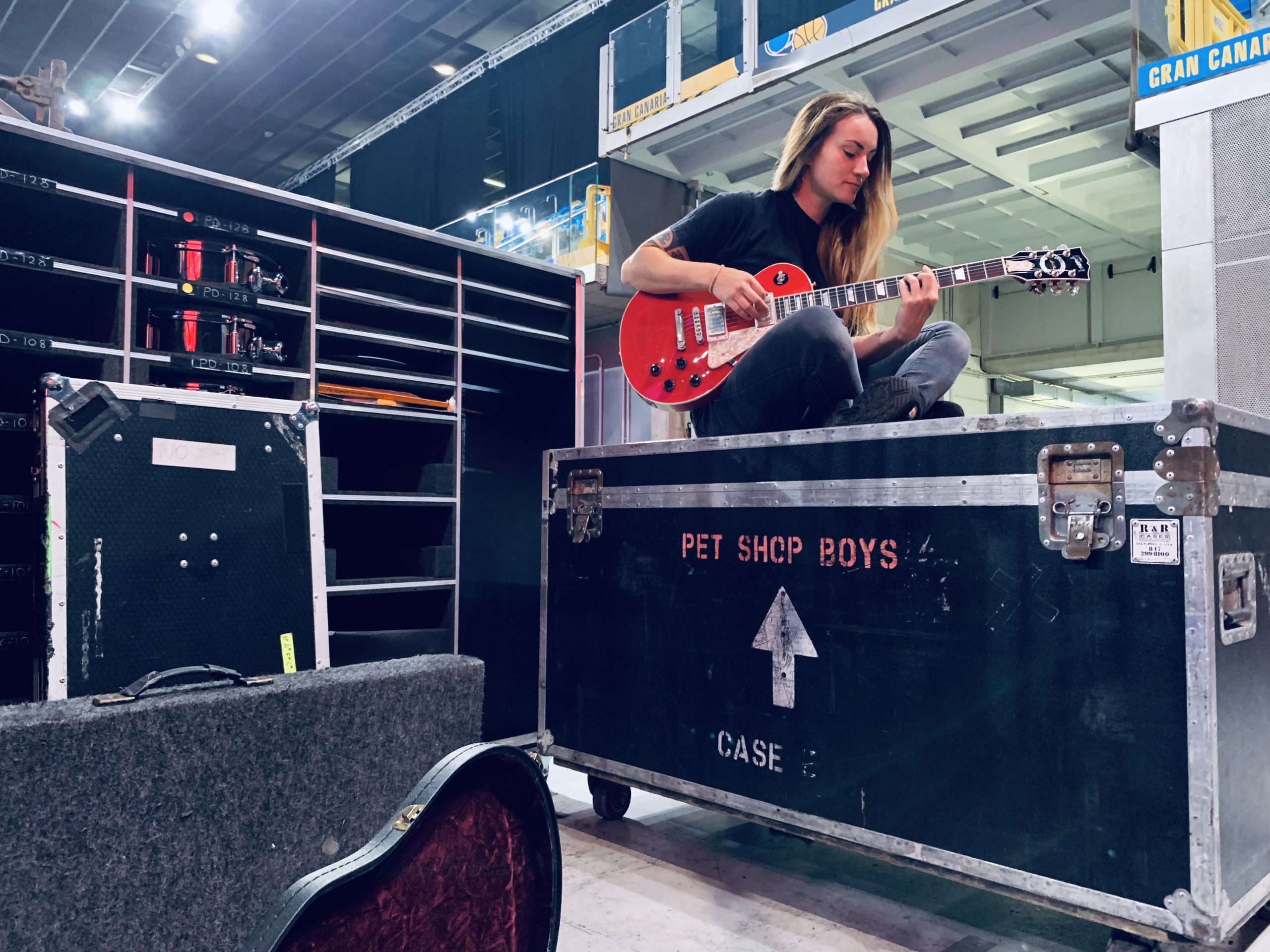


Sara Ferrero’s path into the music industry grew from a natural passion for sound and a fascination with the gear that made it. “I’ve always been surrounded by music,” she tells us, tracing her obsession back to a childhood filled with instruments and inspiration. But while others chased the limelight, Ferrero found herself drawn elsewhere. “I was always more oriented towards gear than playing,” she points out. That mindset—part music lover, part problem solver—has seen her rise from local festival internships to international touring crews, where life on the road changes daily. People and places come and go. Yet one thing more than anything remains constant: “The reliability of Roland and BOSS makes everything very consistent.”
Journey Into Sound
Sara Ferrero’s journey began earlier than most. At just 17 years old, thrown into the deep end of a festival stage crew, she admits, “I had no clue what I was doing, but everything was exciting.” Even before that, her ear for great tone was evident: “The first pedal I had was the DS-1 Distortion… That’s when I started experimenting with gear and discovering pedals.”
Like countless others since the DS-1’s 1978 debut, this iconic orange stompbox was a gateway to a wider sonic palette. Soon after, Ferrero picked up a CE-2 Chorus, inspired by the sounds of her guitar hero Johnny Marr, with whom she recently talked shop while working at a Pet Shop Boys show.
Encouragement at home helped make it all possible. “My parents were very supportive,” she explains, eternally grateful for those long drives to gigs, even if it was for unpaid work. Indeed, it wasn’t all glamorous, as readers will discover. But it was valuable, real-world experience that shaped her work ethic, and she generously shares some hard-earned advice for aspiring techs below.
There was no shortcut to Ferrero’s success as a tech. Dedication and sacrifice are what keep the phone ringing, and she made it happen. Relocating from Italy to the UK via Los Angeles in 2017 proved pivotal, opening doors in a busy touring circuit while she continued to hone her skills.
Today, Ferrero remains one of the most in-demand techs in the business. And when it comes to essential gear choices, she doesn’t settle for anything less than the best: “The BOSS TU-3W Chromatic Tuner is a game-changer. I rely on that more than any other tuner.”
Pet Shop Boys
What live shows have been keeping you busy lately?
I recently finished a three-week period with Pet Shop Boys during their Obscure shows at the Electric Ballroom in Camden, London. The production included five consecutive shows featuring a few guest appearances. It was an entirely new set, which made the experience especially intense, with a few weeks of rehearsals beforehand.
Obscure was a unique series centered around Pet Shop Boys’ B-sides, so no hits! Although the venue was relatively small for them, it created a very special, intimate atmosphere. It was really fun! The show offered fans something unique, with performances of songs that had never been played live before. Of course, it was sold out.
"The BOSS TU-3W Chromatic Tuner is a game-changer. I rely on that more than any other tuner."
How did you get involved with Pet Shop Boys?
I did a tour with Will Young before COVID-19, and the tour manager was the same TM as the Pet Shop Boys’. When the Will Young tour ended, he asked me if I was available. I was like, “Yeah, of course! I’m happy to assist.” Another tour manager stepped in, but I stayed on board.
How did COVID-19 impact your work?
When COVID-19 happened, I was at home for a year. I started doing a few jobs for TV and artists like Ella Henderson here and there. I finally started with Pet Shop Boys in 2021, and I’ve been sticking with them because they’re amazing people and I love their music.
Pet Shop Boys were groundbreaking in terms of production, politics, and aesthetics—what did you discover working with them?
Working with them made me want to discover more of their music, so I went back and checked out different videos and collaborations. The music technology they used, the look and feel of their videos, and the ideas they had for past live shows were incredible.
The Pet Shop Boys’ live shows are truly amazing. I watched the DVD they released this year [Dreamworld: The Greatest Hits Live at the Royal Arena Copenhagen], and the show looked so good.
Of course, being on stage, you never see the show, unfortunately. I was like, “Oh, that’s what happens at that point!” Because I’ll be tuning a guitar or handling quick stage changes, I won’t always catch what’s happening on the screens.
"I’ve never experienced a failure with a BOSS pedal—they’re troopers."
Roland Rhythms
What Roland or BOSS gear do the Pet Shop Boys use live?
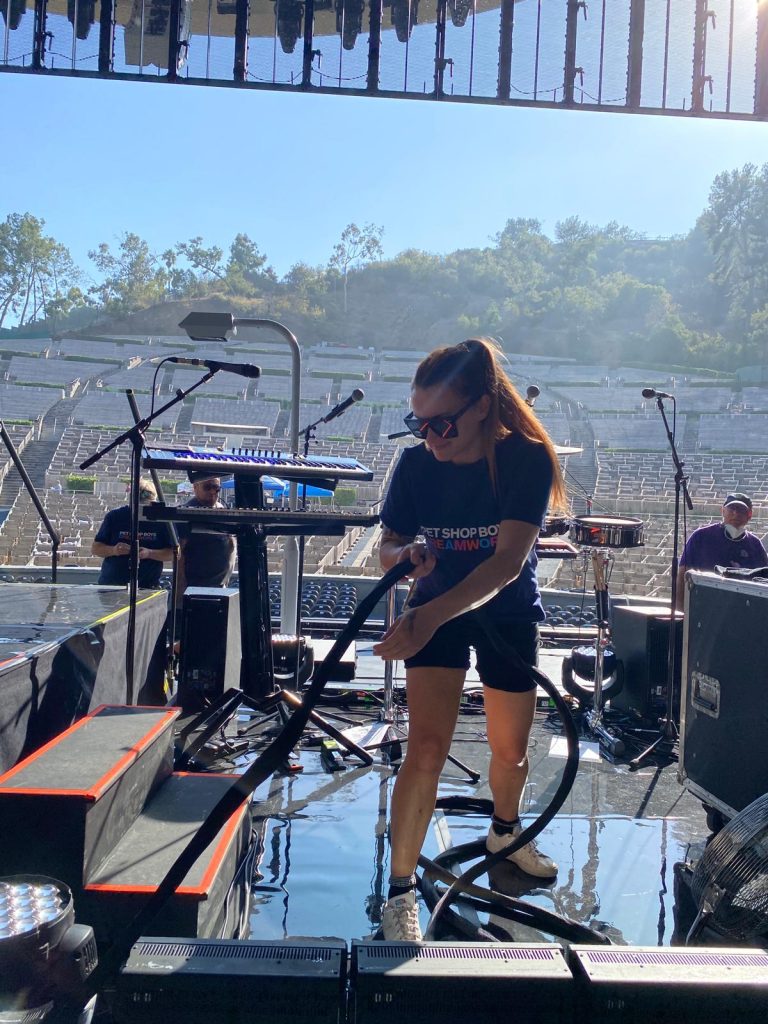
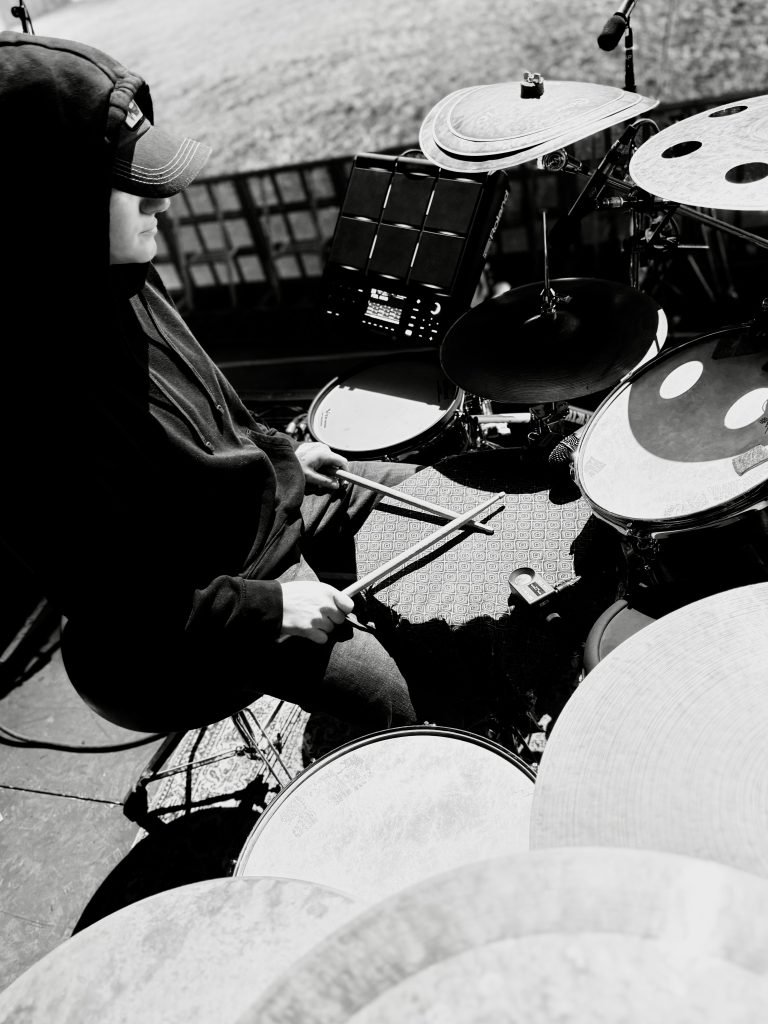
They always have multiple SPD-SX Sampling Pads on stage, and the electronic drums are all Roland. We have two live drummers—each with four V-Drum Pads and two V-Cymbals.
The SPD-SX Sampling Pads are key. They let us easily connect all the V-Drum Pads and V-Cymbals, which really helped slim down the gear. It’s very easy to use. The only thing that we had to adjust was the sensitivity on the V-Pads, of course.
One of the drummers hits the pads very lightly, while the other plays with much more force, as if on an acoustic drum kit. But it’s been a smooth journey with Roland, and the customer service is amazing.
Compulsory Compacts
How reliable is BOSS and Roland gear on the road?
I’ve never experienced a failure with a BOSS pedal—they’re troopers. And they’re so easy to use. Even the battery swap—you don’t have to get a screwdriver and take it apart. The reliability of Roland and BOSS makes everything very consistent. With Pet Shop Boys, I just line-check the gear!
Are there any BOSS essentials you carry in your tech toolkit?
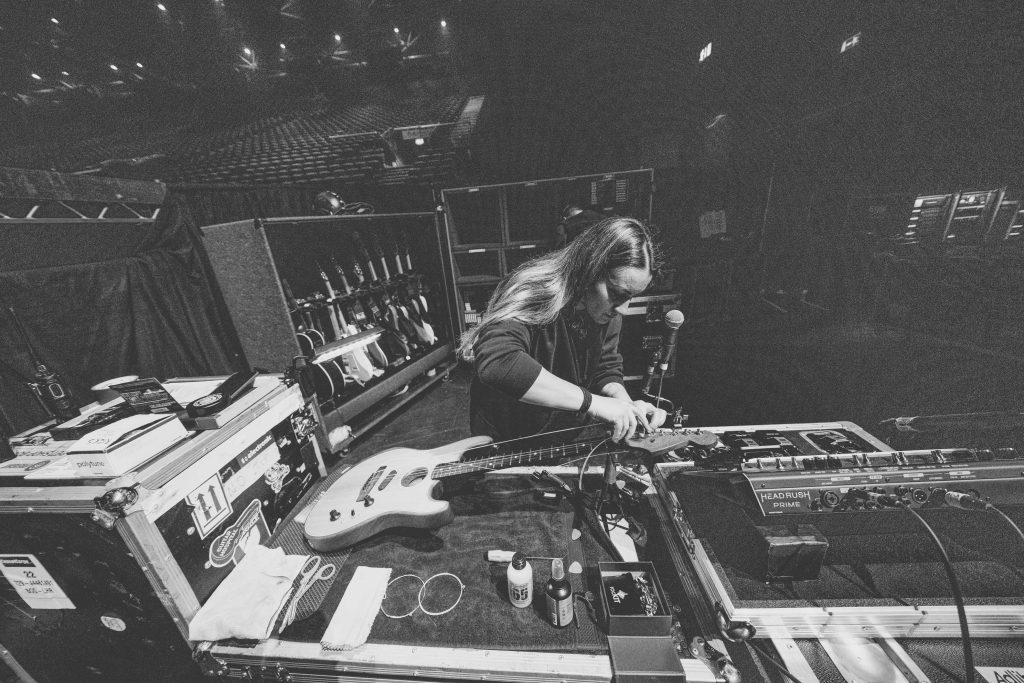
I always have the BOSS TU-3 and the TU-3W Waza Craft Chromatic Tuners. I love the Waza version. It’s such a nice pedal. Like the TU-3, it’s very precise. I always found discrepancies between other brands’ pedal tuners, but the BOSS TU-3W Chromatic Tuner is a game-changer. I rely on that more than any other tuner. The whole TU-3W design is amazing. I love the LED colors and the black finish.
I love how BOSS pedals are color-coded—you know, overdrives are yellow, distortions are orange. It’s a distinctive look that BOSS compact pedals have always had. If you go on a gig and take a picture of the stage, BOSS pedals really stand out. Even if you’re quite far away, you can usually spot what they are.
"The reliability of Roland and BOSS makes everything very consistent."
Vintage Vibrations
What’s your take on BOSS multi-effects?
Even though BOSS has a great legacy and seems like it’s been around forever, they’re always pushing forward with technology. I love that BOSS multi-effects include models of older pedals to get a more vintage sound. It’s quite difficult to tell the difference between new digital gear and more traditional pedalboards in a live sound mix out front.
I’m really looking forward to checking out the new BOSS GX-1 [Guitar Effects Processor] and GX-1B [Bass Effects Processor]. It’s so amazing how technology is advancing, and I love that BOSS balances cutting-edge tech with great sound and reliability.
What was your first effects pedal?
BOSS Distortion and Chorus were the first two effects I tried. The first pedal I had was the DS-1 Distortion, which I used with my bass. That’s when I started experimenting with gear and discovering pedals. I was particularly interested in how Johnny Marr got his sound, and I read that he used a BOSS CE-2 Chorus, so I bought one. I wanted to sound like him and was really inspired by him. That’s when I started playing guitar.
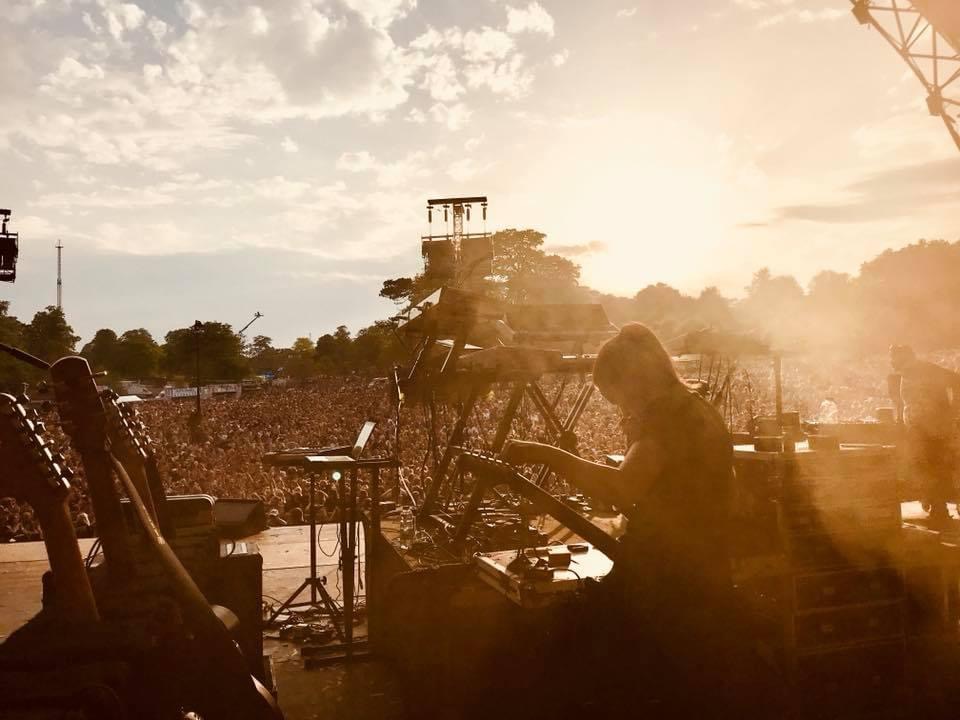
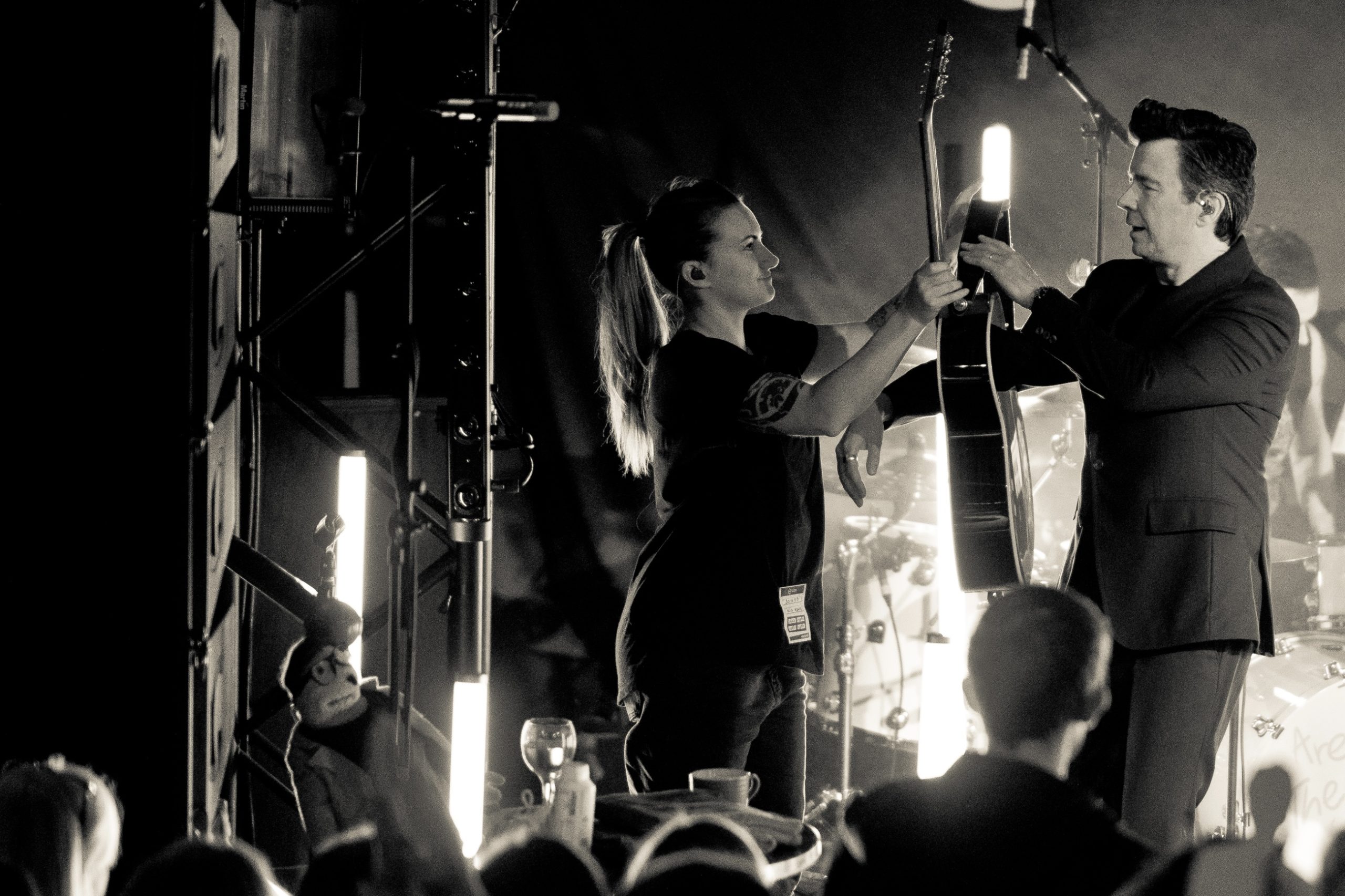
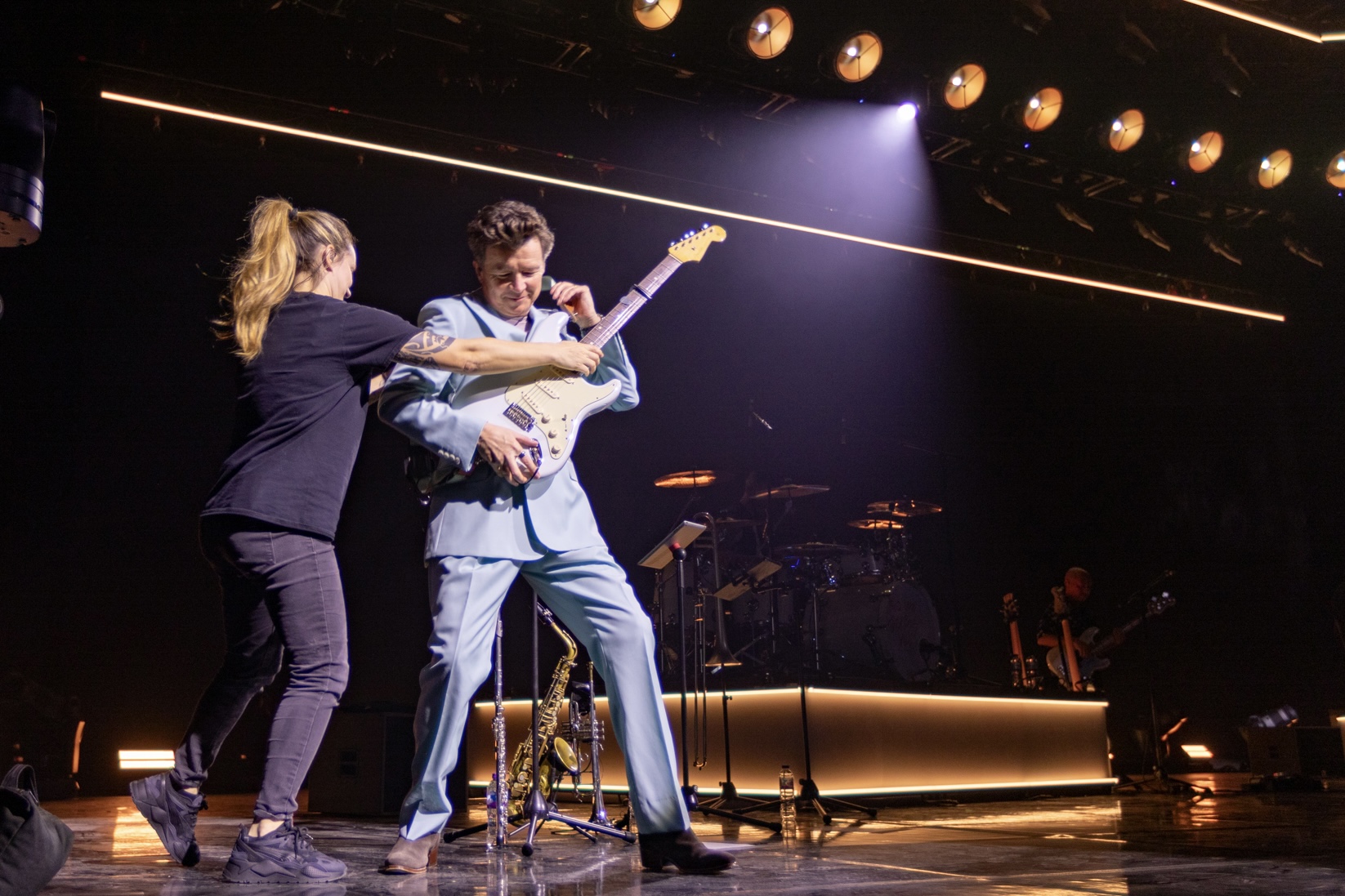
I met Johnny Marr recently at a Pet Shop Boys gig, where he guested live on a few songs. He came on stage right, and we had a moment to chat. He asked me a few questions because he saw me passing guitars to Neil [Tennant].
Johnny Marr is genuinely a lovely person, and it’s always nice meeting someone you’ve looked up to for so long who is so down-to-earth.
Moving Air
How have you seen guitar rigs change over the years?
I see digital processors on stage, rather than traditional pedalboards and amps, increasingly often, and I hope amp-based guitar rigs will make a comeback. I don’t know exactly where the technology will go, but things always come back around in the music world, and I think some people will return to using amps and stompboxes.
For example, when I worked with Editors a couple of years ago, they were using multi-effects processors instead of their previous dual-amp setups. When we spoke, they mentioned missing that sense of “moving air,” even though the sound with the processor was spot on.
"I’m really looking forward to checking out the new BOSS GX-1 [Guitar Effects Processor] and GX-1B [Bass Effects Processor]."
They were really referring to the physical feel and response that traditional amps naturally provide. At the same time, there’s no denying the consistency and reliability a multi-effects processor gives you, which you don’t always get in a more traditional amp and pedalboard setup.
Of course, a guitar player hears themselves differently than anybody else, and the sound and feel that comes from amps through mics is completely different from that of XLRs from digital processors. So, regardless of how great the technology becomes, I think musicians will still want to use real amps.
As a guitar player, it’s a challenge not to sound like something you’ve already heard. Tone is very important, and when you listen to somebody who’s spent time honing their sound, it makes all the difference.
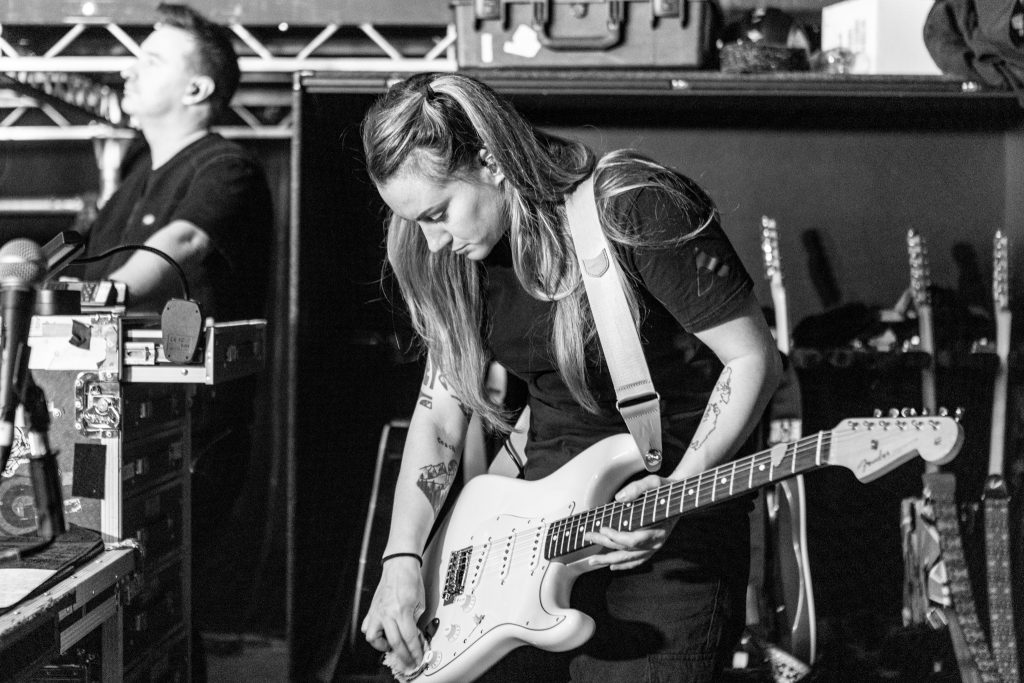
How do you perceive the difference in terms of sound between using real amps with pedals and digital processors?
I worked with Band of Skulls after a period of touring with Westlife, which were two very different environments. I was the tech for bass and guitars on Westlife, and the setup didn’t involve traditional amp rigs in the same way.
Band of Skulls, on the other hand, were very much about real amps and pedalboards, and that approach created a very different feel—much more open and dynamic in the room. It felt more immersive than the direct, in-ear, monitor-based experience.
There’s definitely something missing if you’re not using a real amp. Real amps sound amazing and are a visceral, physical experience, whereas digital processors mimic the sound but not the feeling.
"I love the RE-201 so much. Maribou State also use its modern pedal equivalent, the BOSS RE-202 Space Echo."
Maribou State
Tell us about the Maribou State tour—the stage rig looked awesome.
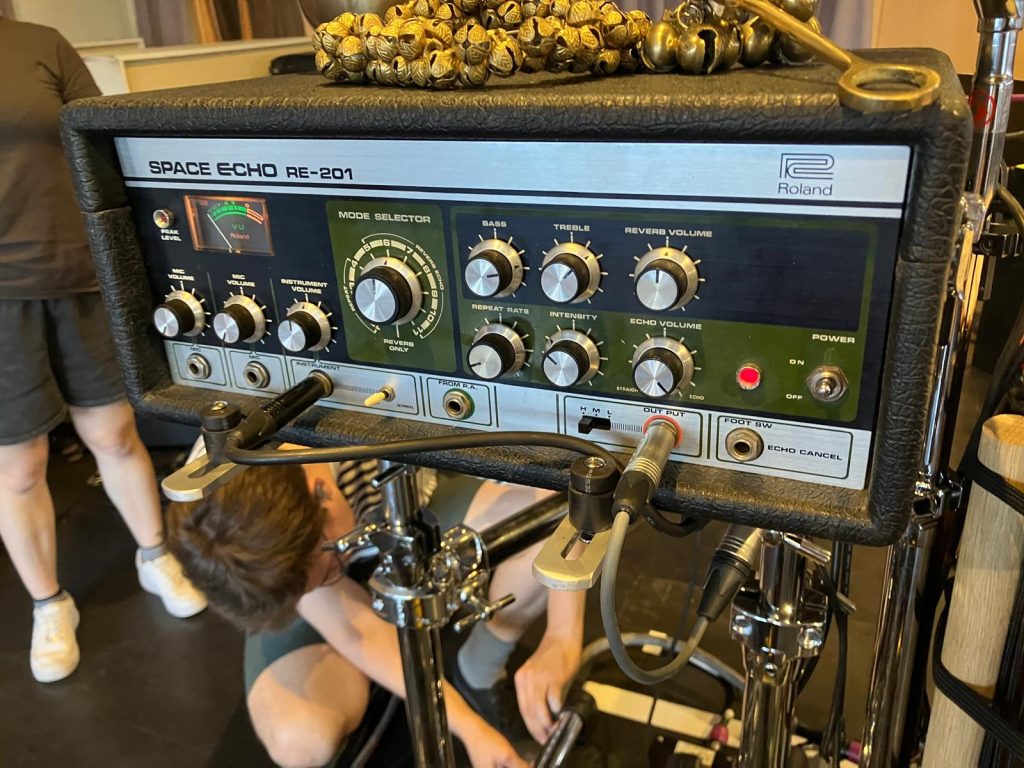
When Maribou State first called me, they asked how to make the stage layout more manageable and more visually appealing. Talulah Ruby was amazing singing on the Maribou State tour, and they used a lot of keyboards, guitars, and other instruments. They also had a vintage Roland RE-201 Space Echo, which sounded incredible.
They had the idea to use a movable riser for the Space Echo, a glockenspiel, a cymbal, and some percussion. Everything was going through the Space Echo, which the guitarist was manipulating in real time to get cool spacey effects. I’d never heard an old Space Echo before, and it was so good!
I remember there was an issue with the Space Echo tape, and a friend of mine—the tech James Sharpe, whom I love working with—helped me change the tape. He held the lid up while I replaced it. From then on, I always made sure the tape was running correctly.
I love the RE-201 so much. Maribou State also use its modern pedal equivalent, the BOSS RE-202 Space Echo. Alongside that, there’s the BOSS PH-3 Phase Shifter, Roland SP-404MKII [Creative Sampler and Effector], and Roland TB-303 [Bass Line]. The 404 and 303 are unbelievable. I don’t think there’s any plug-in that can sound as good; the vintage 303 sound is amazing.
Maribou State’s setup also included the Roland KT-10 [Kick Trigger Pedal], PD-8 [Dual-Trigger Pad], PDA120L-BK [Tom Pad], RT-30H [Acoustic Drum Trigger], and RT-30HR [Acoustic Drum Trigger].
In Demand
You’re clearly in high demand as a tech, but has it been a constant run of work since the beginning?
Since my first tour, I’ve never had downtime. I mean, I’ve always had a call about the next tour. Early on, I used to suffer with impostor syndrome now and then, but I haven’t doubted myself since somebody asked me, “So many people just say yes without even thinking, so why are you questioning yourself?” And honestly, things have always worked out well on the gigs I’ve done.
What advice would you give your younger self?
If I could give my younger self some advice, knowing what I know now, I would say, “Talk less. Listen more.” I was very chatty and always said what I was thinking, and sometimes my opinions didn’t go down well. I learned the hard way.
It’s important to listen to the advice from people further down the road. It’s good for younger people in this industry to be sponges for information and to listen to those with more experience. I remember being terrified of saying the wrong thing, but I learned to listen.
Also, it’s important not to take everything personally—like, don’t automatically think somebody is saying something because of you; maybe they’re just going through a hard time. It’s good to be aware of not coming across as nosy or annoying, but it’s super important to ask questions, even if you think they’re stupid.
Conquering Adversity
What have been some of the greatest challenges in your career as a tech?
When I started working as a tech, I didn’t get paid very well, and the environment wasn’t the best. I got bullied because I was young and female. It may have changed, but 20 years ago, when I started, I faced those problems all the time. I would sometimes go home in tears.
I’m not saying I don’t get treated differently at all now, because it still happens sometimes, but I’m older, and I know how to deal with it better. It’s very rare for somebody to treat me badly these days.
The world seems to have changed. But I found that, as a young person, it was tough to get into this industry without being treated differently—especially as a woman.
"If I could give my younger self some advice, knowing what I know now, I would say, 'Talk less. Listen more.'"
Has the music industry changed in any other respects?
There’s an important part of our industry that doesn’t get spoken about enough: mental health. It’s better these days because social media has helped raise awareness of it. People sometimes think that working in the music industry and touring is an easy life, but it’s actually a hard life.
The older you get, the more you realize that working for 14 hours a day isn’t healthy. You often don’t have time to recover because you travel overnight and have another gig the next day. You can feel invincible when you’re younger, but I was the same way when I was 20.