

In part one of this three-part Reverberations mini-series, we traced Charlie Jones’s extraordinary journey into the orbit of Led Zeppelin’s Robert Plant and Jimmy Page—two towering figures whose partnership shaped rock history. From the pressure-cooker auditions that placed him in their world to the intense dynamics of the Page and Plant era, Jones spoke candidly about what it meant to survive—and thrive—inside one of music’s most formidable creative settings. But his story hardly ends there.
Collaborative Chemistry
A Grammy-winning bassist, multi-instrumentalist, composer, producer, and engineer, Jones has spent decades navigating wildly different musical terrain. If the first major chapter of his career was defined by 14 years in the Led Zeppelin sphere, the periods that followed reveal just how adaptable—and musically adventurous—he truly is.
In part three, Jones discusses working with electronic pioneers Goldfrapp, the tonal revelations of BOSS pedals, and formative influences that paved the way for a life in music. But for now, in this second installment, the wide-ranging musician reflects on being part of another legendary rock institution: The Cult.
Readers will soon discover that playing bass in The Cult is a role that requires dexterity, focus, and a thorough understanding of the band’s sonic identity. Here, Jones talks about making music with Billy Duffy and Ian Astbury, and what it means to hold the bass chair in a band with distinctive chemistry that was formed years before he joined.
From there, Jones turns to yet another icon of popular culture: Siouxsie Sioux, whose 2007 solo debut, Mantaray, he helped bring to life while acting as co-producer, musical director, and bassist-for-hire.
Elsewhere, he opens up about his musically ambitious solo projects and the philosophies that have guided his remarkable career.
Cult Classics
How does working with The Cult compare to working with Jimmy Page and Robert Plant?
Working with Billy Duffy and Ian Astbury is comparable to working with Jimmy Page and Robert Plant in that it could go either way. It’s about walking a line rather than making sure everyone’s safe and sound. So, you need to be present.
The Cult is also fundamentally bass, drums, guitar, and vocals. But it’s a difficult gig because the similarities of the chord changes mean you really need to have the arrangement down, or it can all go wrong.
I dream about learning songs all the time—performance anxiety dreams (though I’ve had similar experiences for real!)
"Working with Billy Duffy and Ian Astbury is comparable to working with Jimmy Page and Robert Plant."
What are some of your favorite live moments with The Cult?
We played a 40th anniversary gig at the Royal Albert Hall in London [in 2024], and it felt very special. I always wanted to play in The Cult, even back in the ’80s. I met Ian Astbury in ’88 because he was a Robert Plant fan and used to come to gigs and study Robert’s stagecraft.
Cult of Chorus
Both you and Billy Duffy use chorus effects in The Cult—how important are BOSS and Roland to the band’s sonic identity?
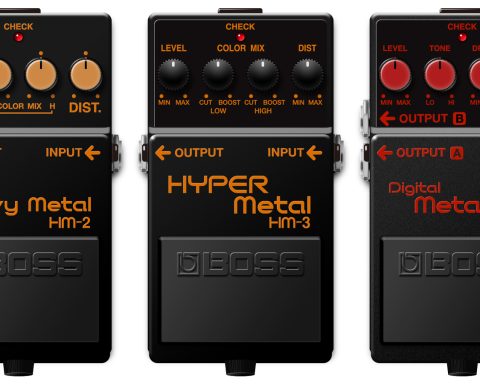
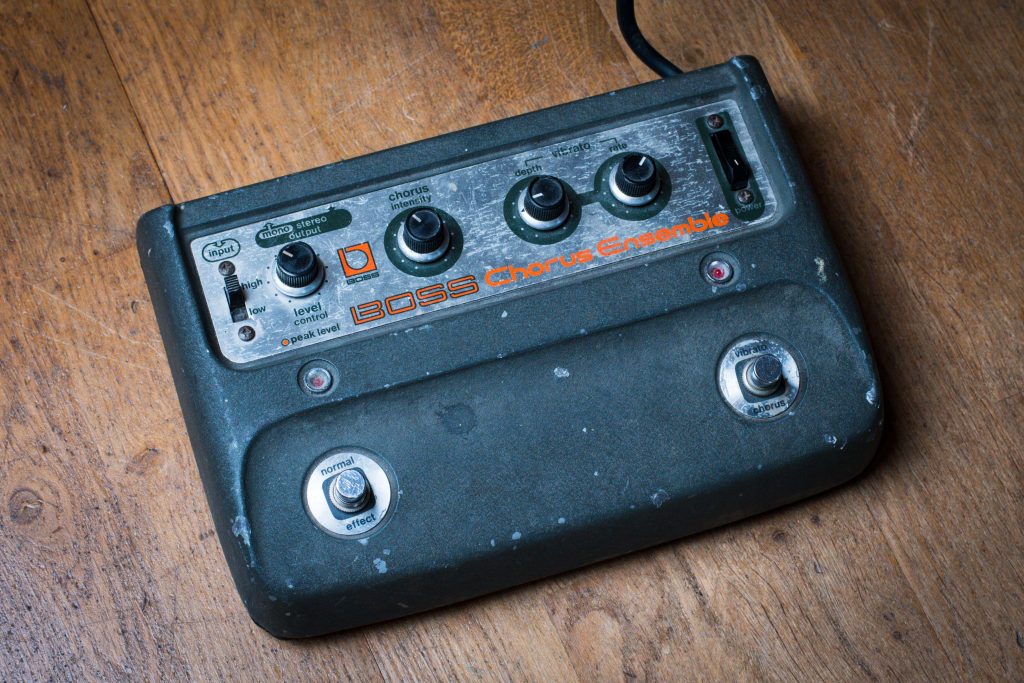
I use a lot of different types of choruses with The Cult, which I love. I’ve got a BOSS CE-1 Chorus Ensemble, which is an incredible bit of kit. I like the sound of the preamp, too. I’m not a huge fan of overly slick-sounding choruses; I particularly like the funk of the BOSS and Roland choruses.
The Roland Jazz Chorus amps are great. Billy Duffy loves them. It’s such a big part of his sound. We released Paradise Live (as Death Cult) in January 2026, and you can hear that sound all over it. Roland chorus is absolutely crucial.
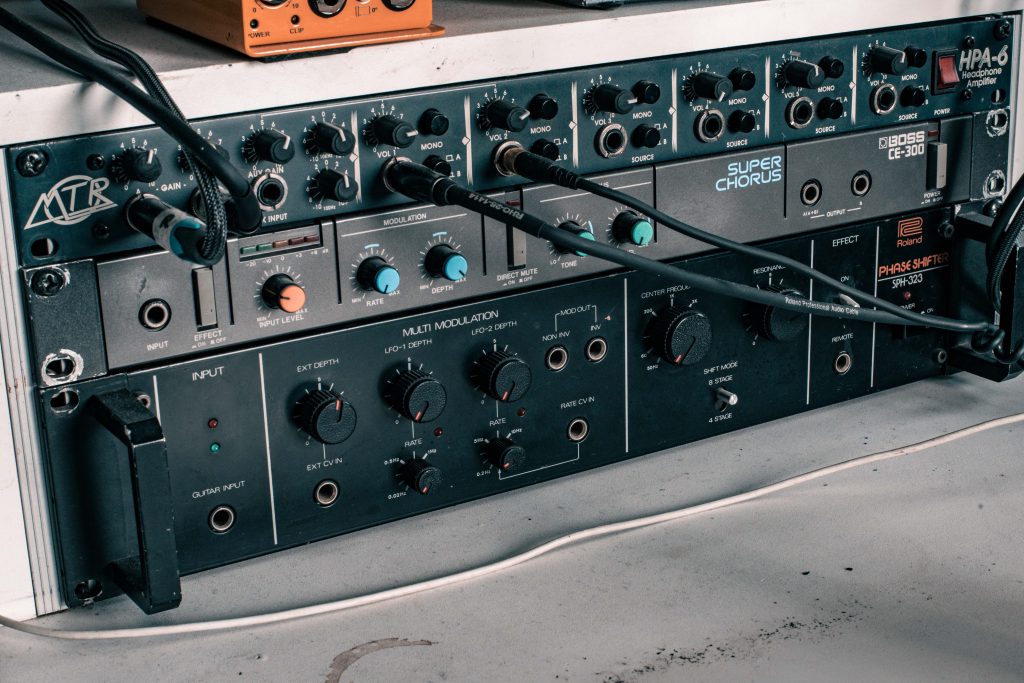
Talking of BOSS chorus, I’ve also got an amazing rackmount unit—the CE-300 Super Chorus. It’s unbelievable. The BOSS CE-300 is a great bit of kit. I love using it to record vocals. Will Gregory turned me on to that. He’s used it on loads of Goldfrapp stuff. I’ve got the CE-300 hooked up in my studio next to a Roland SPH-323 Phase Shifter.
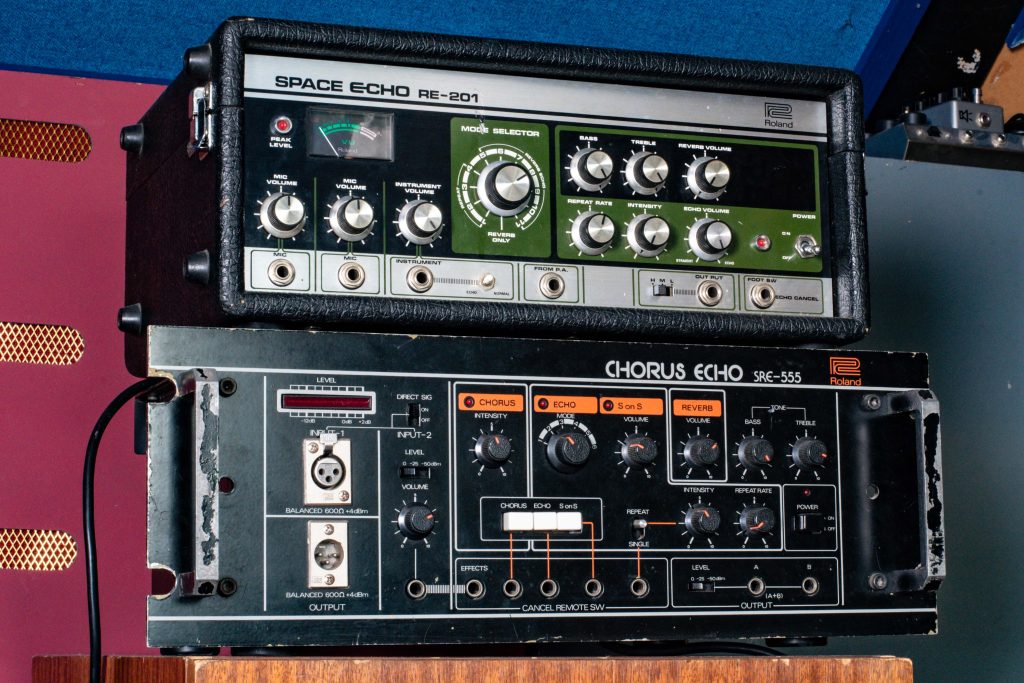
The Roland SRE-555 Chorus Echo is another one of my favorites to record with. I also have a Roland RE-201 Space Echo in my studio, which I use on virtually everything. Space Echo was life-changing. Nothing comes close to it. I really want to get the BOSS RE-202 Space Echo pedal.
"I particularly like the funk of the BOSS and Roland choruses."
Studio Strategy
How does The Cult tend to record?
The last album I did, Under the Midnight Sun, was produced by Tom Dalgety. We went in with ideas that Billy Duffy had developed, then Ian Matthews and I cut the rhythm tracks—drums and bass—as a performance.
They tended to have guitar parts worked out in advance, with Billy having already dictated the tune’s tonality with Tom Dalgety. Sometimes I’d be given a bass part, and they’d say, “This is the bassline, but we want you to humanize it and give us your input.”
I like doing that. Often in the past (not with The Cult), I’ve been given songs with no existing basslines, so I had to create them. I enjoy both of those creative approaches.
What are some of your favorite tracks from Under the Midnight Sun?
I really like “Mirror” and “Vendetta X.” I think it’s a great record overall, and I’m proud of it. It’s difficult to say where the sound of The Cult will go next, because they’ve consistently changed their sound over time. Anything is possible.
What stands out about Tom Dalgety’s approach as a producer and engineer?
I share history with Tom Dalgety as we worked on Siouxsie Sioux’s [2007] Mantaray album together. In fact, it was Tom who asked me to play on The Cult’s Under the Midnight Sun.
I love Tom’s old-school engineering and production skills. It’s a rare quality, and he’s an education to be around.
It felt very special working with Siouxsie Sioux. I co-produced her debut solo album, Mantaray, with Steve Evans, and Tom Dalgety engineered it. It was recorded here at Riverside Studios in Bath. I also put the live band together and MD’d.
Darkwave Royalty
How did you get involved with the making of Siouxsie Sioux’s Mantaray album?
Steve Evans [Robert Plant, Proclaimers, Goldfrapp] was going to produce the record, but he was juggling a lot of projects, so they got me in. I did a lot of writing for Mantaray, but it was unusual because I had to write the music around Siouxsie’s vocal tracks; I only had a click and her vocal to work with.
Some tunes were written with other people and were complete, but I had to write about 60 percent of the album that way. Siouxsie’s singing style is unique. Her vocal tracks worked in different keys, so there was room to experiment.
"I did a lot of writing for Mantaray, but it was unusual because I had to write the music around Siouxsie’s vocal tracks."
What was it like working with Siouxsie Sioux?
Siouxsie is proper punk. You know where you are with her. I love genuine people. She told me, “You know what’s great about you? You’re in touch with your feminine side.” I said, “I’m alright with that. But please don’t hit my double bass when you’re swinging your mic around!”
Siouxsie is a great artist to work with—great ideas, very creative, and very down-to-earth. I remember her saying, “I’m 50, and I don’t care who knows it. I’m gonna do what I do.” She had some beautiful jumpsuits made by Pam Hogg [1951-2025], whom she hung out with on the road.
Symphony of Samples
Were there any hitches during the making of Siouxsie Sioux’s Mantaray?
On the track “Loveless,” there was a really interesting strings sample on DAT—an intriguing chord with an unresolved feeling. I loved it, so I used it as a starting point.
When the track was being mixed, I said to my co-producer (Steve Evans), “We need to replace those strings because we don’t know where the sample is from,” but he said, “It’ll be okay.”
Later, Siouxsie was in Paris (she speaks fluent French), being interviewed by a guy who was very switched on. He said, “It’s interesting that you did a song called “Loveless” and the string intro is taken from Olivier Messiaen’s “To Abide in Love” [“Demeurer dans l’Amour”]. She was like, “What?!”
Messiaen was an incredible French composer. We had a look on iTunes and discovered that the track preview matched the sample on our recording. Fortunately, it was on the same label as Siouxsie’s.
"Siouxsie Sioux is a great artist to work with—great ideas, very creative, and very down-to-earth."
However, the publishing was a different scenario, and we had to cough up some money. But it got sorted in the end. We had to recreate the chords, which Steve Evans did very skillfully.
BOSS of Bass
What are some of your personal highlights from the Mantaray album?
There’s a cool bass solo on the track “They Follow You,” where I used the BOSS SYB-5 Bass Synthesizer [listen below]. I used that and the DigiTech Bass Synth Wah, going into a distortion pedal with a delay at the end of the chain.
If you use synth pedals to fire into other pedals like distortion, you can get some amazing sounds. That was done in one take, in the moment. Steve Evans was like, “It’s way out of tune!” But it sounded so edgy.
The Roundhouse gig [in London] was also a highlight—that was a great show.
Why did Joe Short step in to play bass on the Mantaray tour?
We got halfway through the tour for Mantaray, and she said, “I’m taking three months off.” After that, I went to play with Goldfrapp. When she went back out on tour, Joe Short stepped in to play bass. She loves Joe, and it worked out great.
How did you capture the complex sound of Mantaray live?
When we were making Mantaray, Siouxsie wanted a diverse sound: brass, strings, percussion, and other instruments. Steve Evans and I put all that stuff on the record, but when we finished it, she told me she wanted to do the Mantaray tour as a three-piece.
I felt it would be better to do that later, so fans would hear something that really represented the record. And when she told me she wanted to do the Mantaray tour as a three-piece, we parted company. However, she later changed her mind, and so I put the band together as an ensemble.
We didn’t use backing tracks live; we fired samples. Rob Brian, the drummer, played to a click, and his timing was brilliant, so we made it work. It was a comprehensive band. Ted Benham played tuned percussion and fired samples as well. We had that down.
"We didn’t use backing tracks live; we fired samples."
A Bigger Piece of Machinery
When touring with established artists like Siouxsie Sioux, The Cult, and Page and Plant, how do you see your role as a bass player?
While I’ve toured them, I’ve also contributed to the creation and recording of original albums. Fundamentally, I’m a recording bass player. But if you go out with a famous band, they often have a huge catalog that needs to be performed live. I’ve played many of John Paul Jones’s basslines, for example.
Every tour I’ve worked on, with the exception of Goldfrapp, I’ve played other musicians’ catalogs. I’m a bass player who generally plays other people’s bass parts when I’m on the road.
To be a great creator is something to aspire to, but, like orchestral players, bassists are generally a cog in a bigger piece of machinery. As a bass player, that is your job, and fundamentally that’s what’s seen me through. Knowing how to fit in is a discipline in itself.
How does that mindset apply when you’re working with The Cult specifically?
Billy Duffy and Ian Astbury have long-established creative chemistry. If I were to suddenly say, “Hey guys, hang on, you could do it differently,” it wouldn’t work.
It’s crucial to work within the context of band chemistry. Right now, that also includes tying into the rhythm section with John Tempesta, especially as he’s played drums in The Cult for many years, and I’m effectively the new guy.
Understanding where Billy and Ian’s vibe comes from—knowledge of the same music—helps my work as a bass player. It’s not about me pontificating about writing, composing, and producing. Even though I do write, it boils down to a shared knowledge and love of music.
"It’s crucial to work within the context of band chemistry."
Meet the Messenger
To what extent does your solo work also help fulfill you creatively?
It gives me the freedom to do stuff where I’m not being directed so much by what other people want to hear. It also gives me a deeper understanding of what’s achievable musically, but I’m under no illusions about its intention. It’s primarily for internal, not for external, purposes. It doesn’t have to be super successful.
Do you have any favorite tracks from your solo recordings?
“Daddy Come Home” from [2023’s] The Captain Francisco album Showbusiness was a big moment. Steve Evans mixed it, and Chris Hughes contributed to the production. The video was shot and directed by Seb Pecchia and features the actor Anthony Head [Buffy the Vampire Slayer, Little Britain].
Anthony Head is not only an amazing actor but also a fantastic musician. He completely got the song’s concept. It was his idea to portray the main character in the video as King Lear.
Another track I’m very proud of is “The Messenger” from my 2013 album Love Form. Clive Deamer [Portishead, Radiohead] played drums, and John Baggott [Portishead, Robert Plant] played piano.
“The Messenger” is a harmonically rich and dense piece of music. I like the way the chords move against the unorthodox sounds. It’s mixed beautifully by Stuart Bruce.
Has your solo material helped you find other work?
It has. People get to hear it and think it’s interesting. I spent 14 years working in the Led Zeppelin world, and therefore, people sometimes assume I’m primarily a rock bass player. I am a rock bass player, but I can turn it on its head and do many other things that aren’t in that style.
How did you diversify your bass sound in terms of gear?
By playing the double bass and using effects pedals, mainly. I don’t use strong effects with The Cult—it’s very straightforward in terms of bass sounds. But playing in that fundamental rock style is an art.
How do your solo recordings inform your approach to session work?
Doing my own music informs me and, in turn, informs what I do with other people. I can take all that stuff I do in my own music, which is complex chords written on piano, and start translating it through my bass playing. I can be quite a melodic player if I want to be. But sometimes it’s easy to stray away from the original intention, so I’ll bring it back.
For example, while recording my solo album Love Form, the chordal center of the music was quite blurry, which messed with my chordal sense during sessions. I was playing notes I thought sounded great, but other people were like, “That’s not the root note!”
"Doing my own music informs me and, in turn, informs what I do with other people."
I remember recording with Marti Pellow, and we had some great musicians involved. We were working on a song the guitarist Paul Stacey had written, and he said to me, “Do you realize this is not in F?” That does happen sometimes, so I have to be mindful.
Does it matter to you how others perceive your creative identity?
Someone could be the greatest drummer alive, but become famous as a producer. Likewise, a top producer might end up better known as a gardener. The important thing is to scratch your creative itch.
I’ve cut my own music and written songs, but the bottom line is: I’m a bass player. Fundamentally, playing bass was my vehicle. I’m out there recording and touring (often playing other people’s basslines), but being a bass player was my gateway for all those other opportunities and successes.
Influences Across the Map
Who were your favorite musicians when you were learning?
In the ’70s, I loved British bass players like Steve Currie from Marc Bolan’s band, Trevor Bolder from David Bowie’s band, and Herbie Flowers. Back then, I didn’t have the knowledge to dig deep into the great soul players, but when I was a kid, my brother informed me about Philly soul and Barry White.
The rock music I liked was mostly American: Hendrix, Santana, and Big Brother and the Holding Company. Growing up in the ’70s, the punk stuff I was into was more left of field. I got into the American band Suicide, whose sound was a cheap rhythm box, an organ, and a huge amount of reverb. Plus a vocal with attitude, which I loved when I first heard them in 1977.
I loved Suicide. They were very unique—they were American and different from what was going on in Bristol. Alan Vega was like an Elvis impersonator. It’s a rock ‘n’ roll thing. There’s a connection between Suicide and Lou Reed: he was a rock ‘n’ roller who ended up in an art band.
"Even though I wasn’t a spandex rocker, I would have loved to have played with those kinds of bands."
Rock ‘n’ roll was, traditionally, concerned with rebellion. When did it change?
In the ’80s and ’90s, when grunge happened, it took some of the fun out of it for me. Everyone was suddenly very serious. All the big hair and great clothes—all that craziness—had gone. It was a hangover from glam, which I liked.
To say grunge killed all the fun is a bit glib. There’s nothing wrong with earnest music, but when you put it in a rock ‘n’ roll environment, it’s a careful balancing act. I mean, it would’ve been interesting to hear Radiohead make a record with Jim Steinman producing!
Even though I wasn’t a spandex rocker, I would have loved to have played with those kinds of bands. There were various opportunities to do gigs like that. When I was working with Robert Plant as a solo artist in the ’80s, Bon Jovi came to England, and their rhythm section was stuck in New York, so they asked me and our drummer, Michael Lee [1969–2008], to fill in for some gigs.
I politely declined because I didn’t think it was my thing, and I was happy with that decision back then. I mean, they were really nice guys, and their music is legendary—they’re mega stars, and I’m an amoeba. But it wasn’t my style.
Then Cinderella asked me to do a month-long tour of America, but I was too nervous to do it. I really wish I’d have done those gigs now. It would’ve been such a craic!
Is there still a flamboyant glam-rock streak in you?
That frivolity will always be there, and it’s probably why I like playing my plastic basses; the aesthetic ties into that world. During the punk period, loads of people had flamboyant stage names, so there was a bit of hypocrisy going on there. You know: Billy Idol, Johnny Rotten, Sid Vicious, Siouxsie Sioux…
Musicians took on personas, characters. But by the time you get to the ’90s, people were systematically eradicating that.
"That frivolity will always be there, and it’s probably why I like playing my plastic basses."
Principles of Punk
Punk can seem like a paradox: breaking rules yet bound by them.
Yeah. It can almost come across as more snobbish than hair metal! When I was 16 and trying to get along in a band, there were all these super cool punk bands like The Pop Group from Bristol. The Slits were also very cool.
How do you define punk?
Punk music is an artistic movement, in the same vein as Brian Eno’s philosophy of following your curiosity rather than sticking to formal rules. Punk came from that ethos of saying, “We can do this.” It’s more about “We’ve got something to say” than “How do we sound?”
Some people, like The Pop Group, really understood that. They just did it. They had the intellect and the swagger to do what they did while making political statements through their music.
Paul Simonon from The Clash probably wasn’t thinking, “Am I technically a good bass player? Punk is all about natural, raw talent.
The Art of Instinct
Did you identify as a punk?
No. I identified as a musician. But I liked motorbikes, so I would’ve been called a greebo. You know, the people I hung out with would typically be on an old BSA wearing an Afghan coat.
I didn’t identify with the punk thing because I was slow on the uptake. Ultimately, my drive to improve musical ability took me in a different direction. Punk is all about feeling what you do and just creating. I didn’t have that kind of vision or artistic maturity; my only artistic leaning was playing bass and trying to improve as a player. So, that’s the direction I went.
Did gaining more technical understanding impact how freely you played?
More knowledge and experience are fantastic, but there’s baggage involved with that. When I was younger, I would do things I wouldn’t be capable of doing now. Sometimes, when I was doing sessions, I had to follow my instinct because I didn’t know what was going on technically. That saw me through for many years.
"All the great musicians I’ve worked with are knowledgeable about music history."
The greatest artists in the world, like John Coltrane, generally learn, perfect, then unlearn. They go more primal. It’s like heading back to the beginning. Like abstract painting, it often makes more sense when people understand the process artists go through to get there.
How important is it for musicians to look back and understand music history?
I think it’s important to know your craft. Robert Plant is 100 percent in touch with all of that. Throughout Led Zeppelin and his solo work, he’s been in touch with musical history. Jimmy Page always was, too. Link Wray’s “Rumble” was a key track for Jimmy, for example.
Robert and Jimmy knew all that stuff. They lived through it and had a vocabulary of great music that informed them. All the great musicians I’ve worked with are knowledgeable about music history.
How do you define great music?
Great music, or great art, gives something to humanity. That’s generally what defines it. That’s why John Lennon’s “Give Peace A Chance” defined him as an artist of great importance. It was selfless and for humanity.
That’s not to say “Sexy Sadie” isn’t a great song, but Lennon was defined more by what he did after The Beatles.