Charlie Jones’s journey in music has always been defined by adaptability, though his unique touch remains a constant. In Part One of this exclusive interview series, we explored his 14 years with music legends Robert Plant and Jimmy Page, where opportunity met discipline at the highest level of rock stardom. Part Two dives into Jones’s work with current bandmates, The Cult, and his historic collaboration with pop culture icon Siouxsie Sioux. This third and final installment turns to Mercury- and Grammy-nominated electronic pioneers Goldfrapp. Working alongside synthesizer master Will Gregory and visionary frontwoman Alison Goldfrapp, Jones’s standout bass lines broke new sonic ground, aided by BOSS effects pedals.
Teaming up with Goldfrapp in the early 2000s found Jones in a singular tonal space. The glam-rock-infused synth-pop sound of the group’s second album, 2003’s Black Cherry, marked a clear shift in his approach to effects. Embracing color and texture, he moved far beyond the boundaries of rock.
During this period, Jones leaned into the experimental and his pedalboard expanded, giving complexity and impact to Goldfrapp’s cross-pollinated musical style. BOSS pedals became a reliable core of that setup, and his bass lines formed the solid foundation of a new, harder-hitting sound.
Live work and studio sessions with Goldfrapp clearly demonstrate the depth and breadth of Jones’s chameleon-like bass prowess. Listen to the award-winning “Strict Machine,” and you can hear why it became a defining moment—not only for this bassist, but for Goldfrapp as a whole.
Your palette of sound greatly expanded when you started working with Goldfrapp—how did your approach to effects pedals change at that point?
I got more into effects pedals when I started working with Goldfrapp for their second studio album [2003’s Black Cherry]. I used a lot of different effects with them. A lot of rock-based bands I’ve worked with have a palette of bass sounds pretty much worked out—it’s generally more about gain structure and distortion.
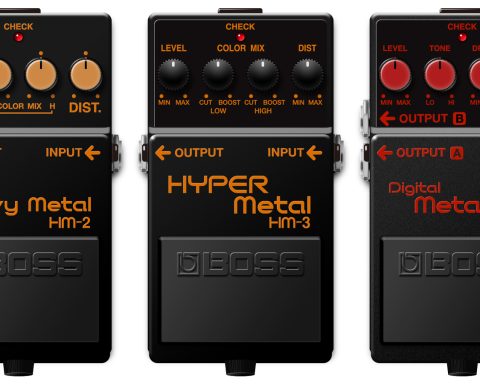
At one point, my Goldfrapp pedalboard was huge. I replaced it with a BOSS [BCB-60 Pedal Board] and used that on a whole tour of South America.
Are there any Goldfrapp recordings that stand out for you?
I really loved working with Will Gregory and Alison Goldfrapp on “Strict Machine” [from Black Cherry]. That was recorded upstairs at Crescent Studios in Bath. I was working for Robert Plant at the time and did it as a session.
“Strict Machine” was a good moment for me and was a change from working with Robert Plant and Jimmy Page. I love that song. It’s got a big bass groove. It won the Ivor Novello dance award in 2004.
What are some of your most memorable experiences playing live with Goldfrapp?
I played an amazing gig with Goldfrapp at Glastonbury in 2004. It was a point when Goldfrapp were coming up, and that gig was the point of them turning into something else. It was a defining moment for me.
Throughout my career, I’ve had strong feelings of being in the right place, at the right time, and in the right band.
"BOSS pedals are built so well, and they never seem to break."
Have you had any harrowing experiences playing live with Goldfrapp?
I’ve had a few! There’s a Goldfrapp song called “Ride a White Horse” which I start with the BOSS SYB-5 Bass Synthesizer pedal. They could’ve had that bass part on playback, but they wanted it done live. I once started off in the wrong key, and we had to stop the performance, which was uncomfortable.
What do you like about BOSS pedals generally?
They’re built so well, and they never seem to break. And they sound incredible. They do a thing. I’ve had BOSS pedals that were really essential, and people have walked off with them, unfortunately. I had a BOSS RV-5 Digital Reverb that was really good on bass. Great pedal. No fuss to use.
Do you have any BOSS favorites?
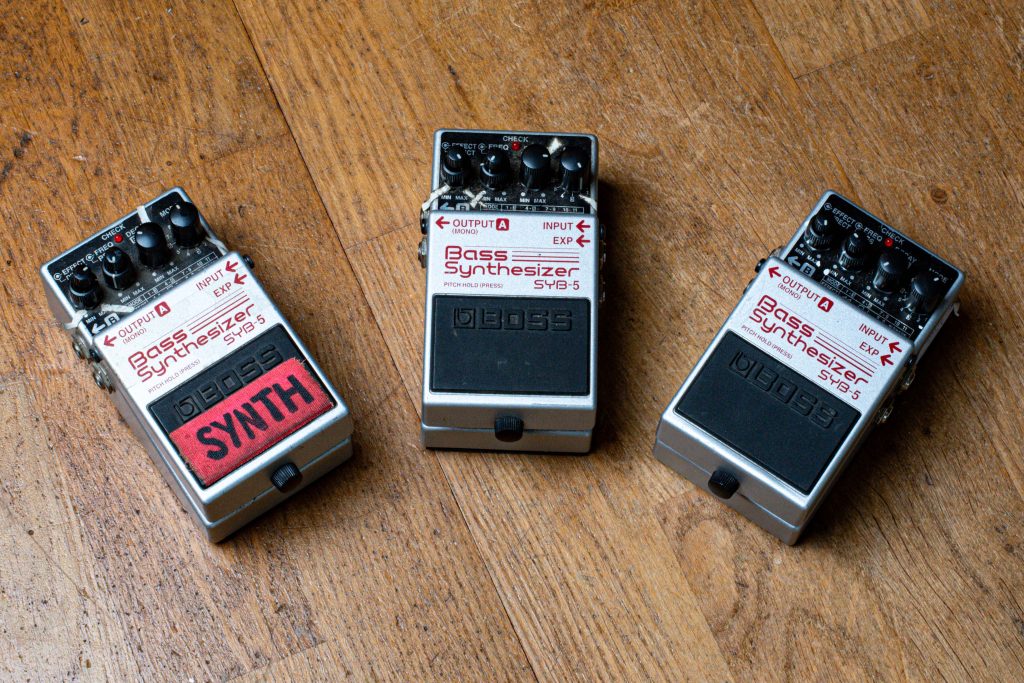
I have a few BOSS SYB-5 Bass Synthesizers that I’ve used a lot over the years with Goldfrapp and Siouxsie Sioux. BOSS was ahead of the game with that kind of thing. The SYB-5 is a massive part of my sound with Goldfrapp. I’ve got three of them: one for the Goldfrapp pedalboard, one for a live backup, and one that stays in my studio.
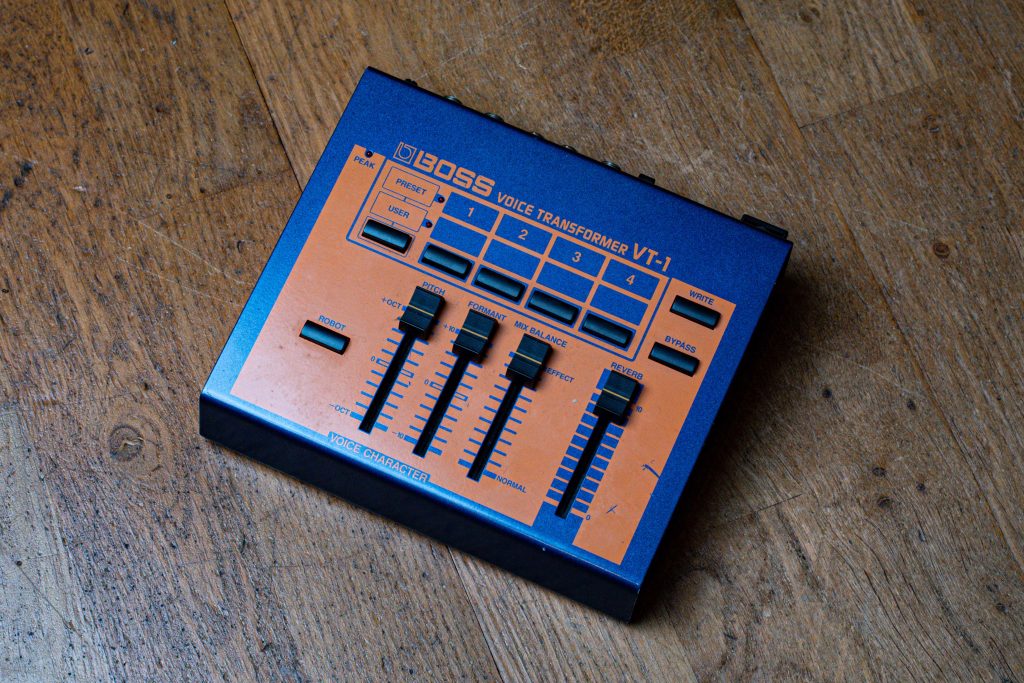
I used the BOSS VT-1 Voice Transformer on my vocals on all of The Captain Francisco [solo project] recordings for the 2023 album Showbusiness. You can hear it in the song “Venus Baby.” Alison also used the VT-1 to record Goldfrapp. You can’t beat it.
I also have an ODB-3 Bass OverDrive. That pedal sounds awesome on bass—really fat. Proper rude. I like the broad strokes of the ODB-3.
"I have a few BOSS SYB-5 Bass Synthesizers that I’ve used a lot over the years with Goldfrapp and Siouxsie Sioux."
I find the BOSS LS-2 Line Switcher super handy for all sorts of things. It’s surprising what you can do with the LS-2. You can get really creative with it.
And, of course, the BOSS OC-2 Octave is a hell of a pedal for bass—a total classic. I’d love to check out the latest version, the OC-5 Octave.
Do you find pedals behave differently on a big stage and through a large amp?
The weird thing is that when you’re playing live, pedals can sound entirely different from when you’re playing in a room. A lot of boutique pedals sound tiny through a big amp, but I have to say the BOSS pedals work really well live. They sound massive.
How well do BOSS pedals perform in recording sessions?
BOSS pedals really shine in that situation. They always do what they say on the tin. When you’re in a recording session, people don’t usually want to wait around while you’re spending a lot of time experimenting with your sound. It’s kind of expected that you already have a great sound, so they can just record the parts and move on.
Has that sense of urgency in the studio changed over time?
It’s okay to take more time if you have your own studio, but if you’re working for someone else, they usually don’t want to hang around. More old-school musicians I’ve worked with, like Robert Plant, are used to just cracking on in the studio and getting things done.
Back in the day, studio time was big money. Prior to the home recording phenomenon, you had to go to a professional studio and pay a lot of money to make a record. So you had to really focus on what you were doing.
"The BOSS OC-2 Octave is a hell of a pedal for bass—a total classic. I’d love to check out the latest version, the OC-5 Octave."
What’s it like working with Goldfrapp in the studio, and how does that compare to your own process?
I’ve worked with Will Gregory and Alison Goldfrapp for over 20 years, and their studio process is always evolving—they’re incredibly creative.
I still use one-inch four-track tape, which is pretty rare now. Two-inch tape was the standard years ago, but it’s extremely expensive.
Will Gregory is a fan of vintage Roland gear, including the SH-09 and JUPITER-4 synthesizers. Do you have any favorite Roland classics?
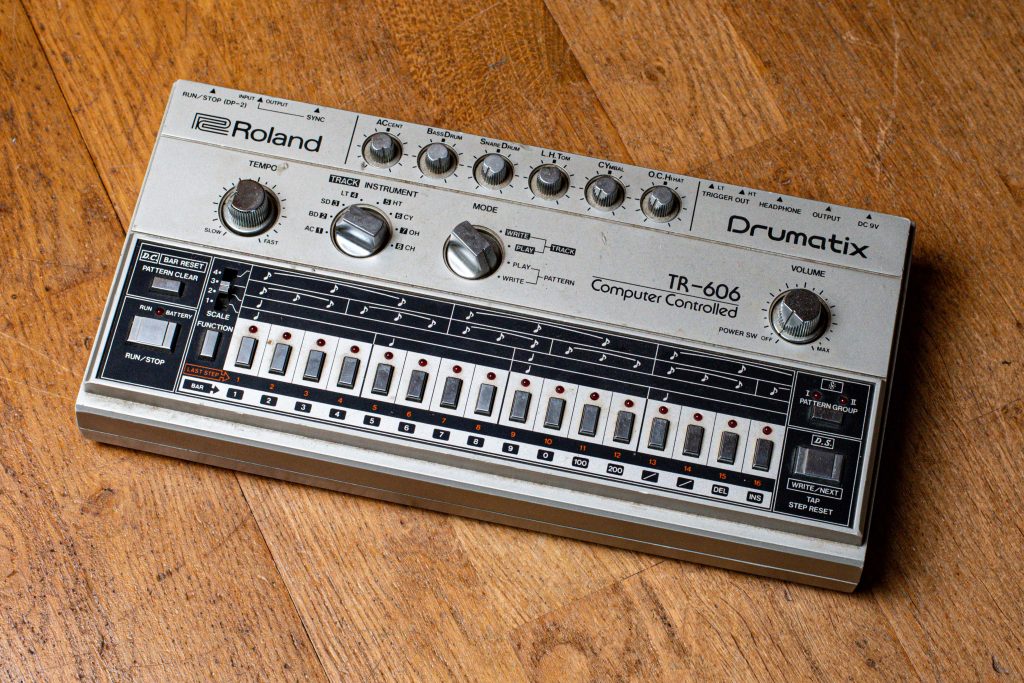
I’ve used the Roland TR-606 Drumatix a lot. It has a certain atmosphere, which I love.
How has the approach to recording rhythm tracks of bass and drums changed over the years?
On many of the records I’ve made, the rhythm track was cut live with the bass and drums playing together. In the ’80s and ’90s, you’d record it that way and maybe patch up a few spots afterward.
Later, the approach shifted more towards recording everything and then comping it together.
How do those methods affect the outcome of the recording?
There’s a place for all of it. Having a creative engineer capture everything, comp it, and move things around can be great. It’s all about capturing energy. As long as the energy isn’t lost, that approach can work really well, too.
Instead of locking into a fixed arrangement, if someone wants to go round and round a verse or chorus, I’m down with that.
"My Goldfrapp pedalboard was huge. I replaced it with a BOSS [BCB-60 Pedal Board] and used that on a whole tour of South America."
Can you share how your early studio experiences set the stage for working with major artists like Robert Plant and Goldfrapp?
When I was 16, I got a job at Right Track Studios on Redland Road in Bristol. I first started working in mobile recording. I had a band called Recorded Delivery at the time, which got a deal. We put out one single called “Russian Roulette.”
My old band Violent Blue [with guitarist Neil Taylor] came after that, then I did some recording with Feargal Sharkey in ’85—I played harmonica on a track called “Ghost Train” that was the B-side to his [number-one] hit “A Good Heart.”
After that, I did a session in ’87 with Ofra Haza for the Shaday album. I played bass on the tracks “Face to Face” and “Take Me to Paradise.” It was a breakthrough record, and when I went to audition for Robert Plant, he mentioned that he was already familiar with Ofra Haza’s work.
The point is, I kept going with all this stuff and, even though I didn’t know it at the time, it all led to working with Robert Plant. Recording Violent Blue with Tim Palmer led to recording with Feargal Sharkey (he was in the studio next to us), and then I did the Ofra Haza album. In other words, I was on a musical journey (though I couldn’t have foreseen it would culminate in my auditing for Robert).
Which early records had the biggest impact on you and shaped your musical taste?
The Bolan stuff, like “Metal Guru,” was important to me. When I was little, my gran took me to Woolworths in Chippenham and bought me “Ride a White Swan” by Bolan. That had a big influence.
I was also really into rock ‘n’ roll, particularly Jerry Lee Lewis. I loved the latter stuff on Mercury Records—the smoothness of the sound.
"I had a BOSS RV-5 Digital Reverb that was really good on bass. Great pedal. No fuss to use."
Were there any bass performances on records that changed the way you thought about playing?
Hearing Herbie Flowers playing bass on “Rock On” by David Essex was a real lightbulb moment. Also, the bass solo in “I’m Not in Love” by 10cc. That stuff informed me, strangely. It gave me the knowledge to contribute to the bigger picture as a bass player.
What was it about “Rock On” that you found so captivating?
“Rock On” has that magic combination of being commercial and abstract, which is hard to achieve. John Coltrane is known as being an experimental jazz player, but it was “My Favorite Things” that launched him.
After all his challenges in life—addiction and being kicked out of Miles Davis’s band—he had an epiphany with that song. It was a commercial song done with complexity. It took that to make him known to the public at large, not Giant Steps, which jazz fans love.
How important is it for a working musician to understand the fundamentals of their gear?
Very. I did lots of recordings where people wanted a Serge Gainsbourg-style bass, and I was chasing that sound down for years and years. I tried loads of different instruments, reverb tanks, amps, and effects. You name it.
About ten years later, I suddenly realized I just needed to use a thinner pick! Who would have known it would have taken me that long to work it out? I overlooked the simplest thing.
That’s the sort of thing time and experience teach you. Had I done my homework, I’d have realized that much earlier on. It doesn’t matter what level you’re at—you can always overlook the fundamentals.
What role did gear knowledge play in shaping a unique sound for high-profile gigs like Robert Plant?
Back in ’88, playing with Robert Plant, I was jumping around in leather trousers with long hair playing a Warwick bass, and I was very happy being that guy.
But I decided to use Marshall amps rather than Trace Elliot, and flatwound bass strings rather than roundwound.
These things were important to me because I wanted to get my sound right.
What was your first bass, and how did you begin learning about tone?
I didn’t even know my first bass was a bass! I thought it was a guitar. I was 14 at the time, and when someone told me what it was, I thought, “That’s why it sounds weird.”
It was a Raver bass with tapewound strings, so I took all the tape off to get roundwounds. I remember taking it to a shop called Brian’s in St Michael’s Hill in Bristol and saying to the guy, “I want some roundwound strings.” He asked me, “What bass is it?” I told him it was a Raver, and he turned his nose up and went, “Woolworths.”
What bass did you get after the Raver?
After that, I saved up and bought a Gibson Les Paul bass copy. I had that for a very brief period before getting a Walnut-finish (or “Mocha”) Fender Precision. I should never have sold that one. They’re very cool.
"I’ve had BOSS pedals that were really essential."
Did you start your musical journey on bass, or did another instrument come first?
Bass was my first proper instrument, though I had a toy acoustic guitar I would tune by ear and strum when I was a kid.
I got a double bass by the time I was 16 or 17, and I tried taking lessons with Fred Wedlock’s double bass player. I only had a few lessons, but I kept hold of the double bass and went on to play in different bands. I played electric bass too, so I was informed by both.
Did you take lessons at any other point?
Around the time of Unledded with Robert Plant and Jimmy Page [in the ‘90s], I returned to lessons with Bill Lynn to develop a solid bowed tone on the double bass, which took about a year. I think it’s always worth considering lessons at any stage of your playing if there’s something specific you want to improve.
How does playing bass with your fingers compare to using a pick?
When I first started playing the electric bass, I used a pick. Then I started using my fingers when I got the double bass. I think it’s more difficult to play with a pick in some ways because you have more give with your fingers. A pick is the sharp end of the knife, and you have to commit to the sound.
Why did you focus on bass, rather than singing and fronting a band?
Truth be told, I wanted to sing in a band. I did do that thing, but ultimately, my bass playing was more productive for me than being a singer-songwriter in my own band. My ability as a bass player took over.
I even had a band at primary school and tried to write songs. I got a microphone from a jumble sale in Chippenham when I was about six years old. I was like, “I’m going to be a singer!”
"BOSS pedals work really well live. They sound massive."
I put my mic in my toy cupboard, but it disappeared one day. I asked my mum where it was, and she said she didn’t know. Skip forward a year, and I’m out fishing with my dad when he pulls my microphone out of his bag. He was using it as a priest! I thought that was pretty symbolic.
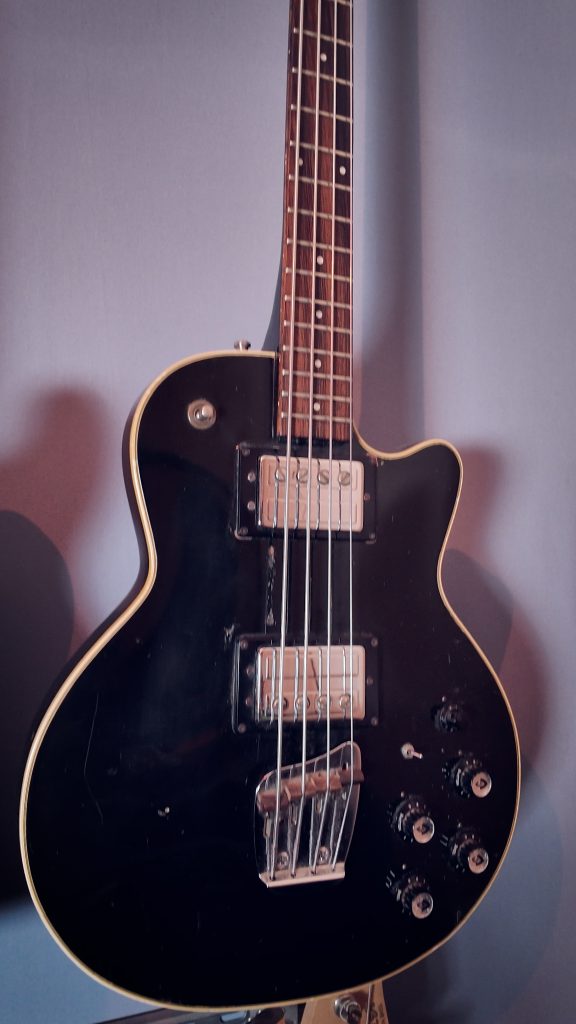
You play a ’70s Guild M-85-II BluesBird bass, which is relatively uncommon. What do you like about it, and how have you used it when recording with Goldfrapp?
I love the Guild basses. I’ve had my Guild bass for years. It’s beautiful. I’ve used it a lot with Goldfrapp. It’s the most versatile recording bass you can imagine. The subby tone is almost orchestral, and it also does an incredible, pokey kind of sound.
How did you discover the Guild M-85-II BluesBird bass, and what made you decide to get one?
I saw Sheryl Crow playing one, and I thought it sounded amazing. A producer once told me, “Guild made the best recording basses.” I bought one with a single pickup and showed it to him, and he said, “No, you want one with two pickups,” so I bought the M-85-II from Vintage and Rare Guitars in Bath.
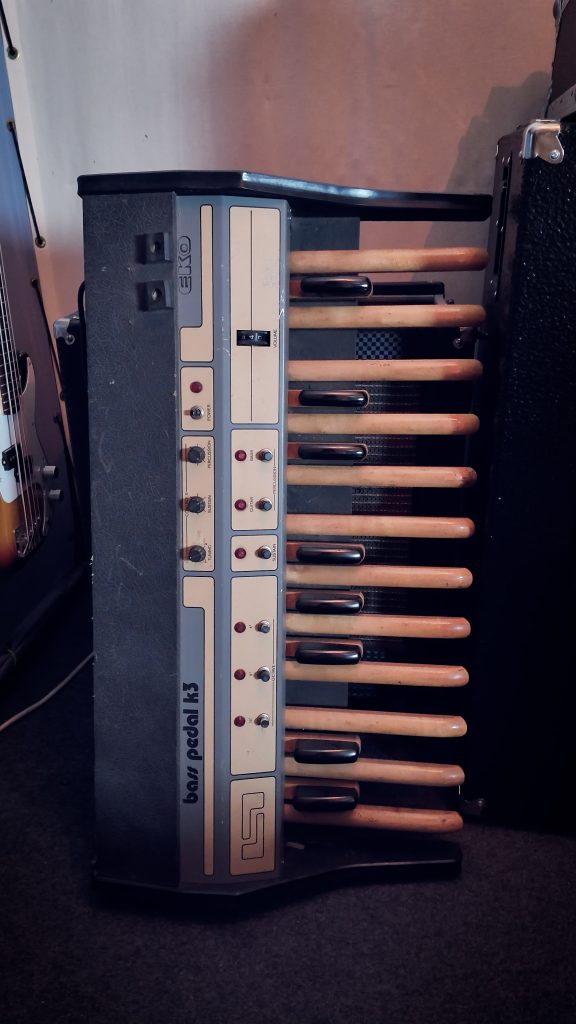
Tell us about your EKO K3 Bass Pedal.
It’s such a cool thing. I used the EKO K3 Bass Pedal for my solo album Love Form in 2013. I played it unconventionally, using my hands with it raised in front of me at an angle. It’s a good vibe.
Which classic Fender basses do you like to record with?
The original 1950s-style Fender Precision Bass with the single-coil pickup is amazing. It has its own sound. Seb Pecchia is a great tech and made me a plastic bass with one of those pickups. It’s really pokey.
I used the BOSS VT-1 Voice Transformer on my vocals... Alison also used the VT-1 to record Goldfrapp. You can’t beat it."
Seb also restored a 1966 Fender slab-body Precision Bass for me and got it playing the way it should. I’m a big fan of those ’66 slab-body P-Basses.
The 1968 reissue of the ‘50s-style Precision Bass, called the Telecaster Bass (Fender’s first reissue instrument), was used to record classic Barry White and Bee Gees records. That thonky sound comes from the single-pickup Telecaster Bass. The saxophonist and bassist Wilton Felder of The Crusaders recorded with a Tele Bass as a session player. He was incredible.
I also like the ‘70s Fender Telecaster Bass with the humbucker. [Telecaster Basses switched from a single-coil to a humbucking pickup in 1972]. Once you record with it in the studio, no one wants to change it because it does its job so well.
You’re known for playing plastic basses; when did you acquire your first one?
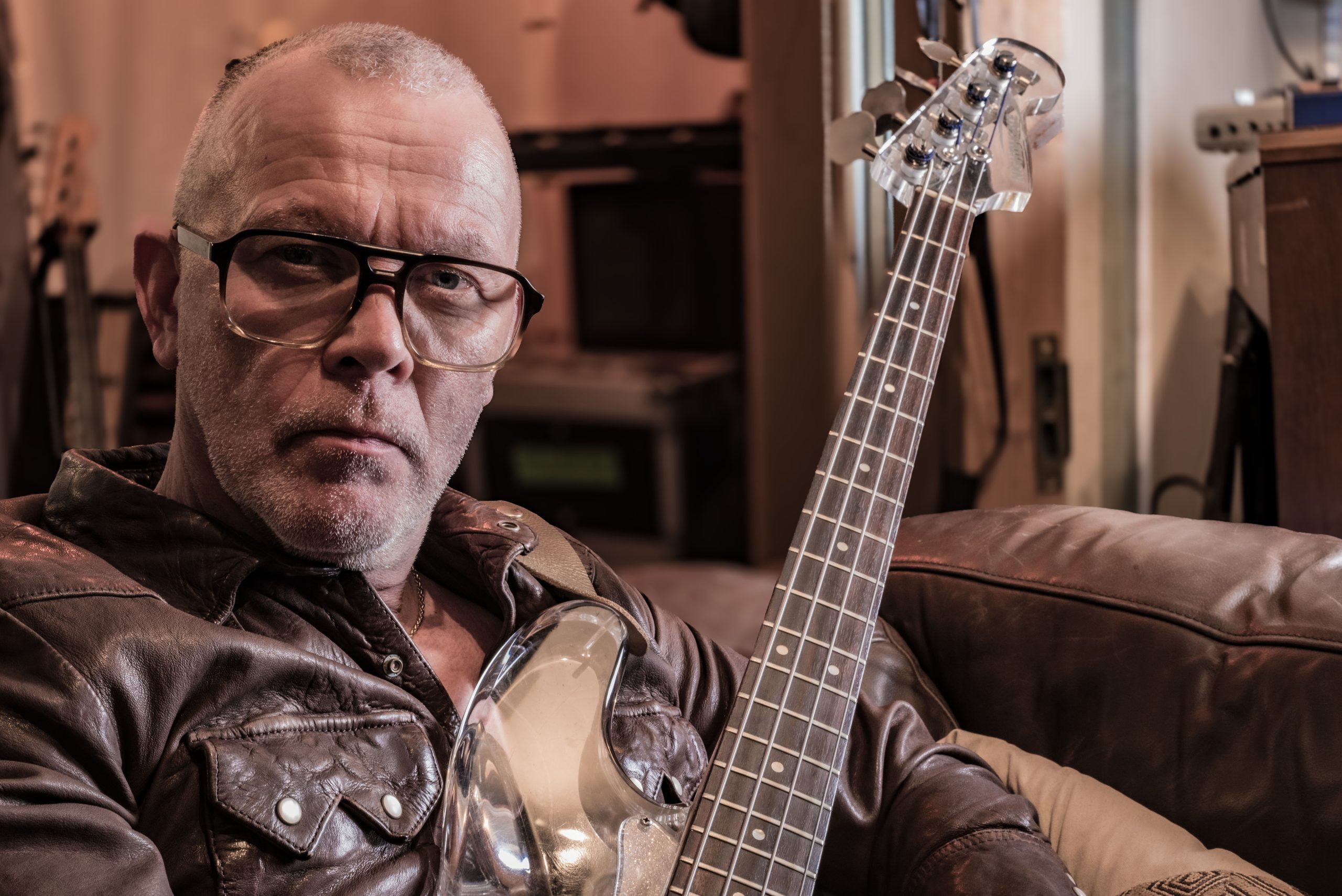
I got my first Plexiglas bass in 1998. It was made by a guy called Neil McDonald—his brand Nightingale. At the time, I wanted Fender to make me one, but the Custom Shop wasn’t geared up for it.
A few years ago, the Fender Custom Shop Master Builder Scott Buehl built me a Plexiglas P-Bass. It’s similar to my purple ’70s-style Fender Custom Shop P-Bass, which I love.
What do you love about ’70s-style Precision Basses?
I think that period of Precision Bass beats any ’60s bass for rock hands down. The weight and thickness of the neck around 1978 were perfect. I’ve got a late ’70s Antigua P-Bass, which I’ve used a lot with The Cult in drop D tuning.
"The BOSS ODB-3 Bass OverDrive sounds awesome on bass—really fat."
What’s the story behind your Warwick Streamer basses?
I have fretted and fretless models that Warwick gave me around 1987/1988. I used a Warwick a lot with Robert Plant, and always with flatwound strings. It’s the only active model I’ve got, and I still love it. I badly wanted a Warwick early on, but I had no work or money at the time. Then suddenly I had a gig and a deal, and they gave me two! It was unbelievable.
When I started working with Robert Plant, I was earning good money and had a deal with Warwick. I remember Warwick flew me out to Germany for a trade show, and I had all these amazing jazz players coming up to me and asking me how to get a gig. I never suffered from imposter syndrome, but I considered myself to be lucky.
Vincent is another great German bass builder. I own a nice instrument of theirs.
How have you seen session players’ financial situation change over the years?
I’m on the back end of those people from the ’80s and ’90s who earned proper money touring, and it’s set me up to be able to carry on with what I do now. It’s much more difficult these days to earn decent money touring. People are on the same kind of money playing gigs now that they were back in the ’80s.
How and why do you think live music has changed so much over the years?
The corporatization and manufacturing of festivals changed the music scene. The way festivals are sold to people has not helped live venues at all. Grateful Dead had it right. I think people need to look towards creating their own fanbase as a model. The hippies were ahead of the game in that regard.
That DIY approach also extended to independent music distribution. Back in the 1960s, composers like Terry Riley mailed out their music to people. They made their own vinyl and sent records directly to fans. They just stuck with their own method of doing things, and it worked for them.
"I find the BOSS LS-2 Line Switcher super handy for all sorts of things... You can get really creative with it."
The Second Summer of Love [in 1988] helped foster a more community-oriented environment, but it wasn’t so good for guitar-based bands. That was the beginning of another change. Even though I’m a musician, I don’t have a problem with that. But when something that was free comes under corporate control, it can be problematic.
Live music is often discouraged, for example, in Ibiza. Setting up in a restaurant and playing is tricky because they want to control it. You can see that sort of thing all over the world, but live music will always exist as long as people are willing to play in bands. Nowadays, it seems merchandise is more important for earning money.
What advice would you give young musicians trying to succeed today?
People I know who’ve MD’d and are looking for younger players often say that someone who only plays bass is kind of a luxury now. Most touring bands want bass players who can also handle other stuff like keys and backing vocals. These days, being just a bass session player is pretty rare—unless it’s your own band, of course.
For me to really understand what it’s like to make music in your 20s now and have an opinion on that would be disingenuous. As a father and musician, I’m more interested in my kids’ success than my own. I wasn’t earning decent money from music at their age; I was on the dole, like everybody else. But they don’t have that luxury now.
But I would say that whatever you do, it’s important to make it tangible. If you’re doing conceptual music (like I do, when I’m not working with other people), it’s important to understand where it lives in the music world. If you’re a musician and you believe in what you do, it’s important to understand the context of your work and what you want to do with it.
To what degree is context important?
When it comes to success, the music is only 40 percent; the rest is context. You can make the greatest music in the world, but it’s very difficult to go anywhere with it unless people understand it. For example, going back to David Essex’s hit record “Rock On”: it was successful because he was presenting an abstract recording within the context of a pop star.
"BOSS pedals really shine in the studio. They always do what they say on the tin."
Let’s say you make a great piece of music—really subtle and challenging—and I want to play it to someone. When they hear it, they might go, “That’s amazing, tell me about this person.” And if there’s an interesting story behind it, they’re more likely to be captivated by it.
Conversely, if someone showed you a painting and you really liked it, but then you discovered it was done by somebody whose politics you opposed, it might change your perspective on it.
The context is about understanding people more, and that’s inextricably tied to their art. With social media, it seems that music is more about context than ever before; the context of young musicians’ lives is the most important thing for selling music.
Unfortunately, that can also be a distraction. I often wish there were a little more mystery.
How do you think AI will impact music?
One could argue that AI won’t interfere with live music because, by definition, live music is about human beings interacting with one another in real time. It’s so visceral as art.
Originally, that’s what music was all about. Interestingly, when people made recordings, they were more like demonstrations intended to encourage people to come to gigs.
At some point, it flipped around: gigs became more about encouraging people to buy records.
I totally understand why musicians are frustrated about the deal they get when it comes to earning money from recordings, and how that has continued to change for the worse because of technology.
But it’s come full circle: we’re now in the same situation as early jazz and classical musicians were generations ago.