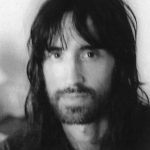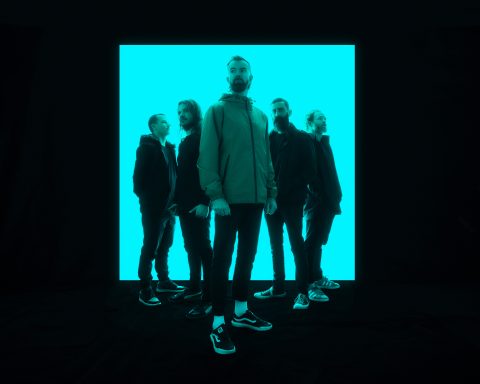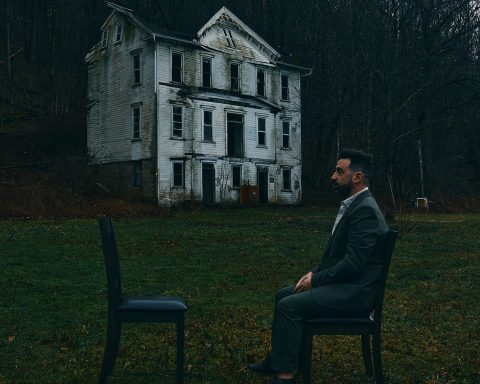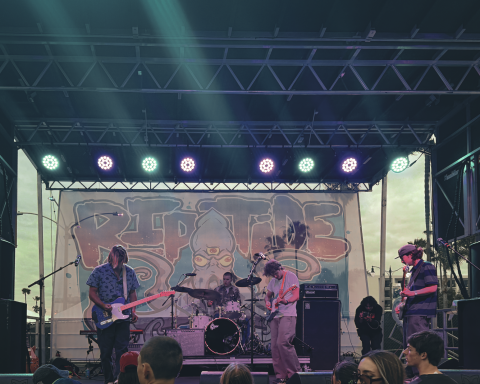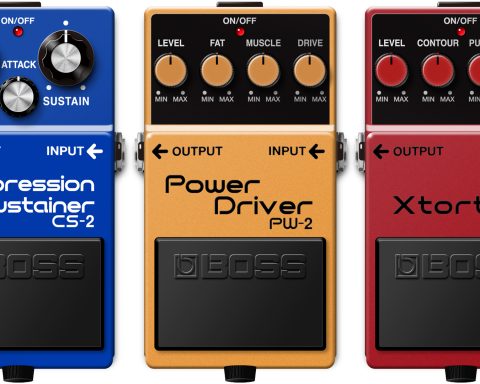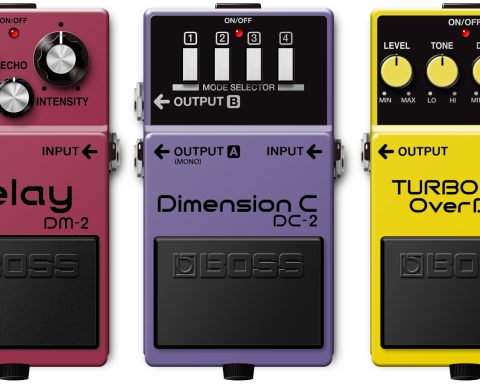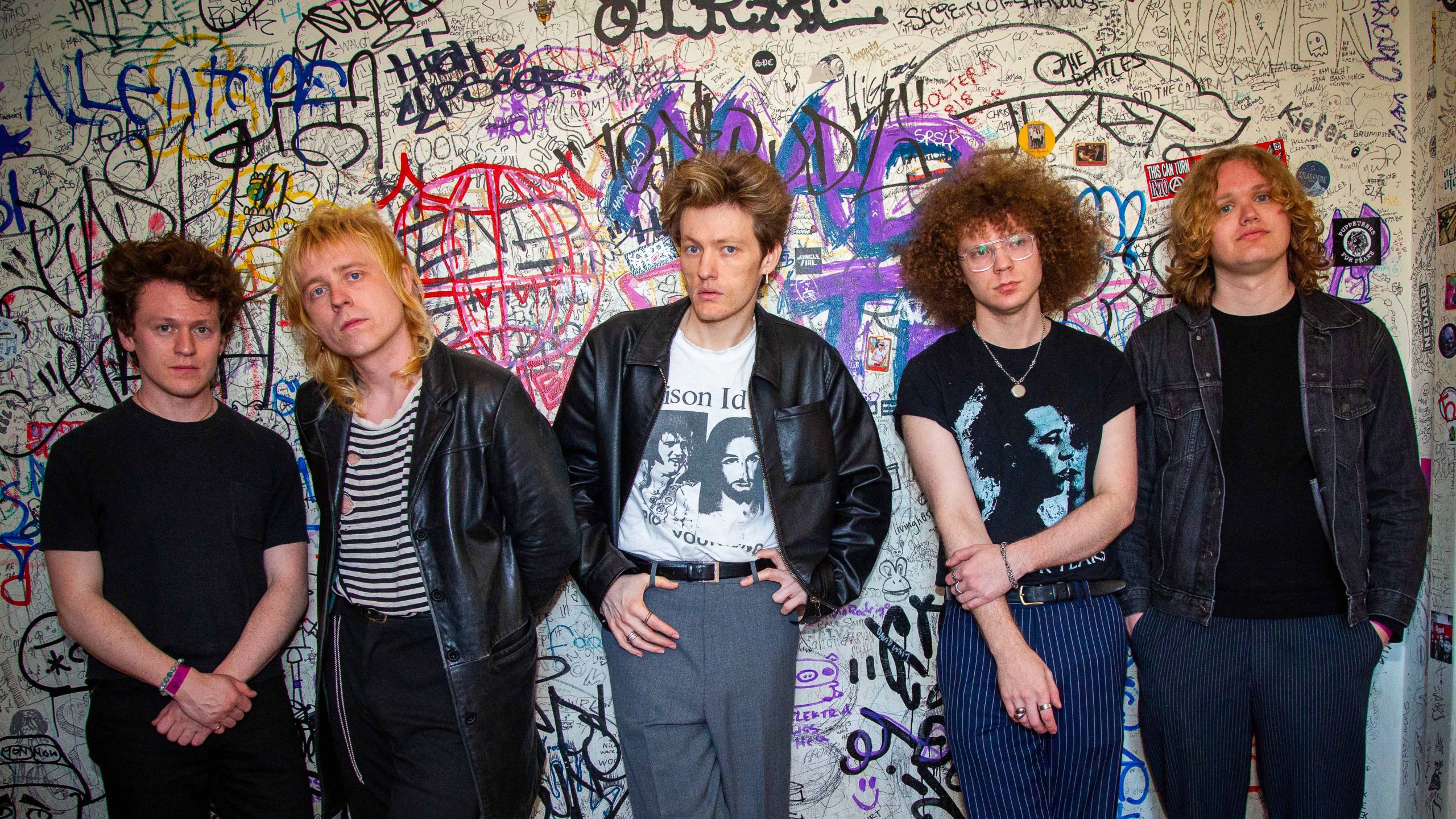


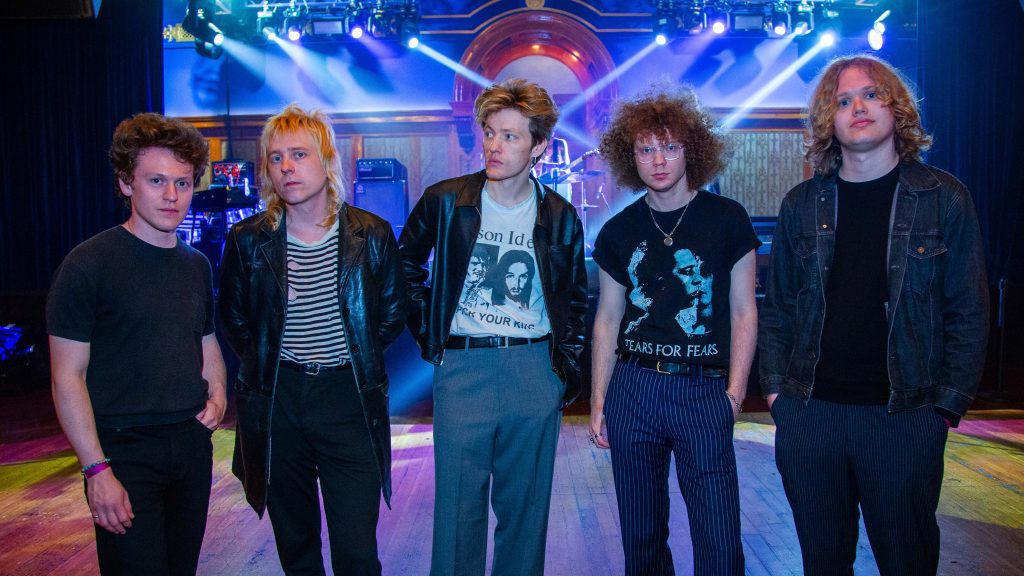
Rising stars Brigitte Calls Me Baby—singer Wes Leavins, guitarist Jack Fluegel, bassist Devin Wessels, and drummer Jeremy Benshish—emerged from Chicago’s alt-rock underground in 2022. Referencing Leavins’s unlikely pen pal (the one and only Brigitte Bardot), they nurtured a heartfelt bond with loyal fans of their own, delivering emotionally intense performances from the off. If opening for Inhaler and Muse (gigs one and two, respectively) in their native city put them on the local map, SXSW 2023 had Brigitte Calls Me Baby pinging loudly on the radar of national labels. Scooped up by ATO Records, the EP This House Is Made of Corners arrived later that year, followed by their 2024 debut album, The Future Is Our Way Out. With the release of the critically praised Irreversible earlier this year, their ascent gathered pace, and crowds swelled internationally. “It’s been a whirlwind!” Fluegel admits.
Rising Stars
Wessels picks up on that same sense of scale, albeit from a different angle. He reflects on the surreal duality of private thought and public connection—at once intimate and remote—and describes those moments when lyrics written years earlier are sung back thousands of miles from home: “I’ll have a realization on stage and think to myself, ‘Wow! I wrote that in my journal three years ago!’”
Venues that were half-full just months ago are now selling out as Brigitte Calls Me Baby move from city to city. By all accounts, their shows run hot from start to finish. Guided by the charged atmosphere in the room, the setlist changes nightly, though it never skimps on crowd-pleasers.
By the time “Slumber Party” hits, the reaction is nothing short of euphoric, as the audience erupts in a blur of recognition, release, and abandon. “I thought I told you, no excuses to stay home,” croons Leavins. “Too bad it’s Friday—there will be people you know.”
In these moments, songs become more than fixed statements; they morph into shared memories, recalled in real time. It’s what happens when lyric and melody take on a life of their own, reaching beyond their creators as conduits of empathy.
That openness extends into the band’s relationship with sound itself, where experimentation and expression converge. Wessels describes his restless creative spirit as a kind of rebellion: ‘Tell me that you’re not supposed to do something with a piece of gear, and I’ll instantly want to try it. That’s what I live for.’
BOSS caught up with Fluegel and Wessels mid-tour to talk essential BOSS pedals, studio secret weapons, favorite stompbox discoveries, and the endless creative possibilities of great gear.
Whirlwind Success
Brigitte Calls Me Baby are causing a real buzz right now—what’s different about this tour compared to the last time you were on the road?
Jack Fluegel: It’s been a whirlwind! We were in the UK and Europe for several weeks, came home, and jumped into this US tour. We’ve drawn some of our biggest crowds to date, and people are really into the new album, Irreversible, which is super exciting.
It feels like we’ve leveled up. It’s funny, we didn’t tour the States much in 2025, but we’re performing in some of the same venues on this tour that we did in 2024. Back then, they were about half-full, but this time around, they’re all sold out.
The energy is great. Each crowd is a little different, which is fun. We don’t play the exact same setlist every night; we tend to change it up. The last five or so songs are super high energy. By the time we get to “Slumber Party,” which is the first single from our new record, things get crazy. The crowd explodes pretty much every night. It’s been awesome.
"BOSS is my favorite pedal company."
Jack Fluegel
Live Transmission
While you’re on the road, do you hear your songs on the radio more often these days?
JF: That’s happened a few times, which is really cool. Sometimes, friends and family send me pictures of the radio display when they catch a station playing a song of ours. It’s always cool to see that.
It always reminds me of that ‘90s Tom Hanks film That Thing You Do! There’s a great scene where they get played on the radio for the first time, and they’re all freaking out. I can relate to that!
Have you had any Spinal Tap moments on this tour?
JF: We certainly have. In some of the bigger venues supporting other bands, we’ve been wandering around cavernous backstage areas, like, “Where’s the stage?!”
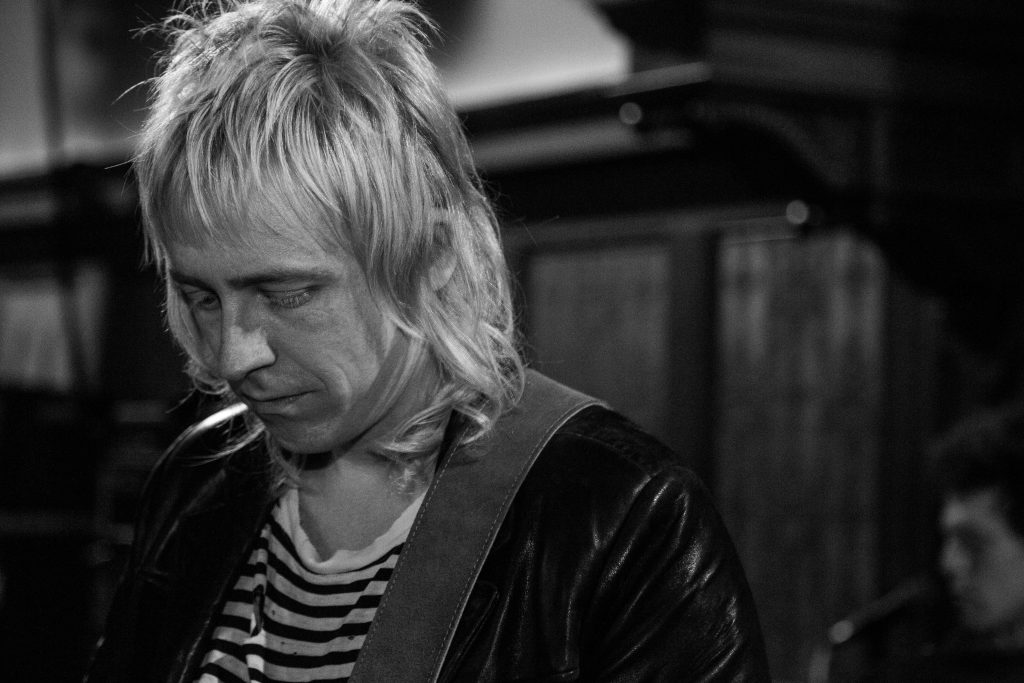
BOSS Aficionados
What do you like about BOSS pedals generally?
JF: BOSS is my favorite pedal company. One reason is that the pedals are so simple to use. The designs are so straightforward, and I know what I need to do to get the sound I want instantly. If I’m in a room that sounds a bit different, I can easily adjust my BOSS pedals to suit the environment.
We’re playing in very different-sounding rooms from night to night, so being able to easily dial in sounds is huge for us. With BOSS pedals, it’s usually just a matter of quickly turning a couple of knobs, and I’m good.
Some other pedals are just way too complicated, especially for playing live with. BOSS pedals are generally so simple to use that I can even adjust them in the middle of a solo, if I want to.
Another reason BOSS is my favorite pedal company is that I know it will do the thing it says. It’s not like, “Well, it does all these other things and the chorus is pretty good.” I know my BOSS CE-2W Chorus is the best-sounding pedal of its type, and it does everything I want it to.
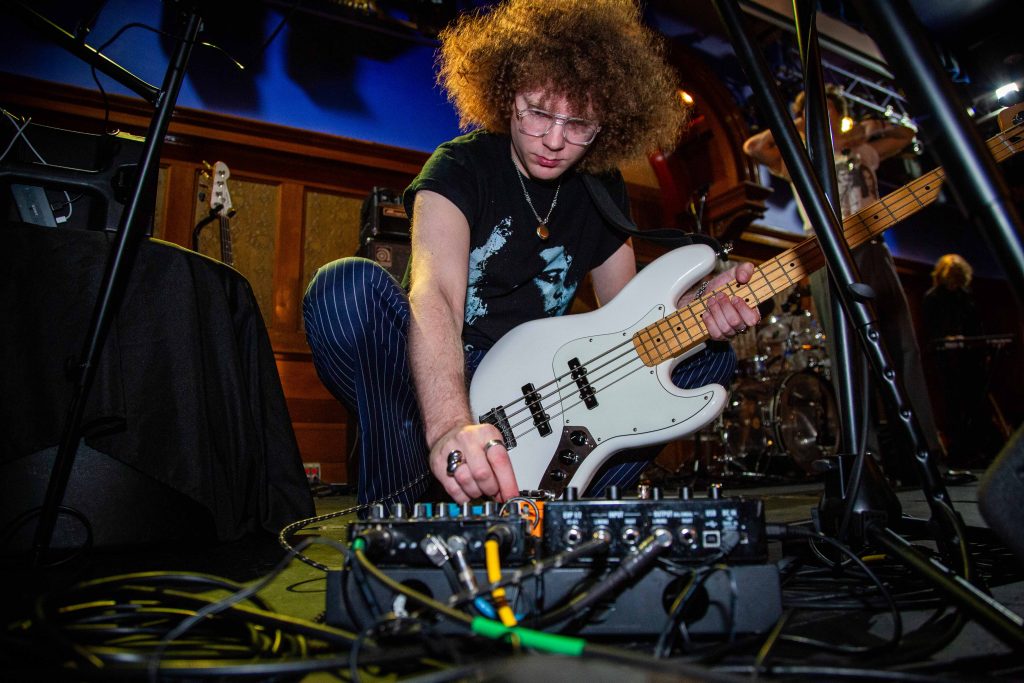
Less Is More
Devin Wessels: When you have a pedal that’s reliable, and you know it’s going to do what it says, it actually opens you up to more experimentation. The thing that excites me about BOSS pedals is that you can put virtually anything through them.
If you know what a certain BOSS pedal sounds like with a guitar—be it a Chorus, Fuzz, or Distortion—you can easily imagine putting other instruments through it, like drums or vocals.
I have a complicated relationship with gear. I don’t want it to get in the way; I want it to be quick, and, for me, the BOSS stuff just works. I don’t have time to run instruments through difficult pedals with too many knobs and menus. But if I know a pedal will sound great when I run something through it, I’m happy to put in the two minutes to set that up. And I’ll check every point on each knob.
"The thing that excites me about BOSS pedals is that you can put virtually anything through them."
Devin Wessels
BOSS Forever
Jack, what does your basic clean tone start with?
JF: In the UK, I used a black-panel Fender Deluxe Reverb amp, but in the States, I use my silver-panel version. It’s a subtle difference in terms of tone. For my basic clean sound, I used to set the amp so it was just breaking up, but I’ve since rethought that. Now, I have an always-on overdrive pedal that gives me a little bit of breakup and compression.
I’m looking forward to swapping in more BOSS pedals. I’ve been into BOSS pedals forever. I mean, I’ve had a BOSS TU-3 Chromatic Tuner since I was 15! I think that was the first pedal I ever bought.
Tell us about your BOSS CE-2W Chorus.
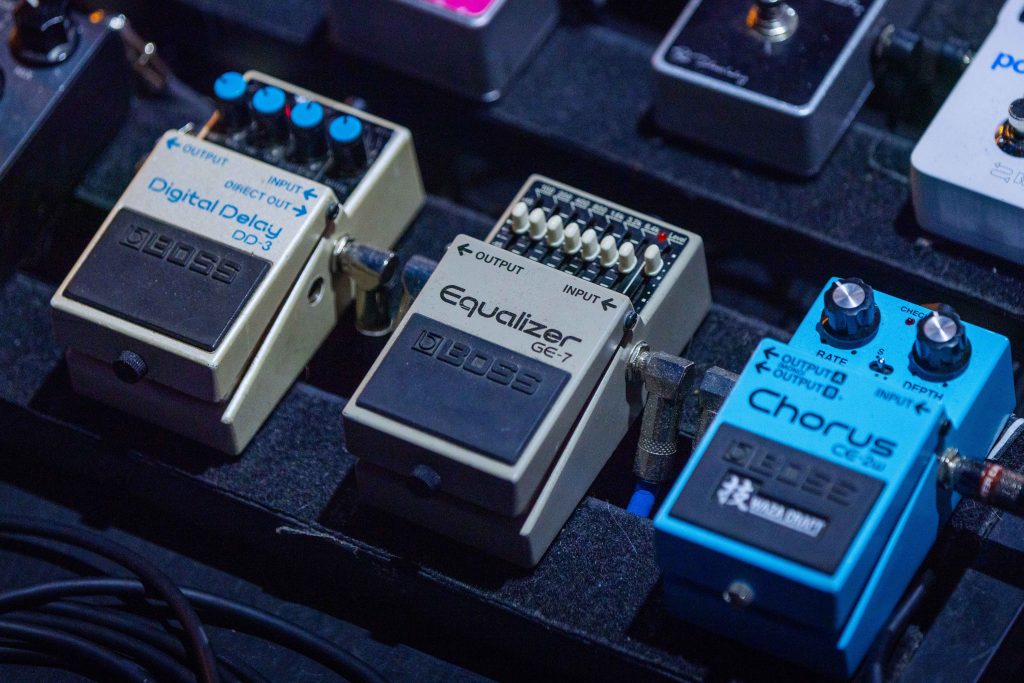
JF: I think the BOSS Waza Craft CE-2W Chorus is the best chorus pedal there is. I really like the CE-2 setting, but I use the CE-1 chorus mode the most. I’ll also flip it across to the CE-1 vibrato setting for a couple of songs. I love both those sounds.
I currently run my CE-2W in mono, but I’d love to move to a wet/dry stereo modulation setup at some point. The CE-2W sounds great after some drive, and also with a clean, heavily compressed sound going into it. It’s incredible. I love that thing.
Sculpting Tone
How do you like to use your BOSS GE-7 Equalizer?
I think every guitarist should have a GE-7. It’s such a diverse pedal. Right now, I use it on my board mostly for a clean boost. But it can also be really useful if I have to use an amp I’m not familiar with (which sometimes happens at festivals). With the GE-7, I know I can carve out the right tone if I need to.
The GE-7 is also great in the recording studio. It’s such a fun tool because you can get all sorts of tones out of it, even cool, weird stuff. It’s fun to experiment with boosting or attenuating certain frequencies. I mean, you can have a completely new sound in seconds.
Placing the GE-7 in front of gain pedals can be cool, too, and it can completely change their character. I run it after gain pedals on my current touring board, but in the studio, I love pushing it into overdrive, distortion, and fuzz.
"My BOSS CE-2W Chorus is the best-sounding pedal of its type, and it does everything I want it to."
Jack Fluegel
On Repeat
What delay pedals are essential to you?
JF: We use a lot of delay, and my BOSS DD-3 Digital Delay is essential. I’m addicted to slapback, so I always have it set for that sound. I’d love to get the BOSS DD-3T with tap tempo at some point, too. My DD-3 is the older version, and I bought it about 10 years ago.
I love playing around with the DD-3 in the studio a lot, for sounds other than slapback. I also have a tape-delay-style pedal that produces a more analog sound. It blends well with the clarity of the DD-3’s repeats. It’s fun to get a mushy, saturated tape sound, but sometimes I like delay repeats to be clear.
Gain Insight
Give us an example of some unconventional ways you use BOSS effects.
DW: I’m using a BOSS DS-1 Distortion on my vocals live. We recorded a song in the studio where my vocals are really distorted. It’s a cool textural contrast with Wes’s clean vocal, and we were thinking about how we could recreate that live, because it doesn’t make any sense for me to sing the part without distortion.
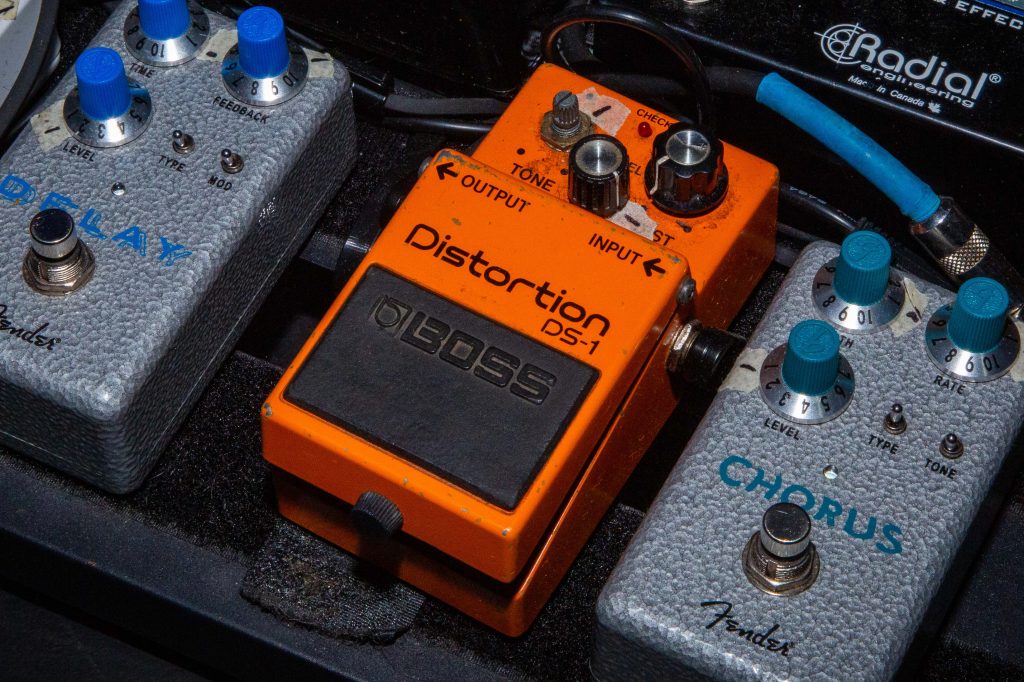
How did you decide on using the BOSS DS-1 Distortion for vocals?
DW: We did a shootout and tried literally every distortion pedal we had to hand, and nothing else worked apart from the BOSS DS-1. I truly thought the DS-1 was the last thing that would work, but it turned out to be perfect. I swear by it now. I’m an evangelist for the DS-1 on vocals.
JF: We tried everything—lots of different gain pedals. I remember one of us saying, “There’s no way the DS-1 Distortion will be the one.” But as soon as we turned it on, we knew. It sounded great!
What settings do you use for the BOSS DS-1 Distortion on vocals?
DW: You have to be careful with the DS-1 when using it with vocals. We have the [Dist] knob all the way down, and you have to play around with the Level and Tone a bit, but when you get it right, it sounds wicked.
"BOSS stuff just works."
Devin Wessels
The other great thing about the DS-1 is that it doesn’t scream in the monitor wedge. We usually use house mics—often a Shure [SM]58—going into a reamp/DI box with a mix knob. The wet/dry mix is crucial. I mean, the distortion from the DS-1 is awesome, but you definitely need that dry vocal mixed in alongside it. A BOSS reamp box would be great!
Heavy Machinery
How else do you use guitar pedals in unexpected ways?
DW: We’re always reaching for guitar pedals to use with synths. Drum machines, too. We used a ton of 808 and 909 sounds on Irreversible. I’m hoping to take that approach even further in the future. I love the synthetic sounds of the 808 and 909. It’s a great contrast to the sound of acoustic drums.
We love to stack those sounds together live using the Roland SPD-SX [Sampling Pad], like an acoustic snare stacked with an 808 or 909 snare. Those kinds of tricks really excite me, like layering noise from a Roland Juno to make it sound like the snare is opening up.
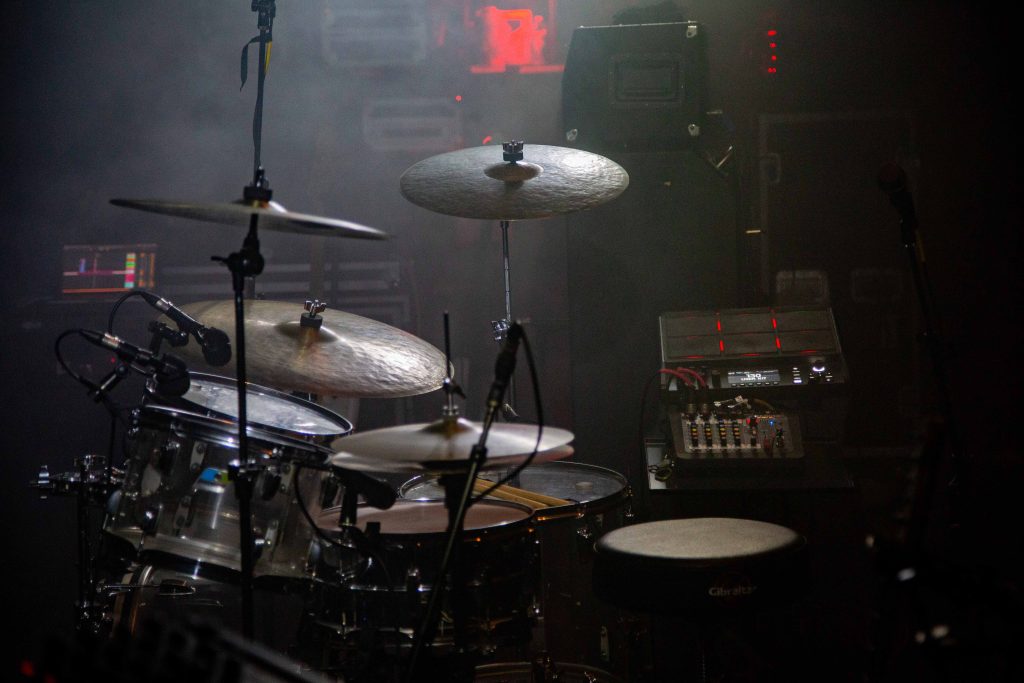
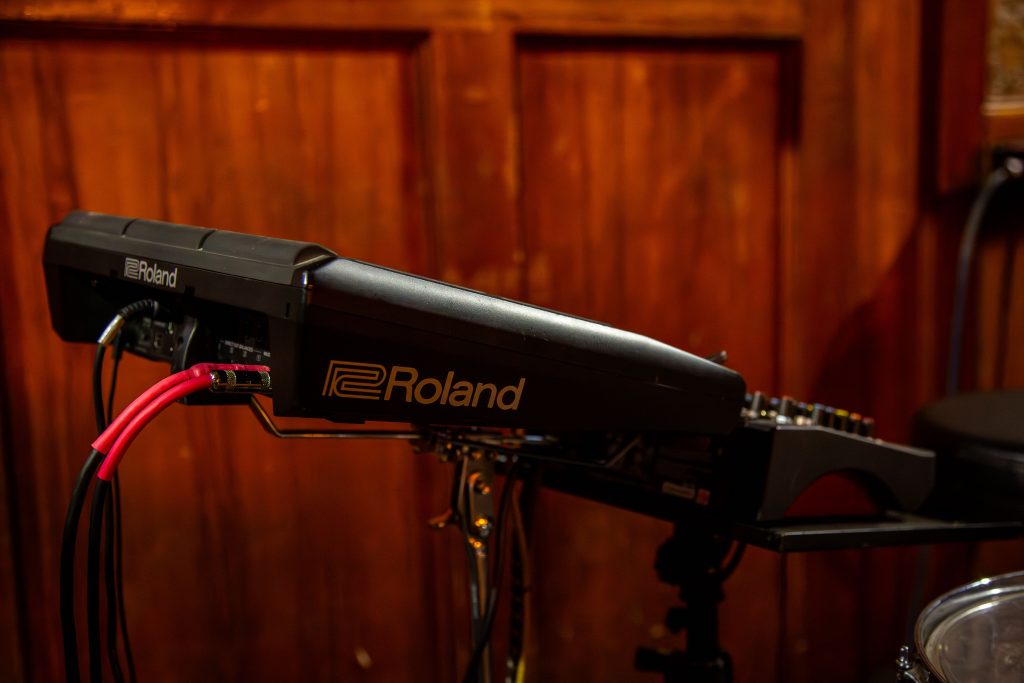
What role is the Roland SPD-SX Sampling Pad playing in your rig right now?
DW: Right now, the Roland SPD-SX is being used as a MIDI controller for Ableton. It gives our drummer, Jeremy, extra options for different sounds and textures. He already uses a snare trigger, but we want to expand on that approach even further with a kick trigger.
Breaking Rules
Is breaking the rules with gear part of your creative process?
DW: Tell me that you’re not supposed to do something with a piece of gear, and I’ll instantly want to try it. That’s what I live for. If someone tells me, “You’re not supposed to do this with a synth,” I’m like, “Okay, let’s do that.” Or if it’s against the rules to run vocals through something, that’s the first thing I’m going to do.
I like to experiment with whatever gear I have to hand in the room. A lot of the guitar pedals and synths I have sitting around in my apartment are the ones we used on Irreversible. But if you can get a cool sound on the demo, and that also works on the record, why not keep it?
"The OS-2 is my favorite discovery."
Jack Fluegel
To an extent, I want to use and abuse the gear, because that’s how you get a sound like nobody else. Plus, making music should be fun, interesting, and engaging. I mean, if it’s not fun for us, then it’s probably not going to be for an audience either.
Irreversible Process
To what extent does music gear influence your songwriting?
JF: When Devin and I were writing songs for Irreversible, it was very rare that either of us came into the room with a chord progression or riff pre-prepared. It was usually the sound itself that inspired the writing, rather than finding a tone to fit something we’d already written. We constantly experimented with gear, and when one of us dialed in a cool sound, the music flowed.
That approach often gets overlooked, but it’s central to our creative process. David Byrne’s book How Music Works, about how technology has always shaped music, is a really great read on that subject.
Infinite Combinations
Music history is littered with stories about musicians reimagining gear to create new sounds, styles, and genres—like the Roland TB-303 Bass Line.
DW: The Roland TB-303 [Bass Line] is a great example of how musicians took a piece of music gear and did something unexpected with it. It was meant to recreate the sound of bass guitar, but it ended up helping to create a whole music genre and scene.
I would love to find a way of using 303 sounds that hasn’t been done before. Maybe it’s a matter of running it through something else. When I think about how far music technology has progressed, it seems like virtually any sound is possible now. I feel like it’s about discovering gear combinations that haven’t been fully explored yet.
There is an infinite number of gear combinations. When it comes to stuff like the 303, the question is: In what contexts have they not been used, and what have they not been treated with before? There’s so much to explore.
"Distortion from the DS-1 is awesome."
Devin Wessels
Which BOSS bass pedals have you explored, and are there any you’d like to try?
DW: The BOSS CEB-3 Bass Chorus has made it onto a few tracks. I had a lot of fun with that pedal. Strangely, I’ve never tried the ODB-3 Bass OverDrive, though I’d love to.
Secret Weapons
Do you have any BOSS “secret weapons”?
DW: If you want more sub-bass, my secret weapon is the BOSS OC-3 Super Octave. Reamping through an OC-3 is a great way to get more sub-bass. A mono synth can do that thing on its own, but if you want to beef up a bassline, say in a chorus section, the OC-3 can work brilliantly.
I don’t think people do that very often, but I think it’s a great application for that pedal specifically.
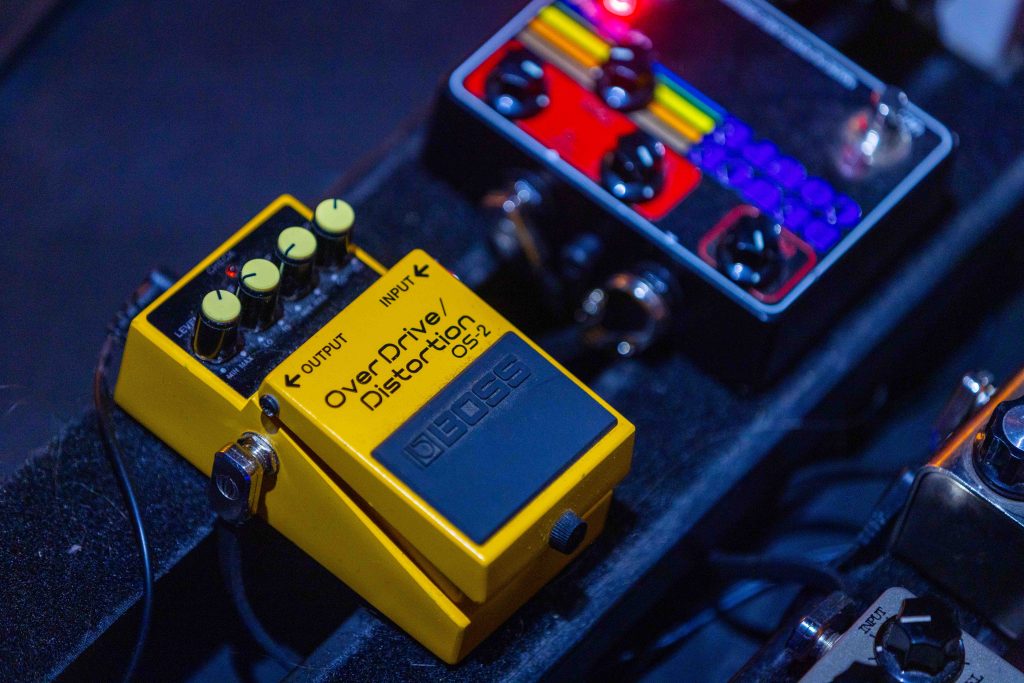
It’s great to see you using the BOSS OS-2 OverDrive/Distortion—how did you discover it?
JF: That’s a frickin’ great pedal! We were off the road for a few months, and I just decided to pick up every overdrive pedal I could find priced under 100 dollars. The OS-2 is my favorite discovery. The [parallel] blend between overdrive and distortion is so good.
I dial it in so that the overdrive and distortion circuits are roughly equal. The distortion on its own is really cool, and the overdrive is surprisingly transparent, but I think the blend of the two is the coolest sound.
The sound of the OS-2 is everything I want from a pedal of that kind. Our touring guitarist [Dylan Barnett] has got my OS-2 on his pedalboard right now, but I’ll definitely be taking it back! It’s a great pedal, for sure.
"I’m excited to try the BD-2W Blues Driver."
Jack Fluegel
Which BOSS pedals are you most excited about trying out?
JF: I’m excited to try the BD-2W Blues Driver. I’ve played with a BD-2 before, but not the Waza Craft version. I’m curious what it sounds like and what the differences are.
Unexplored Territory
DW: I’m a huge fan of Space Echo. Most of the studios we’ve worked in have some type of Space Echo effect. Space Echo is everywhere for a reason. What a classic sound that is. There’s so much you can do with it. And driving Space Echo preamps is awesome.
I use a Space Echo plug-in all the time, but if I had Space Echo hardware, I’d reach for it when tracking and mixing, too. I feel like you can use Space Echo for almost anything, and I’m sure there is still unexplored territory.

Why do you particularly like using hardware?
DW: We recorded with a guy in LA who manipulated delays while tracking—performing with the effect unit itself, so to speak. There’s a certain magic in using hardware because you can easily manipulate it in real time. Even though not every single thing is useful, you inevitably stumble across all sorts of interesting moments.
Using software, you have every option available to go back and change things, but it feels really great to just commit to the moment when you’re using hardware. There is something special about catching a unique moment in time. Living in the moment and capturing those special moments in the studio and on the stage are huge for us as a band.
Magic Moments
What special moments stand out for you on this tour?
JF: We were on tour when Irreversible came out, and there were kids in the audience who knew every word, even though it had only been out for a day or two. That blew my mind.
"My secret weapon is the BOSS OC-3 Super Octave."
Devin Wessels
DW: There’s nothing cooler than hearing a lyric you wrote being sung back to you in a different country. Once in a while, I’ll have a realization on stage and think to myself, “Wow! I wrote that in my journal three years ago!”
What does that sense of connection through music mean to you?
DW: The world desperately needs more connection, and being part of that in any way feels really special. Connecting with fans and forming a like-minded community is something we love.
These days, we’re starved of real-time connection, and I’m all for any good alternative to being on your phone or computer, feeling lonely.