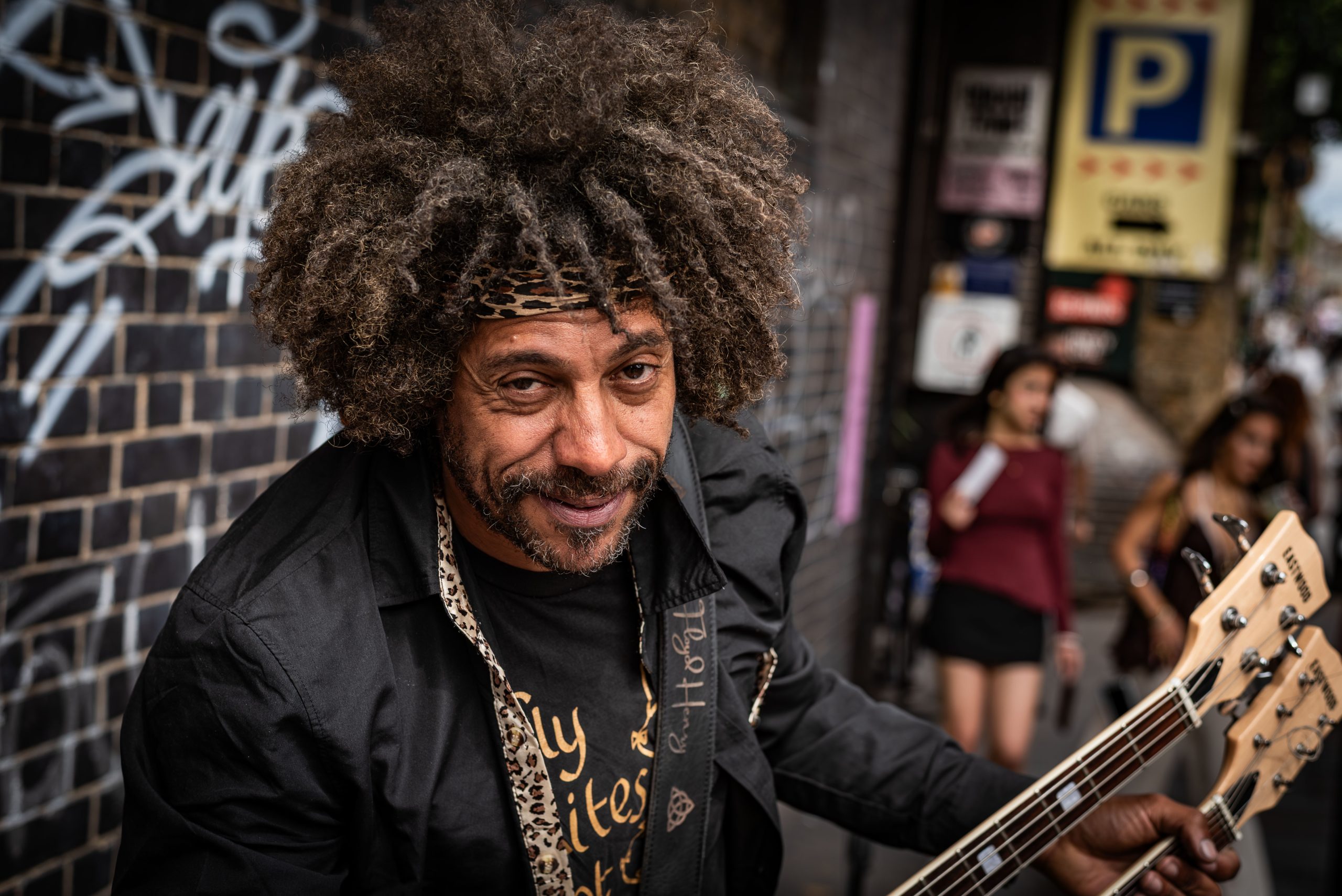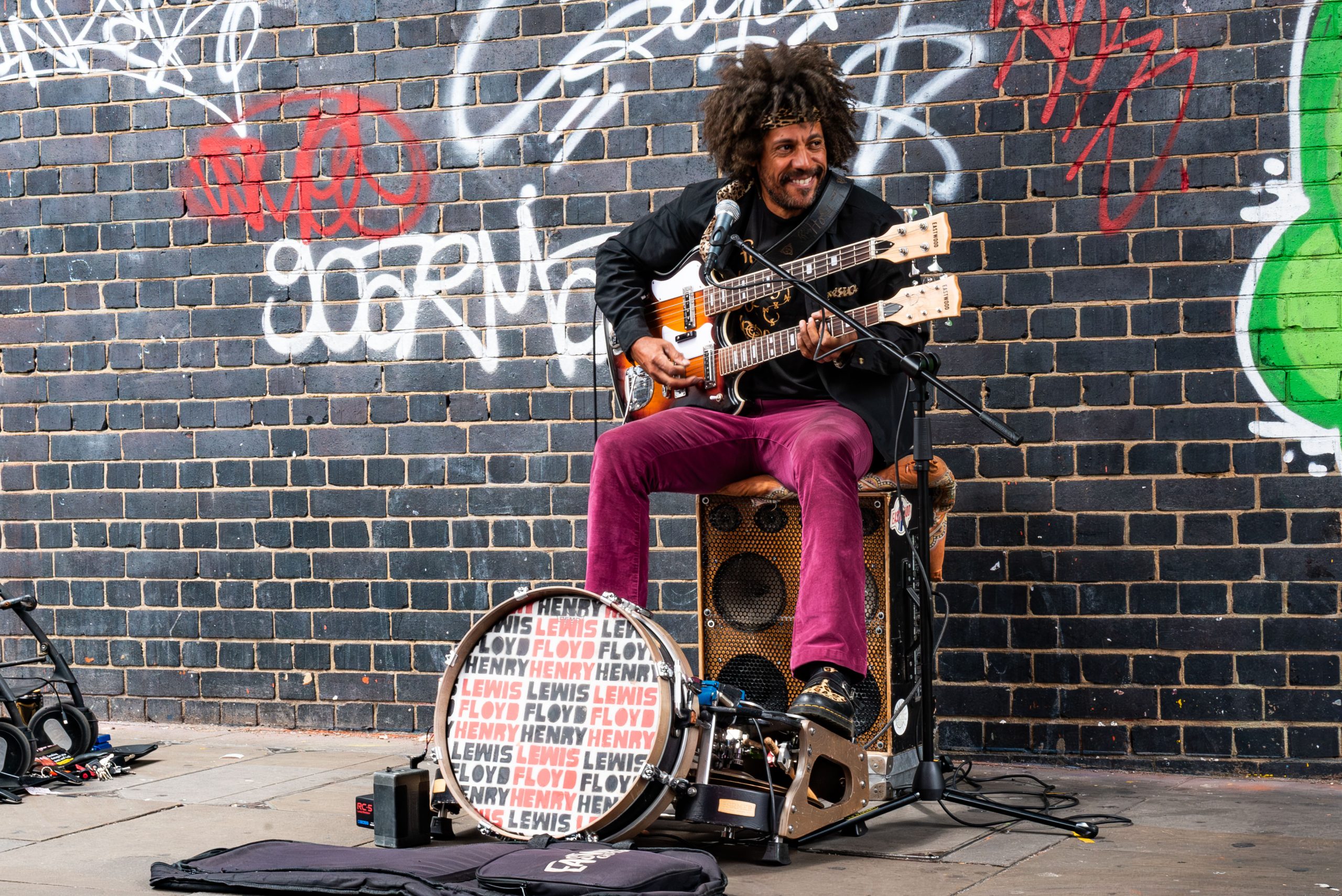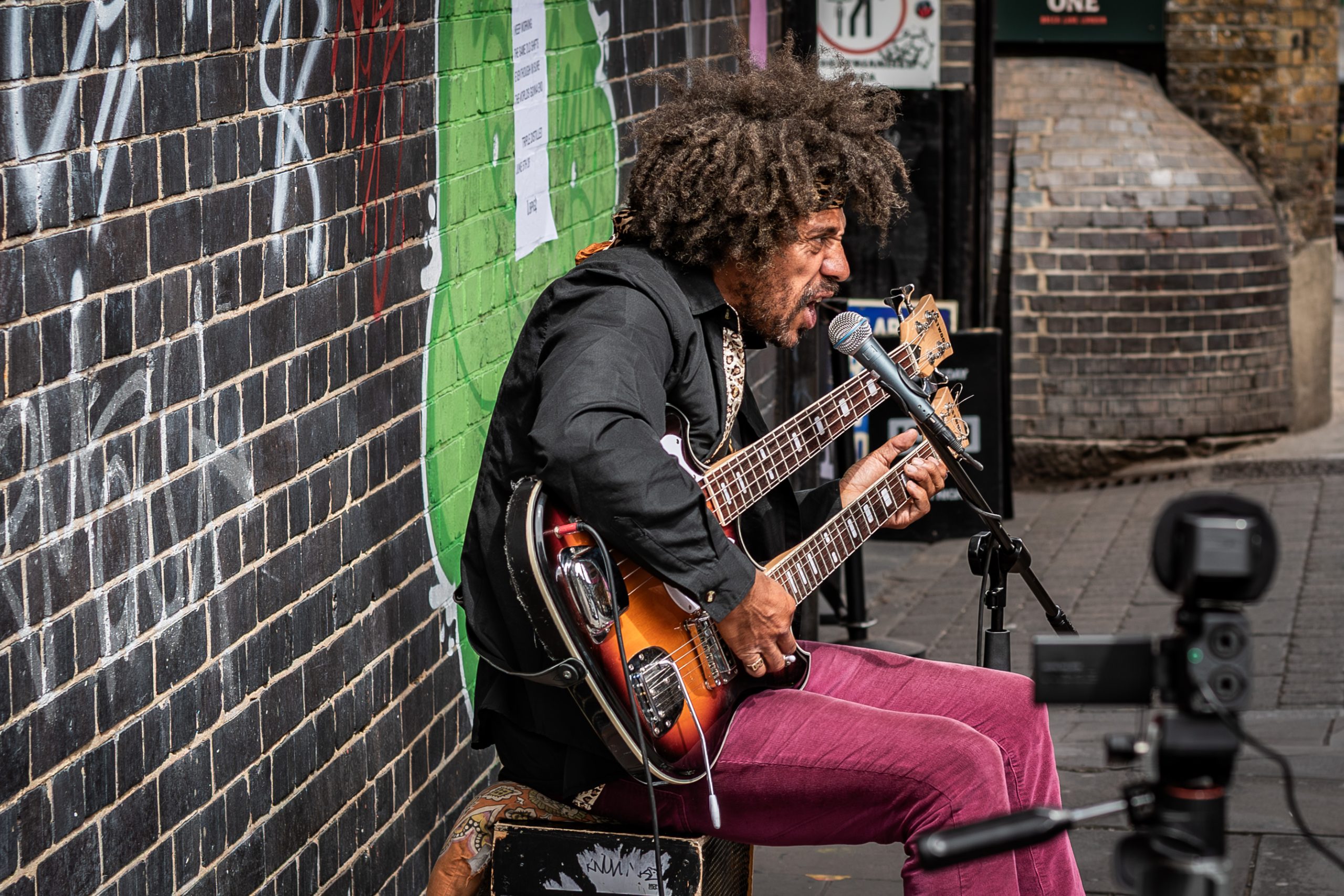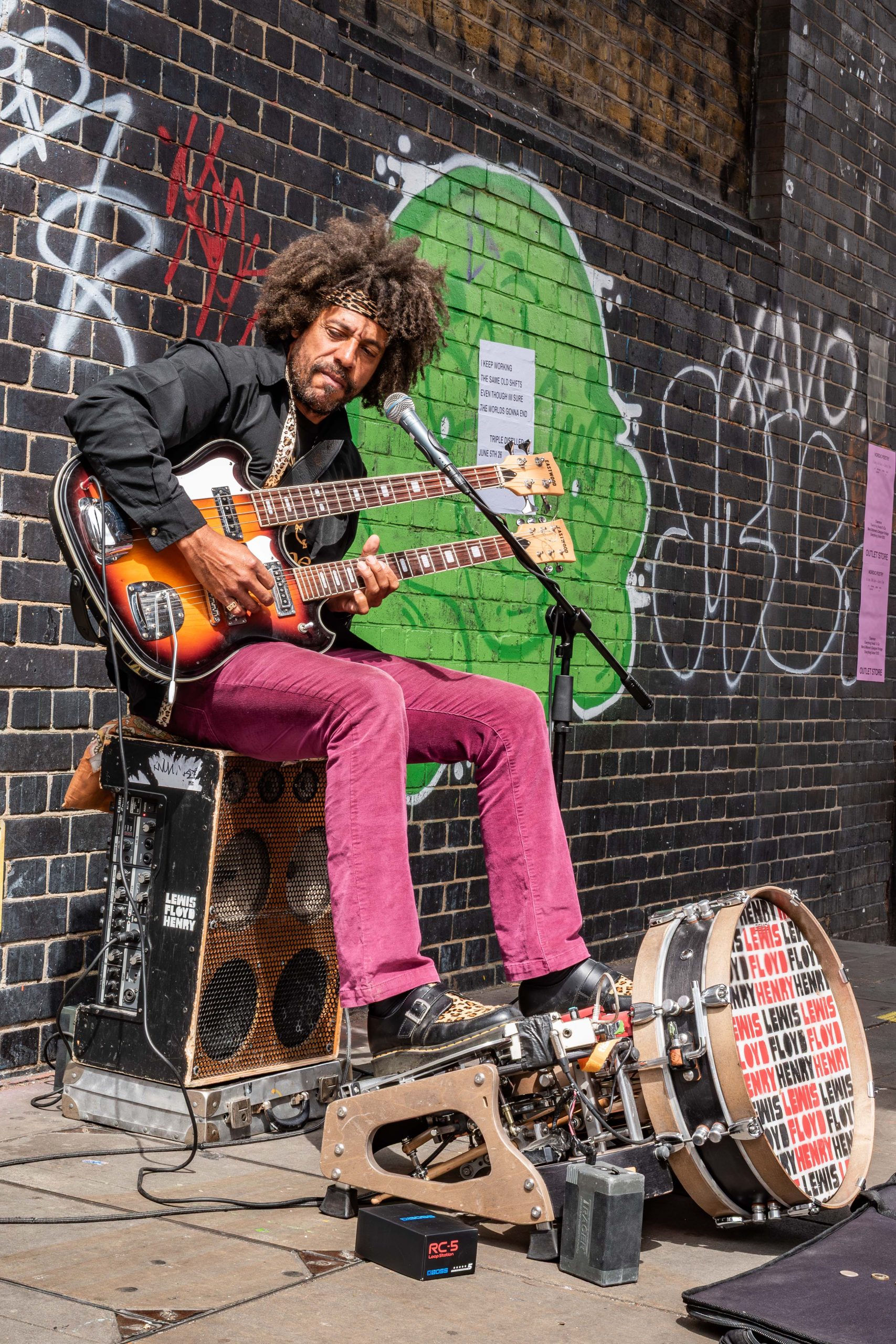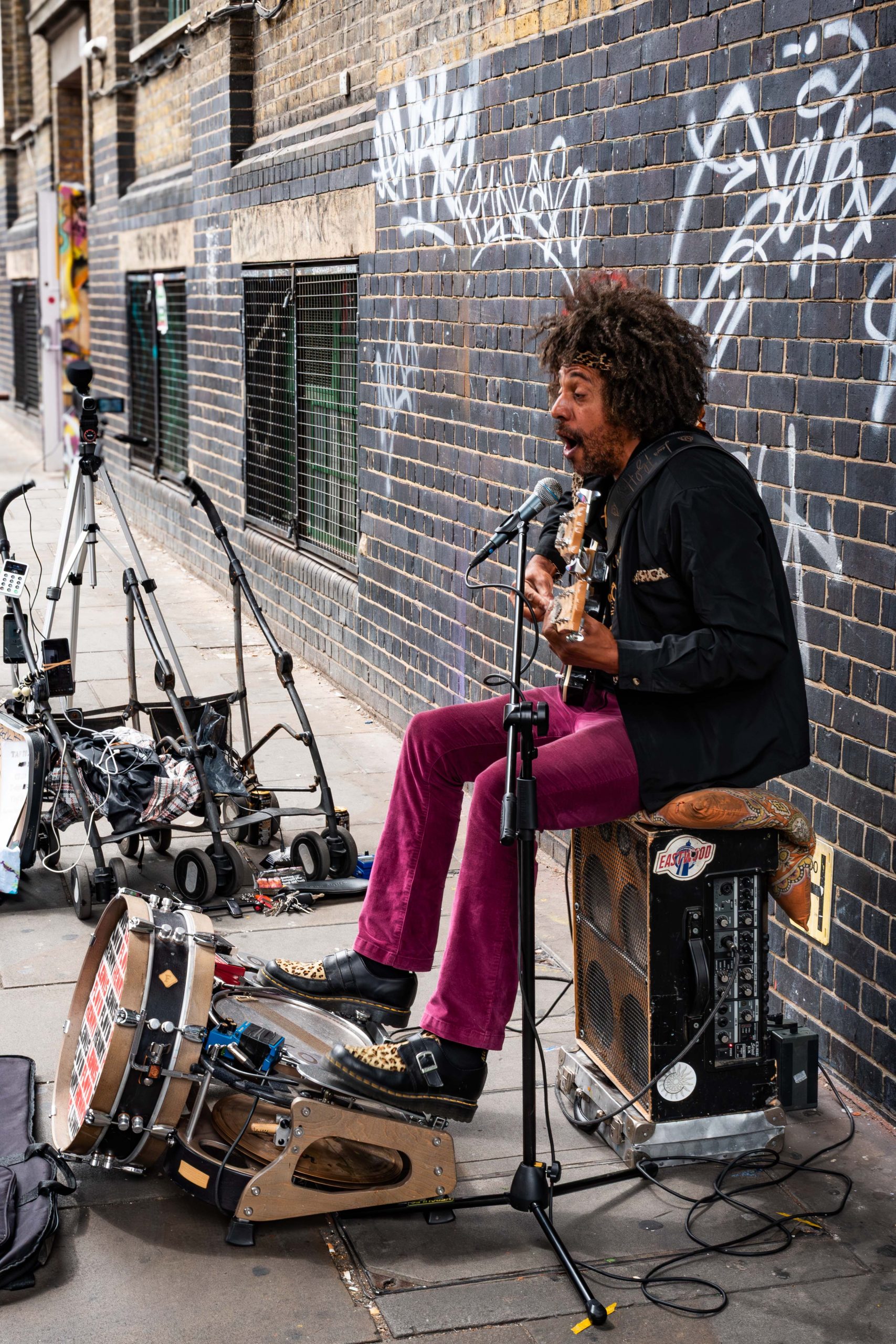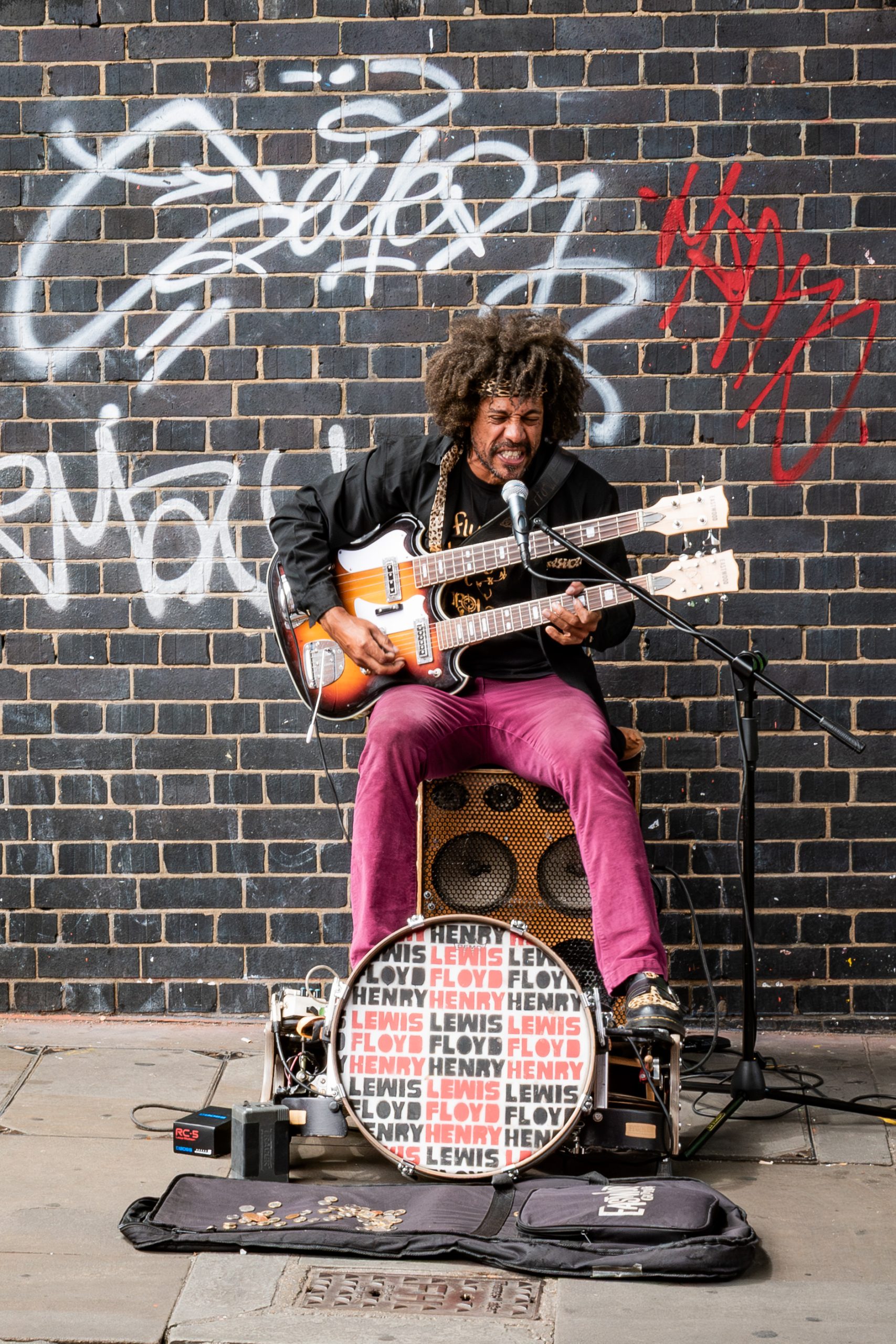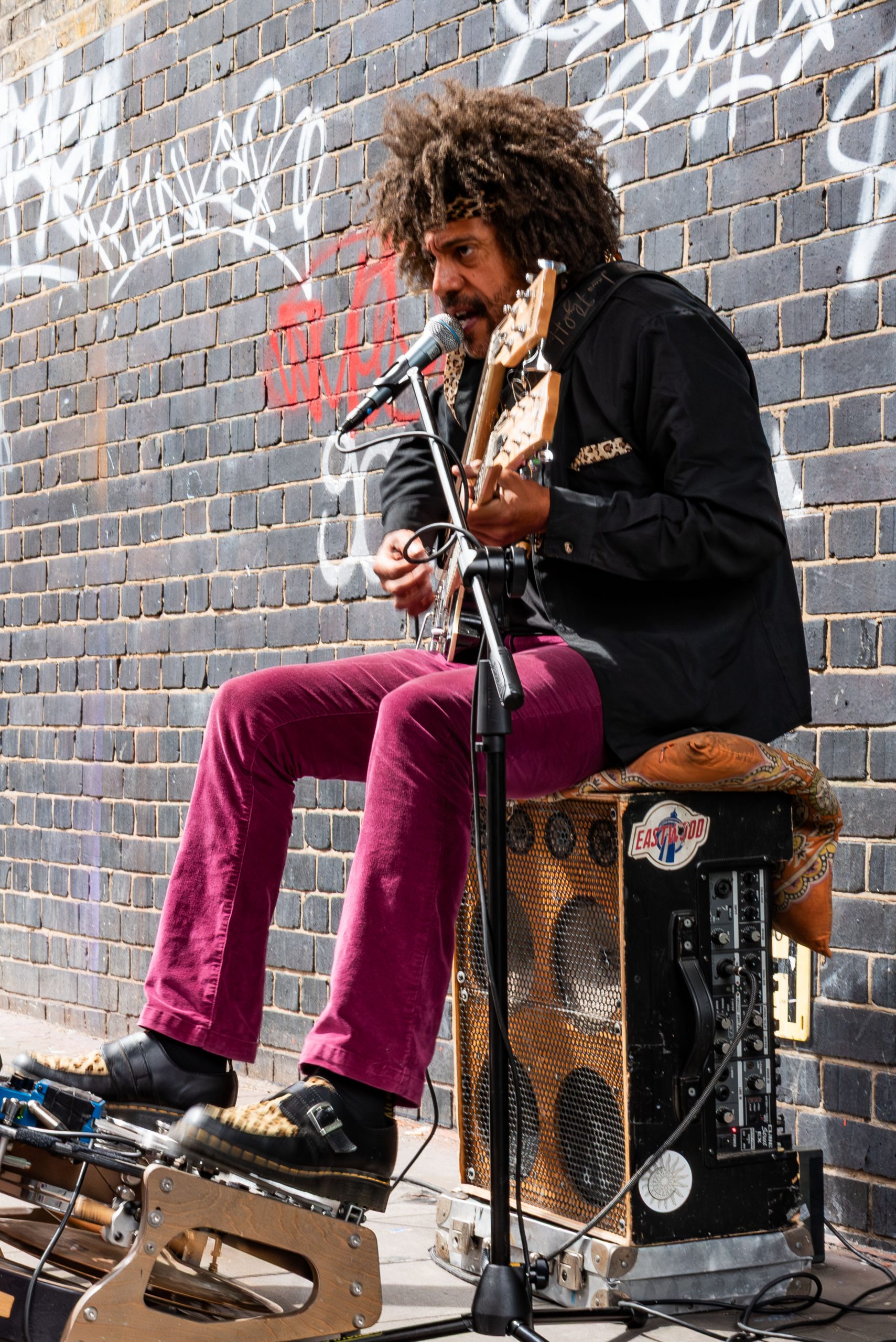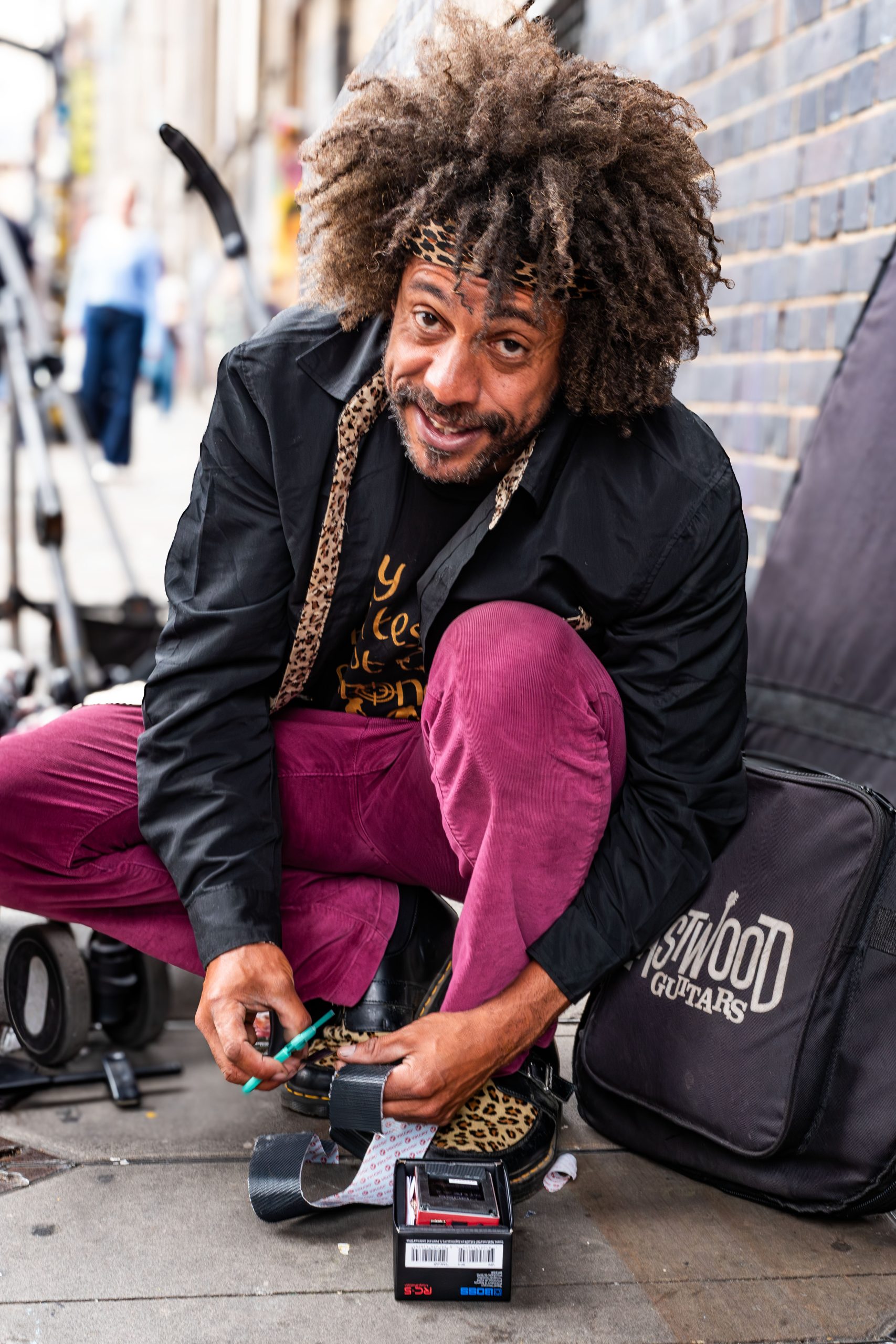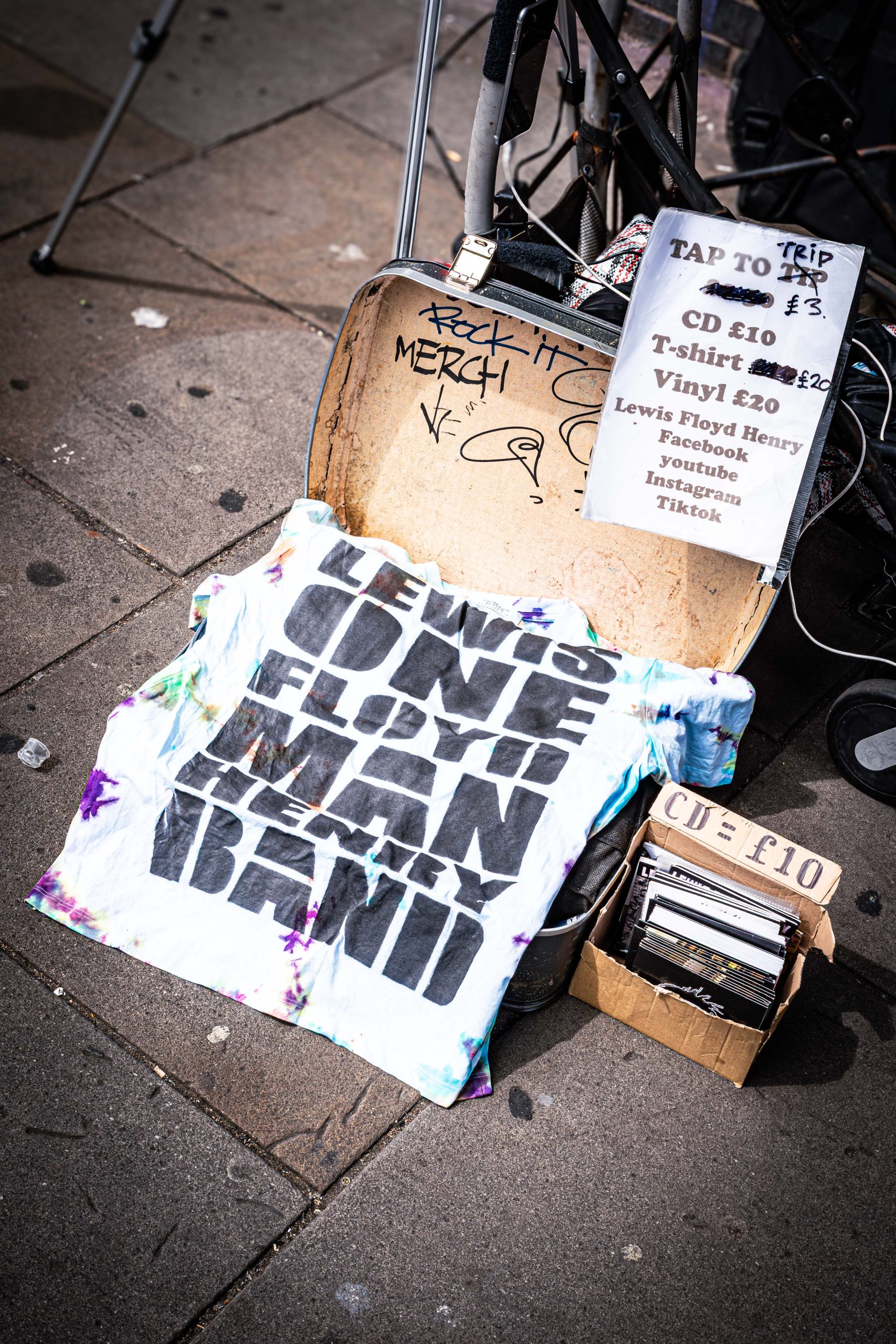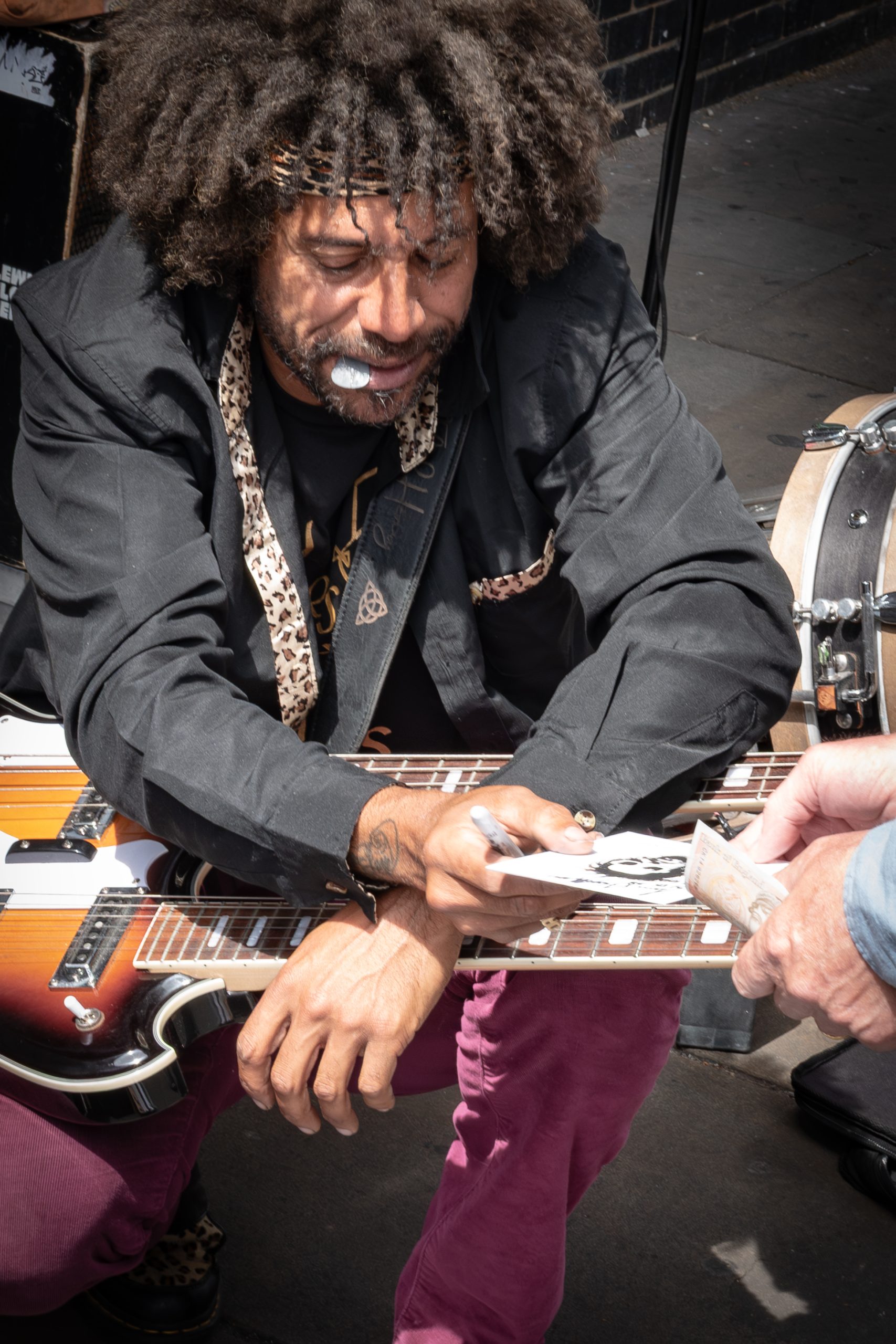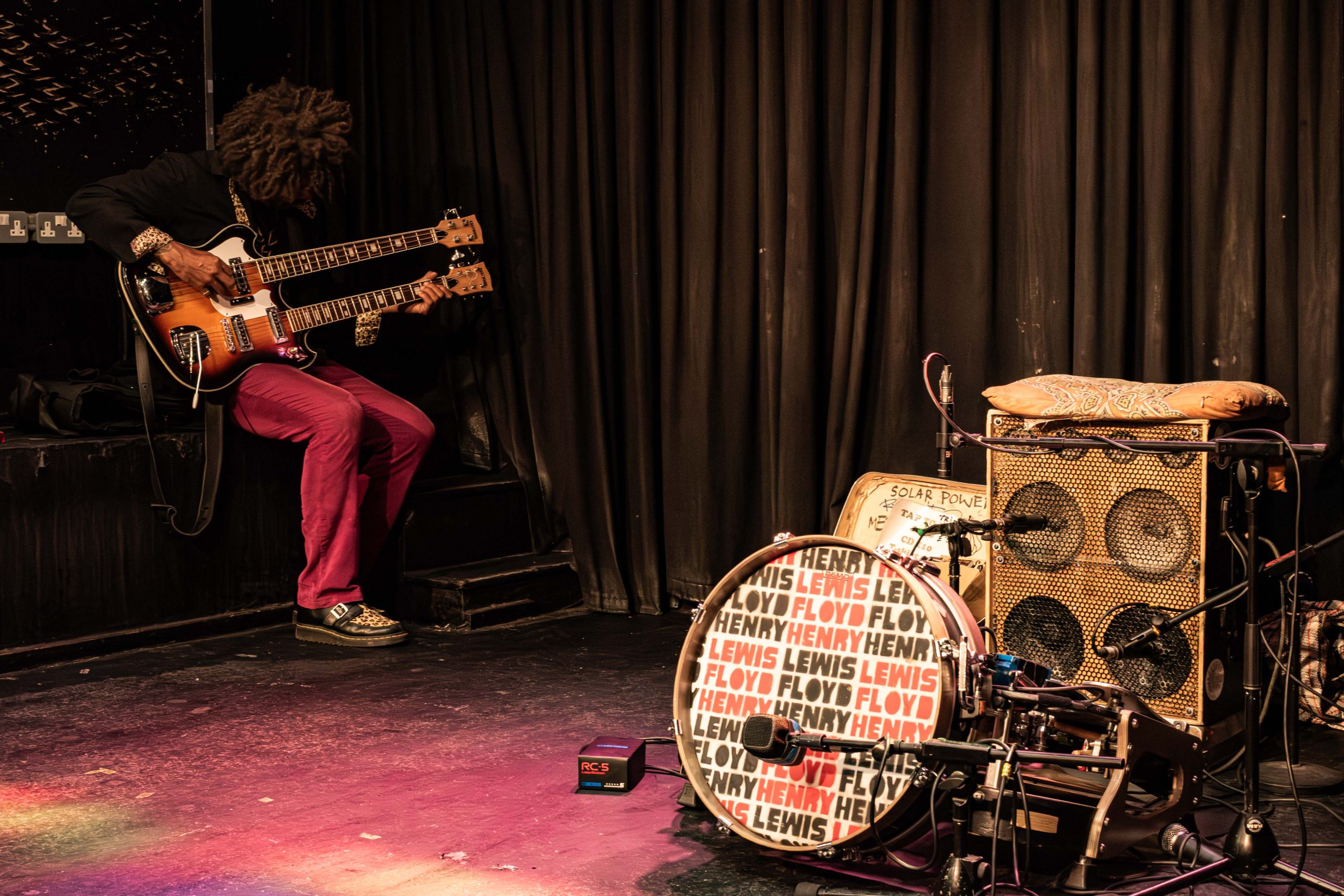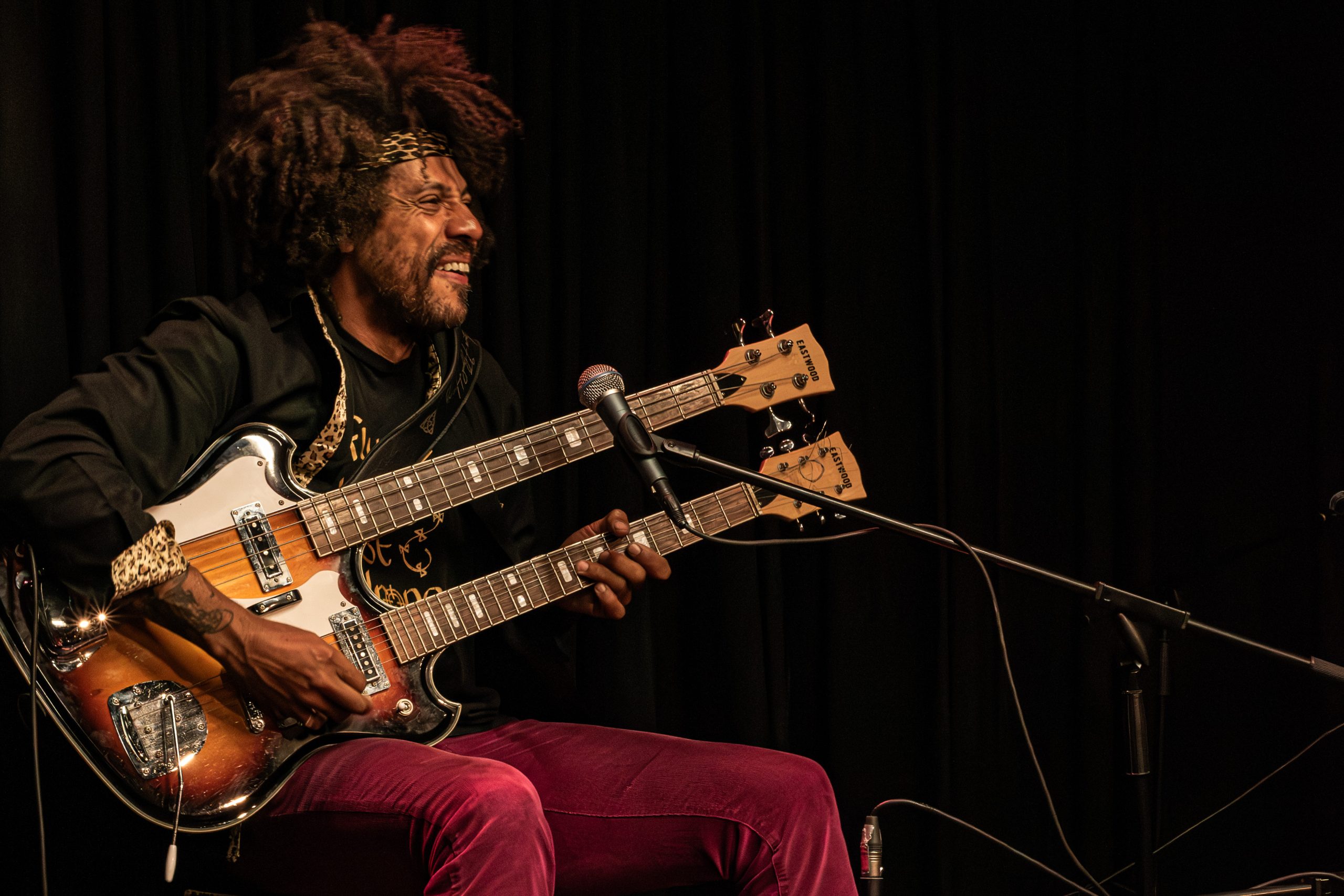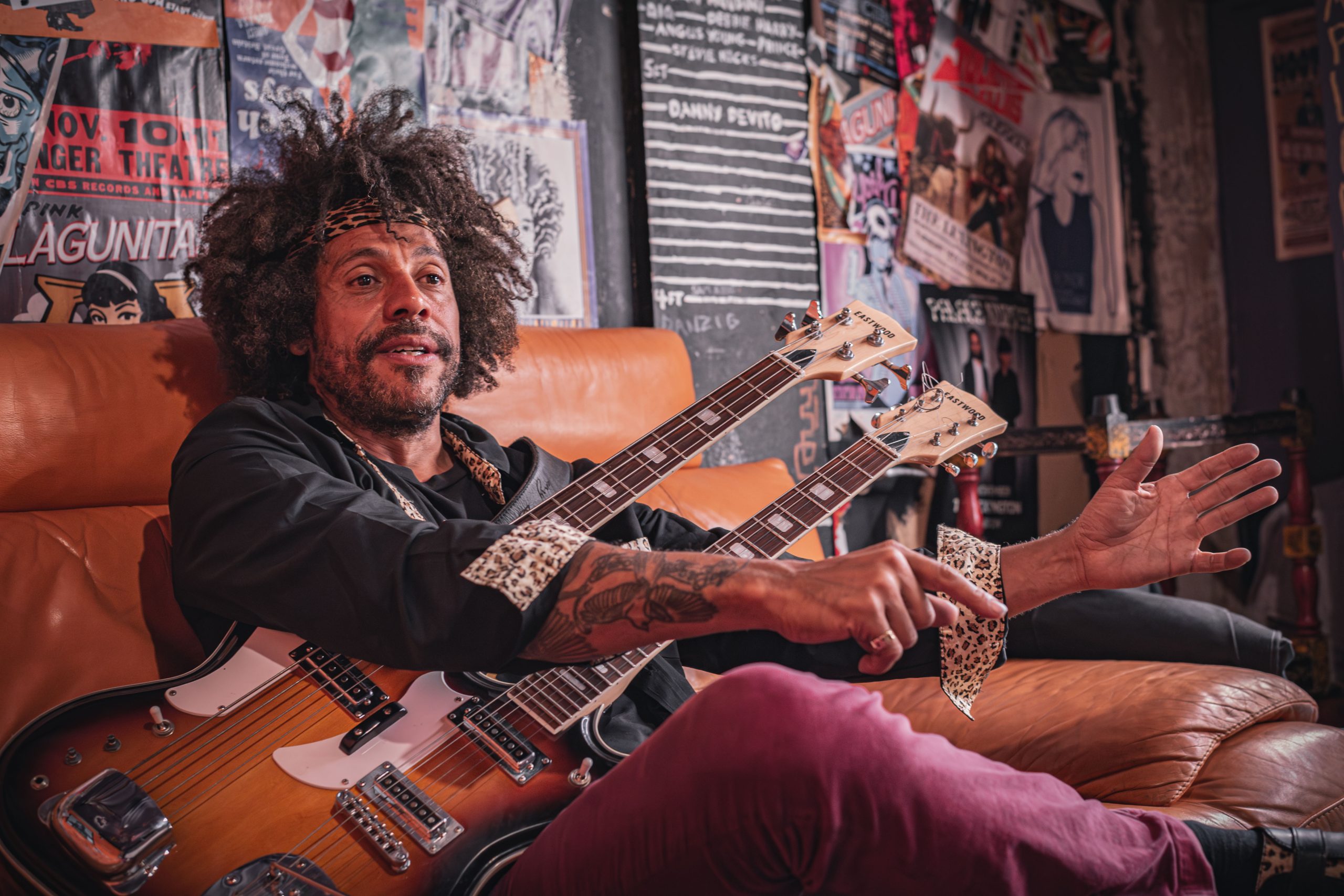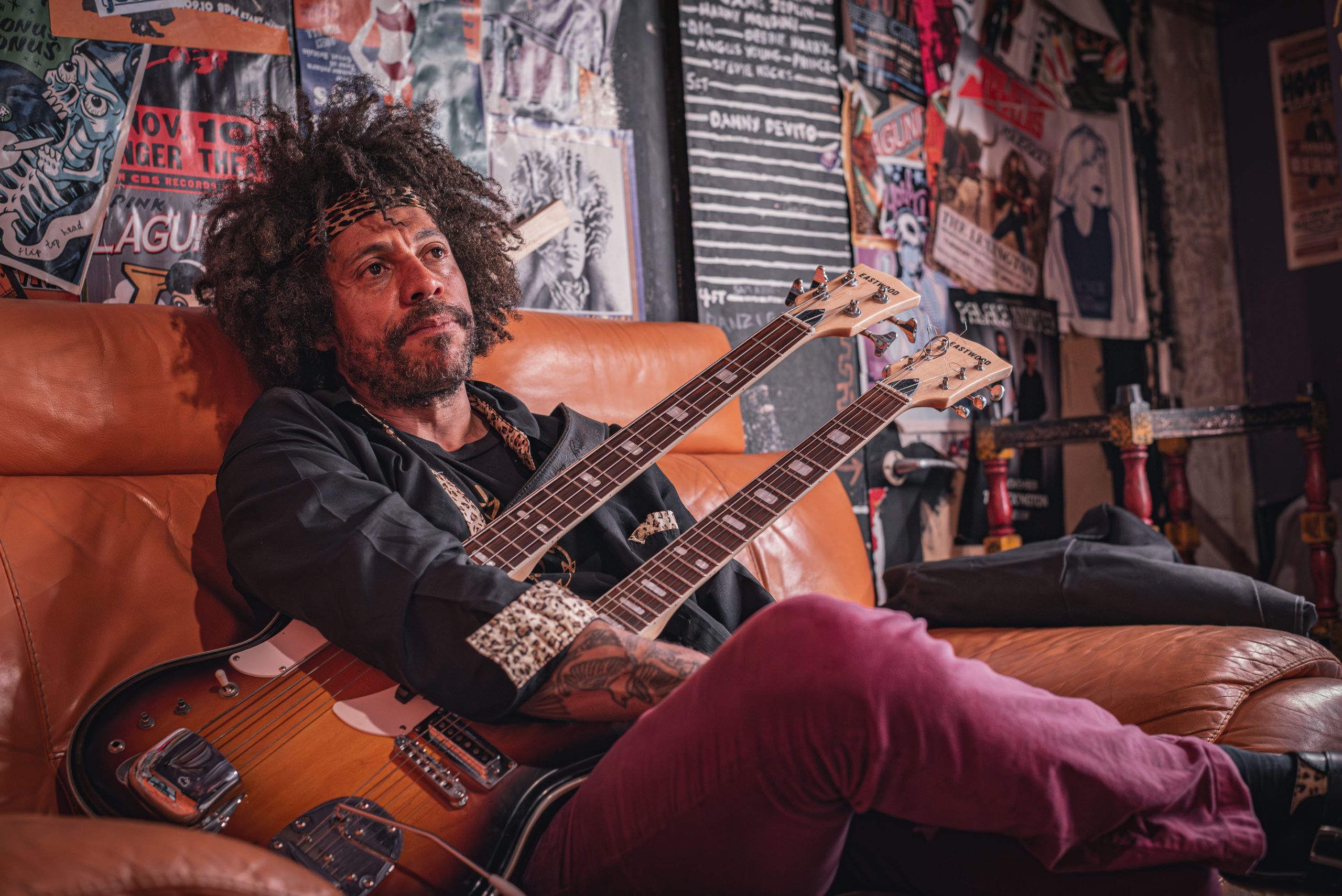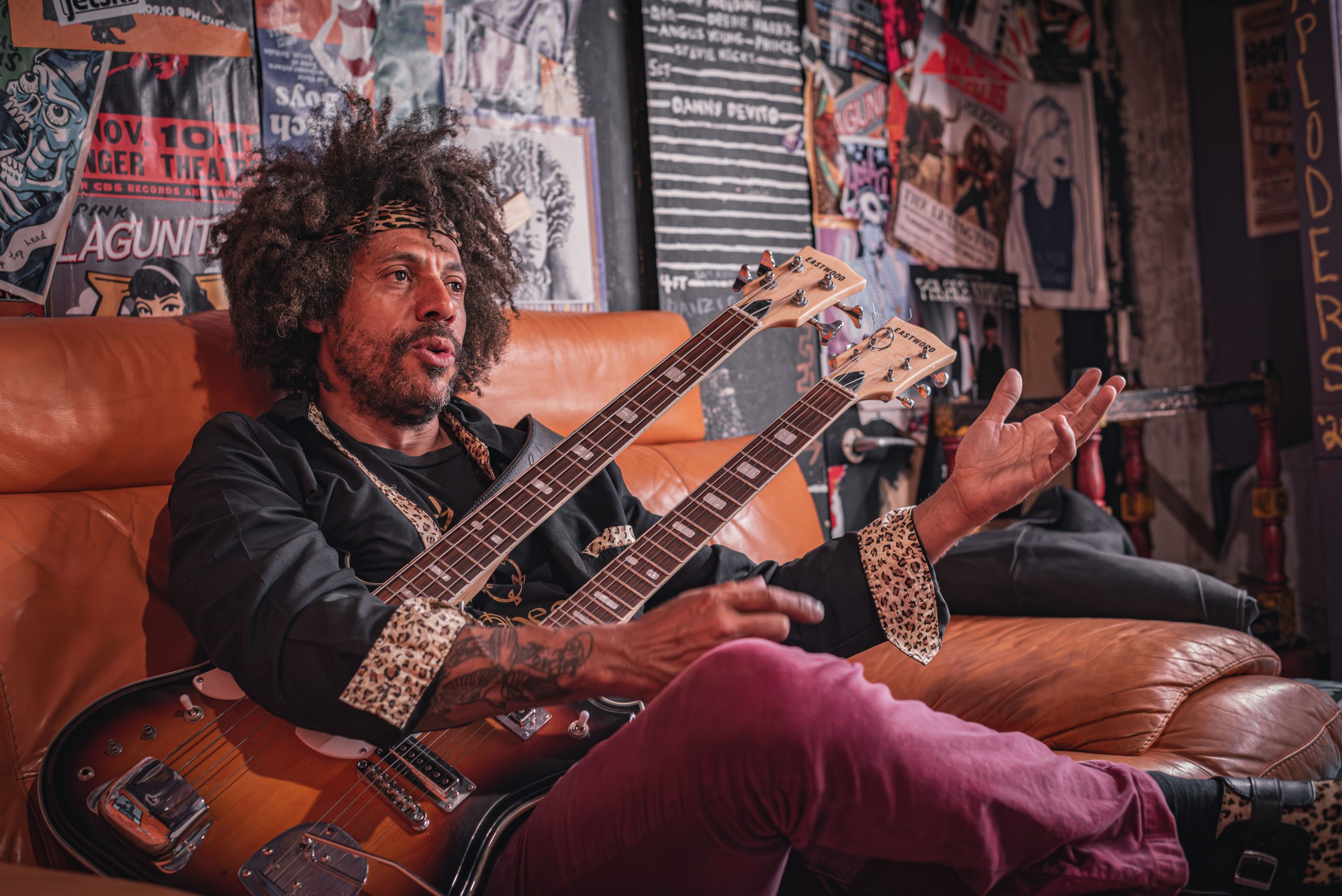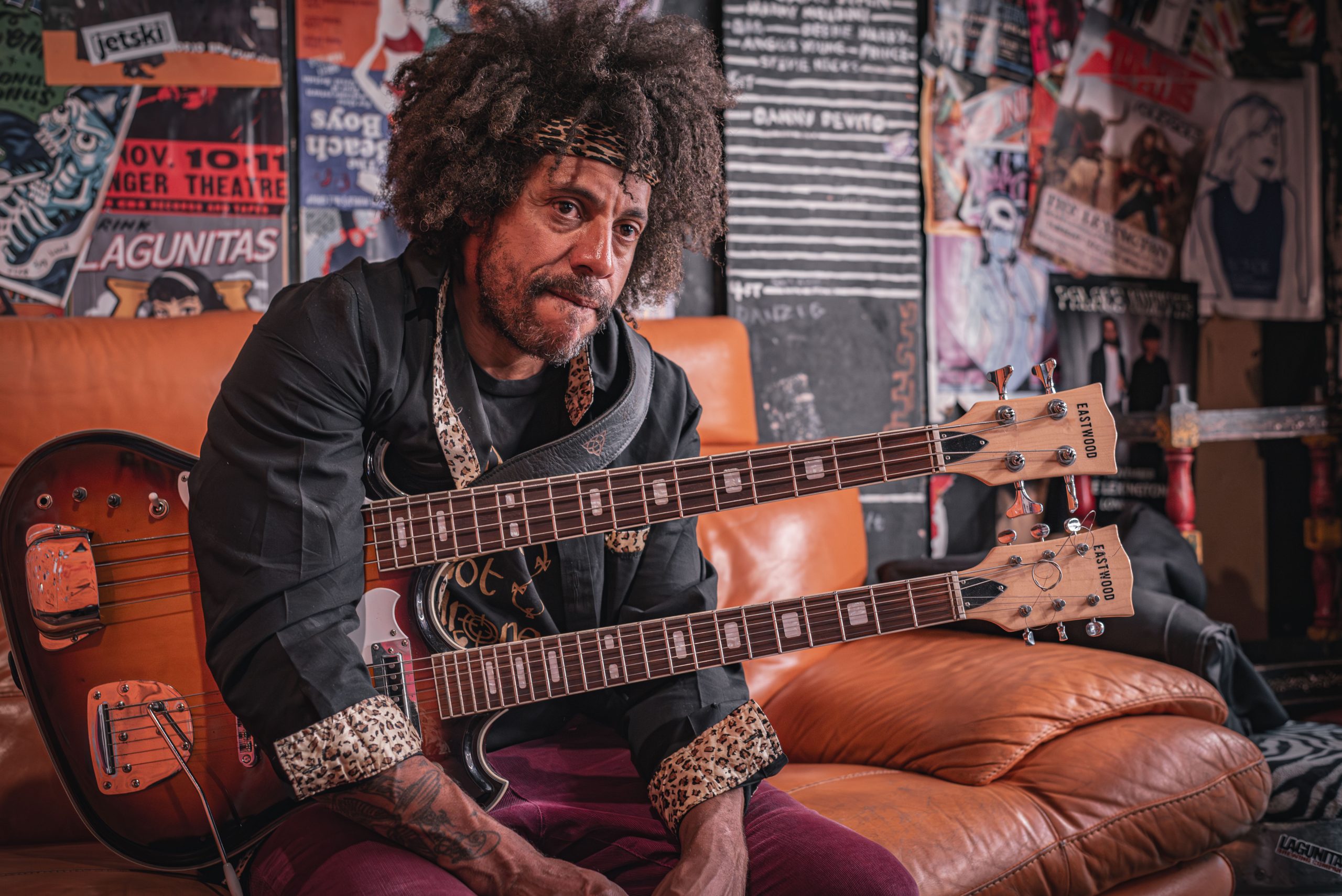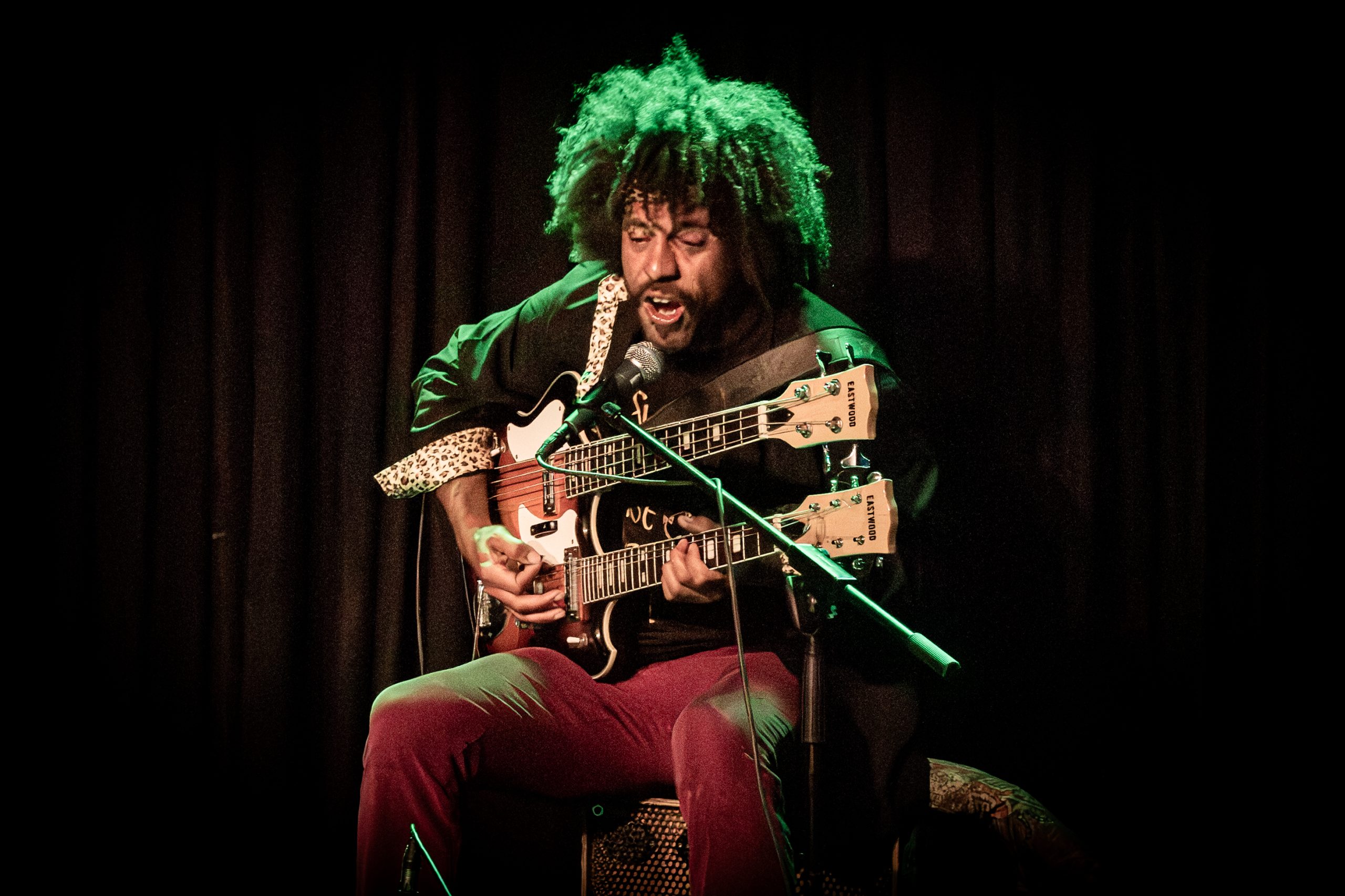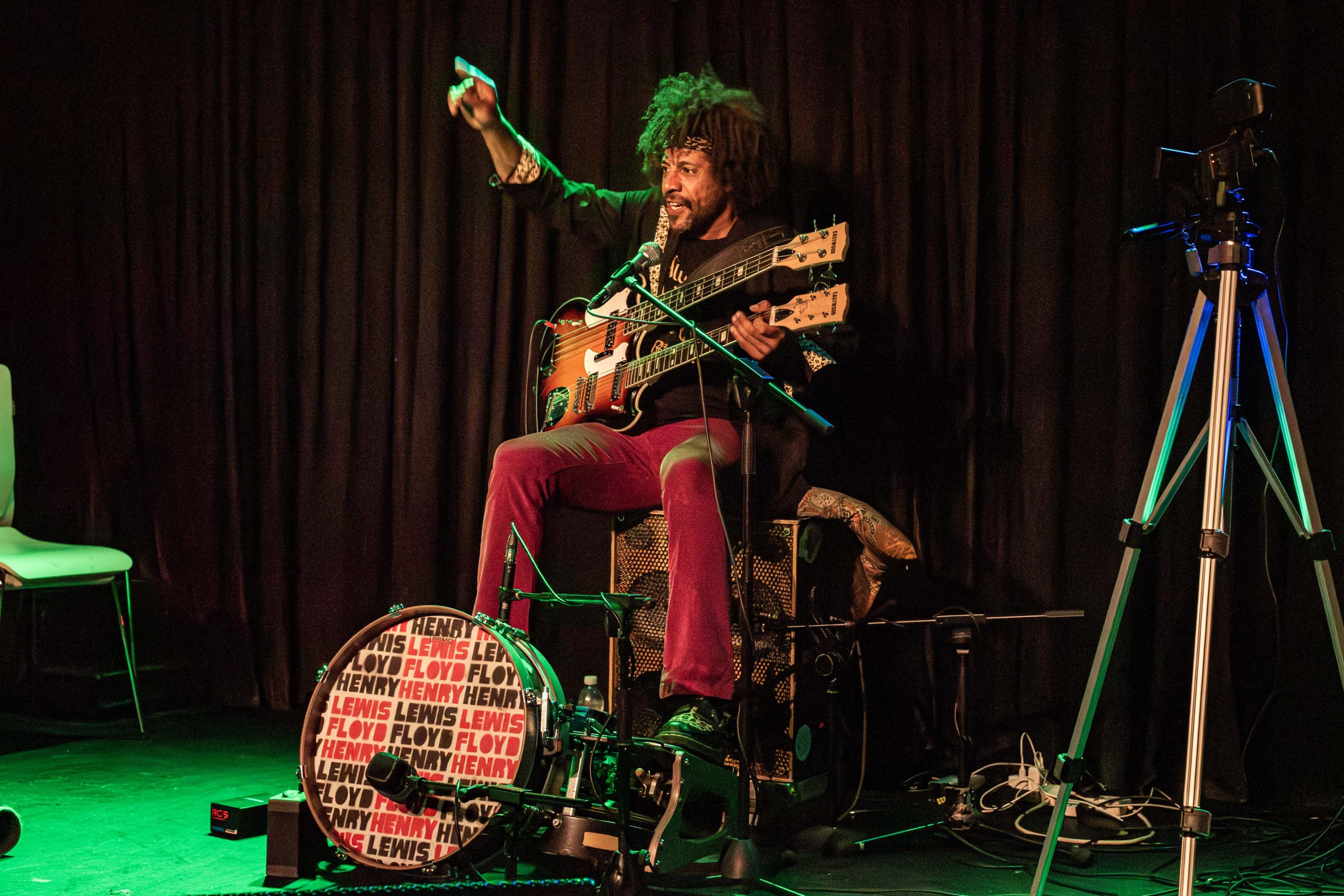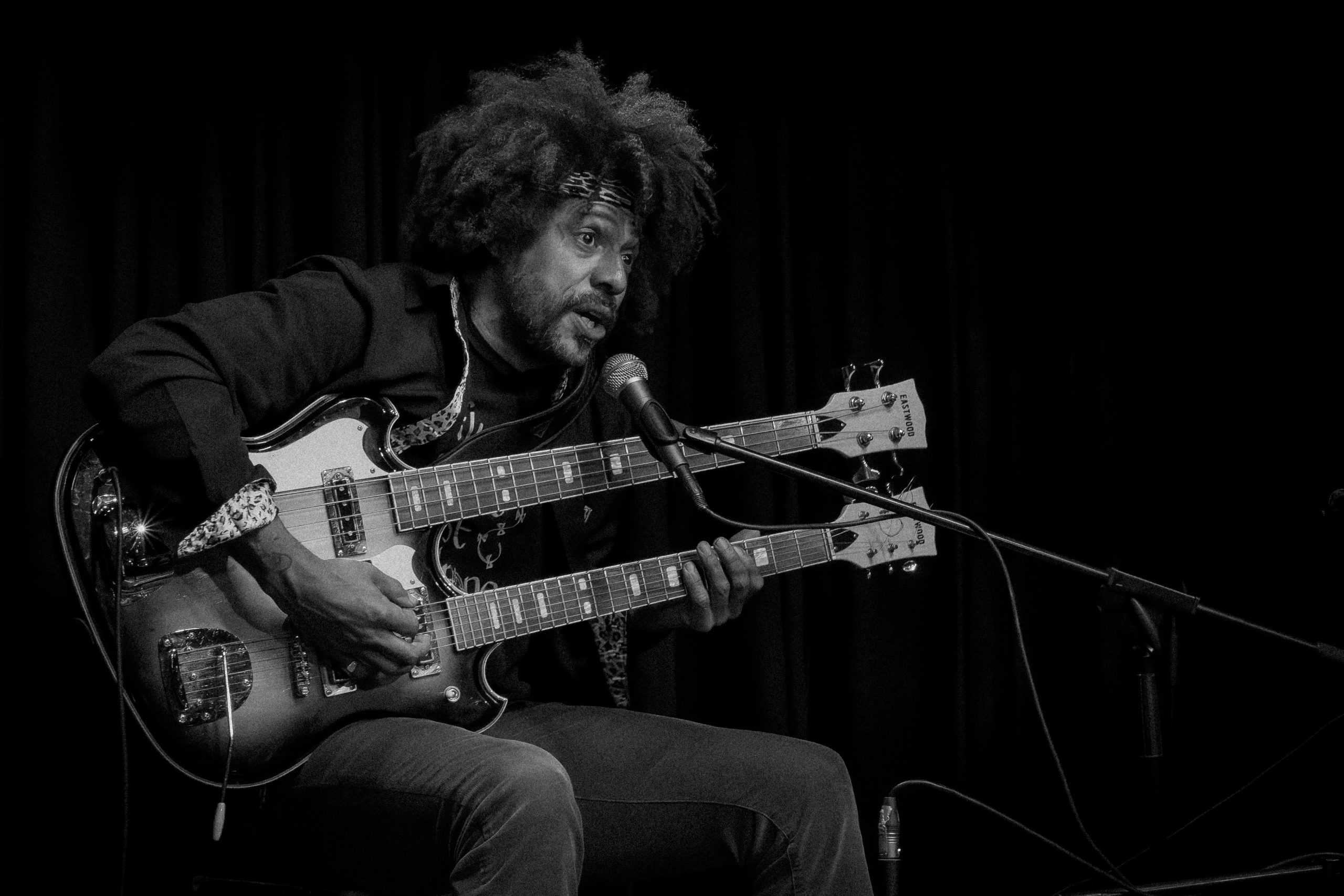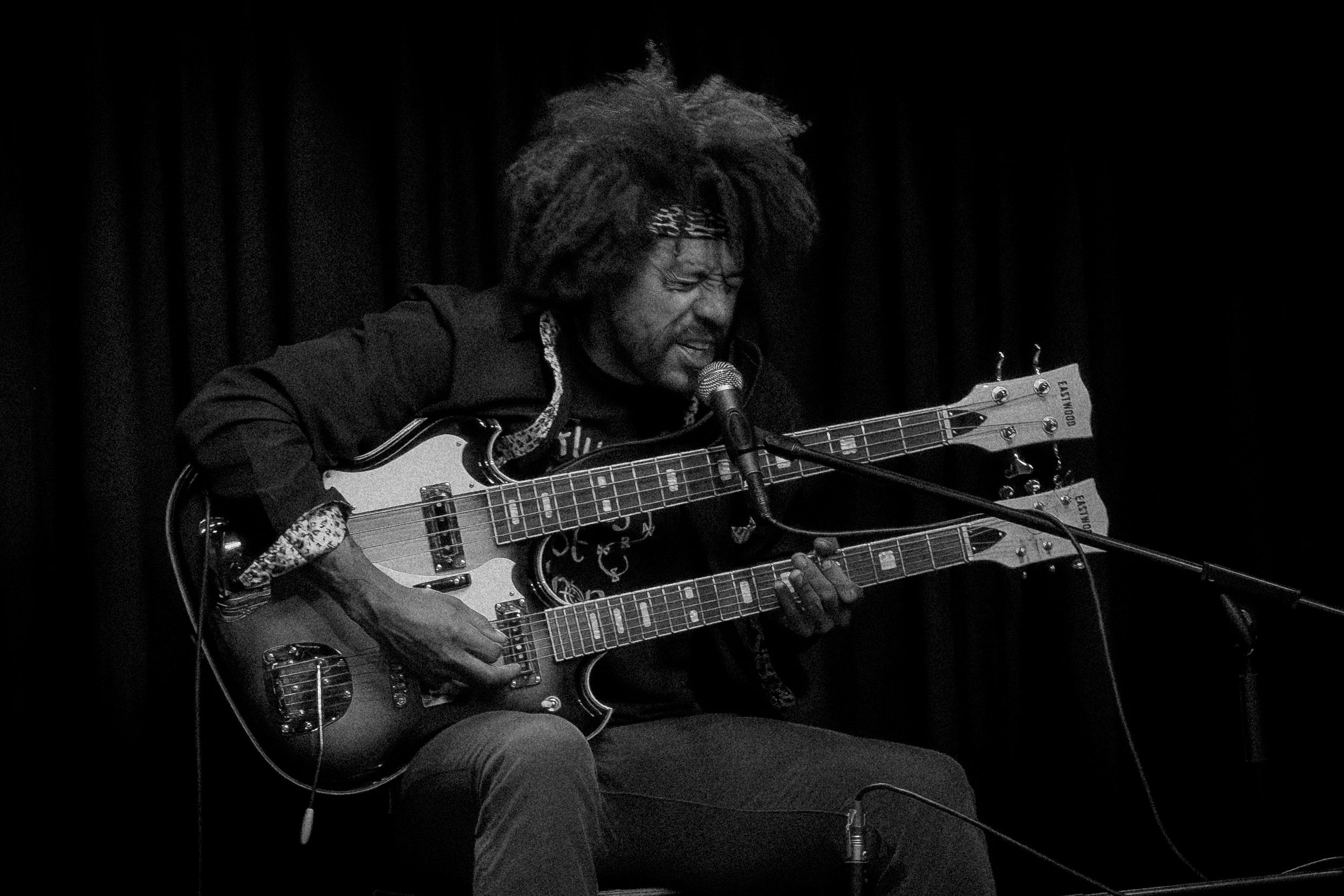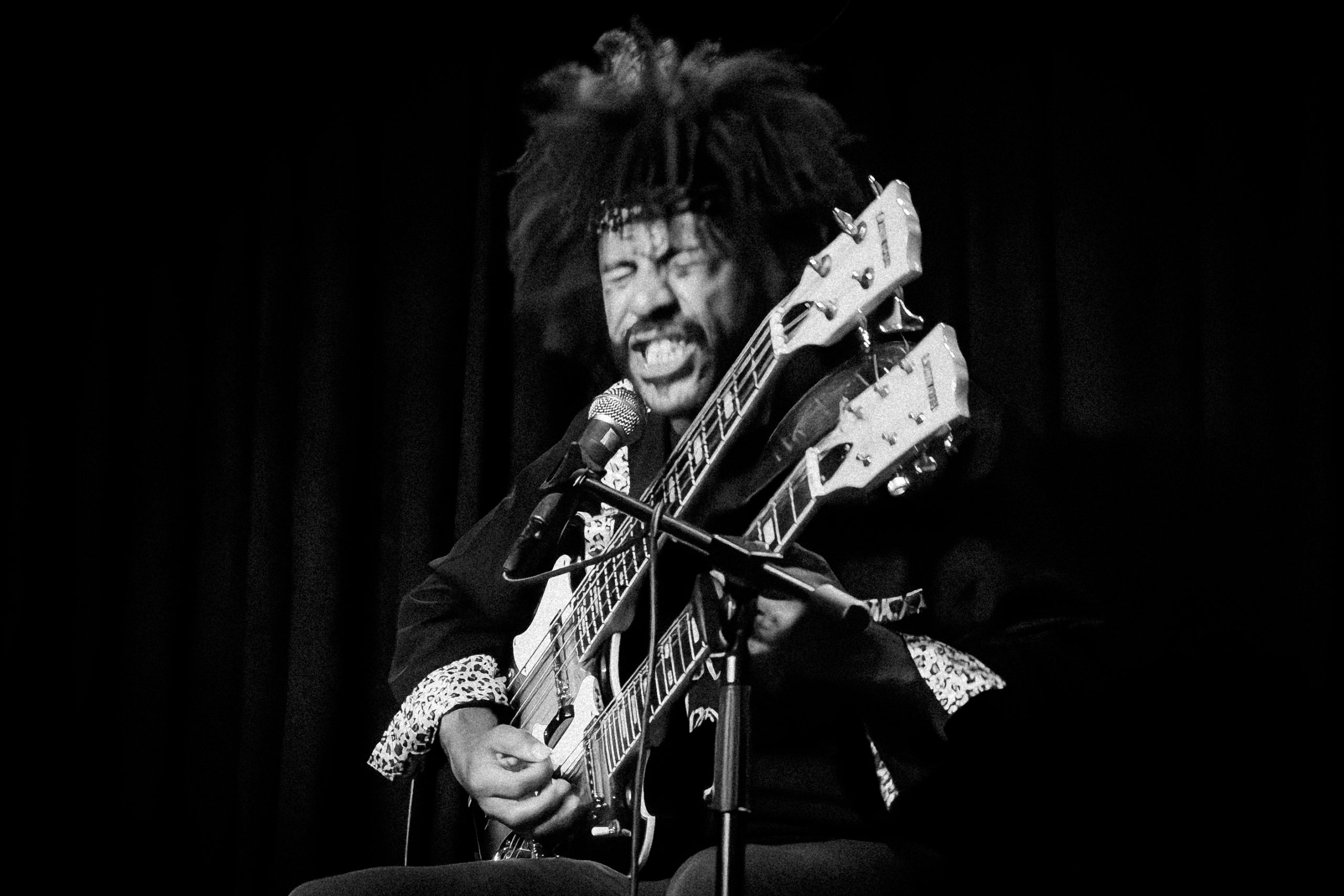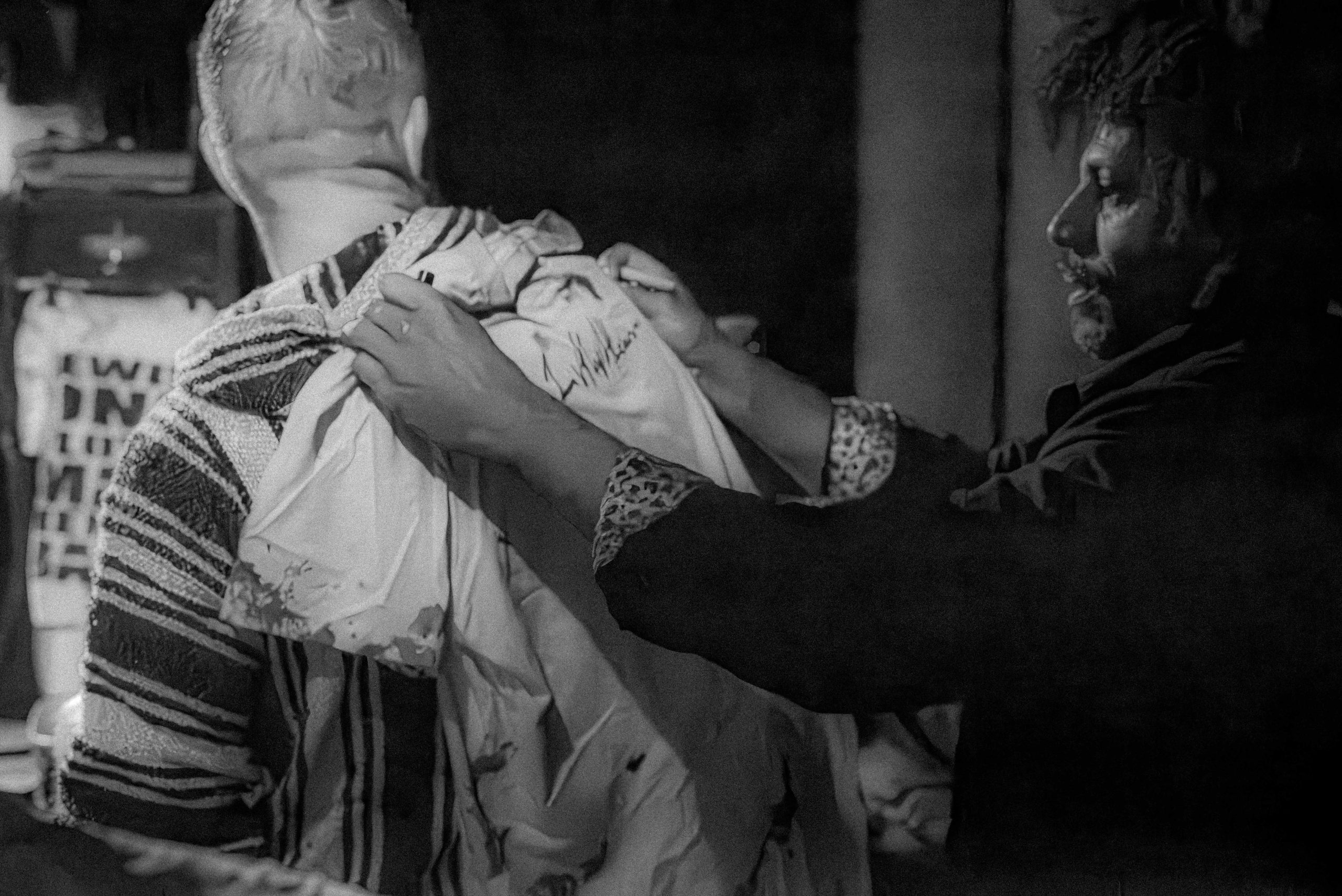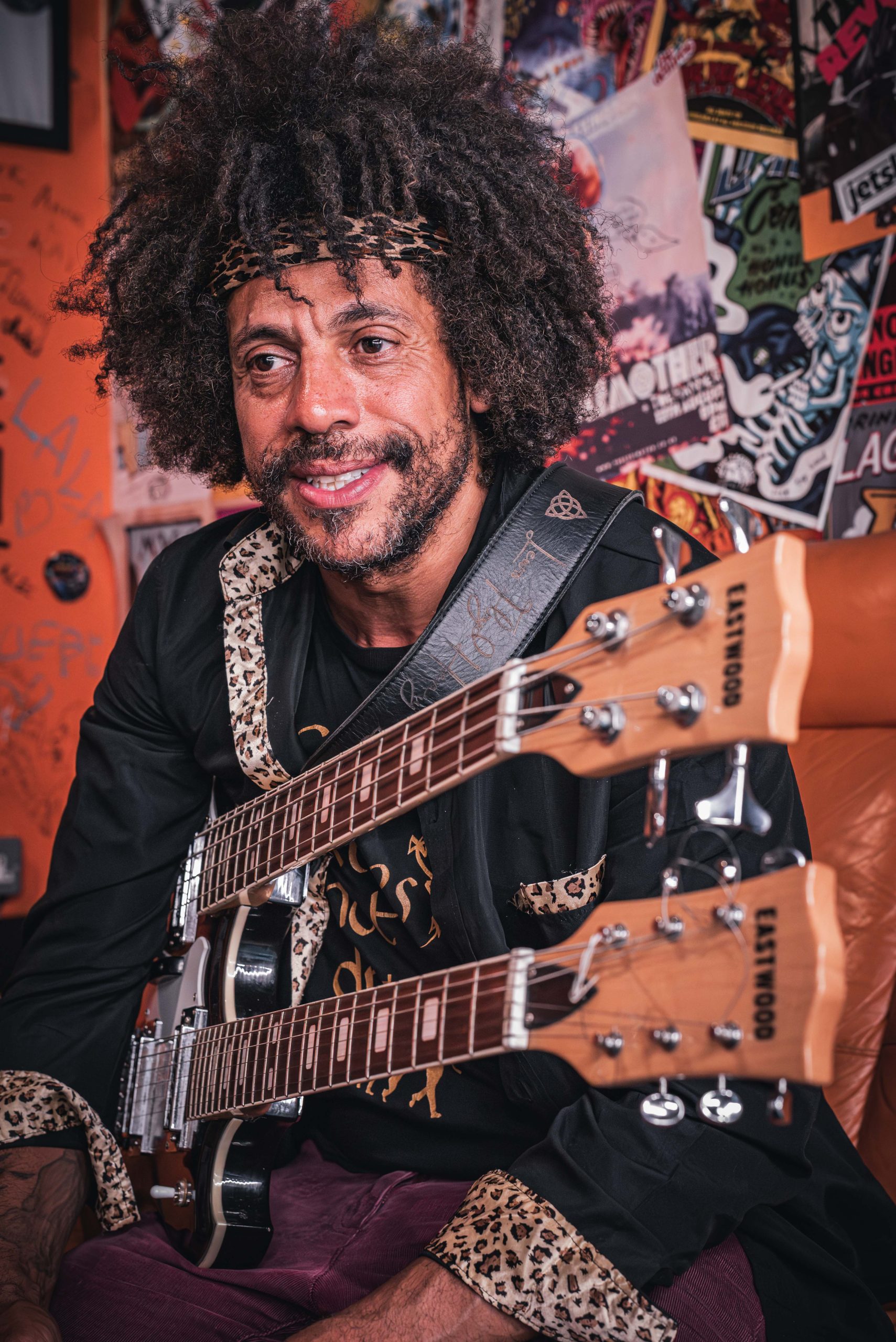


Lewis Floyd Henry has cultivated one of the most striking and enduring musical styles in busking history. From viral Wu-Tang Clan/Metallica and Biggie Smalls/Motörhead mashups to self-penned psychedelic eruptions, he’s a one-man band firebrand who turns heads wherever he goes. With hands, feet, and voice grooving deep in tandem, Henry’s singular ensemble of drums, bass, guitar, and vocals is spectacular to behold. Focused yet fluid, he delivers unforgettable, attention-grabbing performances using BOSS pedals and a pair of Roland CUBE Street EX amps. “My BOSS pedals are properly street-tested! And they’ve never let me down,” he points out. “CUBE Street EX amps sound amazing. They’re an essential part of my sound.”
Road-Tripping
Busking is an ancient worldwide tradition. And it remains a richly rewarding experience for any musician. But it takes guts. Behind the scattered cheers and change lies the unpredictable reality of street performance, where thieves, drunks, and fierce rivalry come with the territory.
So what drives this busker to keep calm and carry on with the routine chaos of the concrete stage? His answer is resolute: “Live music—whether it’s on a street corner or on a stage—has never been more important.”
In this candid interview, Henry tells us what it really takes to earn a living as a modern-day busker. Aspiring street musicians and seasoned performers alike will find plenty of inspiration here—from crafting multi-layered songs and dialing in a live mix to powering portable equipment and getting paid in an increasingly cashless society.
Along the way, Henry lifts the lid on capturing live energy in recordings and why AI will never replace authentic human connection. He also reveals how performing on the streets has shaped him as a musician, and why BOSS pedals and Roland CUBE Street EX amps are vital for every street, studio, and stage performance.
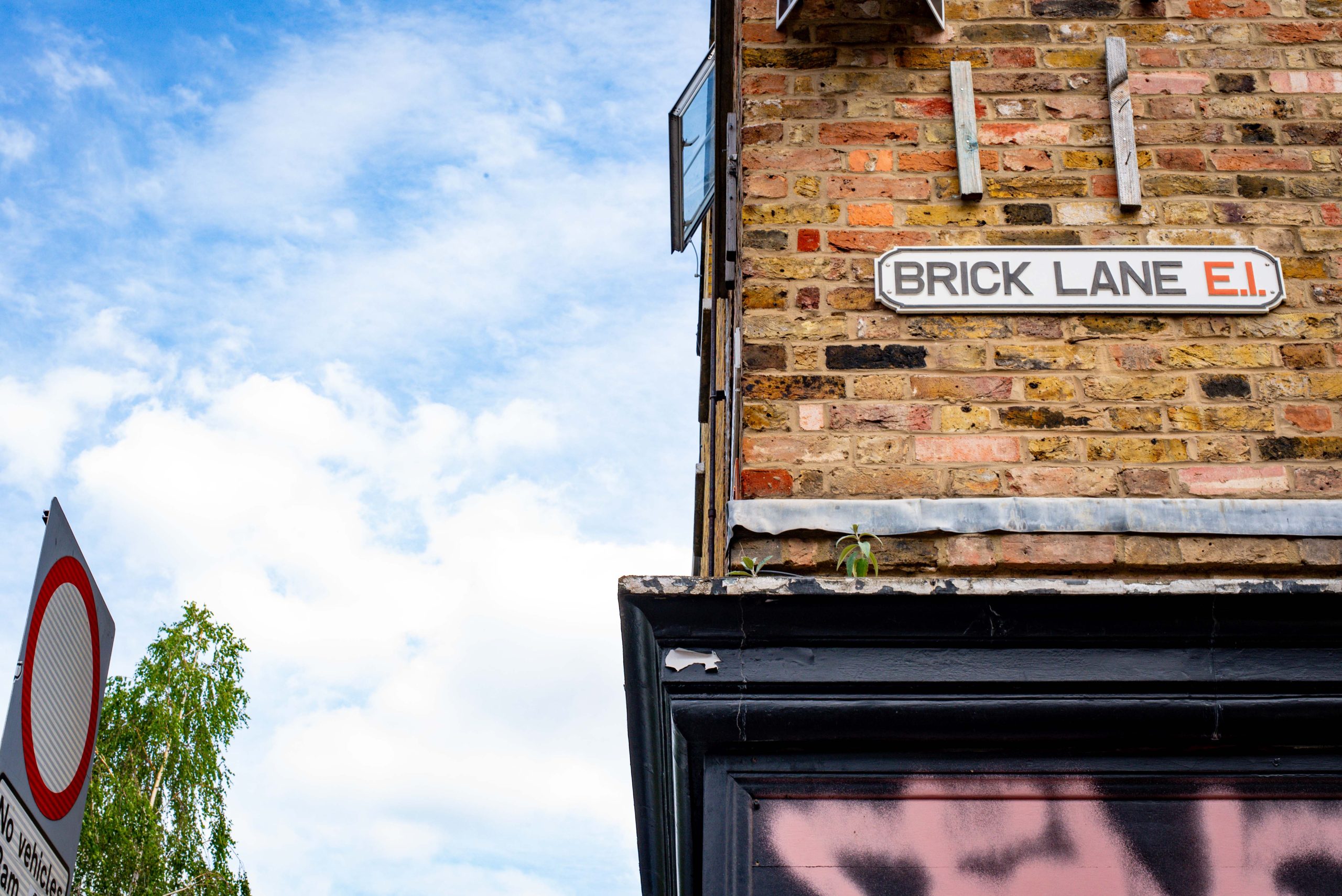
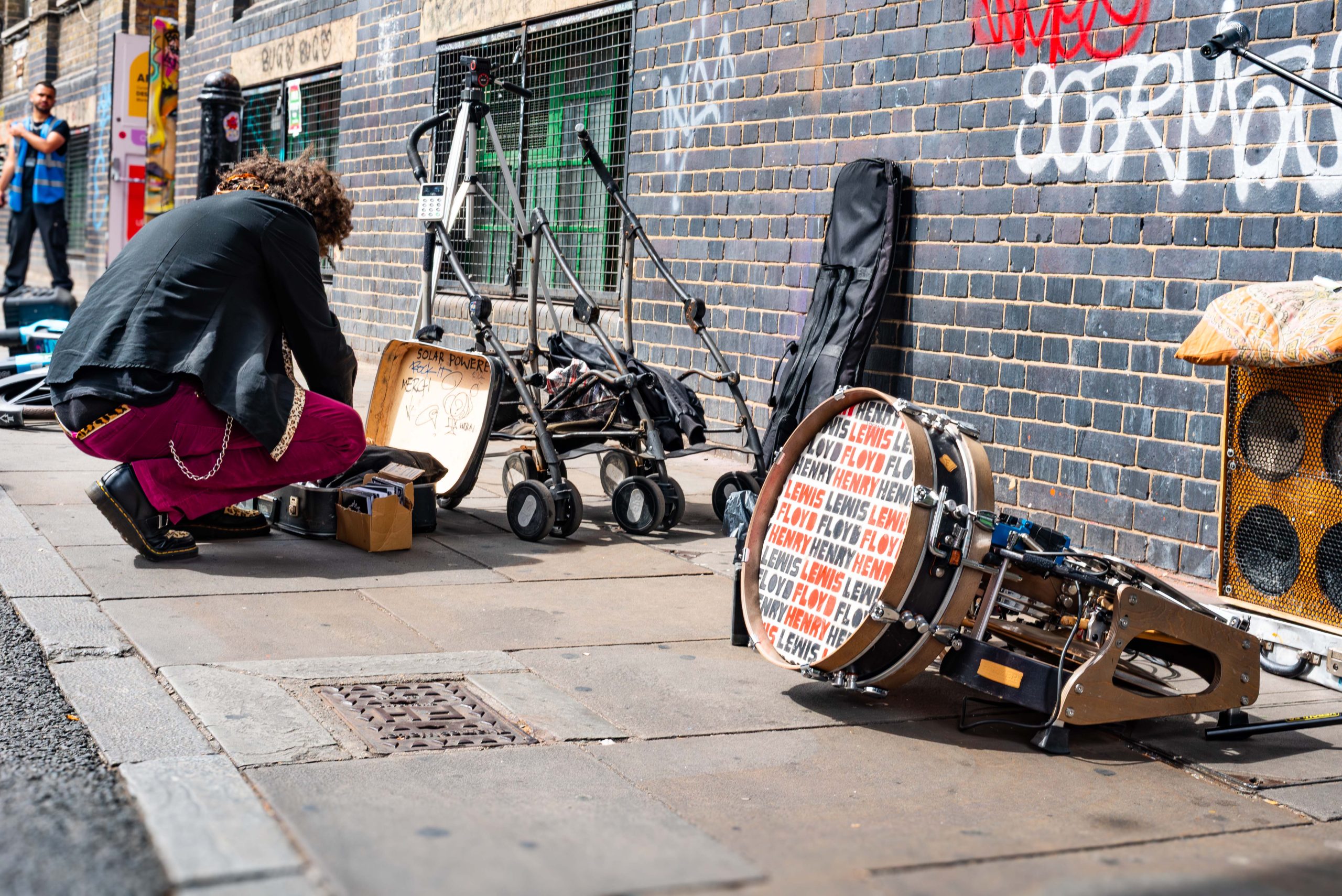
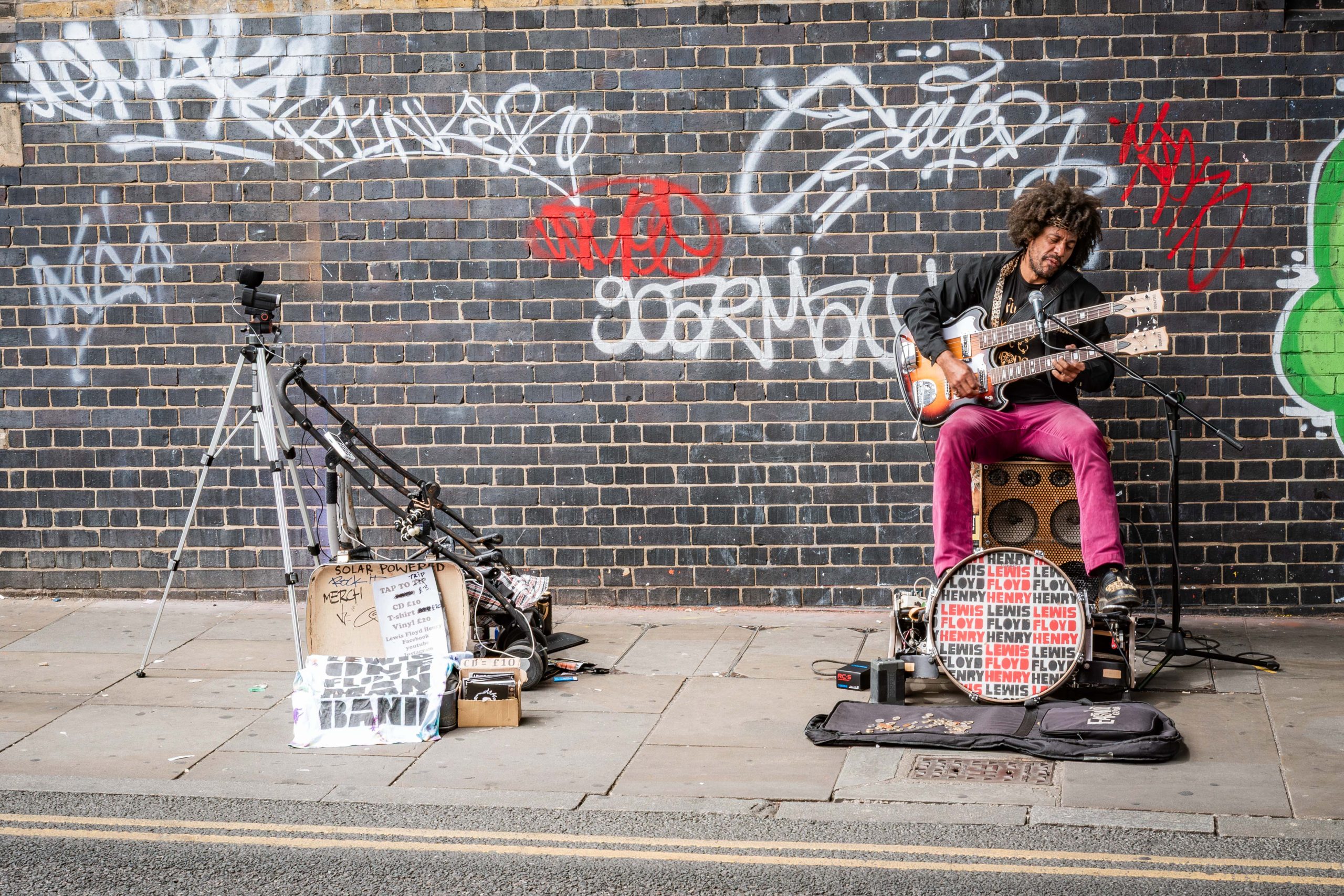
BOSS met with the man himself at one of his regular busking spots on Brick Lane, East London. Arriving with a gear-loaded pram in tow, he wasted no time turning on, tuning up, and dropping jams. Beats, basslines, riffs, and rhymes echoed through Banglatown’s summer haze, as passers-by stalled mid-step. Transfixed by sound, crowds shifted and swelled throughout the day.
Come early evening, with gratuities gleaned and merchandise monetized, it turned out to be a successful day’s busking. But Henry wasn’t done. As the sun dimmed in the capital’s sky, he packed down and set off again to “pull a double shift” with an evening performance at The Lexington.
Cutting through the dense revelry of Arsenal Football Club’s colossal victory parade, BOSS followed our roving rap-rocker a couple of miles northwest to the historic Victorian venue on Pentonville Road, Islington.
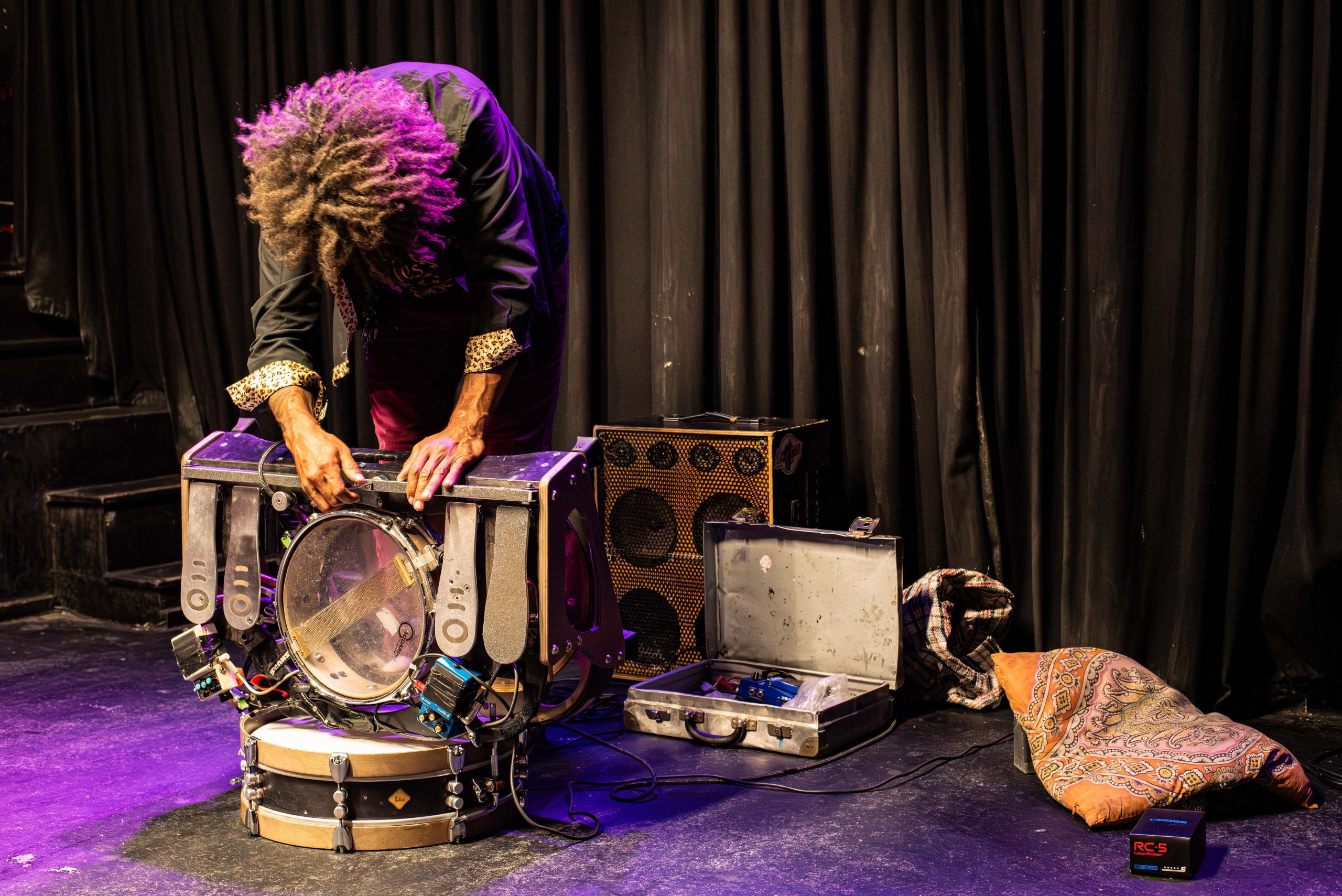
There, on a different kind of stage, we find Henry assembling his trusty mobile rig for a second time. After soundcheck, we headed to the green room to talk about ordinary life and extraordinary music.
Viral Visions
You’re known around the world for your viral rock/rap mashups. How did those ideas come about?
It comes from busking. I quickly realized that you make more money busking by playing familiar songs. In my repertoire, I perform my own songs, but I also play a lot of covers—stuff like [Steppenwolf’s] “Born to Be Wild” and Jimi Hendrix numbers.
I was playing [Motörhead’s] “Ace of Spades” one day, and got to that bit that goes, “You know I’m born to lose, and gambling’s for fools,” and I just spontaneously decided to repeat it. I had this kind of hip-hop beat going and thought, “It would be great to put a rap in here and use it like a chorus.
I was thinking, “What rap can I do off the top of my head that everyone knows?” and Biggie Smalls’ “Juicy” came to mind. So, I rapped that, before coming back round to the Motörhead thing, and people’s ears pricked up. Suddenly, I had a decent crowd around me.
From then on, I did the Motörhead/Biggie Smalls thing more often and started thinking of other tracks to mash up.
"BOSS Loop Stations made such a difference to what musicians could do live on their own."
What other mashups did you come up with?
I did a “Wutallica” mashup as well: Metallica’s “For Whom the Bell Tolls” and Wu-Tang Clan’s “Da Mystery of Chessboxin’.” I didn’t play it exactly like Metallica because, obviously, I couldn’t recreate Lars Ulrich’s drum parts. I’d play the riffs with a hip-hop beat and rap over it.
How did the Motörhead/Biggie Smalls and Metallica/Wu-Tang Clan mashups go viral?
Some people filmed me performing my Motörhead/Biggie and Metallica/Wu-Tang mashups while busking. They just shared the videos online, and the clips went viral on social media. I had those mashups in my set for fun, really. I mean, I didn’t base my whole set on it; I just used to mash up one or two things.
Why do you think your one-man-band setup stood out?
I think the one-man-band thing wasn’t really happening at that time, so it sounded kind of fresh. There were a few people out there doing it, like Bob Log III and Son of Dave, but it seems much more common now—probably because BOSS Loop Stations made such a difference to what musicians could do live on their own.
Streets Ahead
When did you start busking?
I started busking around 2004, when I was in a three-piece band called KNOWN. I remember sitting around with them one day, and they were like, “Shall we go busking?” I was a bit like, “Really? Do we really want to do that?” I wasn’t really into the idea at first. I was more into just playing gigs. But they were like, “No, it’ll be fun!”
So, we got the amps together, headed out on our BMXs, and just started playing. We’d go to Brick Lane sometimes, or wherever there was a festival happening. We did a lot of busking at festivals like Glastonbury and Hyde Park.
What amps were you using to busk with early on?
When I started busking, I wasn’t using Roland CUBE Street EX amps like I am now. I used to take a Pignose amp built into a different enclosure. I’d end up making my own stuff. I’d go to places like Maplin and wire it all up myself.
"We got the amps together, headed out on our BMXs, and just started playing. We’d go to Brick Lane sometimes, or wherever there was a festival happening."
Early on, you couldn’t really buy proper busking amps like the Roland CUBE Street EX. I mean, you could, but they weren’t very good. All the buskers I knew had some kind of custom setup with a car battery and an inverter.
They managed to make it work, but you’d have to carry loads of heavy equipment. Car batteries are heavy, but it was just a means to an end, really.
What inspired you to go out busking on your own?
Well, I ended up doing it as a one-man band because the three-piece band I was in eventually split up. I started off playing Robert Johnson and Nick Drake songs on an acoustic guitar and using a tambourine to tap out a beat.
Kick Into Action
How did you start to build live drums into your performances?
I played drums and had a kit set up in my room. I’d sit there with my guitar, playing the kick and hi-hat, thinking, “If only I could somehow play the snare as well.” I ended up turning one on its side and just hitting it with a kick pedal. After that, I hooked up the first version of my rig and practiced with it before taking it out to busk regularly in 2007.
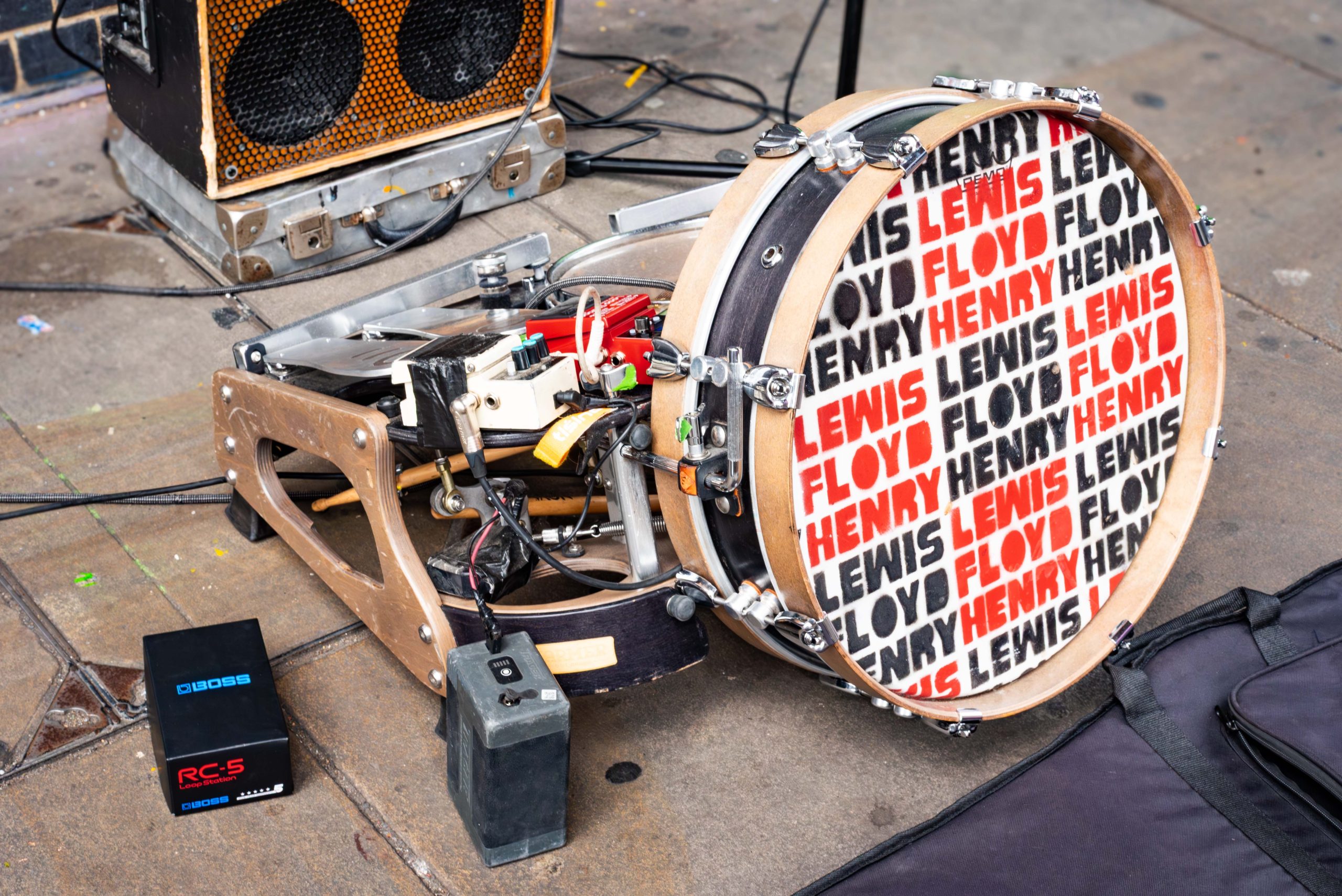
What did it feel like going from a three-piece to a one-man band?
Well, I saw it as a bit of a regression at the time because my feet were nowhere near as good as the drummer I’d been playing with. I had to adapt the songs I’d been doing with the band to work as a one-man band.
What songs did you start off playing as a one-man band?
I played some songs from my old band, KNOWN, but when I first started doing the one-man-band thing, I was really into Robert Johnson’s stuff. At the same time, I started developing my own delta blues slide and bluegrass-style sound.
What Robert Johnson songs did you perform?
“32-20 Blues,” “Kind Hearted Woman,” and “They’re Red Hot.”
"When I was using a single CUBE Street EX, I ran both the vocal mic and the guitar through it, which is great because it has multiple channels."
Cubism
What Roland amps have you used for busking historically?
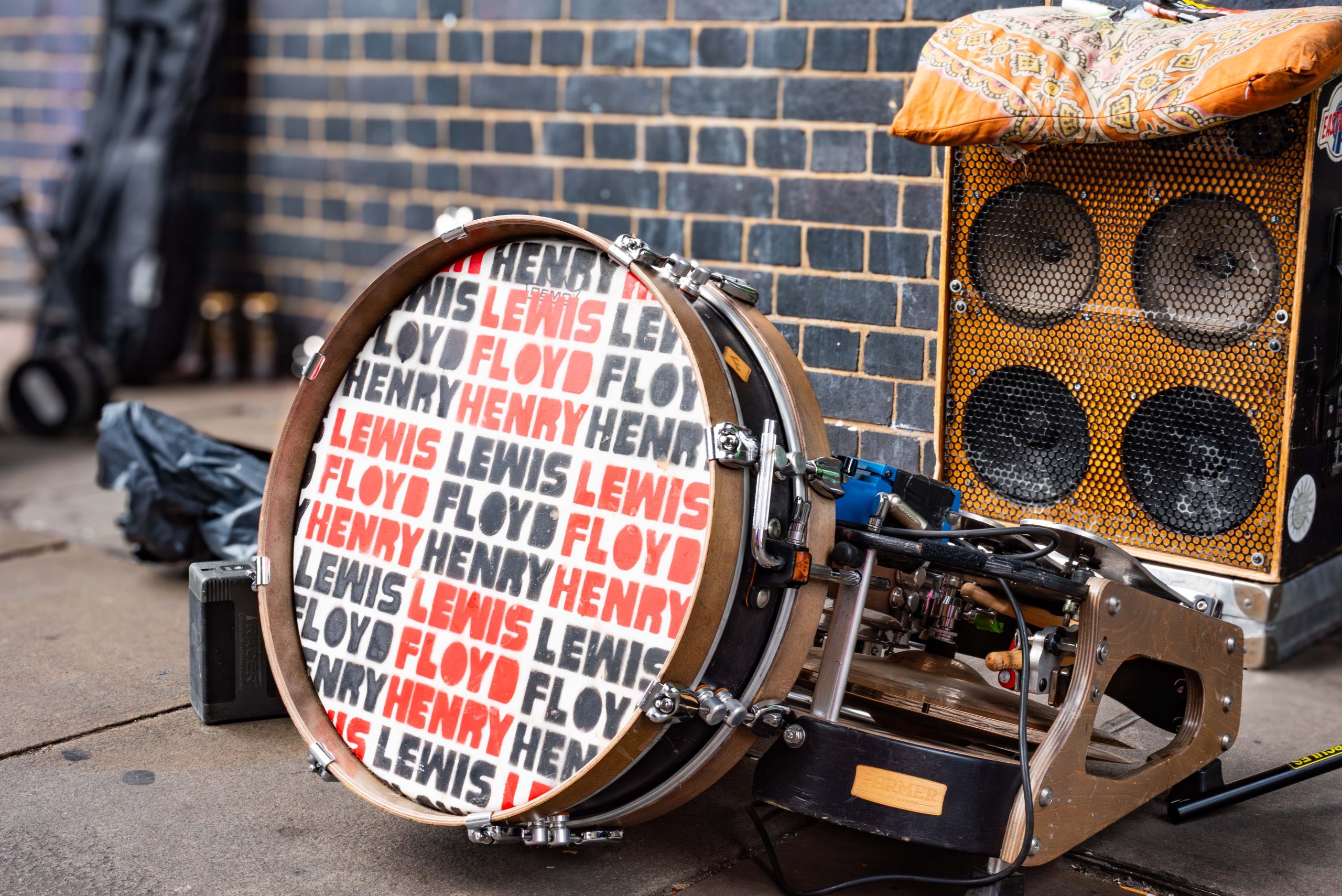
The first one I got was the Roland CUBE Street. I remember it was available in red and black finishes. These days, I use two 50-watt Roland CUBE Street EX amps. For a few years, I used a single CUBE Street EX in its original enclosure. But I prefer using two CUBE Street EX amps now: one for vocals and the other for guitar.
When I was using a single CUBE Street EX, I ran both the vocal mic and the guitar through it, which is great because it has multiple channels. I eventually got another CUBE Street EX and started bringing both of them out to busk.
Roland CUBE Street EX amps are relatively lightweight, but how do you transport your whole busking rig?
I cart my rig around in a pram.
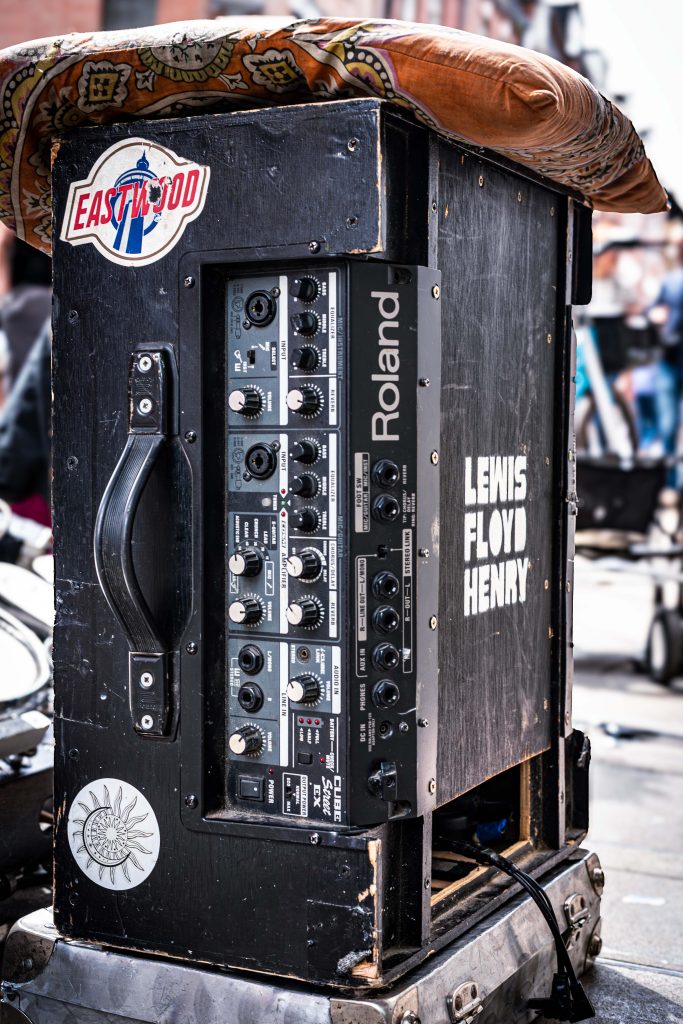
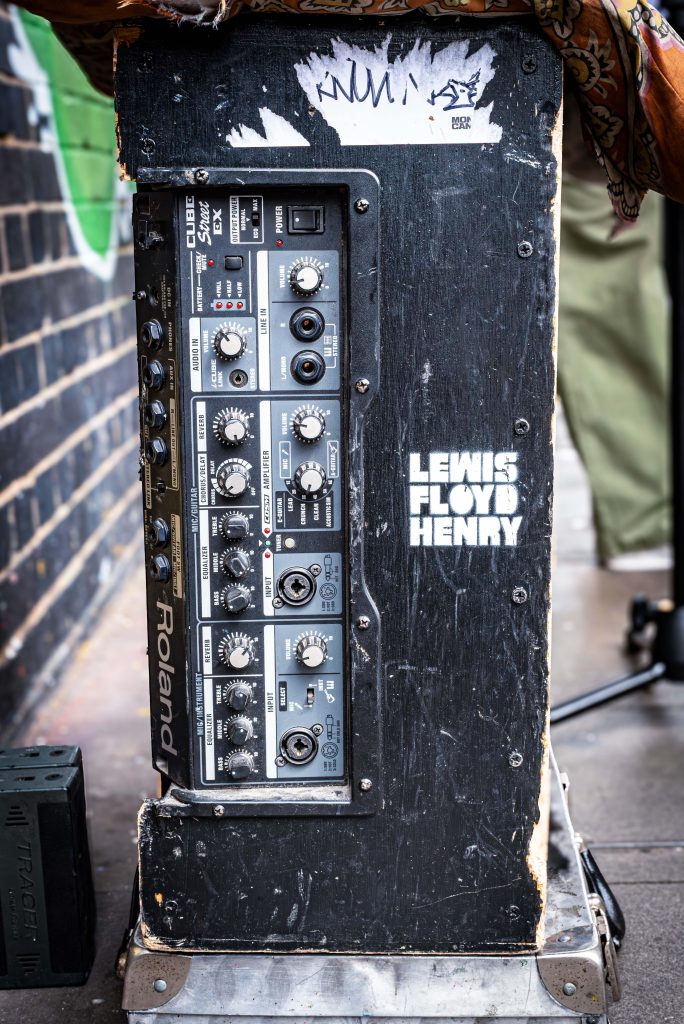
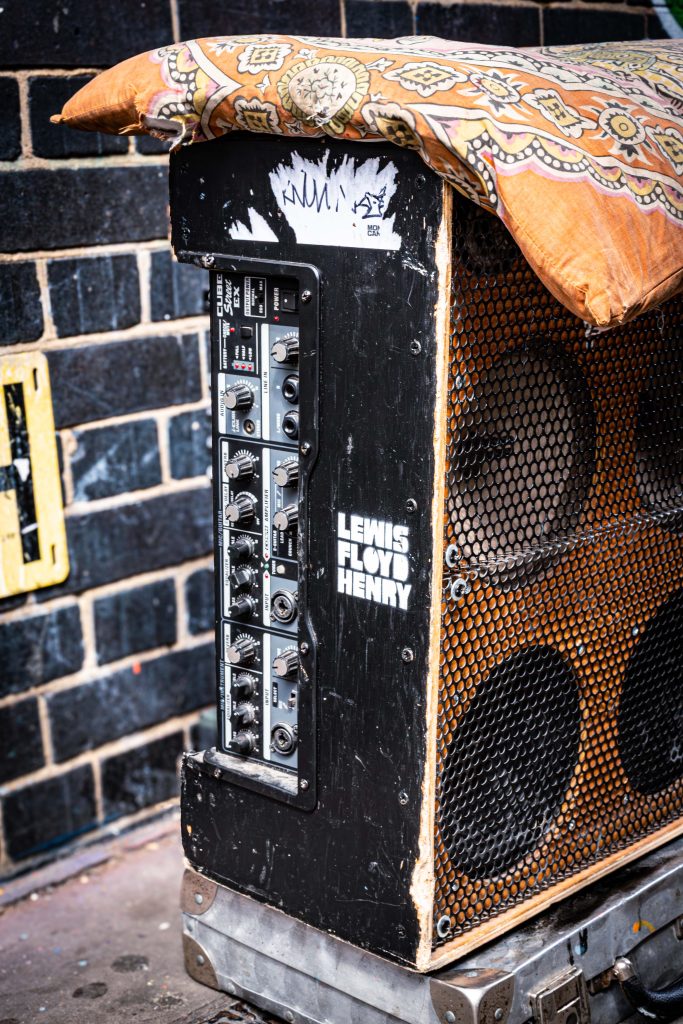
You’ve modified both of your Roland CUBE Street Ex amps—tell us about that.
I had the idea to build an enclosure to house both CUBE Street EX amps in a single unit. It was a bit risky because they’re not a straight-front amp design—they’re angled. But I thought, “What the hell,” and just went for it. I took them apart and combined them into a single enclosure, which is what I use now.
Why do you prefer Roland CUBE Street EX amps for busking?
I use CUBE Street EX amps for several reasons. They were a big step up from the other amps I was using. They’re loud and have decent headroom. The sound is always really clear. They’re genuinely great-sounding guitar amps, and I love the built-in effects—the reverb, chorus, and delay.
The CUBE Street EX also has combo jacks that take either an XLR mic cable or a regular instrument cable, which is really handy. Also, the [stereo] line outs are great for live shows because the front-of-house engineer can easily take a direct feed.
CUBE Street EX amps are pretty light, too. Roland obviously engineered them to be portable, and I noticed that straight away when I got them. I was like, “Wow, these are really light!”
"I think the CUBE Street EX amps sound amazing... I don’t just use mine live; they’re great for recording, too."
How do you power your Roland CUBE Street EX amps?
The 50-watt Roland CUBE Street EX amps run on eight AA batteries, and you can use rechargeable ones if you want. Because I busk for quite a long time, I use a rechargeable power supply. [Roland recommends using the BTY-NIMH/A Rechargeable Amp Power Pack]. That allows me to busk continuously for about five hours non-stop.
You can also use an AC adaptor for mains power if you’re playing a gig or in a studio recording.
Some famous guitarists, such as Robert Smith from The Cure, are known for using Roland CUBE amps because they simply love the way they sound. What do you personally like about the sound of the Roland CUBE Street EX?
I think the CUBE Street EX amps sound amazing. They’re an essential part of my sound. I don’t just use mine live; they’re great for recording, too, and I’ve been using them for all the stuff I’ve been releasing. Whenever I plug into another type of amp, like a Marshall or a Fender, I’m like, “Nah, that doesn’t sound right!”
BOSS Move
Besides your Roland CUBE Street EX amp, what other music gear plays a key role in your sound?
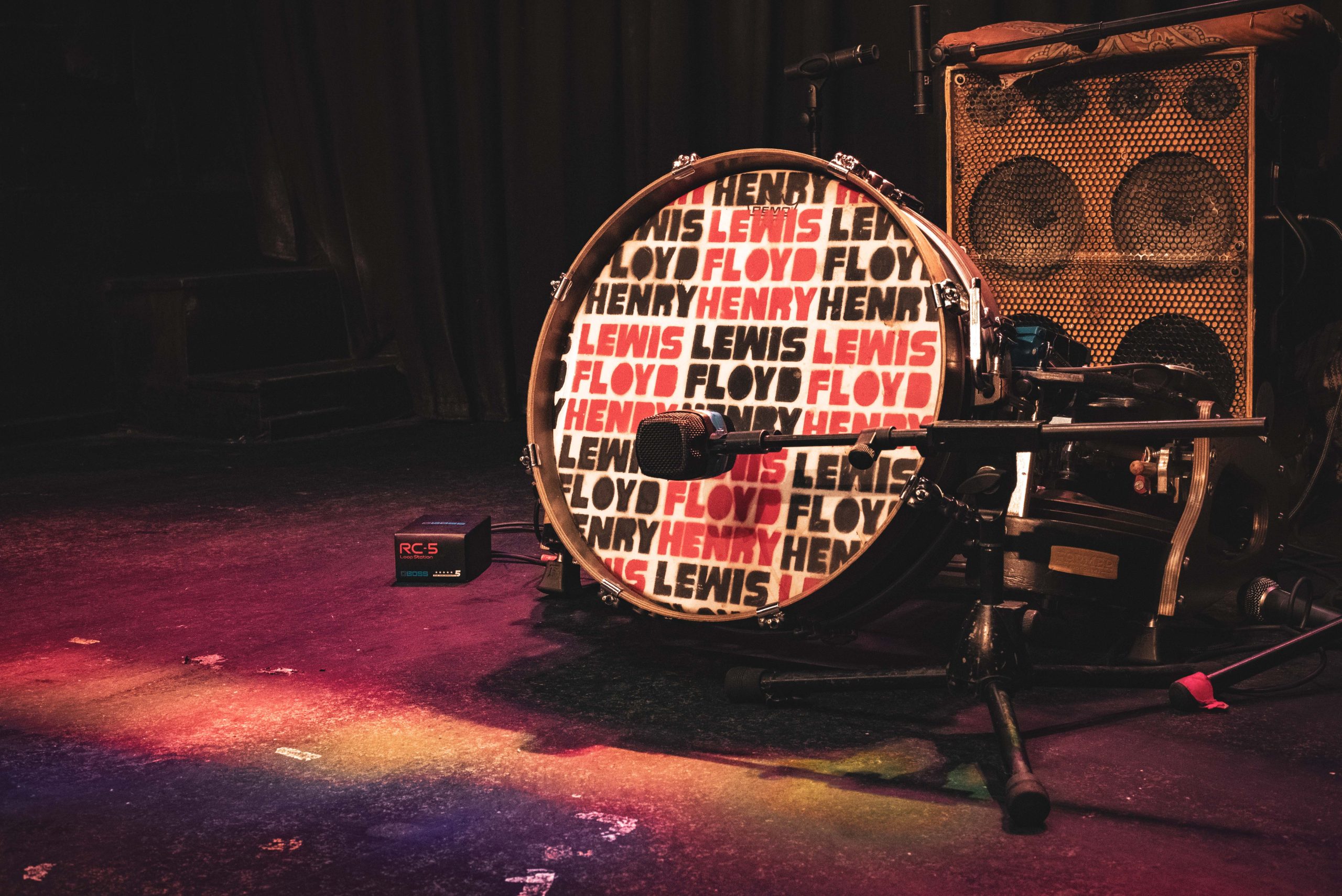
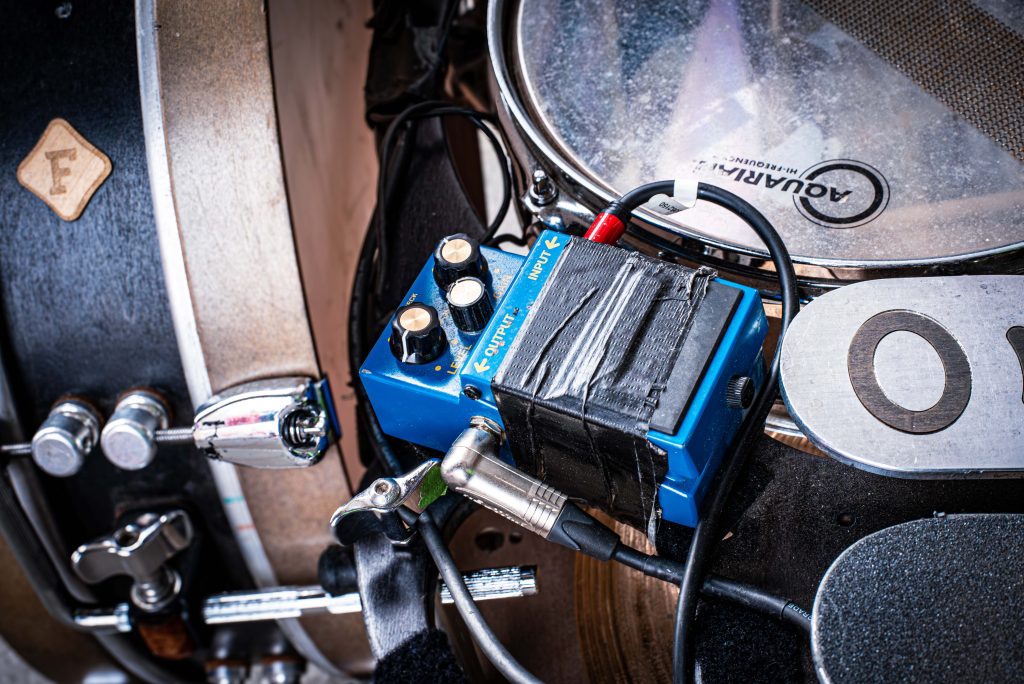
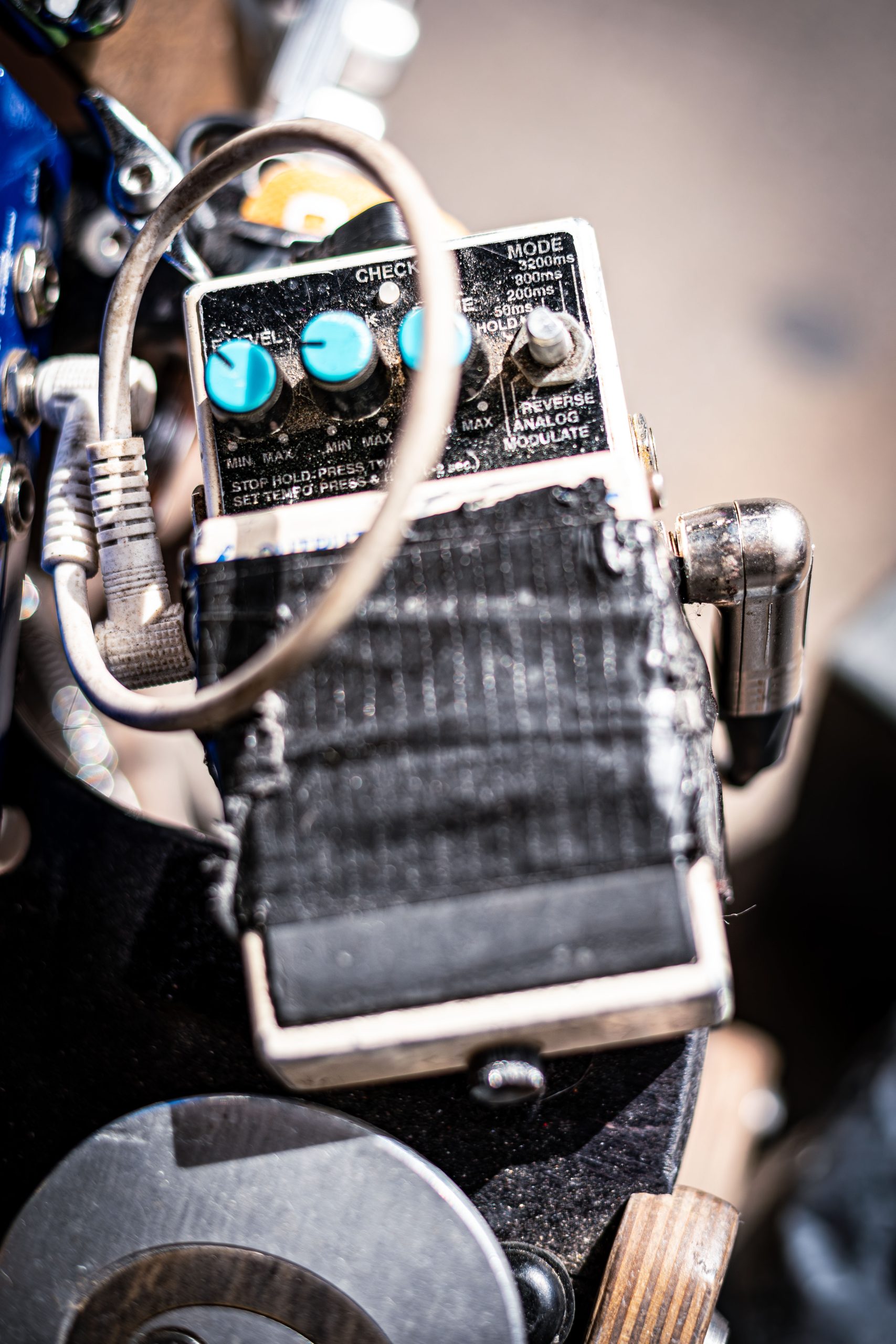
The BOSS BD-2 Blues Driver, DD-7 Digital Delay, and Loop Station compact pedals are also really important to my sound. I’ve been using an old RC-3 Loop Station for a while, but I’ve just got an RC-5.
Have you used any other BOSS pedals for busking?
I used to busk using the DS-1 Distortion with the Blues Driver. I played rhythm parts with the Blues Driver and used the Distortion for a solo boost, but I’m really into using just one tone for everything now.
I also used to use the BOSS FZ-5 Fuzz a lot. That’s a cool pedal because it has three different types of classic fuzz sounds: Fuzz Face, Octavia, and Fuzz-Tone. That COSM technology is really good. I love the Fuzz Face mode because it sounds so accurate. I also bought a BOSS FZ-2 Hyper Fuzz. The FZ-2 is great for that doomy, Super Fuzz-style tone.
"One of the reasons I love BOSS compact pedals is that they're built like tanks."
Before I got my bass/guitar double-neck, I used a BOSS OC-3 Super Octave pedal for bass sounds. It’s got two different inputs: one for guitar and one for bass. I like using the Poly mode of the OC-3. That’s really cool.
Are there any BOSS pedals you’ve used in the studio that you don’t use for busking?
I haven’t used the BOSS TE-2 Tera Echo for busking yet, but I’ve used it quite a bit for recording. I’d like to take it out busking, though. The Tera Echo is an amazing pedal. It sounds cosmic, man! I first heard the Tera Echo played on a demo and immediately thought, “I need to get that.” I’m really into those kinds of psychedelic sounds.
The Tera Echo is one of those effects where I don’t play many notes when I’m using it. With the TE-2, I tend to keep my playing quite sparse and let the effect do its thing. It’s a really awesome ambient kind of sound.
Street-Tested
What is it about BOSS pedals that appeals to you personally?
Well, one of the reasons I love BOSS compact pedals is that they’re built like tanks. That’s massively important to me because, as you can imagine, they go everywhere and anywhere when I’m busking. I use them in all sorts of conditions. My BOSS pedals are properly street-tested! And they’ve never let me down.
I need pedals that can handle being stomped on. And you can really stomp on BOSS pedals without worrying because you just know they’re not going to break. I mean, the switching is great. I love the design of BOSS pedals because you basically step on the whole front part of the pedal. There’s nothing fiddly or fragile about them.
How have your BOSS pedals stood up to the rigors of street performance over the years?
My BOSS pedals just keep on going. They last for years and years. I’ve used them for ages, and in all kinds of weather, too. My BOSS pedals have been through a lot of abuse; they’re out there in the elements—rain, hail, and all sorts of different temperatures and humidity. As I said, BOSS pedals don’t tend to break.
"My Roland CUBE Street EX is like a blank canvas for my effects."
On Loop
How do you like to use BOSS Loop Stations?
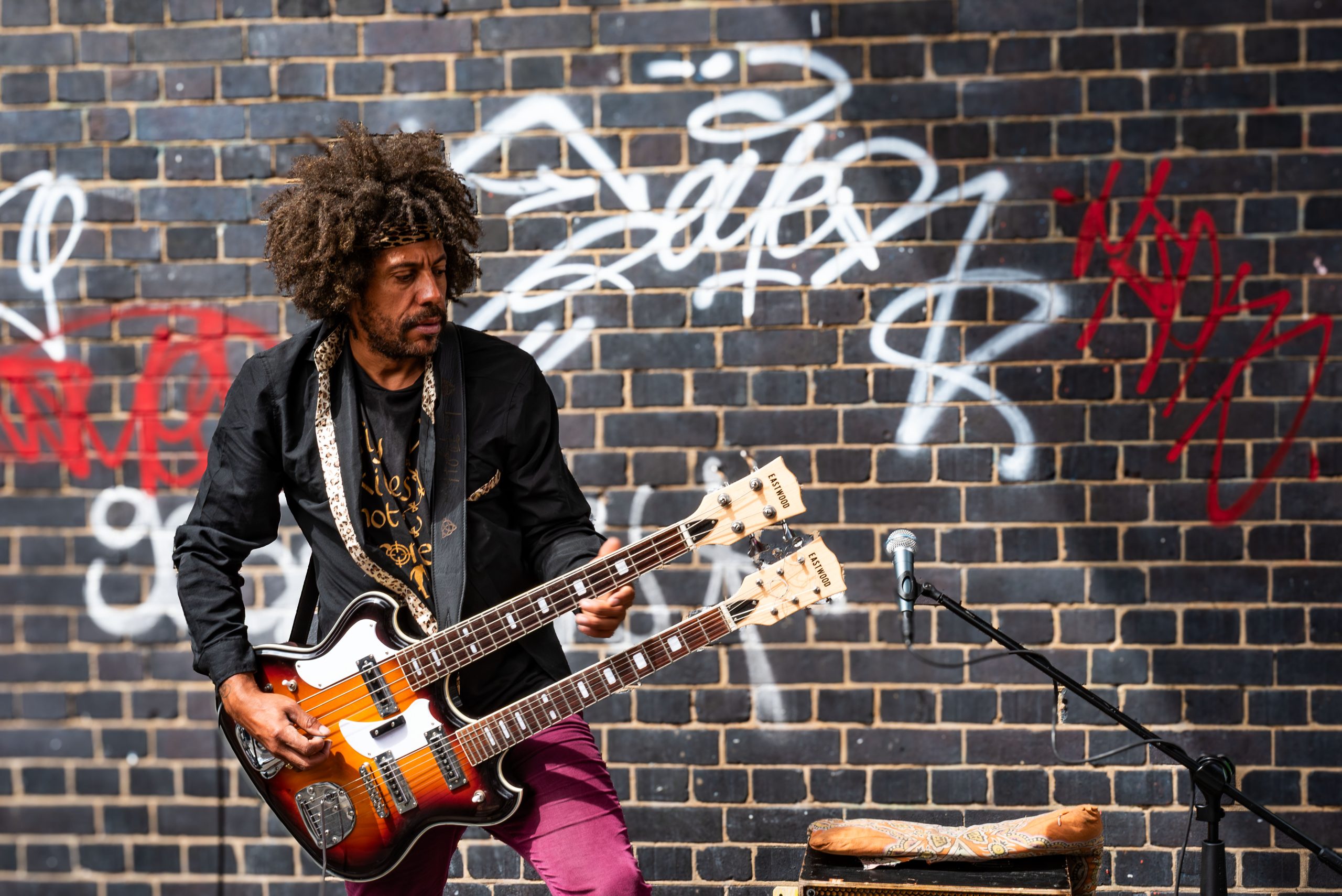
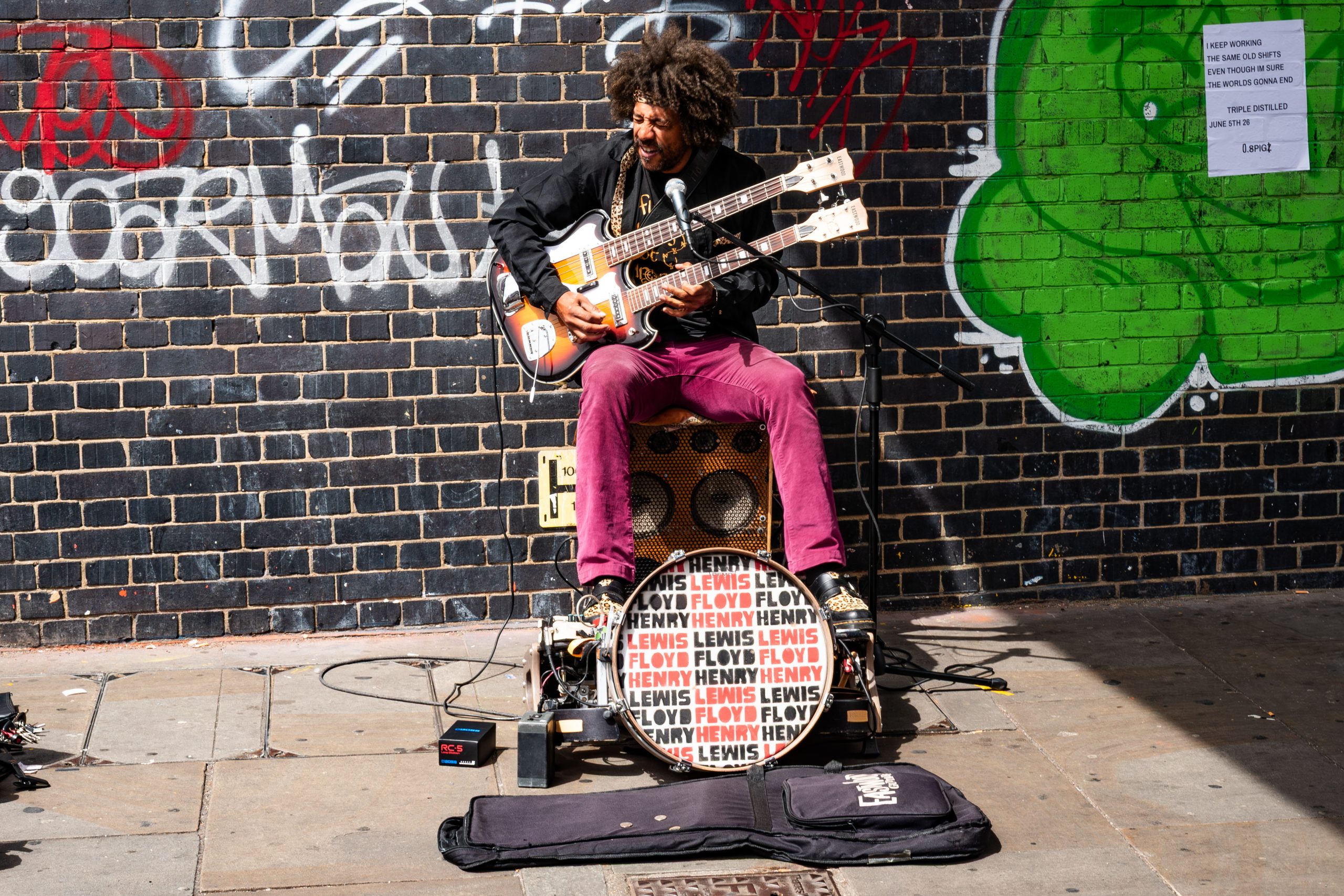
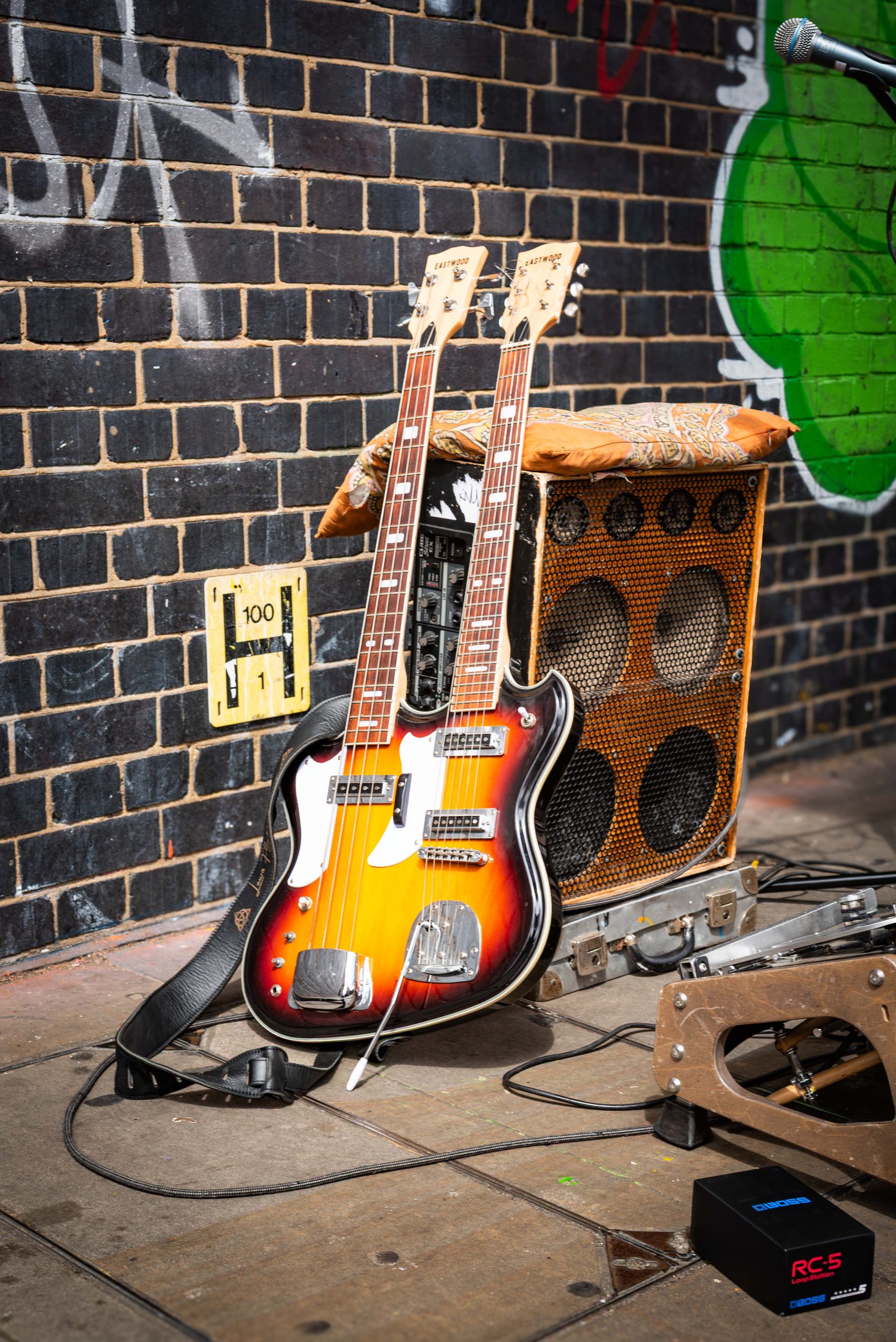
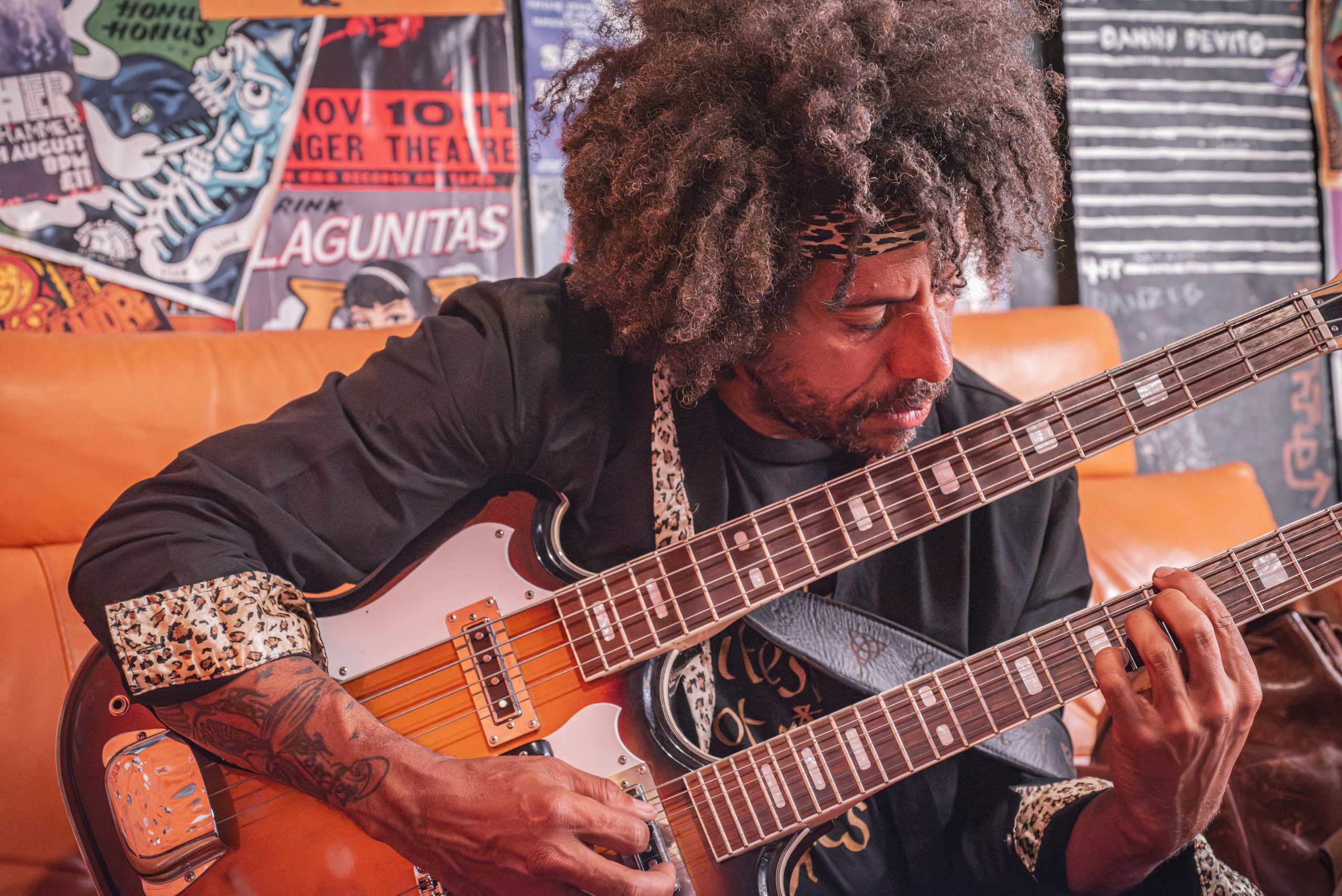
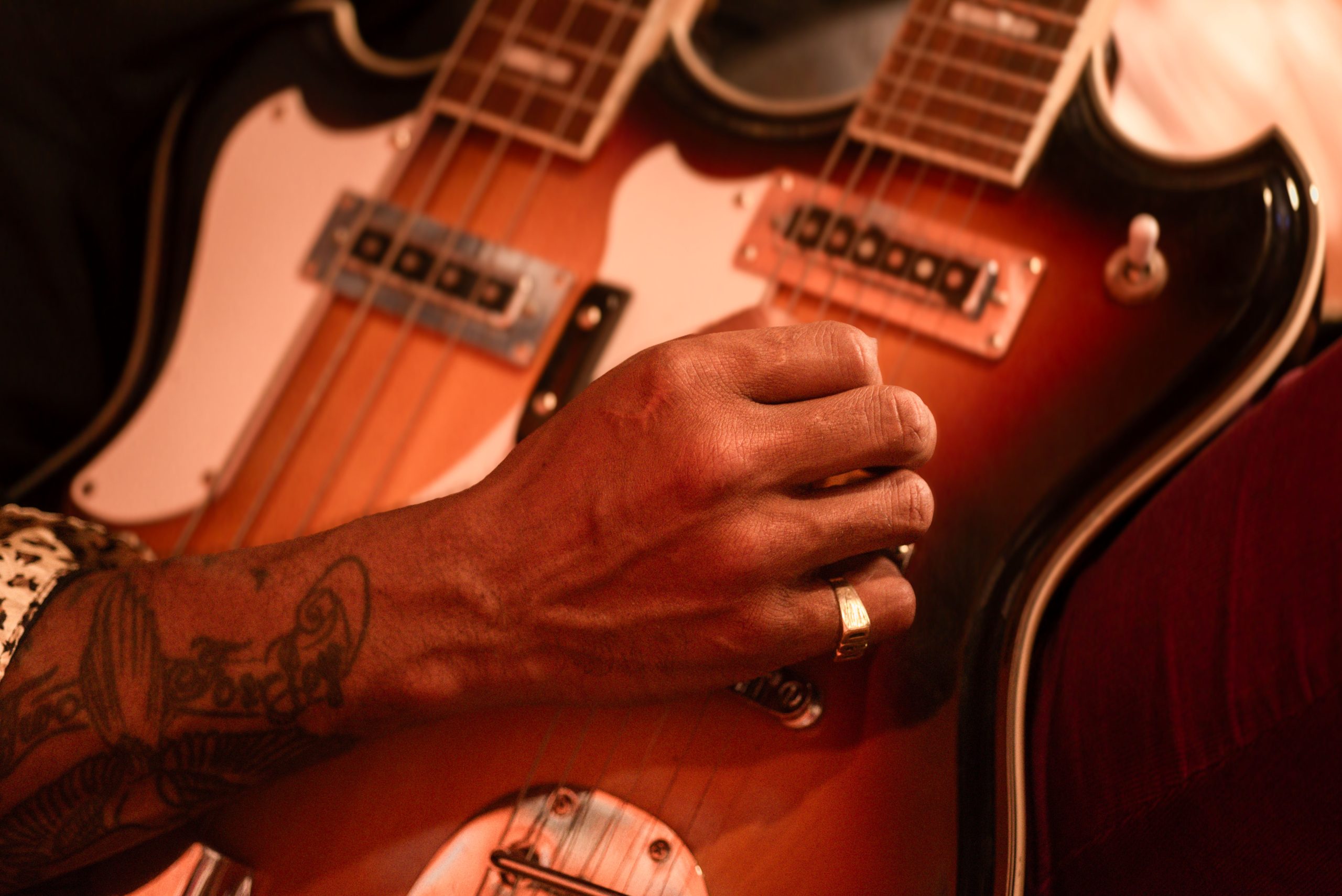
I play a double-neck guitar; it’s got a bass neck on the top and a guitar neck on the bottom, and I loop the bass line first for every song. All my songs have a bass line running throughout. When I was just playing guitar, I didn’t use loop pedals. But that’s changed now.
These days, with my double-neck guitar, I loop the bass line at the start of the song, and once that’s set, I play guitar and drums over the top. I don’t build up loops in layers with overdubbing; I just stick to a single loop: the bass line.
What COSM Amplifier Type do you use on your Roland CUBE Street EX for guitar?
For my guitar, I have it set to Clean mode, not Lead, Crunch, or Acoustic [Sim]. It’s a really good clean amp sound, with a good bass response. My Roland CUBE Street EX is like a blank canvas for my effects.
Chain Reaction
How is your signal chain set up?
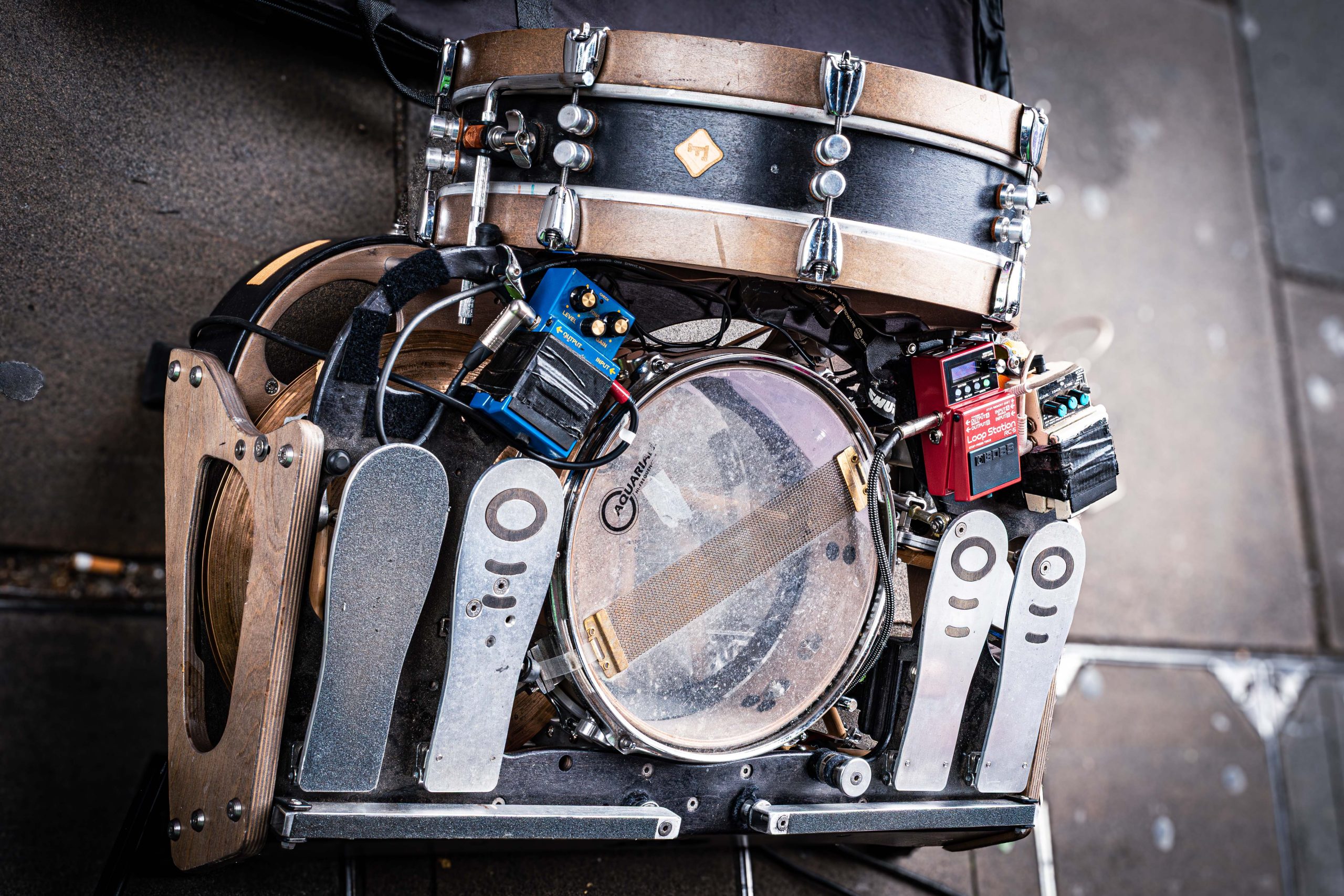
My guitar signal goes to the Blues Driver first, then the Digital Delay, then the Loop Station, then the Roland CUBE Street EX. But the way I arrange them in my rig looks different from the signal chain order. When I look down, the delay is furthest right, the looper is in the middle, and the drive is on the left. I’ve set it up that way for ease of use with the drum pedals.
Have you ever used BOSS pedals for vocal effects?
Yeah, I used to run my vocals through the BOSS Digital Delay as well, but now I plug my mic directly into the CUBE Street EX, which is set for a little slapback. It was fun putting vocals through the DD-7, though. Sometimes a friend comes busking with me and manipulates the delay time and feedback on the fly. I love messing around with that kind of thing. The DD-7 can get totally psychedelic.
"My guitar signal goes to the Blues Driver first, then the Digital Delay, then the Loop Station, then the Roland CUBE Street EX."
How versatile are BOSS Digital Delays when it comes to creating different sounds?
The BOSS DD-7 Digital Delay has been discontinued [superseded by the DD-8 Digital Delay in 2019], but I still think it’s a really great pedal. The DD-7 was actually what got me into looping. I used to use the Hold mode to loop a rhythm part before a solo.
After a while, though, I thought I’d just buy a dedicated looper, so I got the RC-30 Loop Station. The RC-30 is really good. I love it. You can have two loops going, and there are some cool effects built in, like the pitch drop [Bend Down mode].
There was another BOSS Loop Station I liked before the RC-30 came out [in 2011]: the RC-20 [released in 2001]. I loved the RC-20’s reverse playback function. I never owned an RC-20, but I used to see other people using them all the time.
BOSS Loop Stations are popular with musicians of all types. Who are some of your favorite Loop Station users?
Oh yeah, there are so many different types of musicians who use BOSS Loop Stations. I think it’s amazing what beatboxers do with them. The guy that I’m playing with tonight at The Lexington, Son of Dave, uses the [flagship floor-based] RC-600 Loop Station. He’s great—a real master looper.
Write Here, Write Now
How do you tend to go about writing songs?
I actually write a lot of songs when I’m busking! I’ll improvise a riff and record it with a beat. I usually record my busking sessions so I can listen back afterward and write lyrics to any cool ideas I come up with. Because I’m always testing out new ideas in real time with an audience, I can gauge the reaction. That’s how a lot of my songs have come about.
"Because I’m always testing out new ideas in real time with an audience, I can gauge the reaction. That’s how a lot of my songs have come about."
Do you practice at home much?
Nah, not really. I don’t play indoors much. Most of the playing I do is outside in front of people. I like to get out and about, man!
When did you first start playing guitar?
I started playing guitar in 1988, so I’ve been through that whole thing of staying indoors and practicing all the time. One of the great things about busking is stepping outside your comfort zone. I really had to push myself to do that because I’m a quiet, shy, introverted person by nature. When people see me busking, they probably think I’m the opposite of that. But busking has really shaped me as a musician. I recommend it.
Do you think busking has helped you become a more confident performer?
Definitely! One hundred percent. Busking completely changed my mindset and boosted my confidence.
Street Level
Do you prefer busking or playing gigs?
I prefer busking now. At a gig venue, you’re at the mercy of the sound engineer, and it doesn’t always sound as good or like what I’m used to when I’m busking. I always try to keep it simple. I’ll ask sound engineers for one mic over my drums, one in front of my Roland amp, and another for my vocals to replicate how I sound when I’m busking.
How has your sound developed over time?
It’s taken me ages to get my sound right. It’s really important for me to hear the bass loop properly. It’s more difficult than you might think, because it’s in the lower register. I’ve played gigs before where I can’t hear it properly, which is really bad because I get lost and can’t perform well.
What’s the best way to get a clearly audible bass sound?
I like a clear-sounding, ’60s Motown-style bass sound. I loop the bass clean using the Roland CUBE Street EX, which makes it much easier to hear. I just use the BD-2 for guitar overdrive, never on bass. That way, you get good separation between the two instruments. A driven bass and a driven guitar don’t sound as good to me because they get a bit lost.
"I loop the bass clean using the Roland CUBE Street EX, which makes it much easier to hear."
Also, my drums aren’t super loud, so they don’t drown out the bass. That helps a lot. I sometimes jam with a drummer, and he finds it hard to hear the bass because he plays so loudly. As the bass is on a loop, it just keeps going, so you really need to be able to hear it properly.
There’s a bit of an art to looping bass well. If it’s off by even a fraction, it sounds weird and is difficult to play along with. You need to be able to count accurately in your head, but it gets easier with practice.
If you make a mistake when you start a song looping bass, how do you deal with it in the moment?
I’ll literally stop the song and start again, whether I’m busking or playing a gig. I mean, that first loop needs to be absolutely perfect. Maybe some people wouldn’t notice that it’s slightly out of time, but to perform well, I need to feel it.
Keeping Cool
What are some of the most difficult situations you’ve faced as a busker?
I’ve had all sorts of difficult situations to deal with when busking, from people stealing my money to Police Community Support Officers telling me to stop playing and pack up. Sometimes, I’ll travel to a busking spot only to find someone else is there and won’t let me play.
The weather can be a problem, too. One minute I’ll be happily playing, and the next it’ll be pouring down with rain. Also, if it’s a really windy day, that can be difficult. It’s more difficult to play if it’s really windy than people might think.
Naturally, certain members of the British public can be a bit crazy sometimes. You know, drunk people stumbling around and getting hyped up can be difficult. Sometimes people can become aggressive, and you’ve got to try to defuse the situation. You need to keep your cool.
"It’s important to get a sound level that isn’t too antisocial."
Are noise levels ever a problem when busking?
It’s important to get a sound level that isn’t too antisocial. It’s a difficult balance sometimes.
What’s one of the most annoying things you’ve experienced while busking?
One of the most annoying things about busking is traveling somewhere and then suddenly realizing that you’ve forgotten something, like a microphone or a lead. I traveled all the way to Brighton [UK] recently and discovered I’d forgotten my microphone stand, which was annoying. I had to go all the way back home and get it.
It’s also pretty annoying if something breaks, like a lead, and you haven’t got a spare.
Street Credit
Do you earn a decent living from busking?
I used to earn a lot more from busking than I do now. Before COVID, I could go out busking for a day in Brick Lane and earn 400- or 500-odd quid, all in coins. But COVID affected everything. After that, the cashless society thing went to a whole other level.
I’d been dead against card readers before, but after I saw a lot of other buskers using them after COVID, I thought, “I really need to get one.” I’m a bit of a technophobe and didn’t get around to setting mine up for about a year. But when I finally did, I started earning more.
So, my income now comes from a mix of card-reader [payments] and cash. I sometimes do live streams as well and can earn a bit from them.
Do card readers ever give you any problems?
Yeah, they can be a bit of a problem because you’re reliant on Wi-Fi and battery power just to make some money, which is a bit annoying. I’m always struggling with Wi-Fi because the signal drops in and out.
Do you ever go on busking tours?
Yeah, I’m going to go on a little busking tour this summer. I’ve got a solar panel in my car to charge up my batteries. I want to go to places I haven’t been before, like Bath.
"I think my music sounds like my influences. People have told me it’s like a cross between Rage Against the Machine and Jimi Hendrix."
Keep off the Grass
For people who haven’t heard your original music before, how would you describe it?
My original music has a psychedelic ’60s guitar vibe—kind of a Hendrix-y, Black Sabbath-y sound. I’m into that kind of thing. You know, sleazy and funky, but with heavy riffs, too. Sometimes, I rap lyrics or sing. I think my music sounds like my influences. People have told me it’s like a cross between Rage Against the Machine and Jimi Hendrix.
What are some of your most recent releases?
I’m in a rehearsal space syndicate down in Hastings, [UK], so I’ve been using that to go in and record. These days, I tend to release sessions, rather than albums. I recorded a session in February [2026] and released it as Is It Nothing to You All Ye That Pass By. Then, in March, I went in and did another session, titled March 2026 Recording Sessions Part 2.
I also did a session in May called Keep Off the Grass. I’m really happy with how that sounds. I think I hit a sweet spot recording that.
Live Energy
What’s your usual recording setup like, and how do you go about recording a song?
I use a Focusrite interface with GarageBand and some mics. I record the old-school way—live takes throughout each song. I don’t tend to record parts individually; I basically do the same thing as when I’m busking. I’ll record three takes of each song and then pick the one that sounds best.
I recently recorded one of my songs with a friend, and we tracked everything separately. It ended up taking about five hours, but I can get 10 songs down in the same amount of time if I just go into the rehearsal room, set up my gear, and do three takes of each.
Why do you prefer the sound of full live takes to overdubs?
I like capturing that live energy, which is hard to get when you’re tracking everything separately. It’s a whole other sound. You can probably get more clarity by recording overdubs and processing tracks differently, but even when I’m doing that, I’m still trying to replicate my live sound. I mean, all my favorite albums have been recorded live.
"I like capturing that live energy, which is hard to get when you’re tracking everything separately."
What are some of your favorite albums?
Jimi Hendrix’s debut, Are You Experienced, and Black Sabbath’s first three albums are some of my favorites. I got really into metal in my teens, too. The ’90s were a really special time. There were big changes in music.
Change of Scene
What are some of your favorite bands from the ’90s era?
Soundgarden, Alice in Chains, and Nirvana sounded completely different from anything that had come before. Meanwhile, metal bands like Pantera and Rollins Band were pushing things in a different direction.
Electronic music was shifting too—jungle felt completely new. At the same time, there was this wave of groundbreaking rap from groups like Wu-Tang Clan and Cypress Hill. And in the UK, Britpop was exploding.
What rap/rock crossover albums do you like?
I loved that soundtrack album Judgment Night [released in 1993]. There are so many great tracks on there of guitar bands collaborating with rap artists. The title track, “Judgment Night,” by Biohazard and Onyx, is one of my favorites. I saw Biohazard three times.
Helmet and House of Pain’s track, “Just Another Victim,” was really good, too. I mean, I was really into Helmet and House of Pain, so it was great they collaborated on Judgment Night.
What are some of your favorite gigs from the ’90s?
I think the maddest mosh pit I was ever in was when Pantera played the Marquee club in London in ’93. I was about 15 or 16 at the time, and there were these huge guys stagediving and kicking me in the head with military boots. But they were great times!
The Astoria was another great venue in London. I remember seeing Overkill, Obituary, and Eyehategod there. The Astoria 2 (next door) was a cool venue, too. The ’90s were a great time to be around. To me, there hasn’t been any really fresh-sounding music since the year 2000.
"Live music—whether it’s on a street corner or on a stage—has never been more important."
Real Power
Technology has transformed the world since the ’90s. Specifically, how do you think it’s changed music and the way people interact with one another?
The good thing about the internet is that it lets you reach the masses, but it’s important to use technology in a healthy way. Unfortunately, the internet has caused a kind of mass laziness. Most people are trapped in the web (literally and metaphorically) to some degree, whether they know it or not. Some younger people have never even experienced life outside of the internet.
A lot of today’s technology is designed to control people by effectively replacing their own thinking. That might sound a bit far-fetched to some people, but just look at some of the AI tools that are designed to do things like write songs for people. How else would you describe it?
The way we’ve been conditioned to rely on devices for the most basic things in life is a real worry. Up until recently, it felt like a choice. Now, you need a smartphone app to do even the most basic things, like park your car.
I’ve got a song called “It Could All Be A.I.” from Keep Off the Grass, which is all about getting offline. We’re constantly staring at screens, and we can’t even be sure what’s real anymore. I think there will be a generation that rebels against all of this—people who want to reclaim their freedom of thoughts and actions.
I think people will want to get back to how things were before. Genuine human connection can’t be replicated by technology, because, by definition, it only exists between people.
Why is performing live important to you?
Music is a very magical thing. You know, the words musician and magician aren’t too dissimilar. Music has real power. The intent behind sound has a profound effect on us. People crave real, shared experiences now more than ever.
Playing live will always be an essential part of the human experience. It’s deeply embedded in our culture. Live music—whether it’s on a street corner or on a stage—has never been more important.