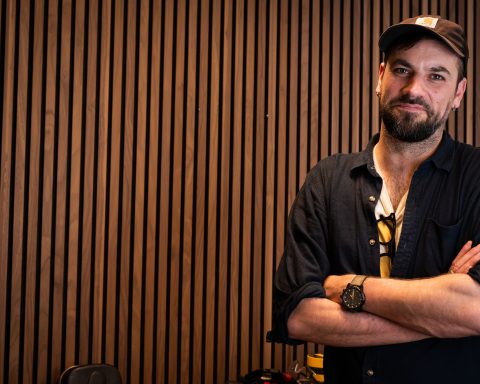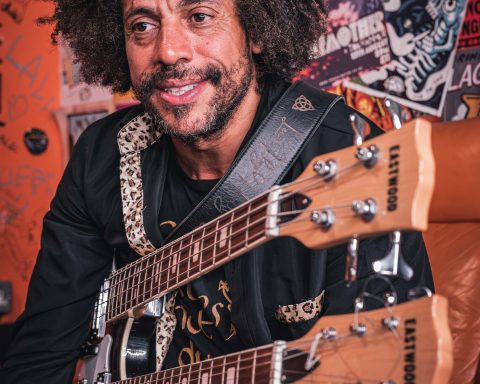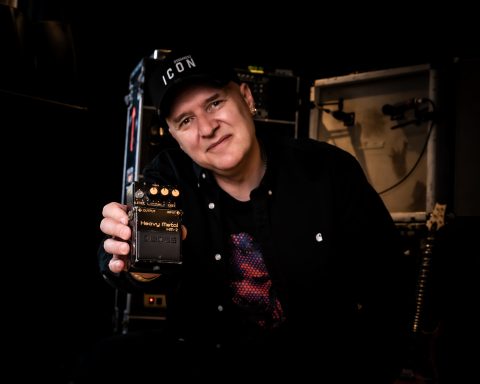


Mike Vennart’s journey as a musician has taken him from the expansive guitar arrangements of Oceansize to the electronic experiments of British Theatre, a series of solo records under the moniker Vennart, and stages around the world with Biffy Clyro. More recently, he was invited to sing and play guitar with Cardiacs, helping share the music of his favorite band with a new generation of listeners.
Along the way, a heavily modified guitar and a collection of well-loved pedals have helped turn his ideas into sound. We caught up with Mike to talk about creative freedom, finding his voice in distinctly different bands, and the music that continues to inspire him—starting with the childhood encounter that made him want to pick up a guitar.
The Shape of Things to Come
Can you remember the first time you knew you wanted to be a musician?
I started on all this really young. My mum and dad took me to see Status Quo when I was seven years old, and I was really struck by Rick Parfitt—pouring with sweat with the lion’s mane hair and that beat up black and white Telecaster. I thought he was the absolute coolest. I just wanted to do that.
Which artists inspired you after that?
There was an Ozzy Osbourne concert on TV from the Bark at the Moon tour, and from that I discovered Jake E. Lee and Randy Rhoads. For my ninth birthday, I got a box set of the first six Black Sabbath albums, and those records just became part of my DNA. If I was stranded on a desert island, I don’t think I’d actually need anything else.
And then—I guess about 1986—I got into Iron Maiden. They have such a rich and rewarding back catalog. You could put a gun to my head, and I couldn’t pick a favorite. I still listen to all that stuff, and I can tell it’s informed everything that I’ve done since.
An Instrumental Relationship
What were your first guitars, and how did you come to own the Squier you’re known for?
I learned on a Kay. It was a weird shape I’d never seen before, but it was the closest thing to what Rick Parfitt played. Then, when I’d been playing for a couple of years, I got a Columbus Les Paul copy, which I loved. I felt like I was Randy Rhoads or something. My folks could see that it wasn’t just a fad, and that all I did was stay in my room and play guitar, so they got me the Squier. You couldn’t get them over here, so we had to order it from Japan. It’s still the best guitar I own. Every guitar I get, I subconsciously try and make it sound like this one.
How did that Squier become such a personal instrument?
It’s changed a lot. The only things that are original are the wood, the frets, and the scratch plate. When I joined my first band they told me I needed a humbucker and a whammy bar, so we carved out space for a pickup with a hacksaw and took the trem from an old Marlin. The other two pickups are out of an Ibanez Roadstar II. They’re my favorite single coils—they’re really cool.
"I broke a string on my RG550, so I had to pull the Squier out for my exam and I've never played anything else since."
When did the Squier become your main guitar?
I’d given it to my mate Gambler, who was later in Oceansize, as he’d just done a guitar building course. He fixed it, re-fretted it, and put locking machine heads on it. I just loved it as soon as he gave me it back.
I had a performance exam at Salford University performing at Band on the Wall in Manchester. I was using an Ibanez RG550 that my dad had bought for me and, as usual, I broke a string—I broke a string every day. So, I had to pull the Squier out for my exam and I’ve never played anything else since.
“The One Pedal to Rule Them All”
Alongside finding the right guitar, how did you start exploring pedals?
When I got started all I knew was that I wanted to play guitar. I had no idea what it entailed or what any of the gear was. I didn’t even know that the guitar is naturally clean sounding. If you want it to sound like a heavy metal band, it’s got to be through a big loud amp or through a distortion pedal. I had no idea what these things were!
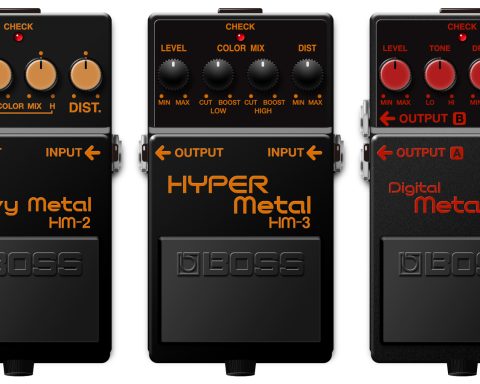
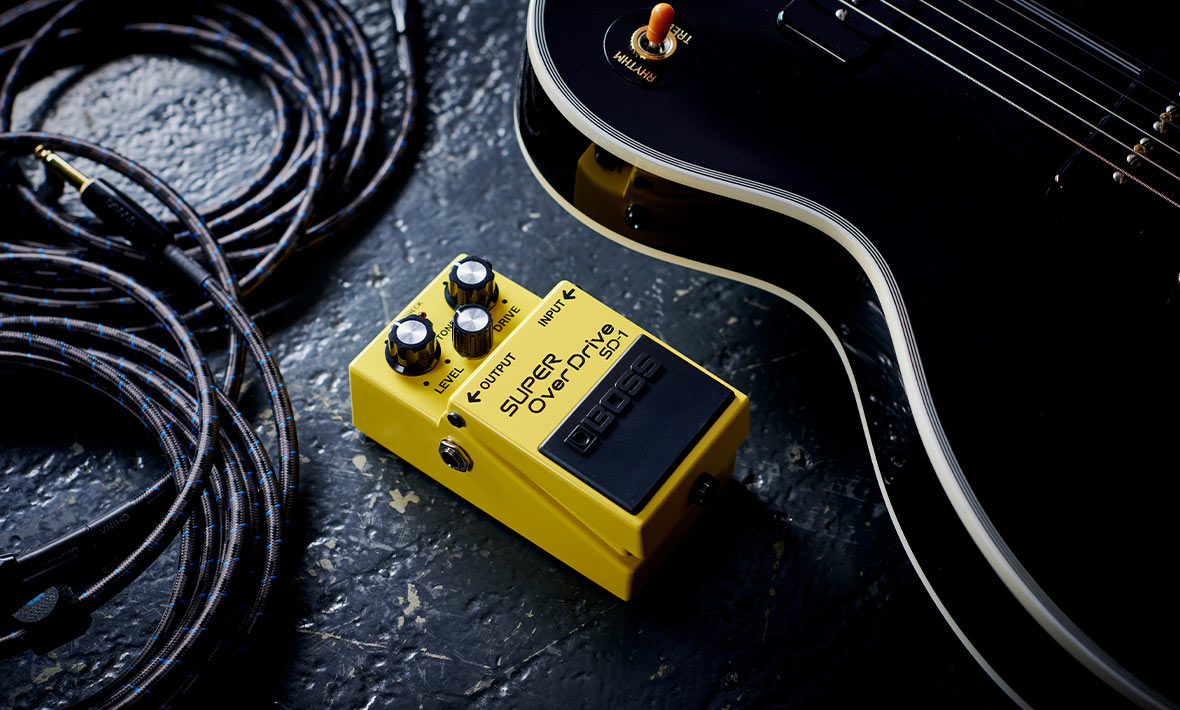
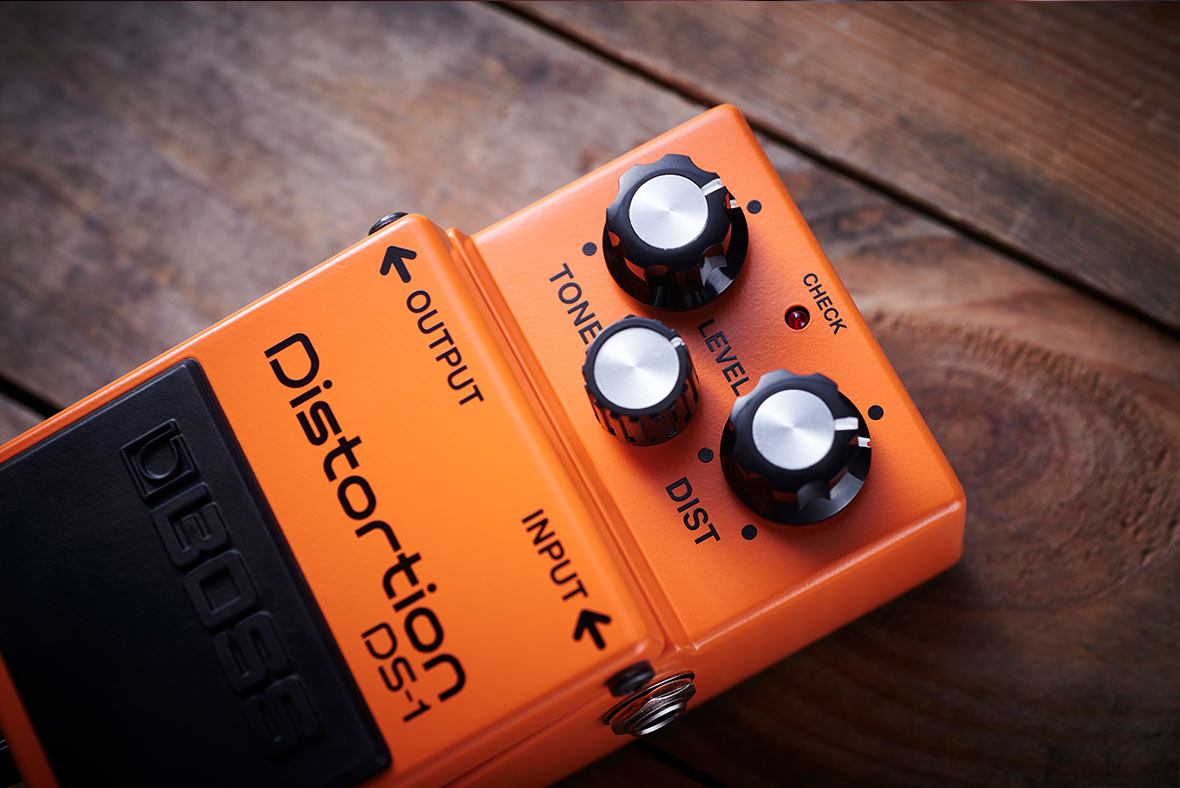
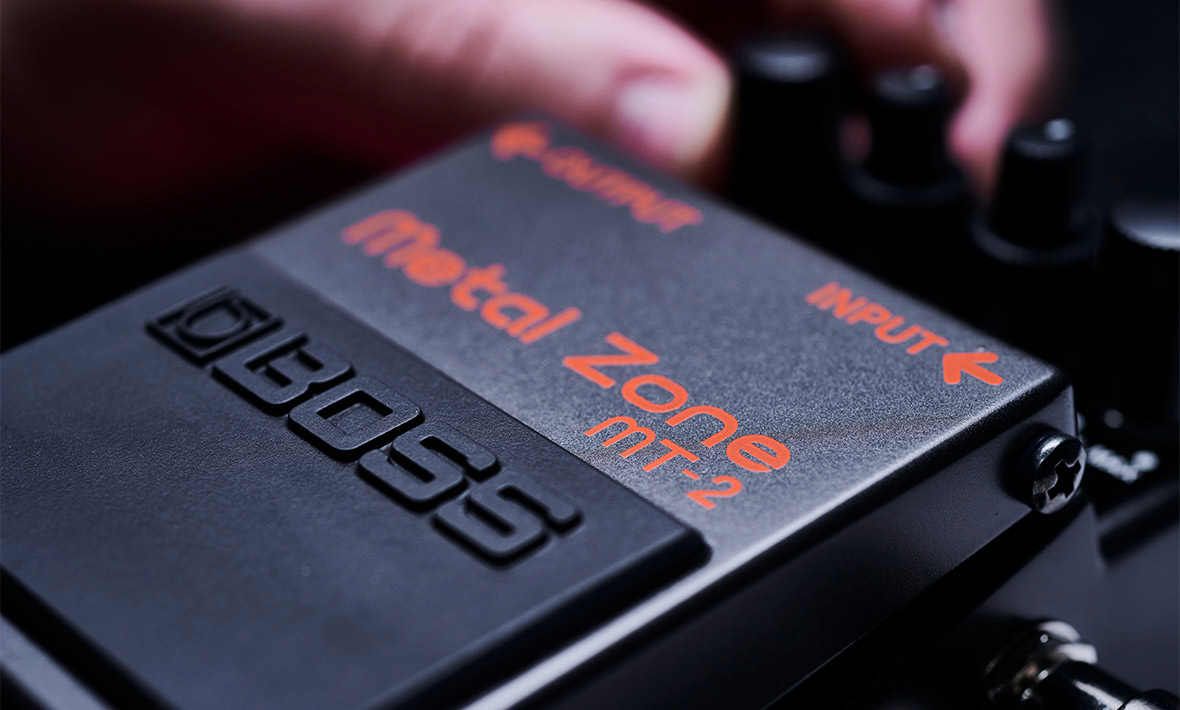
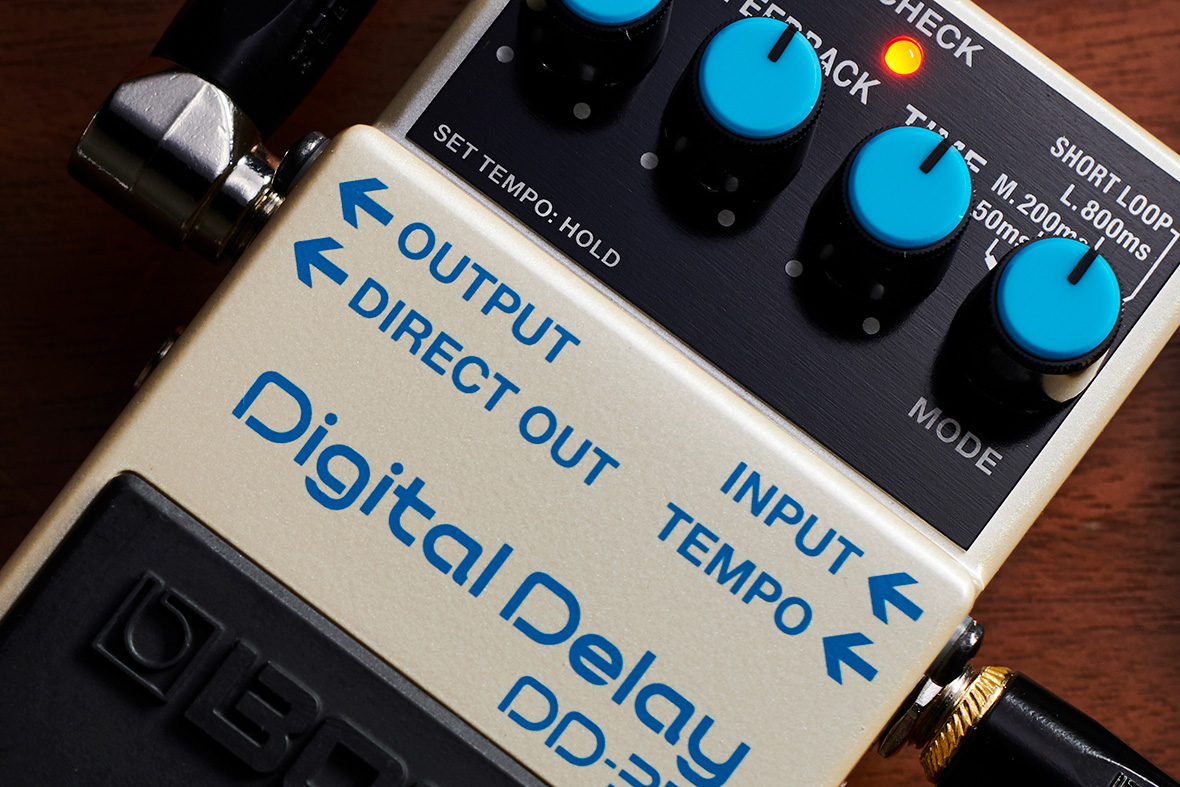
I ended up getting the BOSS SD-1 and DS-1, and they were both constantly on, totally dimed out. Then when I got to college, everyone had the Metal Zone, so I swapped my two overdrives for one. I remember thinking, “I have arrived now. I’ve got the one pedal to rule them all.” Then I got a DD-3 second hand from someone in 1992 and that’s still on my board today.
The exact same DD-3 you bought in 1992?
Yep. It’s had absolutely no repairs whatsoever. Those things are bomb proof, man.
Strength in Numbers
What were your early experiences of playing in bands?
I’d been kicking around in various college bands and playing covers, but it was always with dudes who were way older than me. I was a really good guitar player by the time I was 13. I honestly thought that by the time I reached 16 it was all over for me, because I thought my selling point was that I was so young and played so well.
How did Oceansize come together?
I met some of those guys at Wakefield College. Then when I went to Salford University, we all moved over there and met a couple of the other dudes. Slowly but surely, we formed Oceansize and started gigging around Manchester and the North West.
How did you end up with three guitarists?
We originally let Gambler in because he was a keyboard player, and he was gonna play synth. He’d just broken up with his girlfriend and ended up living with his mum again, so I was like, “Come and live with me and be in my band.” But it turned out he didn’t have a keyboard. What he did have was this beautiful SG that he made in his guitar building course the year before—but he’d never played guitar before. He ended up plugging into whatever amp was in the rehearsal studio and just played along. He learned to play by learning our songs.
Did Gambler have his own style?
To this day, you will never see that man with a guitar in his hands. He never plays it. But, if you hand one to him, he’ll play things that you’ve never seen anybody else play. Because he’s a pianist, he arrives at the most unusual shapes and intervals. It’s really fascinating to watch. It makes you realize how f***ing boring you are as a musician.
How did the three guitars fit together?
It just happened truly organically. There was never any discussion about what we were gonna do. It was just about watching each other and working around it. Literally everything was born from a jam. If somebody brought in a riff or a drum beat, we’d just play over it until we were all happy.
"We threw an awful lot at our first record. There was a lot of experimentation and it's very varied."
A Record of Evolution
What was it like taking that experimental approach into the studio for your debut album, Effloresce?
We threw an awful lot at that record. We spent a month recording it and it was the first album Chris Sheldon (the producer) had ever done on Pro Tools, so he threw everything he had at it too. I think you can hear it on the record, you know? I remember our drummer Mark saying it would have sounded better if we’d done it on tape, and I was like, “Dude, if we were doing it on tape we’d still be making it now!”
What did Pro Tools allow you to do?
The things that we did just wouldn’t be possible any other way. Mark really wanted to do a lot of cutting up of drumbeats and doing multiple takes. He was also doing things like sampling birds at five o’clock in the morning, cutting that up and learning how to play those rhythms. So, there was an awful lot of experimentation and it’s a very varied record.
How did subsequent albums differ?
I remember wanting that second album (Everyone into Position) to be the kind of record that you’d see a Glastonbury headliner performing. So, it was written around seeing bands like Radiohead or The Flaming Lips at Glastonbury and thinking, “Imagine our songs blaring out of a PA at midnight.” Unfortunately, it didn’t work out like that and we never did headline Glastonbury.
For Frames, I remember saying to Mark, “I think Everyone into Position was more song based and I want this to be more cinematic,” you know? And that’s exactly what it ended up being. Every song took a lot longer to unfurl. It was much more epic and ethereal and less in-your-face.
And how about the fourth and final album—Self Preserved While the Bodies Float Up?
I don’t know what we were thinking there!
"You crank the intensity on the DM-2 and it just talks to you. All these little ideas just write themselves."
The Effects of Time
Across those records, which pedals became central to your sound?
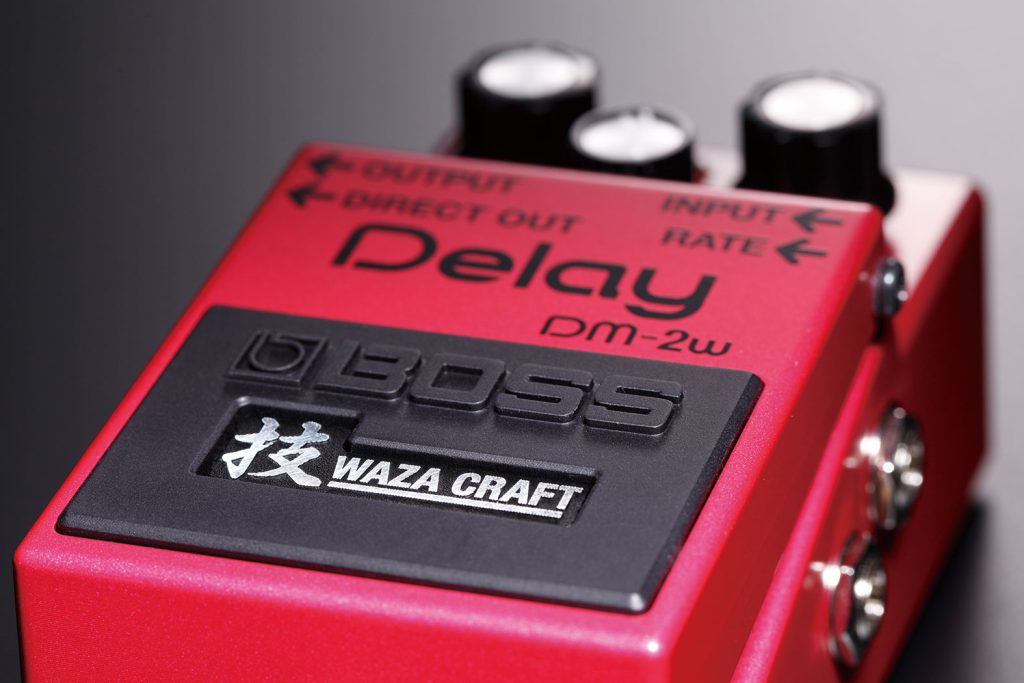
One of the biggest components of my Oceansize sound was the BOSS DM-2. The band Amplifier were using a DM-3 and I decided I needed one, but they were £175 on eBay and I was on the dole. So, I called my mum up and I said, “Have you still got all my old Iron Maiden records? Right, I’m coming to get them.” So, I sold my collection—the entire ‘80s back catalog—and got about £150 for it. Peanuts! When I got the gig with Biffy Clyro, I bought it all back though.
How did the DM-2 shape your playing and the music itself?
It’s probably on every song from the second album onwards. This is a trick that I started using quite a lot—if I wanted a big washy sound with tremolo picking or something, I’d send the signal to three amps with a different delay pedal on each. So, it’d be a BOSS DD-3, the DM-2, and then the other would be a reverse delay of some kind.
I remember sitting in my room just playing one note every 10 or 15 seconds listening to the repeats on the DM-2. It was like it was painting pictures. You crank the intensity on that thing and it just talks to you. All these little ideas just wrote themselves.
The Art of Uncertainty
When you revisit those records now, how do they sound to you? Do you listen back often?
Never. I’m kind of scared of records once I’ve made them, and I think that you’re supposed to be a bit embarrassed by what you’ve done in order to get better, you know?
I only ever return to the Oceansize stuff because it keeps getting reissued and repressed, so I’ll always have to check a remaster or a new test pressing. I did that for the 20th anniversary of Effloresce, and I’d honestly not listened to it since we did it. I couldn’t believe how fully formed we sounded on that first record! It sounded like we knew exactly what we were doing and I don’t remember feeling like that at all. Maybe the rest of the band did, but I hadn’t a clue.
"My lyrics became more stream of consciousness, like putting a jigsaw together. It's not until years later that I've worked out what some of the songs mean!"
You say the first album sounded more assured than you felt. How confident were you about the band’s direction?
I think I was confident outwardly, but internally just really unsure of what Oceansize was. I think in hindsight that lack of direction was probably one of our strengths. I was simultaneously trying to turn Oceansize into something more song-based, whilst at the same time really loving instrumental music like Talk Talk or Mogwai. I eventually tried to let the music do the talking without singing for the sake of it. It wasn’t maybe until we made Frames that I really got a handle for when to shut up!
How did your approach to lyrics develop over those albums?
One problem that I have with Oceansize—and it’s very much my problem—is that lyrically I hadn’t quite worked out my craft. In the beginning I wrote from a very literal standpoint, and I don’t know why I did that because I was always into spacey, obtuse lyrics by bands like Pavement or Faith No More. But for some reason everything that’s on the first record is about real experiences. After that it became more stream of consciousness, like putting a jigsaw together. It’s not until years later that I’ve worked out what some of the songs mean!
An Exercise in Reinvention
After Oceansize broke up, you and Gambler took a different direction with British Theatre. How did that begin?
It was born out of a desire to do something really different—something more electronic. I think you can hear a bit of the conflict that we had on the early recordings. Gambler’s leaning into the electronics and I’m leaning into still wanting to be a band. By the time we got the album together it really clicked and I think that record is some of the best stuff I’ve ever done.
What changed as you moved from those early EPs to the album, Mastery?
There’s really not a whole lot of guitar on the album, and most of the guitar is Gambler playing. I just sang on it and and wrote the words. It was such a different experience, and a really exciting one.
Gambler is a real maverick in a textural, avant-garde realm. He does a lot of experiments with tape machines, and field recordings—degrading music and making things sound as organic and earthy as possible. I think of Mastery as really inventive record.
How did the two of you develop songs together?
Some of the best stuff was where I wrote a song using my limited electronic know-how and gave the stems to Gambler. Then he’d take it to pieces and put it back together in a way that was completely unrecognizable. There’s a song called “Newman”, which, when I gave it to him, he just absolutely dismantled it and made it his own. And it’s one of the best songs!
Is it fair to say that British Theatre was where Gambler’s experimental side was allowed to shine?
Absolutely. There’s one song where he recorded me just noodling away on guitar, bounced it onto a cassette, then bounced it from the cassette to the computer. He bounced it back and forth between the computer and cassette about a hundred times. What you get when you line all that back up in the computer is this speed discrepancy. So, they start out identical and then slowly slip out of sync, and the quality is getting worse and worse—like a natural tape delay effect. I can’t imagine how long it took him to do it.
"With Vennart, I have to argue with myself a lot. But I think a mixture of uncertainty and absolute conviction is where the fun is."
Creative Control
With British Theatre taking you into electronics, what did you want to explore through your solo project, Vennart?
I wanted to make rock songs. And I wanted to do a project that was all about my guitar playing. There’s some guitar tones and some harmonic qualities that just weren’t allowed in Oceansize. Fuzz, for example, was absolutely not allowed. And songs in a major key were also not allowed! So I crammed as much of those things into the first record as I could.
When you were writing for Vennart, how did making those decisions alone compare with working in a band?
In Oceansize, we all had to argue with each other to get to the finished result. And the finished result was usually great. With Vennart, I just have to argue with myself—and I do argue with myself a lot. But I think a mixture of uncertainty and absolute conviction is where the fun is, you know?
I remember when Oceansize were recording Everyone into Position, I felt like I had totally lost it. In fact “Homage to a Shame” on that album is about having writer’s block—feeling like you’re just cheating and that you’re going to get found out for being utterly talentless.
How do you work through that uncertainty when a song isn’t coming together?
I always say that you’ve just got to put one foot in front of the other.
Once you get to the 20th step you might chance upon something that takes you somewhere, but you have to trudge through all these awful-sounding things.
And what’s it like when everything suddenly clicks creatively?
Sometimes it does feel like the songs are there and you’ve just got to find them. As I’ve got older, I’ve realized that those are the days that I live for. But they don’t come every day, and that’s why when it does happen, it’s like you’ve won the lottery!
"The EQ on the Metal Zone is unlike anything else. You can really blow people's minds with the scope of tones it produces."
A Place in the Mix
Alongside your own projects, you’ve been playing with Biffy Clyro for several years. How did you find your place in their guitar sound?
The rule with Biffy is, “Don’t play Simon’s parts.” Simon is usually playing all the strings all the time, so he covers a lot of harmonic content. Initially I would just make it chunkier and cover any string or brass parts that were missing. But then they got a keyboard player and string players, so I don’t know why I’m still there to be honest! I think they just like having me around.
Simon Neil is another player with a strong attachment to BOSS pedals, isn’t he?
You simply can’t tear Simon Neil away from the Metal Zone. It can’t be done. They’ve done blind tests with him trying to find new sounds, and the only time his ears prick up is when it’s a Metal Zone. The EQ is unlike anything else, and you can really blow people’s minds with the scope of tones it produces.
With Simon covering that much ground, how do you choose a tone that complements him?
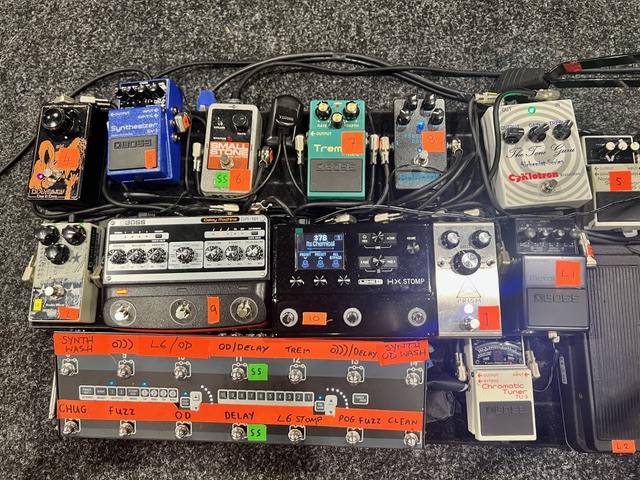
It became clear quite quickly that they didn’t want somebody with the same tone as Simon. His sound is so vast and all-encompassing, so they needed something that would fill a certain gap. I do occasionally get to use a dimed-out HM-2 though and go full chainsaw mode. There’s no feeling like that, just striking a power chord and listening to it rattle the stage.
What other pedals are you using with Biffy these days? Is the DM-2 still part of that setup?
I’m using the BOSS DM-101 these days, which is essentially the DM-2 on steroids. I’ve got all my DM-2 sounds but I can use tap-tempo and add reverb and modulation if I want them. It is hands down the greatest delay pedal on the planet. You can put an HM-2 or something into it and it will make those enormous sounds even bigger and add dimension and harmonics.
And what about the Squier that’s been with you for so long—do you still tour with it?
I can’t tour it anymore. It nearly perished in 2012 when Biffy was supporting Metallica. The crowd barrier was unsafe and it snapped, so they had to cancel the gig. We were genuinely concerned that that they were going to burn the place to the ground—and they did! But we managed to get the guitar out way before that happened.
So that guitar has survived a fire as well as decades of playing!
Exactly! I mean, we were insured so it ultimately would have been okay. But you can’t insure this Squier, you know? It’s not worth anything. I could probably have rebuilt one the same, but it would never be as good.
What do you enjoy most about playing those Biffy shows?
I get my jollies off every single night playing for Biffy Clyro because I love the tunes. I’ve got great guitars, a really loud amp, and I get to rock out in front of tens of thousands of people. I have the best time.
"Those Cardiacs records are above and beyond anything else to me. It's just music with absolutely everything in it."
Impossible Shoes to Fill
Another part of your story is becoming the singer for Cardiacs, one of your favorite bands. How did that opportunity come about?
It’s not a gig that I was ever, ever chasing. I didn’t think that they’d ever ask me. They had a record that Tim Smith had written and recorded the music for before he died, and they needed someone to sing on it. They tried a few other people, but it didn’t work out, so they called me. I still can’t quite believe that it’s happened—I’m still sort of getting my head around it.
What makes their music so important to you?
Those records are above and beyond anything else to me. It’s just music with absolutely everything in it. I think some people get a little bit put off by the everything-all-the-time nature of Cardiacs, but that’s what I like about it. You don’t drift off and have it on in the background while you do something else. You really, really listen to it because there’s so much to hear. It’s so rich and so rewarding.
With so much happening in those songs, how difficult were they to learn?
It was so hard man. You’re combing YouTube thinking, “Somebody must have learned this already.” But they haven’t! It’s so satisfying when you unlock it though.
When I was a kid, I always thought there was some magical Cardiacs mode, and once I learned that scale, I’d have it down. It’s not that—it’s total chromaticism. It’s totally unrelated major chords fitting together with a chromatic melody over the top. That’s Tim’s thing, and nobody can do it like he did it.
Once you’d learned the parts, how did you approach the guitar tones?
Tim never used any pedals—not even a tuner—so I tried to keep it minimal. I used a light overdrive and the BOSS DD-7 for the backwards delay in “Woodeneye”. I also had my DM-2 for a bit of slapback here and there. And that’s it!
Was keeping that setup minimal your decision, or something the band asked for?
There was never any discussion about it, but Cardiacs sound how Cardiacs sound, you know? I know what Tim’s style was, and I’ve got loads of recordings of him playing.
"Cardiacs’ music is just so embracing of all the great things about life, nature, and humanity. It’s for everyone."
A Celebration of Everything
You’ve described the joy of playing with Biffy. How does being on stage with Cardiacs feel?
There’s a different air with that stuff because there’s a poignancy due to the fact that Tim’s not here. There’s an air of celebration because people are so overjoyed to hear those songs again. I also respect that there’s sometimes an air of trepidation because, you know, I’m not Tim Smith, and I could never hope to replace him.
How have audiences responded to you and to hearing those songs again?
When we did London—in fact, when we did all those shows—everybody was just so happy and accepting. It was remarkable because it was such a young audience, and a really diverse audience too. People of color, a lot of trans folk—just a lot of LGBT people. It was really eye-opening. What other band shares that kind of audience?
That sense of an accepting community seems to be part of the music itself, doesn’t it?
This is it to me. I always push Cardiacs on people, and most people are repelled by them. But the people who got it would always come to me and say, “It’s just so celebratory.” That’s exactly what it is. If people are struggling in their lives or if they’ve got some kind of neurodivergence, Cardiacs’ music is just so embracing of all the great things about life, nature, and humanity. It’s for everyone.