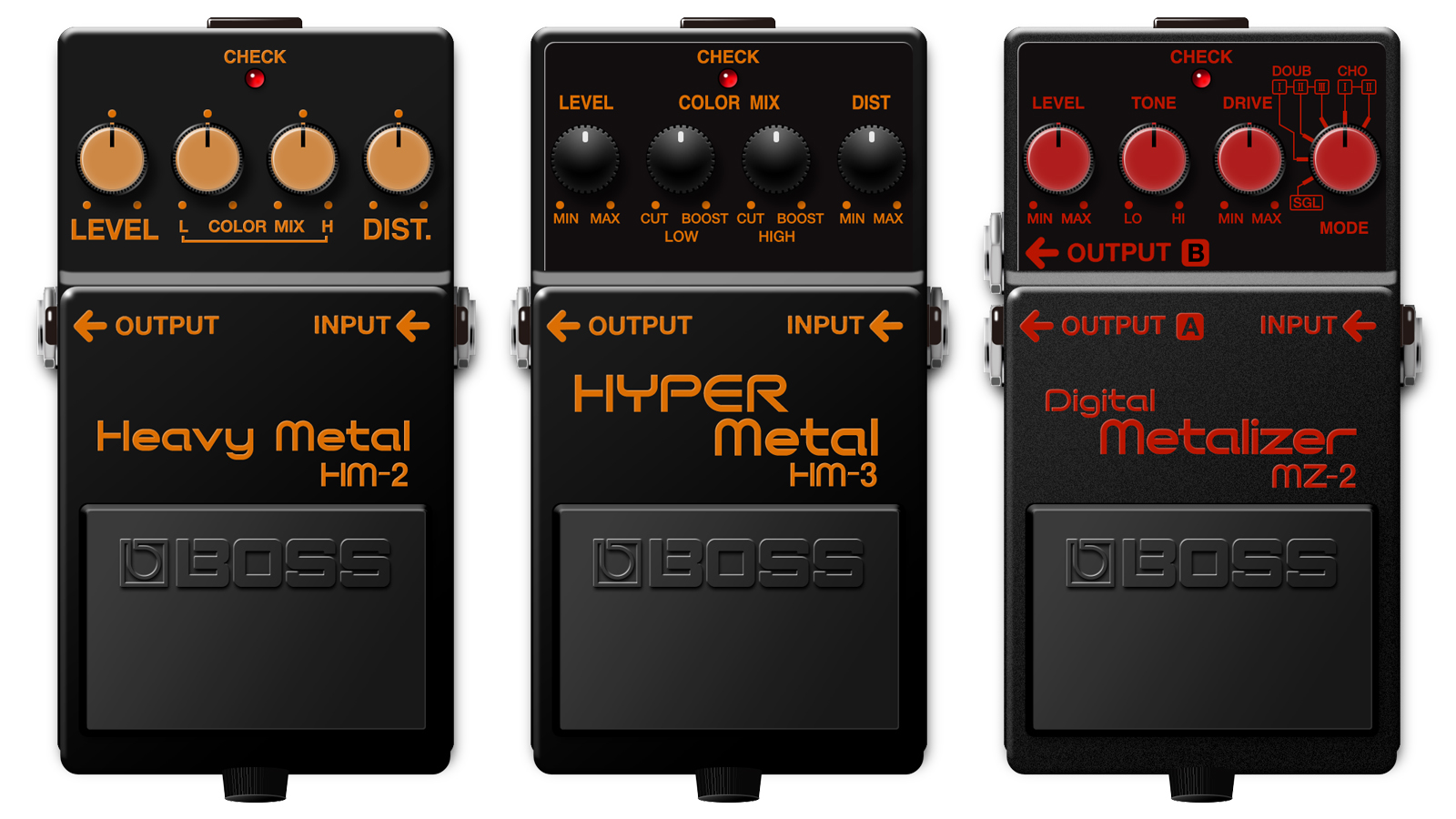
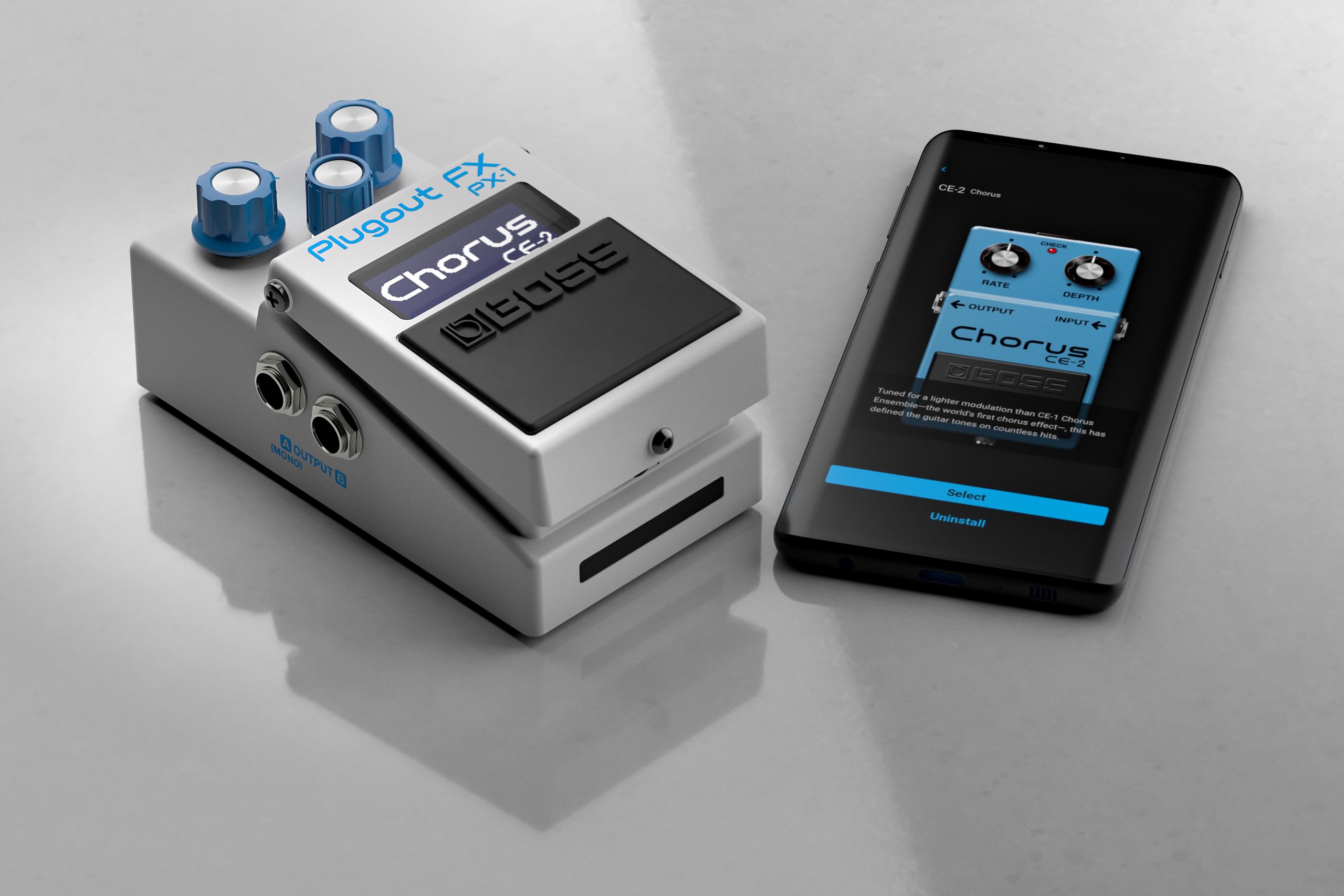
The PX-1 Plugout FX compact pedal gives guitarists of all styles and levels access to a spectacular array of vintage, rare, and classic BOSS effects. Curated from a historic catalog of game-changing devices, these timeless sounds are meticulously crafted using original units and brought to life with stunning realism. Our team of engineers in Japan is working tirelessly to expand the PX-1’s range of authentic BOSS effect models, and optional Model Passes are being developed continually. Keep an eye out for new PX-1 releases as they appear on the BOSS website and PX-1 app. In this article, you can read all about the third trio of PX-1 Model Passes released in September 2026, comprising the HM-2 Heavy Metal, HM-3 HYPER Metal, and MZ-2 Digital Metalizer.
Out of the box, the PX-1 comes with eight “1” designation BOSS effects baked into its permanent library, so you can start playing immediately. These include the 1977 debut “traffic light” trio of compacts—the OD-1 Over Drive, PH-1 Phaser, and SP-1 Spectrum—along with the DS-1 Distortion, CS-1 Compression Sustainer, TW-1 T Wah, SG-1 Slow Gear, and SD-1 SUPER OverDrive.
Beyond this, the PX-1 boasts eight user locations for storing your preferred choice of effects. Simply register your PX-1 with a free Roland Account and download the CE-2 Chorus, BF-2 Flanger, OC-2 Octave, VB-2 Vibrato, DD-2 Digital Delay, DF-2 SUPER Feedbacker & Distortion, PS-2 Digital Pitch Shifter/Delay, and PN-2 Tremolo/Pan using the BOSS Effect Loader app.
You can read all about the origins of these 16 awesome BOSS effects included in the PX-1 Plugout FX package in this article:

Discover why vintage, rare, and classic BOSS effects reborn in the PX-1 Plugout FX remain timeless tone-shaping tools for stage and studio.
MoreExpanding your collection is easy. With the option to purchase PX-1 Model Passes as they are released, you can curate your own BOSS effects library over time. That way, you’ll enjoy the sounds of vintage, rare, and classic BOSS stompboxes without paying collectors’ prices.
So far, three batches of PX-1 Model Passes have been released, and you can read all you need to know about the featured pedals in our ongoing series:

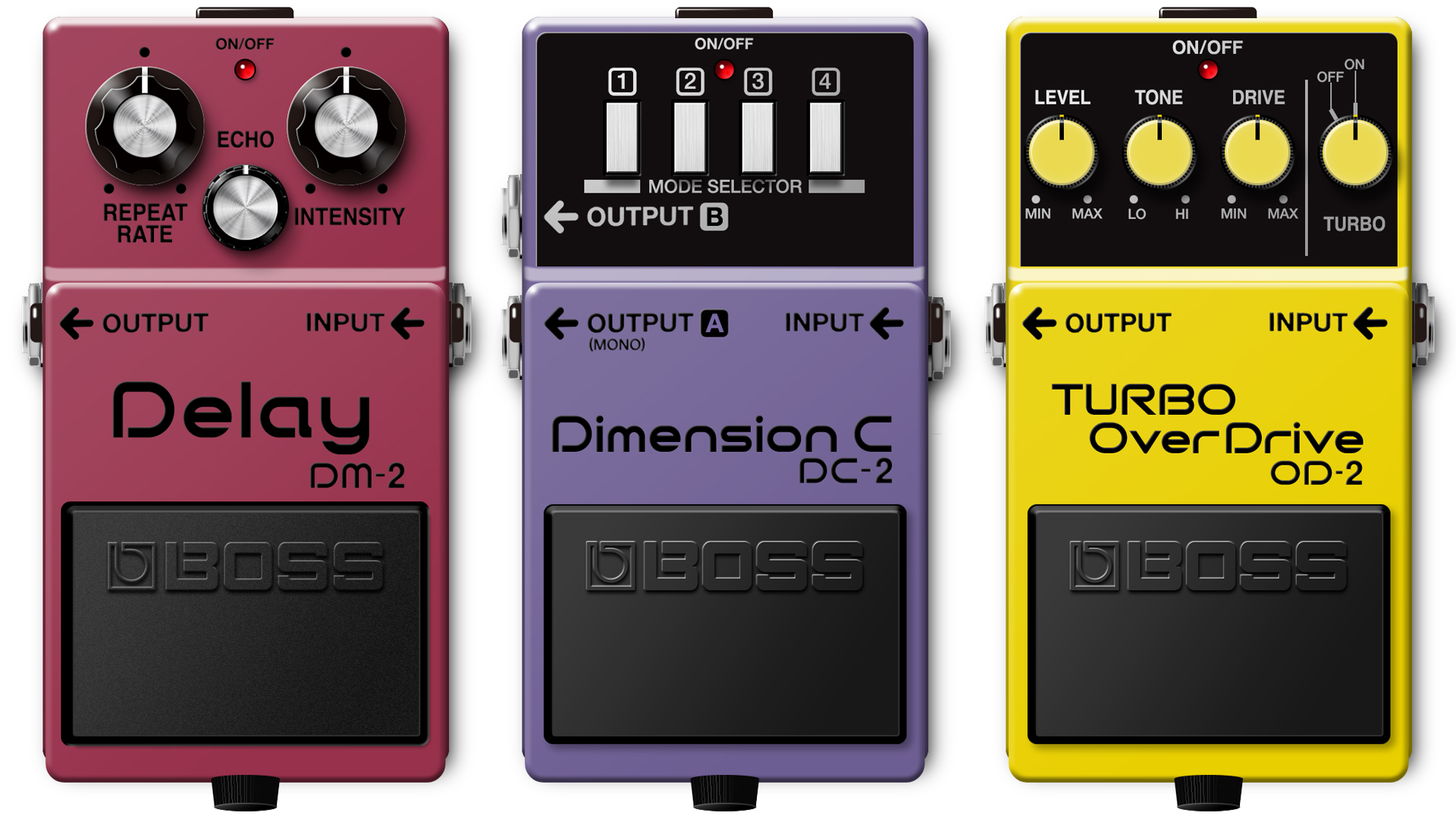
Add the vintage analog DM-2 Delay, tone-enhancing DC-2 Dimension C, and harmonically rich OD-2 TURBO OverDrive to your PX-1 effects palette.
More
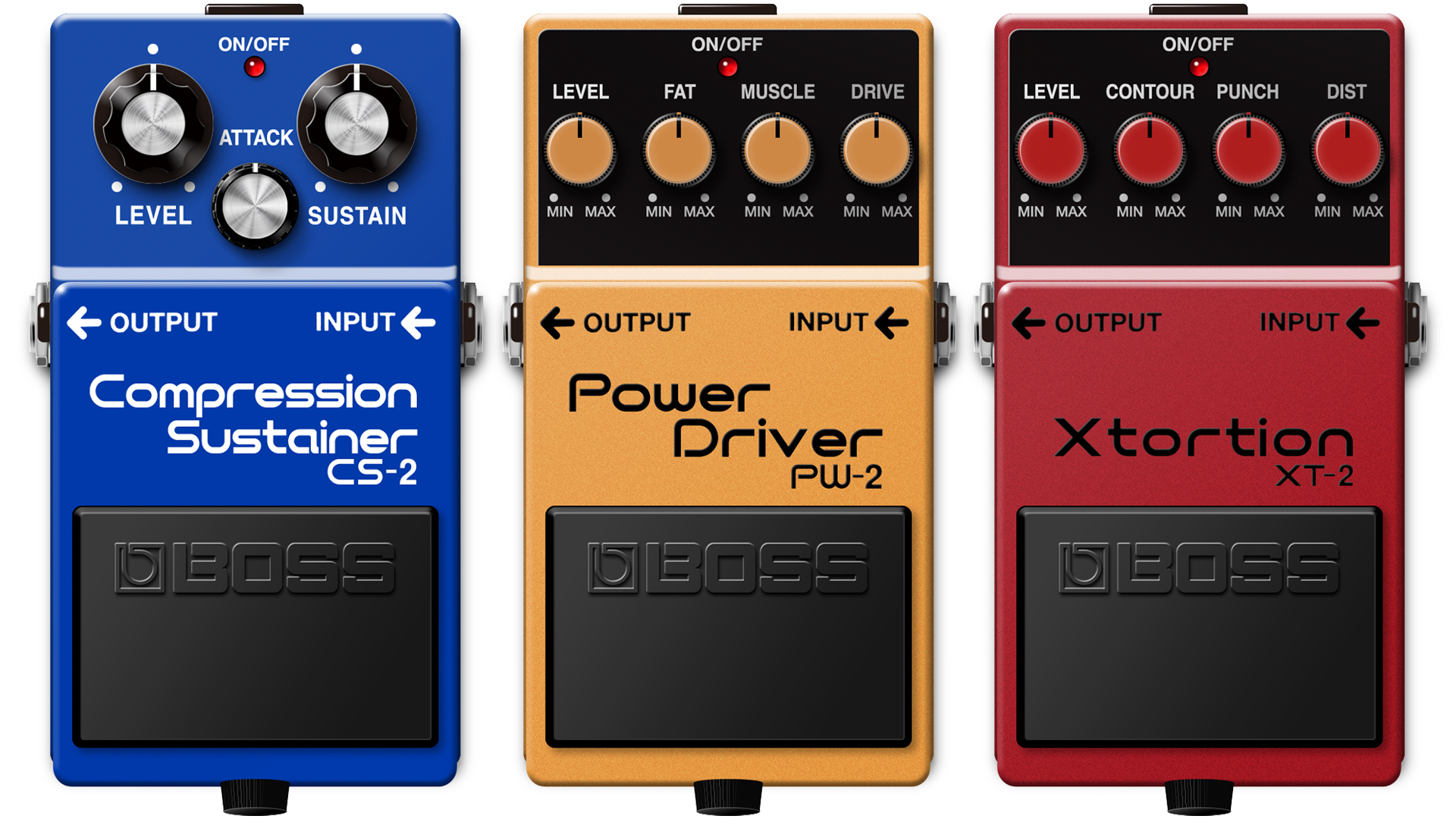
Level up your PX-1 collection with the classic 1970s CS-2 Compression Sustainer, amp-like PW-2 Power Driver, and high-gain XT-2 Xtortion.
MoreHM-2 Heavy Metal
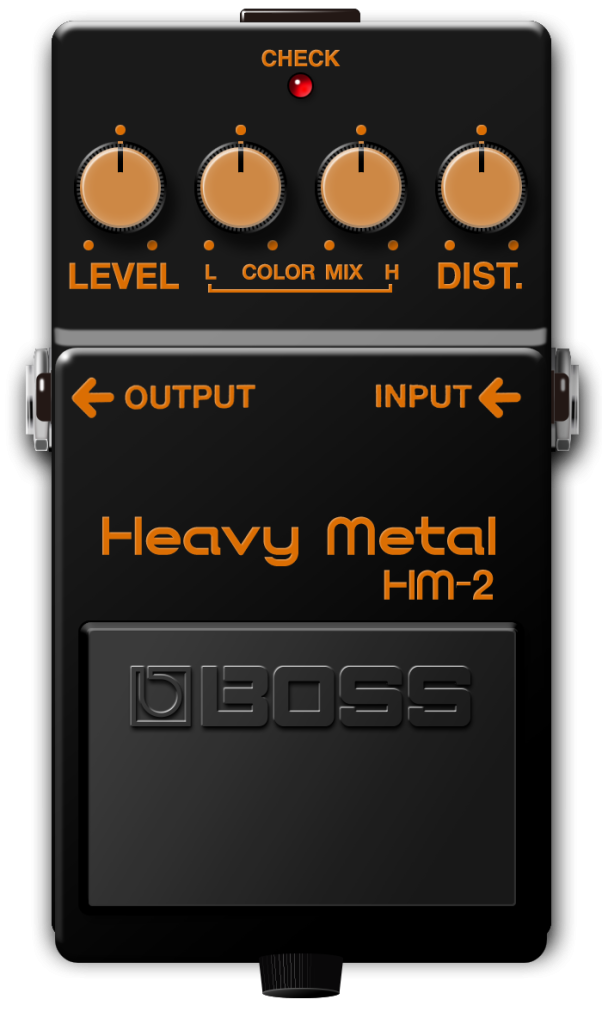
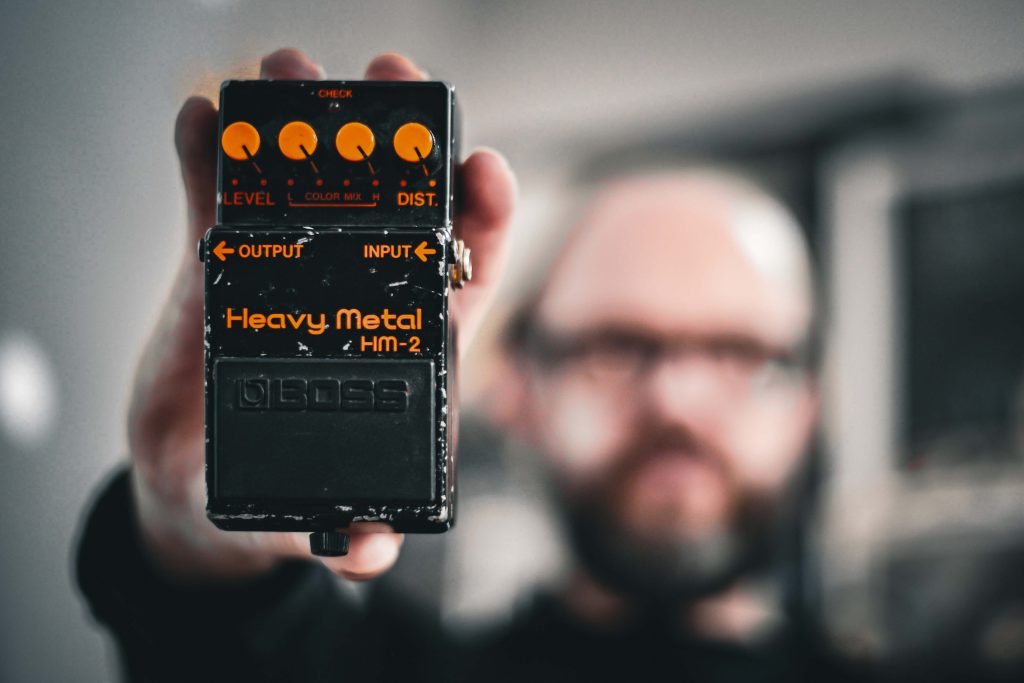
Released in 1983 and discontinued in 1991, the HM-2 Heavy Metal forged a legacy as one of the most distinctive-sounding BOSS compacts of its type. This influential dirt pedal houses a fierce distortion circuit that later became synonymous with the “chainsaw” tone of Swedish death metal. Hailed as a true high-gain masterpiece, original examples are still coveted by hard rock and metal axe-wielders today.
The HM-2’s striking sound is shaped by numerous stages of gain circuitry designed to retain the nuances of picking. The first employs a two-stage transistor amplifier, which helps suppress noise. Interestingly, its bias fluctuations give the low end a subtle boomy quality reminiscent of the era’s amplifiers. While the final clipping stage is finessed with diodes, the signal is first driven through an asymmetrical overdrive circuit inspired by the classic SD-1/Marshall combination—a staple of ‘80s metal rigs.
Churning out ladles of molten-hot metal is the HM-2’s M.O. But there’s more to it than just red-hot distortion: a pair of unique EQ controls, Lo and Hi, further define its salient sonic signature. The Lo knob enhances bottom end for added heaviness—great for low-down dirty riffs and drop tunings. But when it comes to distortion, midrange is king, and the Hi knob lets guitarists rule the stage, cutting through mixes with authority.
The HM-2’s aggressive EQ was certainly a defining feature; both Lo and Hi boast exceptionally wide adjustment ranges of around ±20 dB. Frequency-wise, Lo utilizes a peaking filter centered at 88 Hz, while Hi combines two peaking filters centered at 800 Hz and 1.5 kHz. So, despite being labeled Hi, it’s worth remembering that this control boosts or cuts midrange rather than treble.
HM-3 HYPER Metal
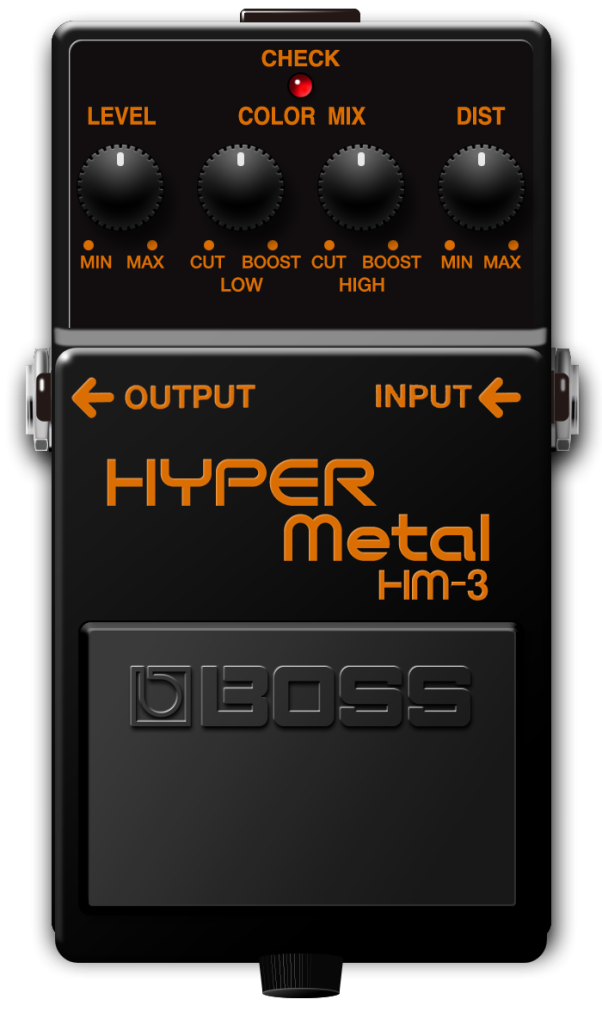
Appearing in 1993 and remaining in production until 1998, the HM-3 HYPER Metal built on the success of its predecessor, the HM-2 Heavy Metal, with a more tempered approach to high-gain distortion. Its four-control layout—Distortion, Level, and Color Mix (comprising Low and High knobs)—opened up a wealth of tonal possibilities. Combining smooth yet gnarly saturation with intuitive EQ, the HM-3 comes into its own in a full-band setting, where clarity and definition matter.
Used by an eclectic array of artists, from southern rock guitar star Warren Haynes to Kurt Cobain during Nirvana’s final recording session, the HM-3 is a deep cut in the BOSS back catalog. But it’s also one of the most versatile high-gain units of the ‘90s. Whether you want to go hard and heavy or dial things back a bit, this under-the-radar gem handles anything from punchy, percussive power chords to thick, sustained lead work.
The HM-3 concept broadly follows the legendary HM-2: asymmetrical overdrive prior to diode clipping. However, instead of using a transistor amplifier in the preceding stage, where bias shifts contributed to the Heavy Metal’s fat low-end boom, the HYPER Metal features an op-amp-based gain structure. The result is crisper, tighter distortion—a tonal hallmark of the ’90s era.
In addition to its sharp-edged distortion, the HM-3’s EQ controls provide a more moderate range of adjustment than those of the HM-2. Low (80 Hz peak) and High (800 Hz and 4.5 kHz peaks) offered around 14 and 13 dB of gain, respectively. The payoff was a powerful yet mix-friendly pedal, voiced for clear low-end focus and articulate midrange—even with the Distortion control cranked.
MZ-2 Digital Metalizer
Back in 1987, LA metal was exploding worldwide. At the epicenter of this hard-rock spectacle was the Sunset Strip—a concentration of world-famous venues where big hair and big rigs ruled. As guitarists increasingly embraced digital rackmount effects, BOSS responded that year with the MZ-2 Digital Metalizer. Fusing analog distortion with digital chorus or doubling delay, this hybrid device squeezed ‘80s refrigerator-rack tone into a spacious-sounding compact pedal.
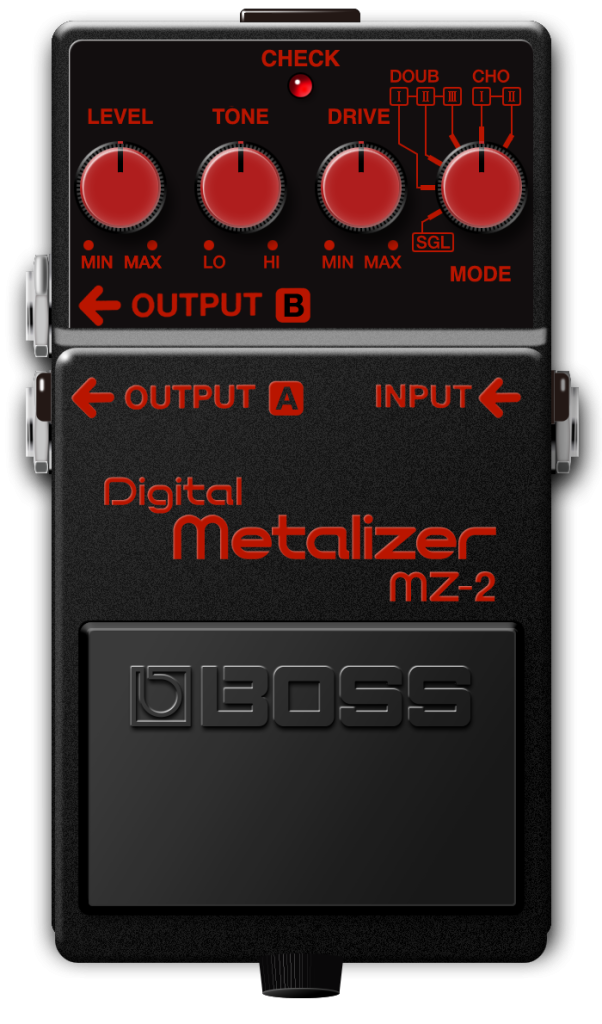
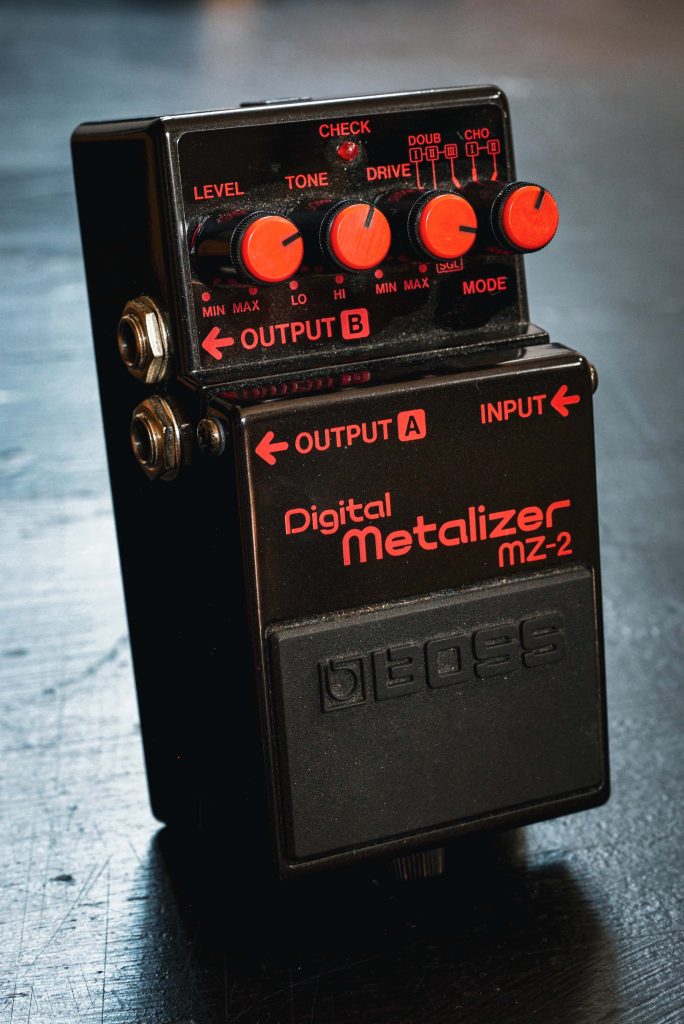
Alongside the essential gain trio of Level, Tone, and Drive, the MZ-2 sports a novel fourth knob labeled Mode. This six-way selector switch gives users instant access to two chorus (CHO) or three doubling-delay (DOUB) effects, adding movement and dimension to the Digital Metalizer’s amped-up drive. For straight-up distortion, the SGL “Single Mode” setting conveniently bypasses these onboard digital effects.
With a preset rate of 0.76 Hz, “Chorus Modes” CHO I and II fatten the sound using pre-delay times of 15 and 30 ms, respectively. “Doubling Modes” DOUB I, II, and III add short thickening delays of 15, 30, and 60 ms, respectively. For dual-amp rigs, an optional stereo output splits the signal while boosting effect levels for added separation and width.
The MZ-2’s distortion section was inspired by the 1985 OD-2 TURBO OverDrive—a discrete-circuit design notable for its low-noise operation. Voiced for hard rock rather than extreme metal mayhem, the Digital Metalizer keeps heavy gain and top-end frequencies in check, while its Tone control offers further shaping via high-frequency shelving. Consequently, the MZ-2 proved versatile enough to accommodate a broad range of styles and was ultimately embraced by notable players well beyond its target market.
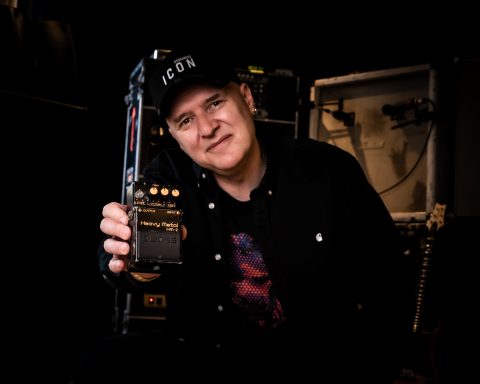
The Digital Metalizer finally bowed out in 1992, as grunge transformed the musical landscape. However, it has since developed something of a cult following. Indeed, The Cult and Pixies producer Tom Dalgety has used it on numerous recordings in recent years. The MZ-2 was also a key component of Pink Floyd guitar legend David Gilmour’s pedalboard.