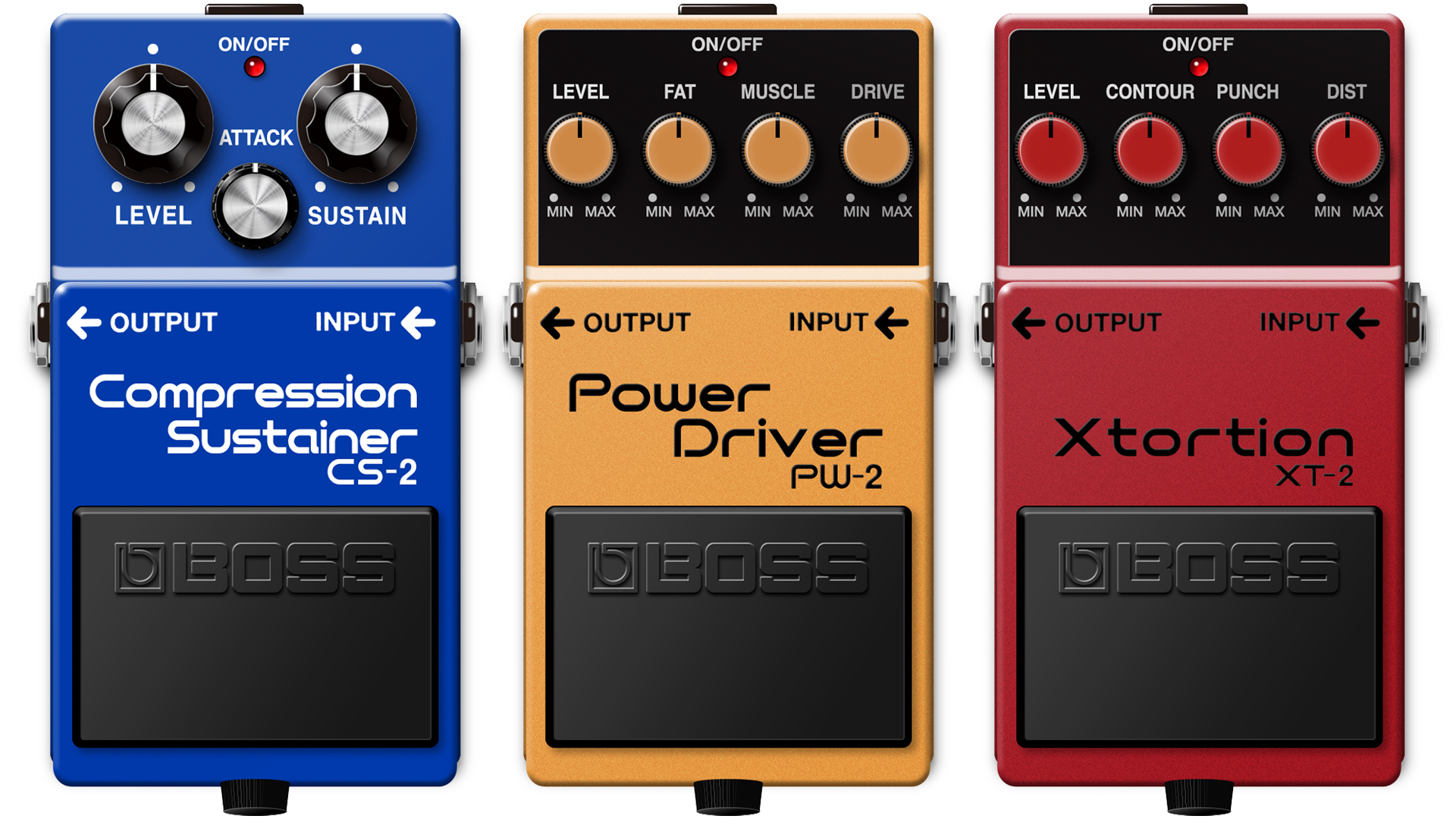
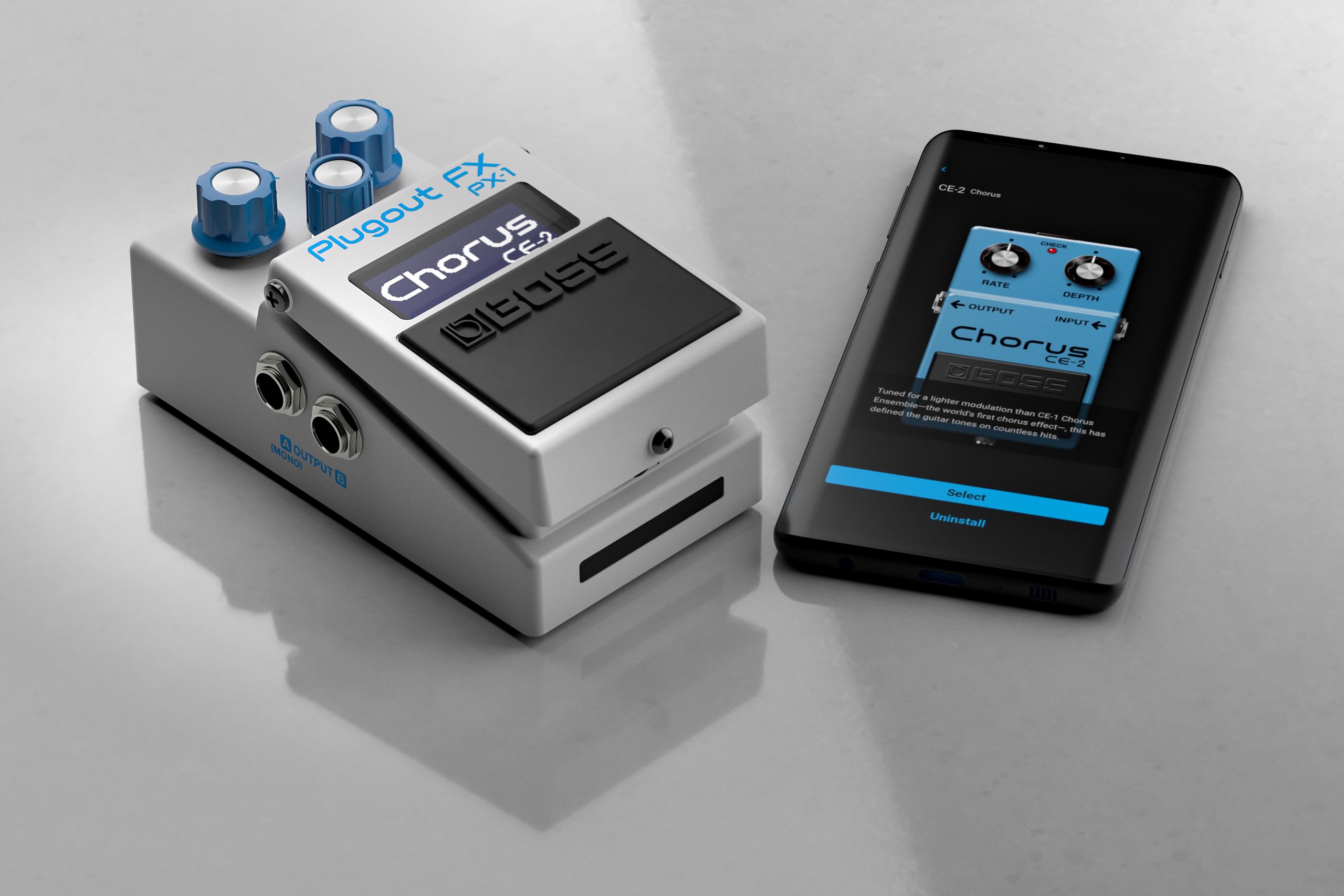
The PX-1 Plugout FX compact pedal gives guitarists of all styles and levels access to a spectacular array of vintage, rare, and classic BOSS effects. Curated from a historic catalog of game-changing devices, these timeless sounds are meticulously crafted using original units and brought to life with stunning realism. Our team of engineers in Japan is working tirelessly to expand the PX-1’s range of authentic BOSS effect models, and optional Model Passes are being developed continually. Keep an eye out for new PX-1 releases as they appear on the BOSS website and PX-1 app. In this article, you can read all about the second trio of PX-1 Model Passes released in May 2026, comprising the CS-2 Compression Sustainer, PW-2 Power Driver, and XT-2 Xtortion.
Out of the box, the PX-1 comes with eight “1” designation BOSS effects baked into its permanent library, so you can start playing immediately. These include the 1977 debut “traffic light” trio of compacts—the OD-1 Over Drive, PH-1 Phaser, and SP-1 Spectrum—along with the DS-1 Distortion, CS-1 Compression Sustainer, TW-1 T Wah, SG-1 Slow Gear, and SD-1 SUPER OverDrive.
Beyond this, the PX-1 boasts eight user locations for storing your preferred choice of effects. Simply register your PX-1 with a free Roland Account and download the CE-2 Chorus, BF-2 Flanger, OC-2 Octave, VB-2 Vibrato, DD-2 Digital Delay, DF-2 SUPER Feedbacker & Distortion, PS-2 Digital Pitch Shifter/Delay, and PN-2 Tremolo/Pan using the BOSS Effect Loader app.
You can read all about the origins of these 16 awesome BOSS effects included in the PX-1 Plugout FX package here.
Expanding your collection is easy. With the option to purchase PX-1 Model Passes as they are released, you can curate your own BOSS effects library over time. That way, you’ll enjoy the sounds of vintage, rare, and classic BOSS stompboxes without paying collectors’ prices.
So far, two batches of PX-1 Model Passes have been released. You can read all you need to know about the pedals featured in the second one, released in May 2026—the CS-2 Compression Sustainer, PW-2 Power Driver, and XT-2 Xtortion—below.
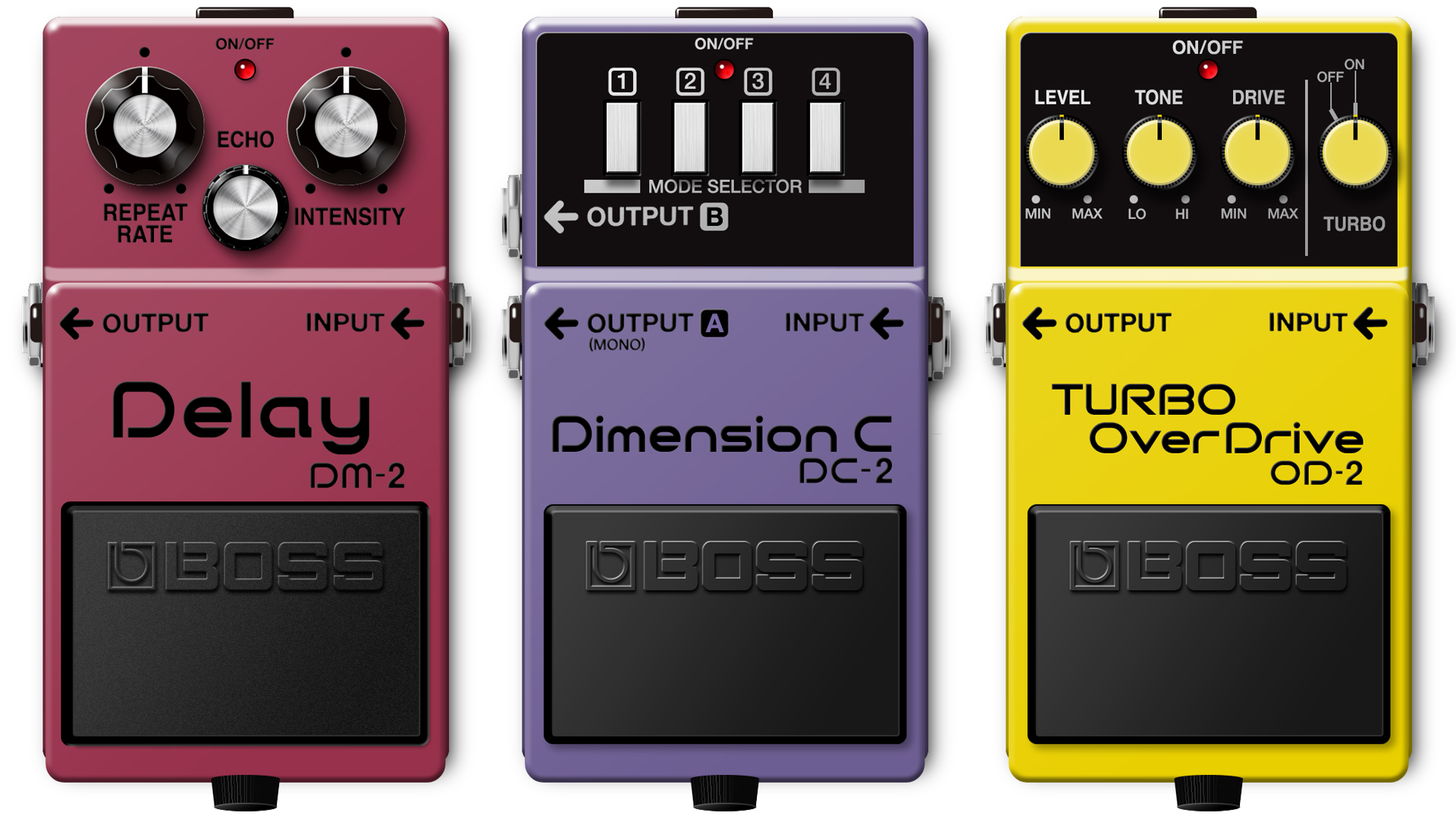
If you would like to learn more about the pedals featured in the first batch of PX-1 Model Passes released in January 2026—the DM-2 Delay, DC-2 Dimension C, and OD-2 TURBO OverDrive—then click here.
CS-2 Compression Sustainer
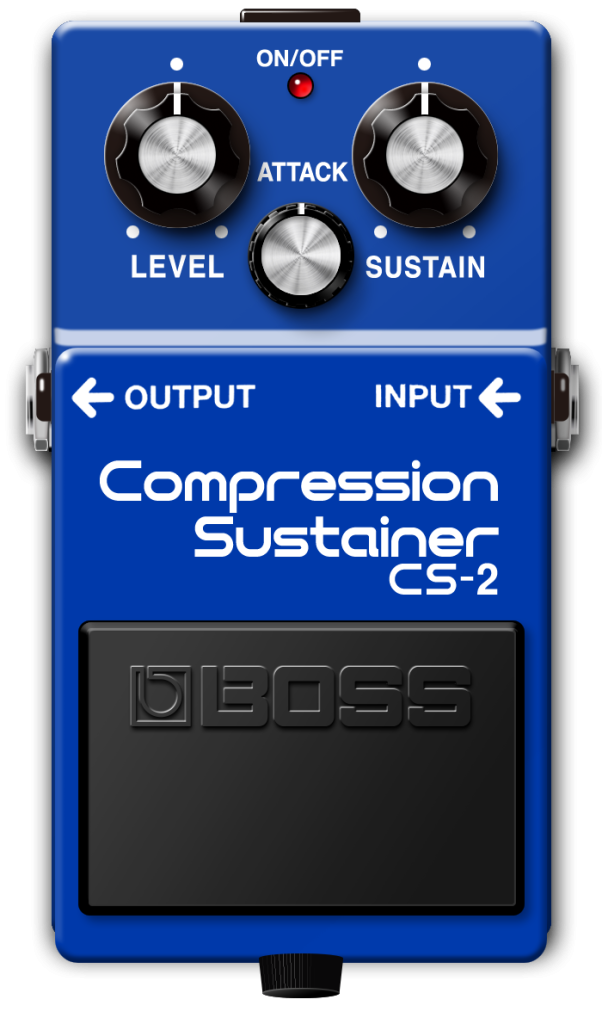
Succeeding the original 1978 CS-1 Compression Sustainer, the CS-2 Compression Sustainer was released in late 1981. As BOSS continued to refine its compact pedal lineup, the CS-2 presented an updated compressor circuit with enhanced sustain, punch, and precision.
The CS-2 departed from the CS-1’s two-way Normal/Treble switch and introduced a third control: Attack. Featuring a new VCA-based circuit, it delivered a faster response while allowing players to preserve touch and tonal integrity—even during fast-playing passages.
Moving away from the softer feel of the CS-1’s photocoupler-based design, the VCA-equipped CS-2 boasted a more immediate attack characteristic that suited musicians of all types. The Attack control allowed players to dial in the compressor’s response time, determining how transients were preserved or attenuated across different instruments and playing styles.
Alongside Attack, the CS-2 featured Level and Sustain controls for output and compression amounts, respectively. Fully clockwise, Sustain extended note duration, while lower settings tightened dynamics. This versatility made the CS-2 effective not only as a compressor, but also as a limiter with Sustain set fully counterclockwise.
PW-2 Power Driver
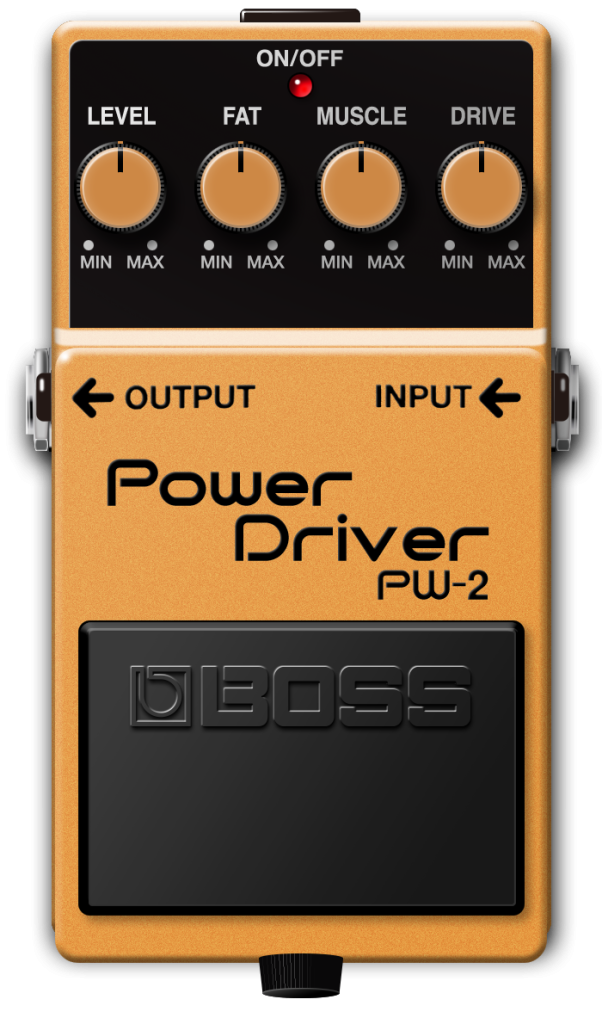
Introduced in 1996 and available only briefly until 1998, the PW-2 Power Driver stood apart from other BOSS drive pedals in both sound and labeling convention. With controls dubbed Fat and Muscle, it signaled a fresh approach focused on visceral drive and tone shaping.
Designed for powerful chord work and grungy low-end textures, the PW-2 was prized for its ability to distort the full frequency range, rather than filtering bass frequencies before clipping. This produced a distinctly raw character reminiscent of a vintage Fender amplifier pushed to its limit.
The clipping stage used a discrete amplifier design (as per the OD-2 and BD-2), delivering a natural, amp-like response with moderate gain and impressively low noise. With Fat and Muscle set to their center positions, the post-EQ section yielded a relatively flat frequency balance.
The Fat and Muscle controls were peaking filters centered at 112 Hz and 945 Hz, respectively, offering a wide range of tonal shaping. Fat increased or trimmed low-end weight, while Muscle sculpted the all-important midrange. Combined with Drive and Level, they delivered everything from thick, chunky rhythms to heavily saturated grunge tones.
XT-2 Xtortion
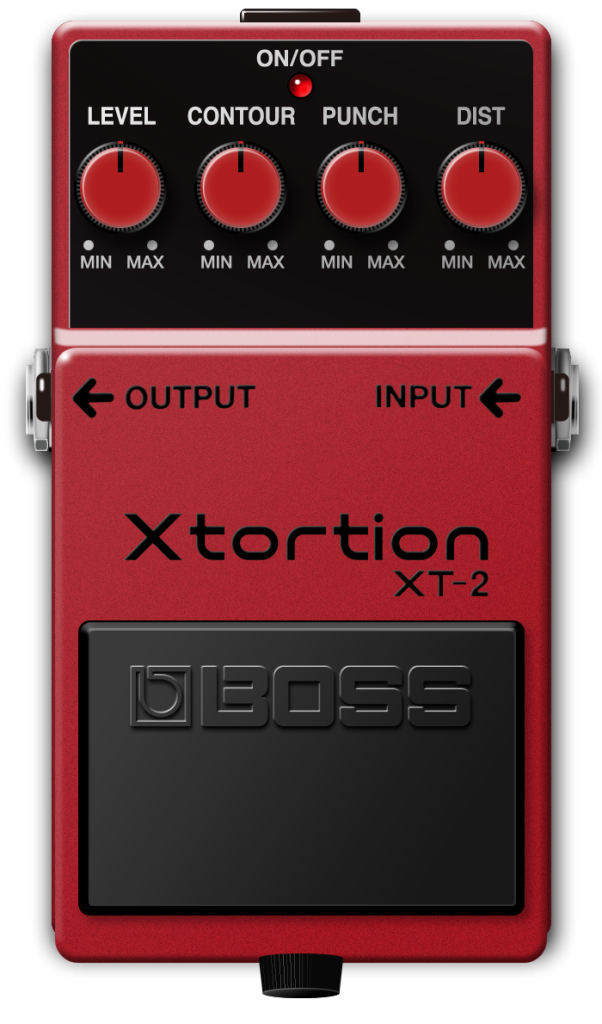
As per the PW-2 Power Driver, the XT-2 Xtortion was released in 1996 and remained in production for a brief time until 1998. Appearing in striking red livery (originally considered for the DS-2 TURBO Distortion), it stood apart from many pedals of the era thanks to its distinctive voice and extremely high gain—even holding its own against the mighty MT-2 Metal Zone.
Announced as a “futuristic metallic distortion,” the XT-2 combined Level and Distortion controls with advanced tone-shaping Contour and Punch parameters. Its design utilized numerous filters before and after the distortion stage, actively shaping the sound. LED clipping, combined with op-amp distortion in the downstream fixed filter path, produced harmonically rich saturation like no other.
In the pre-distortion section, the Punch circuit featured three peaking mid-boost filters at 500Hz, 1320Hz, and 3kHz. Even with Punch at minimum, the boost remained active, ensuring a consistently strong character. The pre-distortion section also included fixed mid-boosts at 200Hz and 4kHz, with the 4kHz boost producing a particularly distinctive edge.
Post-distortion, the Contour circuit handled the three familiar amp-style tone controls of bass, middle, and treble simultaneously. This created further complex tonal behavior; turning Contour up cut mids and boosted bass, while turning it down cut treble. Despite this complexity, the XT-2 always retained a distinct sonic identity, sounding unmistakably like… well, the XT-2!