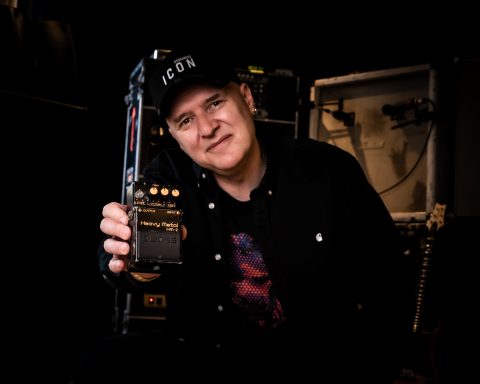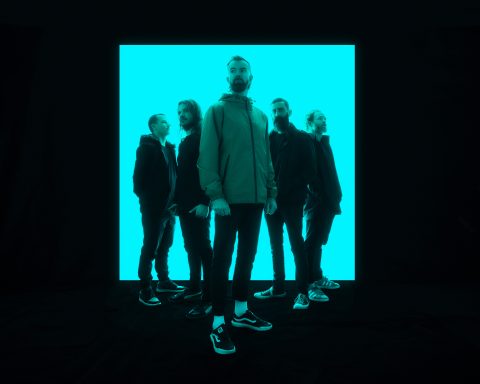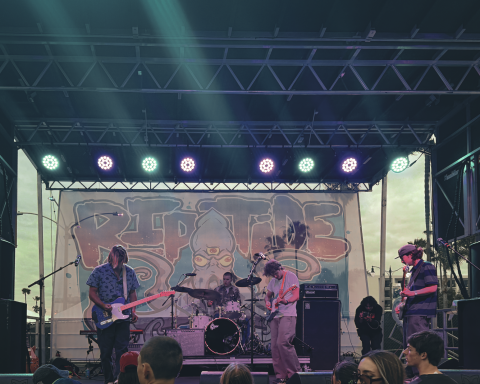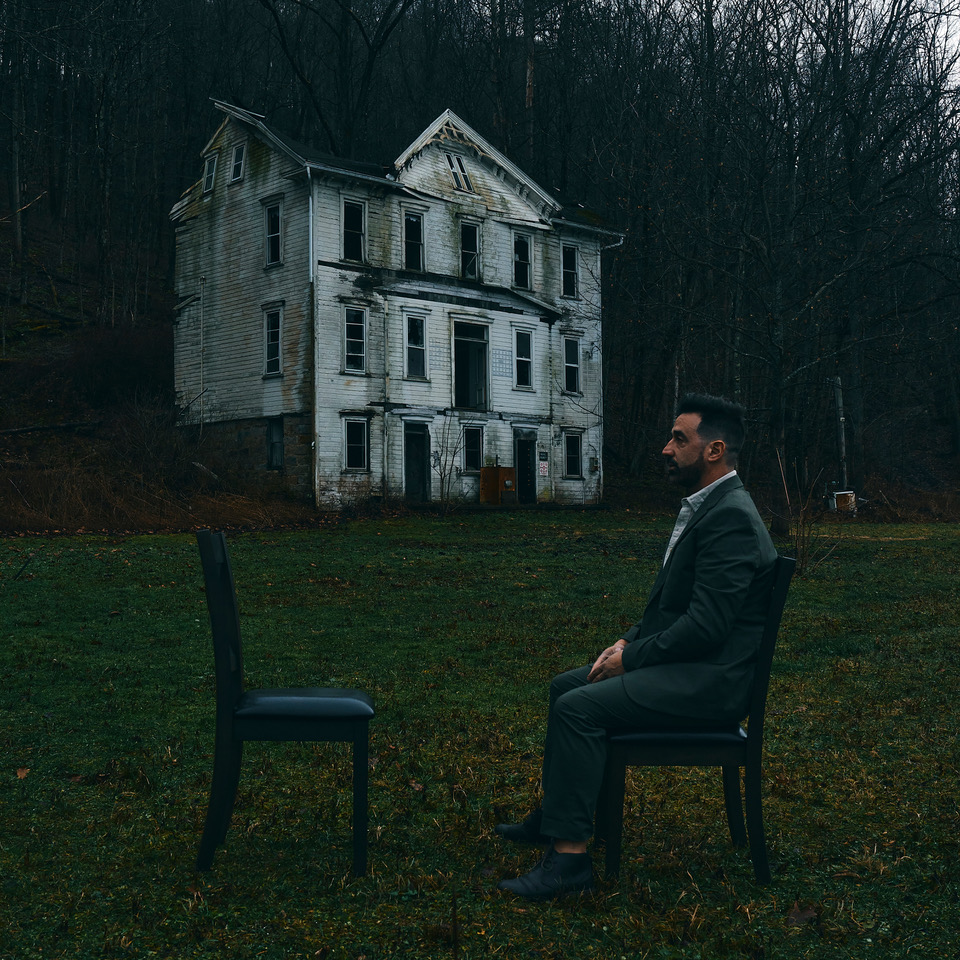


A founding member of emo icons, The Juliana Theory, guitarist Josh Fiedler is stepping into unexpected new territory with his first solo project, LOWREV. A lifelong songwriter, Fiedler found himself with a growing collection of musical ideas that didn’t quite fit within a band context. In a matter of months, those ideas took shape as It’s Hard To Lie To Strangers, released on legendary independent imprint Equal Vision Records.
Creative Evolution
Formed in 1997, almost by accident, The Juliana Theory began as a side project that the band did not anticipate lasting. Instead, they became one of the defining voices of the emo era. Despite an on-again, off-again hiatus from 2006 to 2020, the band is back on the resurging emo scene.
After signing with Equal Vision Records, they released their first new music since 2005’s Deadbeat Sweethearbeat, marking a comeback that has since grown into major tours, including Andrew McMahon in the Wilderness’ Hello Gone Days Tour with Dashboard Confessional, and a 25th-anniversary run celebrating Emotion is Dead in Australia.
In the years between, Fiedler continued to evolve creatively. Following The Juliana Theory’s initial break, he collaborated with bandmates and new players in projects like Vesta—an indie-leaning continuation that stepped away from the pressures of the major-label emo scene. Later, he joined forces with Scott Mellinger, Justin Niedzwecki, Chris Fafalios, and Kelly Tobias to form the post-emo supergroup PACK in 2018.
Now, with LOWREV, Fiedler is flexing his creative muscles in a new way, on his own terms. In April 2026, he announced the project and released his debut single and title track, “It’s Hard To Lie To Strangers.” Ahead of the album release, we spoke with Fiedler about his creative process and the BOSS gear that’s been by his side and under his feet every step of the way.
The Listening Experience
You worked at a music store when you were younger. How did that influence your musical tastes?
It was a record store called Camelot Music. We had an alternative/punk section, and I had a manager who would special-order all kinds of stuff. And then, other employees and I would tell him things to get in, like pop-punk from Lookout Records or Fat Records and emo stuff from Jade Tree and Equal Vision.
It broadened my musical tastes, too, because we would play all kinds of music all the time, and the employees had different tastes. And obviously, being surrounded by every album, you’d see something or hear a song and be like, “Oh, I’m going to take that.” We’d get first crack at everything that would come into the store. I have a lot of CDs because of that.
And that was before streaming, before everything was available. It took a little more time and intention to discover new music. Do you think it played a part in how you listen to music today?
For sure. I grew up in the ’80s and ’90s, so when I would get a record—tape, CD, or vinyl—for the first time, I would take it home and listen to the whole thing. I’d read all the liner notes and the lyrics. It was more of an experience then, which I think is coming back a little bit now, too. The younger generation is starting to realize that it’s not really special to just stream something off your phone. I think that’s why vinyl has had such a resurgence over the past 10 years, and now, CDs are coming back too, which is cool.
"A lot of the record is first- or second takes, just me playing. I would leave it because I wanted to capture the moment that I wrote and recorded the song."
Where You Going?
Speaking of new music, your first solo album, It’s Hard To Lie To Strangers, comes out at the end of the month. What made you decide to embark on a solo project after so many years in bands?
I’m always writing and recording, whether it’s for The Julianna Theory or my other band, PACK. I’ll record songs and send them to my friends. I had a lot of songs that didn’t really fit with either band. They didn’t have vocals or anything, and some of them were just ideas in my head, voice notes, or just like a little part that I would record myself playing on my phone.
Sometime last year, something just kind of came over me, and I decided to write and sing some of my ideas. I sent it to a couple of friends, and they were very encouraging. And one song led to five. I sent that to my friend, Dan, at Equal Vision. And he asked what I thought about doing a record.
I had a lot of other songs in my brain. I finished another six or seven, and it became a record within two months. I would write and record in between conference calls at my day job at the time. It was really kind of weird. I never thought I’d do it. But as I did, something just kind of came over me, flowed out, and here it is.
Does finishing this album feel like the closing of a chapter or the opening of a new one?
I’m probably opening a new one because I already have enough songs for a second record. I’ve recorded them and everything. I was joking around that I’ll have my second record finished before the first one comes out, but that’s not totally the case. I needed to have a little more patience. I’m having my friend drum on it. And we’re all busy with regular jobs, kids, and different projects. But yeah, it’s a new chapter.
What was it like working mostly alone as opposed to working with bandmates?
It was kind of awesome. I just did whatever I wanted, rather than overthinking and overanalyzing. I just went with it. A lot of the record is first- or second takes, just me playing. I would leave it because I wanted to capture the moment that I wrote and recorded the song. Some of the musical ideas are the basis for a song. I might have just had a verse or chorus, but I didn’t have bass, piano, drums, vocals, or anything. A lot of it was started and finished in a day. And it was kind of cool not to have to worry about anything or anybody else.
"I'm a big band person, but it is kind of nice to be able to do something on my own that I have complete control over."
That being said, I love being in a band, and I love the camaraderie when you’re in a room with four of your other friends. Or Brett (Detar) in The Juliana Theory, I love to be able to send him some ideas, and then he’ll spit out something that I didn’t even think he would do, which is cool. Then he’ll send it back, and like the song’s done. Or he’ll take two of my songs, break them apart, and create four more. It’s pretty cool that way, too.
I’m a big band person, but it is kind of nice to be able to do something on my own that I have complete control over.
You recorded it in your basement. What’s your setup like?
Honestly, it’s really small. It’s my MacBook, and I go into Universal Audio Volt, then into Logic, and then I have a bunch of different plugins and stuff, too. I use all my guitars. I have a modeling pedalboard and other pedals too. Then, I have a cheap microphone that I used for all the vocals. And that’s kind of it. The computer’s probably the most expensive part.
My drummer has a larger setup with a few different types of room mics and a couple of snare mics.
My incredibly small setup is kind of amazing. Twenty-five years ago, this would have blown my mind. Back then, you needed access to a full studio packed with tons of gear. Now, you can just record everything on your own.
What was it like recording with your family around?
I typically record during the day when they’re not here. They would be at school. My wife would be at work. So, I had the house to myself. I don’t like anybody hearing me singing. Sometimes I would finish some stuff late at night after everybody was asleep. I’d come down and finish adding synth or whatever to a track or do a little extra background vocals. But it’s mostly just me here by myself with my dog.
"I feel like it's a 20-year cycle, where things that came out in the past are rediscovered."
Emotion is (Not) Dead
Emo music is having a resurgence. Why do you think that sound and emotion are resonating again?
I feel like it’s a 20-year cycle, where things that came out in the past are rediscovered. Right before emo came back, grunge was back in full effect, too. In the late ’90s/early 2000s, we were listening to Led Zeppelin, Pink Floyd, and The Who.
That time was special. You had all these bands that came out of nowhere, like New Jersey or Kansas. And we were all part of this bigger scene. We were playing in fire halls and people’s basements. There was a vibe that hadn’t existed before.
It’s obviously great music. It’s stood the test of time, and people are rediscovering it now, 20 to 25 years later. It all comes back around.
Last summer, The Juliana Theory toured Emotion Is Dead again for its 25th anniversary. Did you try to recreate the original tones? Or did you reinterpret them with modern tools?
For the most part, I would recreate using modeling. I have a pretty good memory of what amps and stuff I used back then, so I would try to recreate as best as I could.
Why do you think that album still resonates with people decades later?
I don’t know. It’s kind of funny. When we were writing and recording it, I didn’t think I’d be going to Australia and playing the whole thing front to back 25 years later. It just blows my mind. It’s awesome. I love it that people still connect with it. We did something right.
Big Rigs and Broken Axles
How has your relationship with gear changed over time?
Back in the early 2000s, we had a tour bus, and my rig was gigantic. I had a three-tier pedalboard. I think I was using big pedalboards before most people. It was huge. I had so many weird pedals on it. And then eventually, we stopped using the bus and went back to a van trailer. I don’t know how many axles we broke, but we realized we should probably downgrade our amps a little bit. So, I went to combo amps.
Now, I use a BOSS Katana all the time for local shows. I love that thing. It’s so good. I know it sounds good as a regular amp too, but I use it as an FR cab, and the speakers sound so good. It’s always very reliable. Don’t have to worry about tubes blowing up on me or anything.
Guitar-wise, I’ve gone from Telecasters to Les Pauls, and then back to Telly. I’m really heavy into P-90s these days, too, so I have a Novo I got last year that I use a ton. It’s got P-90s in it. I have a couple Reverends with P-90 that I use a lot. I change it up a lot. I don’t like to stick with one thing all the time. It’s boring.
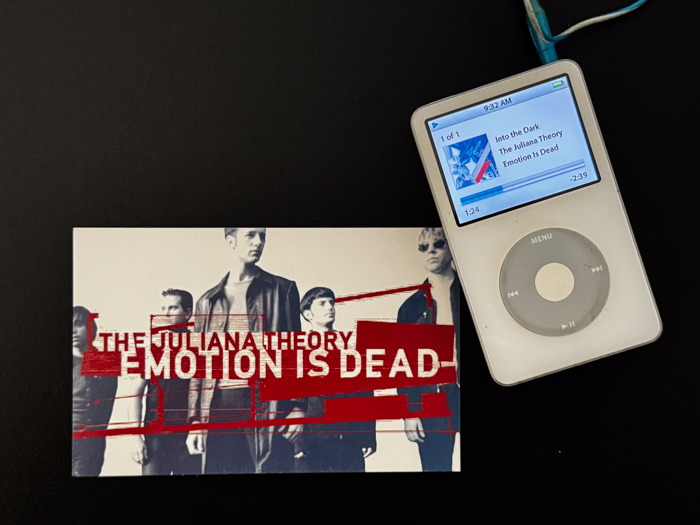
You mentioned online that you used a wah pedal on Understand This Is a Dream. And then you added BOSS Reverb, DD-Delay, and Chorus for Emotion is Dead. How did those contribute to the evolution of your sound?
When we started The Juliana Theory, we never really wanted to recreate anything—we were just figuring it out as we went. Back then, my setup was super simple. I used a JCM 900 with a footswitch, a lot of distortion, and a wah pedal.
Honestly, I don’t even remember exactly how I was using the wah—I think it mostly came out in the live set.
"When we started The Juliana Theory, we never really wanted to recreate anything—we were just figuring it out as we went."
When we started writing and recording songs for Emotion Is Dead, I got a DD-5 and RV-5 Digital Reverb pedal. And then when we were recording, we used tremolo, phase, and flange. The first pedal I bought after Emotion is Dead was the BOSS purple BF-2 Flanger pedal, the classic. That was on my pedal board forever. Same with the DD-5.
We were expanding our tones and effects across songs because we didn’t want to rely on just distortion and clean tones. We love the Smashing Pumpkins, that early ’90s stuff that was using chorus and delay.
And then, obviously going back to Led Zeppelin, I mean, like delay, reverb, everything. Our other guitar player and I got really into effects and just wanted to keep growing the boards.
Is there a BOSS pedal you’ve come back to over the years because it works no matter the era or setup?
Every BOSS pedal I’ve used just works—they’re all solid. The DD‑5’s been a go‑to for me for years. I’ve used the Fuzz on a few different things, and the Tremolo has always been really reliable. The flanger was always part of my setup, too. I don’t have one right now, though.
Lately, I’ve been thinking about getting one of the BOSS guitar synth pedals. I’ve kind of been putting it off, but I’ve wanted one since it came out. I just want to spend some time with it and see what I can do.
"Once you’re a musician, you’re always a musician. I can’t imagine not playing or writing music."
The Drive to Create
At this stage of your career, what still excites you about making music?
Making music is just part of who I am now. It’s something I need to do. Anytime I write something, I get this feeling… like when you come up with an idea you think is cool, then play it for a friend and they agree. It’s that moment of validation—like, okay, this actually connects.
It’s a really special feeling, and I don’t think it ever goes away. Once you’re a musician, you’re always a musician. I can’t imagine not playing or writing music.